

 I can’t tell you how many times I’ve been asked that question. My answer is ‘yes’ – all yoga is, of course, therapeutic. And so, one might wonder, what is yoga therapy and how is it different from our day-to-day practice?
The answer is complex. It’s on my mind, however, because I’m spending a few days in Reston, Virginia at the Symposium for Yoga Therapy and Research (SYTAR). This annual gathering of yoga therapists from around the world is an opportunity to meet Facebook friends in the flesh (I’ll be looking for the roomie I had during the last SYTAR I attended at Asilomar). More than that, of course, SYTAR is our chance to gather as a community and to be inspired, encouraged and educated.
It wasn’t too long ago when it seems like all it took to be a yoga therapist was a business card. Over the course of many years and most likely more than a little heated debate, however, in 2015 the International Association of Yoga Therapists (IAYT) announced a rigorous certification process. I know the process is rigorous because I survived and since 2016 have had the honor of having the C-IAYT credential behind my name.
But that still doesn’t answer our question. Just what is yoga therapy?
It depends on who you ask.
I know yoga therapists who are also licensed MFTs who use yoga therapy to support the work they do with patients in session.
I know yoga therapists who excel at sports. They’ve created a clinical protocol and work with individuals with sport-related injuries.
There are yoga therapists who focus on individuals with cancer and yoga therapists who focus on depression.
The application of yoga therapy can take place in a group or one to one. It can be practiced in a studio, a medical setting or in a client’s home. Yoga therapy will almost always be informed by the therapist’s own yoga journey – whether our practice is Iyengar, Viniyoga, Yin or Restorative.
Is attempting to define yoga therapy a fool’s errand?
Yoga therapists certified through IAYT must have received their yoga therapy training from an IAYT-certified school, of which there are few (although numbers are increasing). The education provided by these schools must follow strict curriculum guidelines set forth by the IAYT – these guidelines are available on the IAYT website.
Our education teaches us to use our strengths.
And that’s why, if you asked ten yoga therapists to define yoga therapy you’d get ten different answers. As yoga therapists and as students of yoga we work from our strengths. We trust the knowledge we’ve gained through our education and our experience to develop the correct protocol whether we work with individuals or with groups, whether we are clinicians or work transpersonally. We trust our instincts to know our boundaries, our limits and our skill set. We trust ourselves enough to know when to advise a client to see a doctor, or accept counselling, or to seek a different yoga therapist who might be better able to provide care.
What is yoga therapy?
It’s everything.
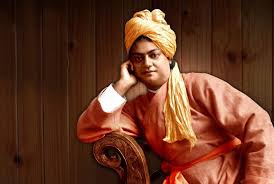 It was Vivekananda’s arrival at the World Parliament of Religion, however, that sowed the seeds of yoga across a wider receptive audience. His delivery of twelve off-the-cuff speeches stole the show and made him a sought-after teacher of the yama and niyamas, pranayama and Kundalini. Vivekananda’s yoga was Raja (Royal) Yoga. Raja Yoga is the practice of attaining unity with the mind, body and spirit. In other words, attaining a state of yoga. It differs from Hatha Yoga in that while Hatha intends to still the mind through the body and breath, Raja brings the practitioner to a state of yoga through the control of the mind. Hatha prepares the student of yoga to practice Raja. The practice of asana is not the key element in Raja Yoga as it seems to be in Western Hatha Yoga, and Vivekananda ignored asana. That doesn’t mean the practice of asana isn’t important, but the practice is intended to build strength and flexibility in order to tolerate long hours of sitting in meditation.
 Since it’s Memorial Day, Ben is off from work and is enjoying a lie-in. I, on the other hand, am set to teach my Monday morning class at Samyama. So when the alarm rang at 6AM Ben, blessed soul that he is, continued snoring while I stumbled first to the bathroom and then to the kitchen where I fed Bruce the Cat, boiled the water and ground the beans for the morning brew.

 Over the past few weeks in the creative expression classes I teach we’ve been creating gratitude journals. Gratitude journals are, as they say, ‘trending’. There are studies, in fact, that suggest keeping one benefits our mental and physical health. This might be true. Shifting our energy toward the positive rather than nurturing our habit of catastrophizing the difficulties we encounter builds our emotional resilience and reminds us that living is a group experience.
 Remember when we took walks for the joy of fresh air and sunshine? When the best thing about walking was the unmistakable scent of spring in the air or the sharp, salty brine and the startling launch of an egret?
 ability to manipulate how I feel. I removed the FitBit and put it in my dresser drawer.
 I threw off the morning’s rhythm on Monday and made everyone cranky. Even Bruce the Cat. I rose early rather than settling in for a second round of snooze control. I filled the kettle, ground the beans and sifted the matcha. I gave Bruce fresh kibbles and changed his water.
 My mother craved licorice while carrying the child who would become me. I blame her for my addiction.
 Driver’s Education was compulsory in Pennsylvania when I was in high school. Our teacher, Mr. D, was a suave and handsome man with a reputation. The halls that echoed with the sound of slamming lockers were also filled with whispers about Mr. D and a certain senior who seemed to always linger around his office. Then again, Mr. D was popular and there were plenty of us who made excuses to see him. But she was always there shuffling files or helping prepare transparencies for the overhead projector. She was always perfectly put together. Always pretty and always self-assured and apparently unfazed by rumors about the alleged tryst. I was in awe.
 I’m a judgmental woman. It’s not charming and not something of which I’m particularly proud. Nevertheless, I own my judgmental nature in the same way that I own my adorableness, my ability to empathize and to be kind, my sense of humor, my lack of math skills, my ability to organize and my fear of driving. I judge. Sometimes harshly, almost always unfairly.
 Mimm Patterson