Age is Not a Number

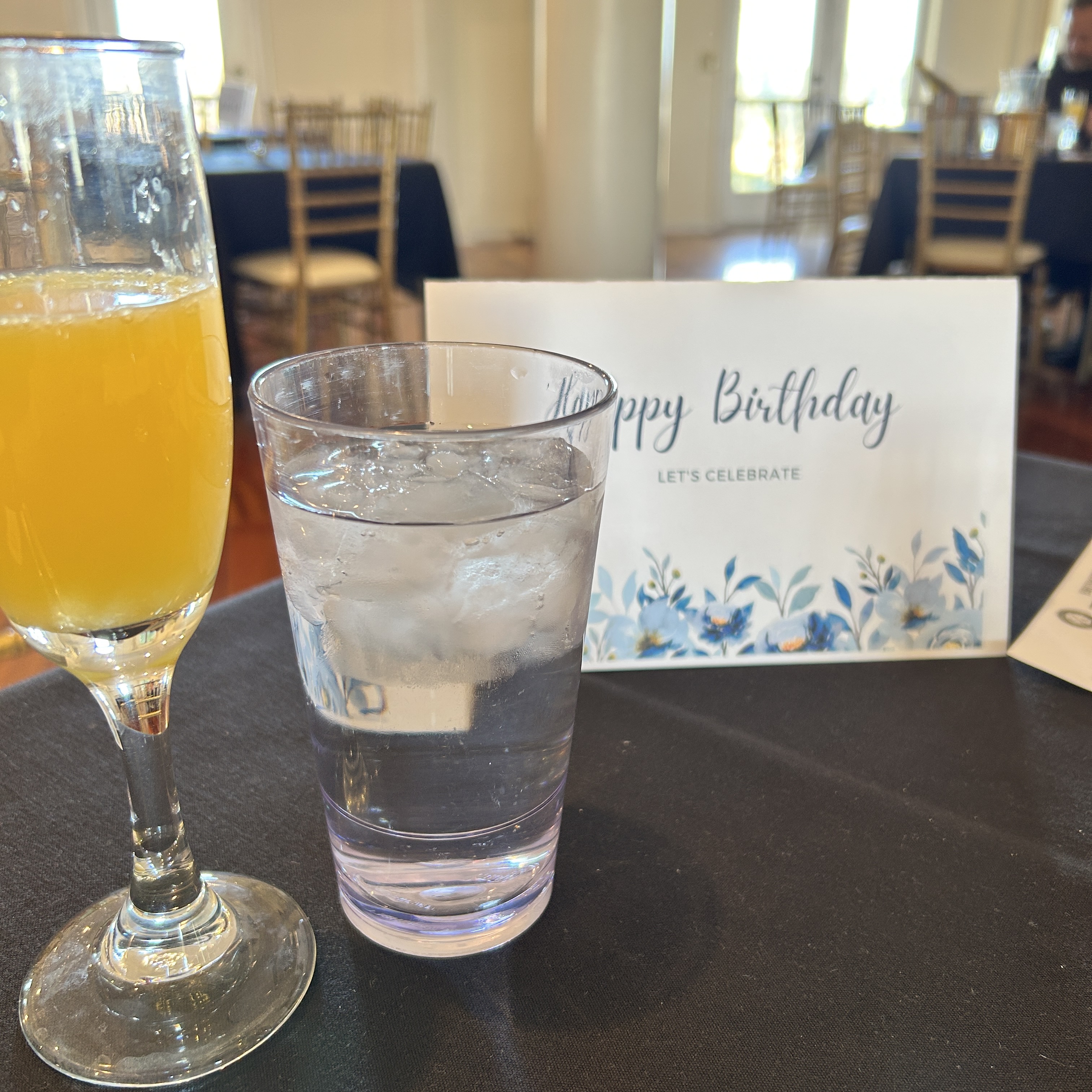
Today is my birthday. I’m sixty-seven years old. And I’m here to tell you that age is not a number.

Age – aging – happens and by believing that age is simply a number bypasses the truth that as the years roll on we change. For example, the hair on my legs is now growing out of my chin and the hair on my head is thinning. My first step in the morning is more like a first limp (yoga hip). My skin is wrinkling, my eyes have gone dry, and over the past year I’ve developed the same hammer toe my mother was blessed with.

So age is not ‘just a number’. I know people mean well. I know the phrase is meant to comfort. But the words also imply that I should ignore reality. The words imply that if I repeat them like a mantra my body at sixty-seven will perform like it did when I was twenty-seven.

I’d rather embrace all the circles I’ve made around the sun. I’d rather embrace all the changes. The not so great changes but the good changes, too. I’m sixty-seven years old today. I have greying hair and I’ve put on weight but I’ve also let go of the envy that consumed me forty years ago. I’ve become more appreciative of the small moments in life. I laugh more. I go to bed early so that I’m awake to see dawn. I want to remember to accept it all.

Acceptance isn’t curling up in a ball waiting for the end. Acceptance puts me on a path of exploration. What can I do now that I couldn’t do forty years ago? What attitudes have shifted? Moving forward, what steps will I put in place to ensure good mental and physical health? What will I do to commit to living a creative life of purpose – a life that has heart and meaning? 

This week I will reflect on these questions – I understand the answers will change over the years as I continue to grow and change. But where am I right now, in this moment? And how can I use the insights I gain by reflecting on these questions? How will these insights impact my art practice? My yoga practice?


Art Imitates Yoga

For as long as I’ve been writing and posting – which must be at least twenty years – I’ve held the intention that I will post each week and each post will be a reflection on my experience as a yoga student and teacher. 

That has never come close to happening.

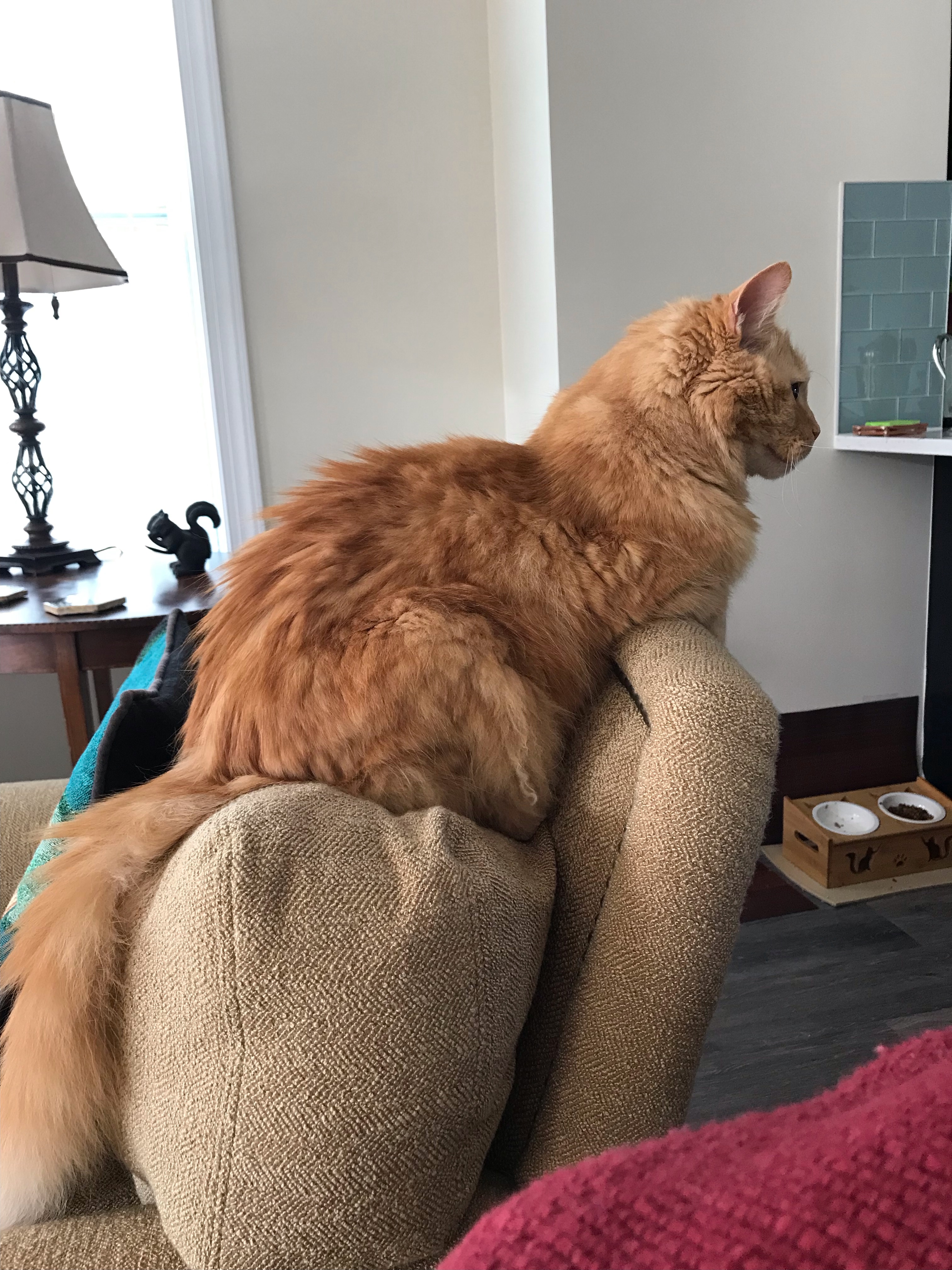
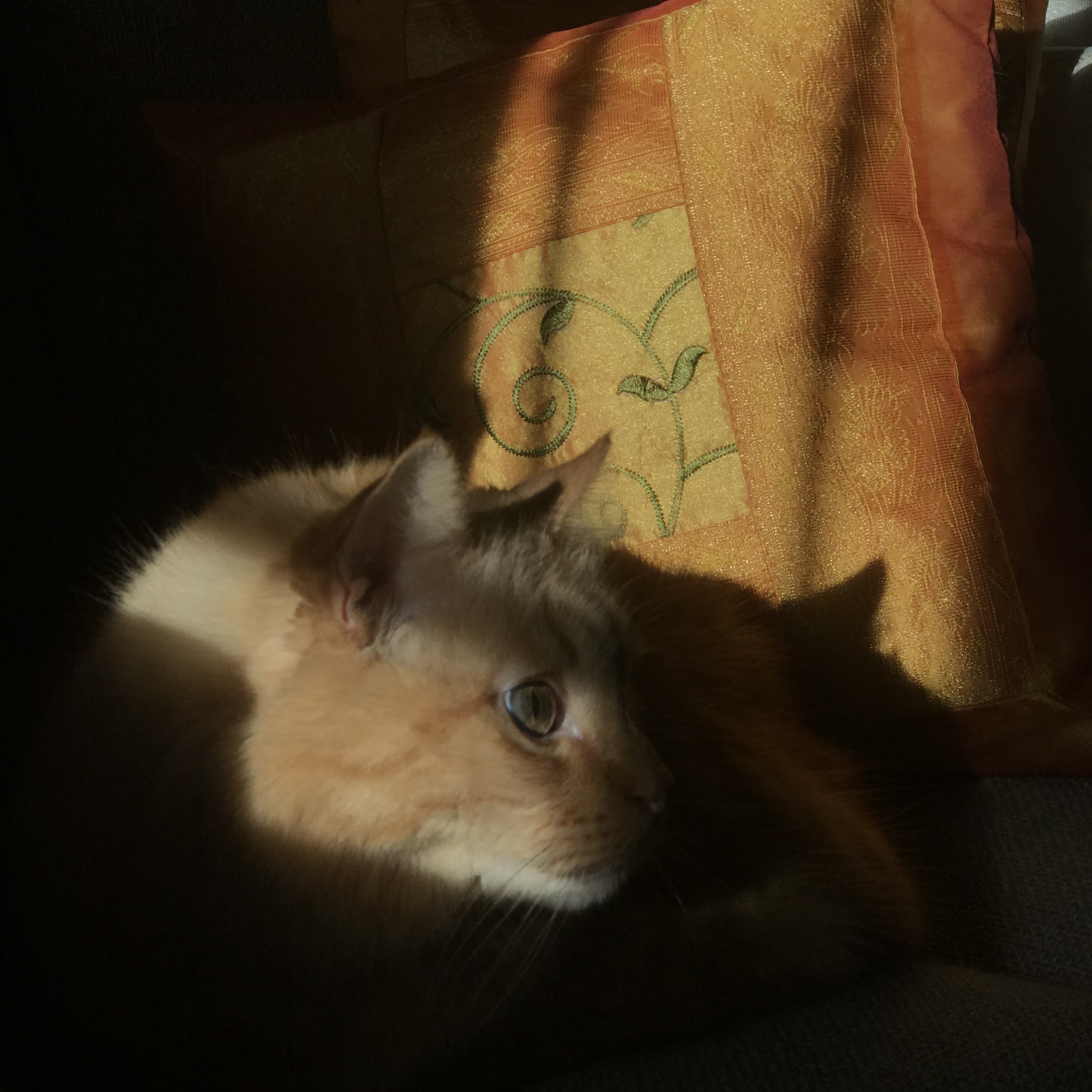
My last post was on September 9th, 2024, when I introduced the world to the incredible Tondu, the senior feline companion who moved in and filled the gap left by dear Brucie’s departure. After that post I found myself struggling to put together a few paragraphs describing the fear and anxiety so many of us are experiencing as our country moves toward a darker age. I finally abandoned all hope and hit the delete button.

Because I can’t write on command. Writing about a specific topic with a self-imposed deadline sucks any ability I possess to string two words together from my brain. I suspect that with discipline (if I showed up daily for myself and for my writing practice) the issue would right itself (pun intentional). But until I do that I’m going to have to be content with writing when the mood strikes.

Which makes me question whether, at the dawn of 2025, I want a writing practice as much as I wanted it in 2010. Fifteen years ago I wrote a full-length manuscript (90,000 words!) about a young woman eager to fly at the start of WWII. The story was inspired by a woman I knew who had been an WASP. In my story she falls in love with a neighbor boy who is Japanese and is sent to an internment camp. Forbidden love! Separation! War! Oh the Drama!

I was never happy with the ending. Do they reunite? Have they been changed so much by their experiences that love dies? Or is love the one true thing? Oh the Potential Heartbreak!

I was going through my own heartbreaking drama at the time and the joy I found living with these characters in my brain was lost. And so the finished manuscript sits in a dusty box, unedited. I always tell myself I’ll get back to it one day but that day has yet to arrive.

Practicing a visual art feels different. Maybe because, fifteen years older, I’ve learned to take myself less seriously. Or maybe I’ve learned to not make creating a competition. Showing up for my art practice is not a chore. It’s a joy. And although when I’m in the art studio I experience the same struggles and setbacks as I do when I write they are never enough to make me push it to the back burner. If anything I grow more determined to find a solution.

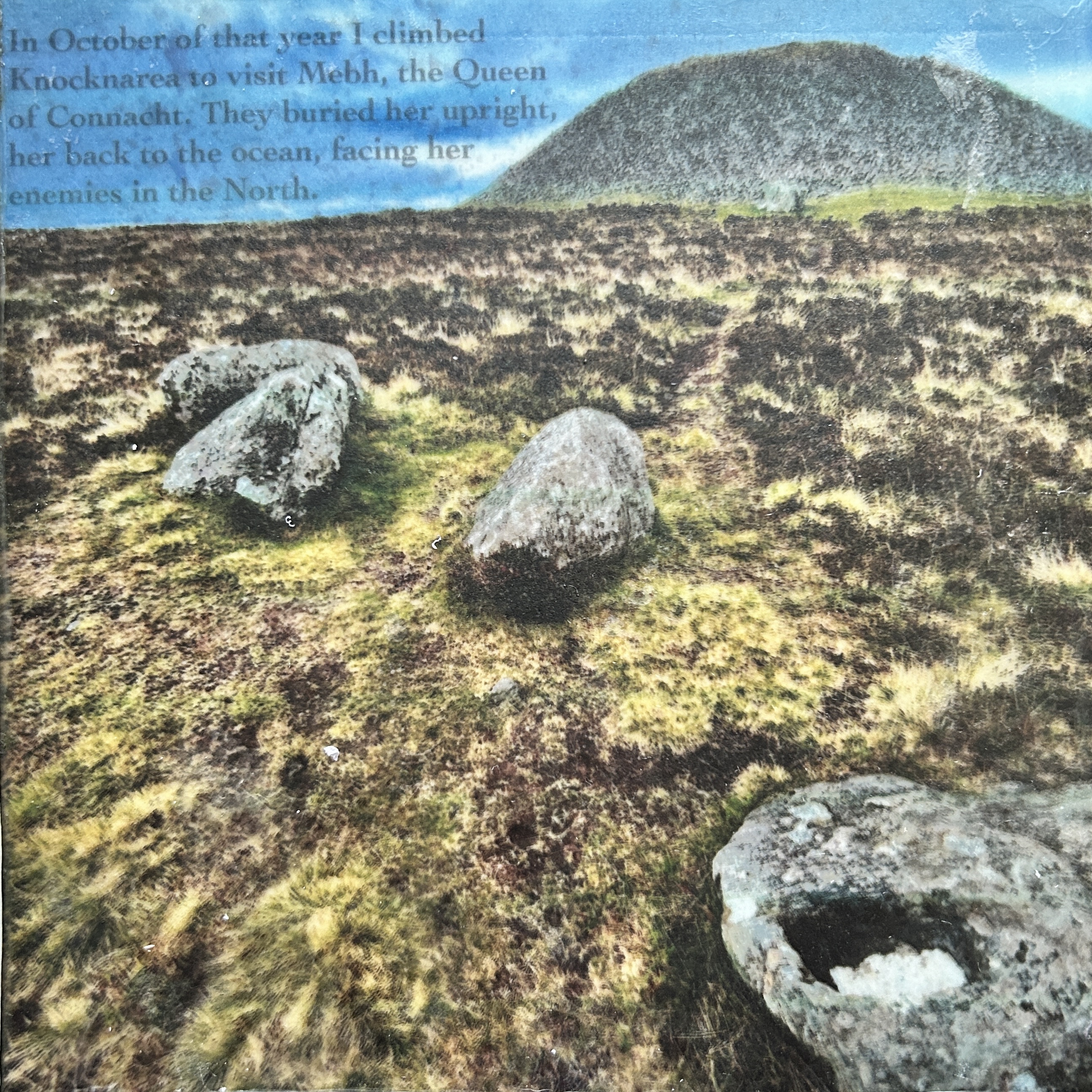
For the past two years I’ve been exploring encaustic photography. The process is this: I take a photograph with my camera. I edit the image on my laptop. I print the image on a sheet of tissue paper and then adhere the paper to cradled birch with encaustic medium, which is a combination of bees wax and damar resin. The tissue paper becomes transparent from the melted wax. I build on this with further layers of tissue paper on which images, texture and text have been printed.

Late last year I found the process becoming rote. I struggled with a few technical issues and when they were resolved I produced work like a robot on an assembly line. The process became a race to see how much I could create in a day. The idea of art as a practice was lost.

The truth is, since my intention is for my art practice to also be a business – in other words I want to exhibit and to sell the work I create – then my time in the studio should be both business and practice. But I was listing heavy toward ‘produce at all costs’. My art had lost its heart. 

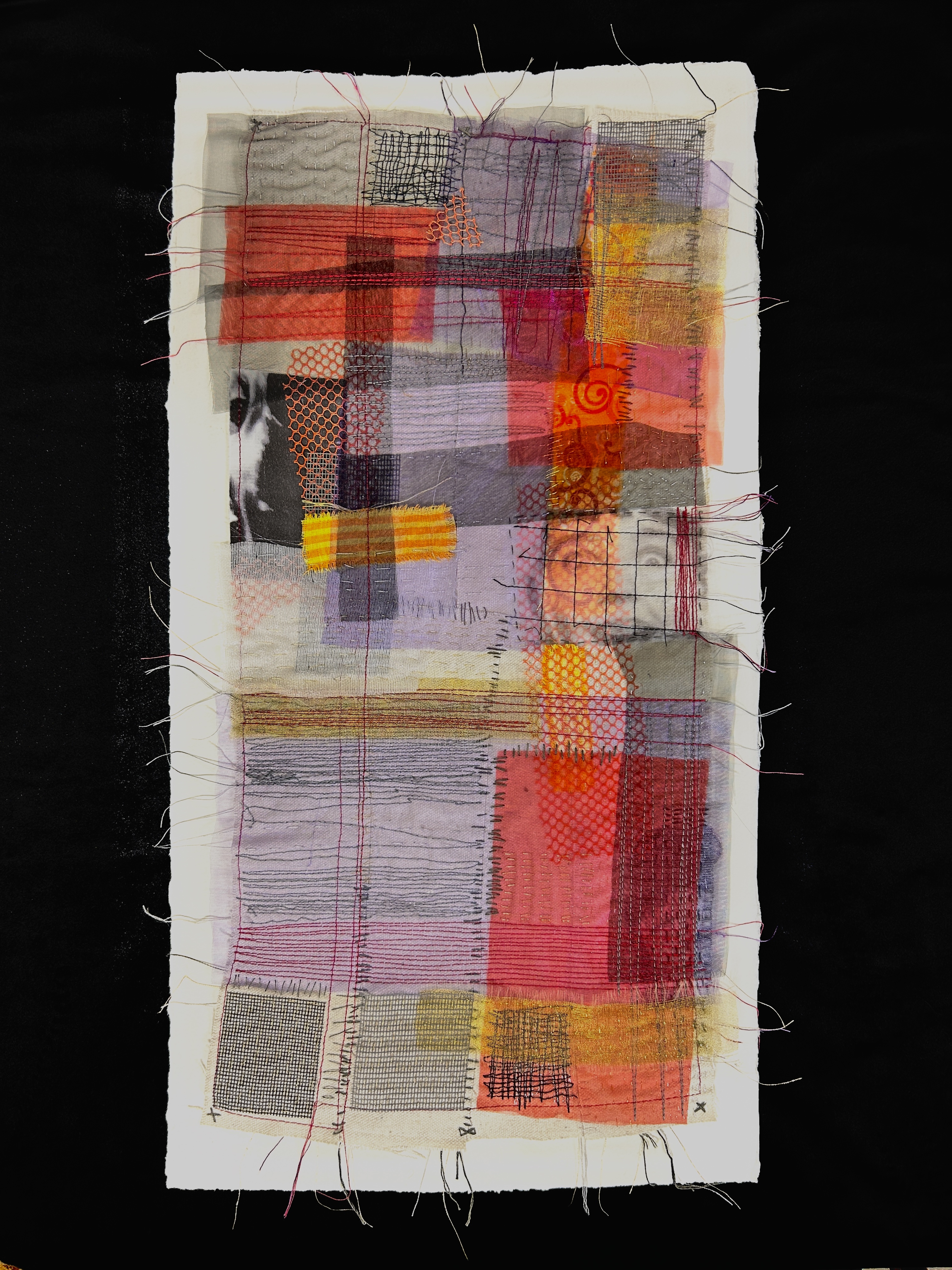
So I put the camera, the wax and the tissue paper and I pulled out my scraps of fabric.

And yesterday, as I stitched layers of rust-stained cotton and dreamy organza together, I thought about yoga. I thought about the verbal cues I use with the women and men with whom I practice. I thought about how I ask them to move with care. To move with intention and to be thoughtful. I thought about how I ask them to meet their bodies where they are in that moment. How I ask them to be present with their bodies and with their breath.

Yoga is a practice. Writing is a practice. Art is a practice, too. And as I move forward in my art practice I’m going to apply all the cues I provide for others during our sessions on the yoga mat. I want the work I bring into the world to be intentional, not rote. I want the work to be thoughtful, not thoughtless. I want to remain present for the making of the work and not to be thinking about what comes next.

I believe this new awareness will serve me well. 

The Iris Apfel of Trees…and My Hair

It’s August. Almost September. And there’s change in the air. It’s as if the trees are tired of being green (and we all know being green is not easy). Stealth like a ninja, Autumn is approaching. It gives itself away, though, by helping those tired trees dress themselves in fall glory. There’s one tree in particular, just outside my window, that begins to show its true colors early. While the doubly tall and slender trees that form a line of sentries behind it appear too shy to offer anything but hints of drab yellow, this little tree has crisp hits of gold along the edges of its leaves and muddled russet on its lower branches. This time of year it is the Iris Apfel of trees. And it is a tree that offers me comfort. A tree that provides cooling shade in the summer for all the deer and other critters that drink from the creek that tickles its roots. A tree that becomes a vibrant, flaming show off in autumn, cuts the sky into hard edged shapes with its bare, black branches in winter and sweetly blossoms in spring. I’ve watched my tree embrace each version of itself for one full year.

I love having four distinct seasons and their clear reminder of time’s passing. (But do I? Really? Four distinct seasons – definitely. Time’s passing? Maybe not so much.)

Early next month I’m having my hair cut by a stylist for the first time in three years. Throughout the pandemic I relied on my tried and true electric trimmer to keep my hair well shorn with a number five blade guard. I didn’t mind that there was no attempt at style. I just wanted my hair to stay out of my face in downward dog. But the east coast humidity curls my hair in a way that others sometimes envy and for a brief moment I considered letting myself transform into one of those beautiful crones with flowing locks who look like they’ve just stepped away from their floor loom to go fill their seagrass basket with wild blackberries plucked from the forest. And then I looked in the mirror and realized I am not that woman. I’m more likely to morph into Rosie the Riveter. In other words, my unkempt curls have to go.

But time has passed and I can no longer pull off the Sinead O’Connor-esque buzz cut I wore with my vintage dresses, fishnets, costume jewelry and combat boots in 1990. Damn you, time. It was my favorite look. The look the made me feel most like me. Now I’m afraid I’ll walk away from my date with hair destiny looking like I have a ‘do’ – a poofy, teased, too perfect coif. I guess that’s easily remedied with a tussle of fingers but still I can’t help but believe that being sixty-four and eight months old is a really weird age for a woman. I no longer look like the woman I feel like and I have no clue how to embrace the woman I’m becoming. More than that, I’m not seen by others as the woman that I feel like.

I know I’m being silly. If I can manage the journey through puberty and adolescence I can survive this journey, too. At the end of the day we’re not measured by how we look and how our looks change. 

Are we?


When I Grow Old…

I broke my wrist on April 12th. I blame the woodchuck. He was running down a grassy hill, away from the pug and Frenchie and their sharp barking from behind a neighbor’s fence, toward his burrow near the trail on which Ben and I were walking, the one that runs along Lickinghole Creek. In my excitement I turned back to say something to my dearest, loss my footing, fell down and went boom.

It’s my right wrist, of course. On my dominant arm. Why would I bother to stick out my non-dominant arm in an attempt to soften what was a very hard fall?

It’s a classic break of my distal radius but does not require surgery. What it requires is immobilization for a few more weeks – six in total.

That’s the thing about life, isn’t it? You think you have yourself organized. You make plans. You set goals. You create deadlines. And then one chubby woodchuck charges down a hill and all that order you created in your head falls apart like a post-menopausal woman tripping over a tree root on a slippery dirt trail.

The first ten days or so were pretty miserable. Not because of the physical pain – although it was uncomfortable. It was the self-inflicted emotional pain that kept me feeling sorry for myself. I was so angry with myself. How could I have let the accident happen? And I didn’t expect falling down at sixty-four and one half years to be so very different from falling down at twelve and one half years. I was determined to live my life as if there wasn’t a broken bone in my right arm. I was determined to do everything by myself and refused to let Ben be the caregiver. I did not want to accept that what my body required more than anything was stillness and rest. I did not want to accept that what I needed to practice more than anything was patience.

Our bodies have innate intelligence. And my body’s innate intelligence refuses to go along any wacky ideas I have about chopping vegetables or cleaning house or going to the gym. My body is more interested in sitting on the porch, taking gentle walks that do not involve woodchucks and hours spent reading. The true healing began when I finally acquiesced to these little requests from my body for some peace and quiet. 

Now that my body and my brain have reached an understanding – let’s be honest: it’s less of an ‘understanding’ and more of an ‘acceptance’ – I’m almost enjoying the unexpected interruption to my regularly scheduled programming. It helps that I can use a keyboard again. And that my cast is a pretty shade of grape. It reminds me of that Jenny Joseph poem, ‘Warning’ – the one that begins, ‘When I grow old, I shall wear purple…’.


Seasons Change

I spend my childhood in rural Pennsylvania. In the 1970’s we keep cool during the hot and sticky summer by catching minnows and crayfish in the creek that runs down from the Blue Ridge Mountains and past my house. In the fall we kick our feet through thick blankets of candy corn colored leaves while the blue mountains turn russet. With the first flurries my sister and I press our ears against transistor radios tuned to WAEB and with fingers crossed hope to hear the name of our school, Northwestern Lehigh Elementary, read aloud along with all the others closed by icy roads and blowing drifts of snow. In spring we trade long pants and boots for knee high socks and cotton culottes. The periwinkle in my mother’s rock garden begins to bloom. The snow melts, the frozen creek thaws and the Blue Ridge Mountains drop their coat of rich winter grey as the new leaves stretch for the sun. For a few weeks the air is perfumed by the lilac bushes outside my bedroom window, and then the school year ends and the hot and sticky dog days of summer return.

When Ben and I first arrived here, to Virginia, the early mornings were already warm and humid, the evenings tolerable. And now, five months later, we’re pulling out the woolly hats and thick coats that spent California winters crammed into the back of a dark closet.

I didn’t know until now how much I missed seasons.

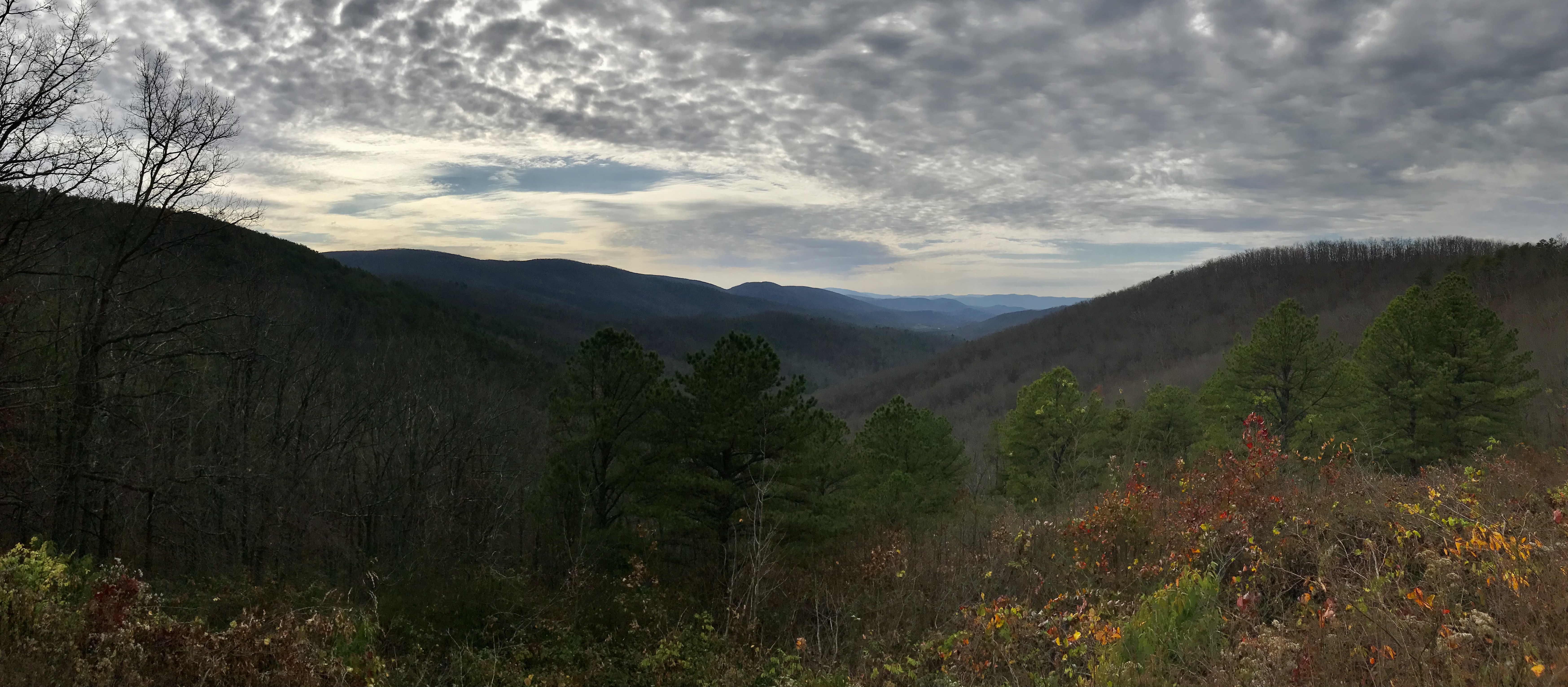
Outside my window is an endless row of tall, bare limbed trees that grow along the Slabtown Branch of Linkinghole Creek. When we arrived in July they were lush and green. Towards the end of August the leaves of one began to shift from shimmering emerald to shades of deep ruby and dusky gold. I was certain it had died. But it was simply leading the way and within weeks all of the trees seemed to be competing with one another to see which might be the most autumnally resplendent.

But now the leaves have dropped. I can see through the trees’ crooked boughs and across the creek bed to the nest of family homes that wind their way up Bishopgate Lane. In the early evenings that we have in mid-November warm light glows from each window and I imagine the homes are filled with the scent of baking bread, home cooking and childish giggles. And as the folks who live there look out toward Old Trail Drive and see the light from Ben’s and my home I wonder if they imagine the same story? Not wanting to disappoint, I returned from my last trip to the local Harris Teeter with flour and baking powder and yeast. It’s definitely soup season and what better treat to enjoy with soup than warm bread with lashings of butter?

Today the temperature will be hard pressed to break forty-five degrees and it will be raining by this afternoon. How cold does it have to be to snow? It doesn’t have to be freezing but I’m certain the ground is not yet chilled enough to support a dusting of the white stuff. But will those trees outside my window be coated with white on Thanksgiving?

I’ve been told by new friends who’ve been here longer than Ben and I to not get my hopes up. There are, without a doubt, four wonderful, glorious seasons here in little Crozet. But winters, my neighbors tell me, lean a little too far toward the temperate to see snowball fights or a carrot-nosed Frosty in every garden. 

I’m more likely to find puddles of slush. I’m ok with that.

Settling into the rhythm of changing seasons changes everything else: the food I eat, the clothes I wear, how I spend my downtime, how I commune with nature. It changes my yoga practice and the yoga I teach. It makes me aware of time and the passage of time in a way that the glorious, endless California sunshine never quite managed to do for me.

And while it’s true that at some point I’ll rue the moment that I step into a deep puddle of wintry slush I know that I will never not love watching the seasons change.


Finding Awe

There’s a wooded area across the street from our kitchen door. I like to stand on the patio while the coffee brews in the morning, or in the evening after dinner, to see if the deer have arrived. They like to eat the grass and weeds that surround a small pond and I love to watch. I hope I never stop being delighted when I see them.

Annular Eclipse, Pyramid Lake, Nevada 2012

One evening last week when I stepped outside to look for the mother deer and her fawn, the sound of cicadas and croaking frogs was so loud I called Ben to listen with me. It sounded like a symphony of bugs and amphibians tuning their instruments before a concert. I hope I never grow accustomed to their music.

There are bats where we live. On our first week here we saw dozens over our house. They were dining on flying insects and then dancing through the sky to find their next juicy mortal. We haven’t seen that many at once since, but now and again I’ll see one or two grabbing a snack. It surprises me every time. I hope seeing a bat in the sky above my house never stops surprising me.

These experiences create a sense of wonderment and awe in me. And for that I’m grateful because sometimes it feels like we’ve lost our ability to be awed. Sometimes it feels like we’re too distracted by the noise of the world or too jaded by the onslaught of constant information to find time for quiet moments of awe.

But these moments of awe are beneficial to our well being. The sense of awe we feel when we’re gazing at a star filled sky, for instance, or witnessing an eclipse, creates in us a sense of ‘small self’ and deepens our sense of connection with others.

What experiences elicit awe in you?


What Better Time is There to Practice?

What would happen if you gave yourself this gift of stillness? What would happen if you let the world take care of itself while you take care of yourself for these few, brief moments?

It’s out of character for me to ask questions during those last ten minutes of class, when we assume our final pose for the day, savasana, and prepare for guided relaxation. But at the end of a recent class, and even though my guided relaxation style leans more toward a body-scan sort of script, that’s what I did. I was hoping the questions might open everyone’s heart toward the idea of it being all right to rest without judgement of what’s happening in the body or with the breath.

Some might disagree but I’ve always believed that those final moments in our asana practice are the most important and the most difficult. We are asking ourselves to balance stillness with presence. We are letting go of the expectations we place upon ourselves. We are doing our best to not think about what we’re having for lunch.

But when we feel agitated and when we know we have a long list of projects waiting for us after that final namaste’, assuming savasana and resting in present-moment stillness is challenging. Yet what better time is there to practice? 

When we are in a brick and mortar studio the idea of a practice feels somehow more available. There are few distractions and the quiet, intentional atmosphere of the studio offers a focus not always available to us when we are rolling our mat out on the living room floor and sharing a virtual class with fifteen others. And while we count the dust bunnies under the bookcase from downward dog and find cobwebs between the paddles of the ceiling fan our mind wanders and our ability to hold our attention on the sensations in our body and the movement of our breath wavers. 

And so I ask again: what better time is there to remain present in and with our practice?

By the way, I understand this challenge because it’s my challenge, too.

There’s a level of loneliness to the online class that doesn’t exist when we’re together in a studio. That’s why I believe it is important to treat our virtual yoga space with the same reverence that we treat the studio yoga space. To remember that we are sharing our practice with others and that while we apart physically we are united energetically.

What would that take to make that shift? 


Being Strong. Being Gentle.

This morning I’m thinking about what it means to be strong. How do we balance owning our strength – our physical and our emotional strength – with keeping a gentle, nurturing heart? It seems easier somehow to be strong for others, doesn’t it? To care for others. How do we care for ourselves? Are we strong advocates for ourselves when we need to be? Are we gentle with ourselves when gentleness is required? Can we say ‘no’? Can we ask for help?

Sometimes, when I’m facilitating a yoga class, I get into my head. I begin to think I’m not doing enough. That I’m not challenging students with more difficult asana or sequences. That everyone is thinking, ‘not this again’. When I fall far enough into my head I like to tell myself I’m a fraud.

Is there something in your life that triggers similar negative self-talk?

After a bit of wallowing I remember that I am not the only yoga teacher in the world and yet an amazing group of individuals continue to show up for my classes. And then I remember how long I’ve been teaching and how much I’ve studied and how those years have created a specific approach and a specific philosophy that I embrace. My gentle heart catches me and I remember how strong I am.

Wouldn’t it be great if we always felt strong? If our gentle heart always caught us before we trip and fall?

In my practice this week, on and off the mat, my intention is to do less but to feel more. I want to notice when I’m moving through life from a place of owning my strength but I also want to notice when I need to treat myself with gentleness. In other words, I want to pay attention.

How will you pay attention this week?


Touching Life: Change Takes Patience

Bruce the Cat is living his best life.

I can’t say the same for his favorite human companion. It’s been a wonderful and an exhausting month but I won’t feel at home until my brain can shift its thinking from ‘I moved to Virginia’ towards ‘I live in Virginia’. My body is here but my energy is somewhere over a cornfield in Iowa and until the two can meet this sense of being unmoored will stay with me. It’s as if there’s a glitch and my spirit is biding its time somewhere in the air between California and Crozet, like a little spinning rainbow waiting for the new software update to download. But that’s what a move is like, isn’t it? The body and the spirit need space to forge their alignment. Until then, balance and equilibrium is off kilter. Just ask my Vrksasana.

Change takes time. We know that. It might be a cross country move, a bad habit we’re trying to break or a new perspective we’re trying to find. Change takes time. And if we don’t see change for what it is – an opportunity to practice patience – then the disappointment we feel when the new conditions we’re expecting don’t arrive fast enough can mess with our head. It has definitely messed with mine. This past month – in between the excitement and moments of joy – I’ve been irritable and frustrated. I’ve lost focus. I’ve had trouble sleeping. To be clear, I haven’t once questioned our decision to relocate but the firm grip I had on the vision for my life and the purpose I knew was mine has slipped away. I don’t yet know who I am in this new home. And my brain won’t be able to transition to ‘I live in Virginia’ until all the things I can’t seem to find – including me – are found.

Change has its own rhythm. It’s own schedule. 

I need to take to heart the words I write. Change is an opportunity to practice patience.

Which means I need to stop worrying about the damaged refrigerator sitting like a monolith in the middle of my kitchen and take joy in the truth that there’s a new, undamaged refrigerator in its place. By next week it the broken monolith will be gone. By next week shelves for the garage will arrive and trying to find the car won’t require navigating a maze of cardboard. After that the boxes still unpacked will be open. And after that we’ll have a few chairs for the patio and will be able to enjoy hot tea in the cool mornings as the sun rises. I’ll begin to learn how I fit in this new place, this new world.

Until then I will continue to repeat the mantra ‘Change is an opportunity to practice patience’. And the first place I will practice patience is with myself.


Neurographic Drawing

At the start of the year I set the intention of building a writing practice that would allow me to post every two weeks. I created a spread sheet of topics around these obvious themes: yoga, coaching and craft. I hoped I would have the strength and energy (and the technical prowess) to have a brief video accompany the posts I wrote about aspects of our yoga practice. I managed one video, but my posts over the past six months have been consistent. Not what I intended, but consistent. Until now.

Writing, like yoga or art, is a practice that requires our presence. We have to show up. And I find it difficult to show up for writing practice when my brain is full. And right now my brain is full. My beloved and I are three weeks away from a major life transition – our move to the ‘other coast’. Our home has become a storage unit filled with boxes and I’m obsessed with worry about how Bruce – our amazing, elderly, deaf ginger cat – will manage the flight to Virginia and how he will adjust to a new home. There are so many details that need to be attended to that there is no room in my brain for putting words down on a page.

And don’t even mention my preoccupation with…well…everything else.

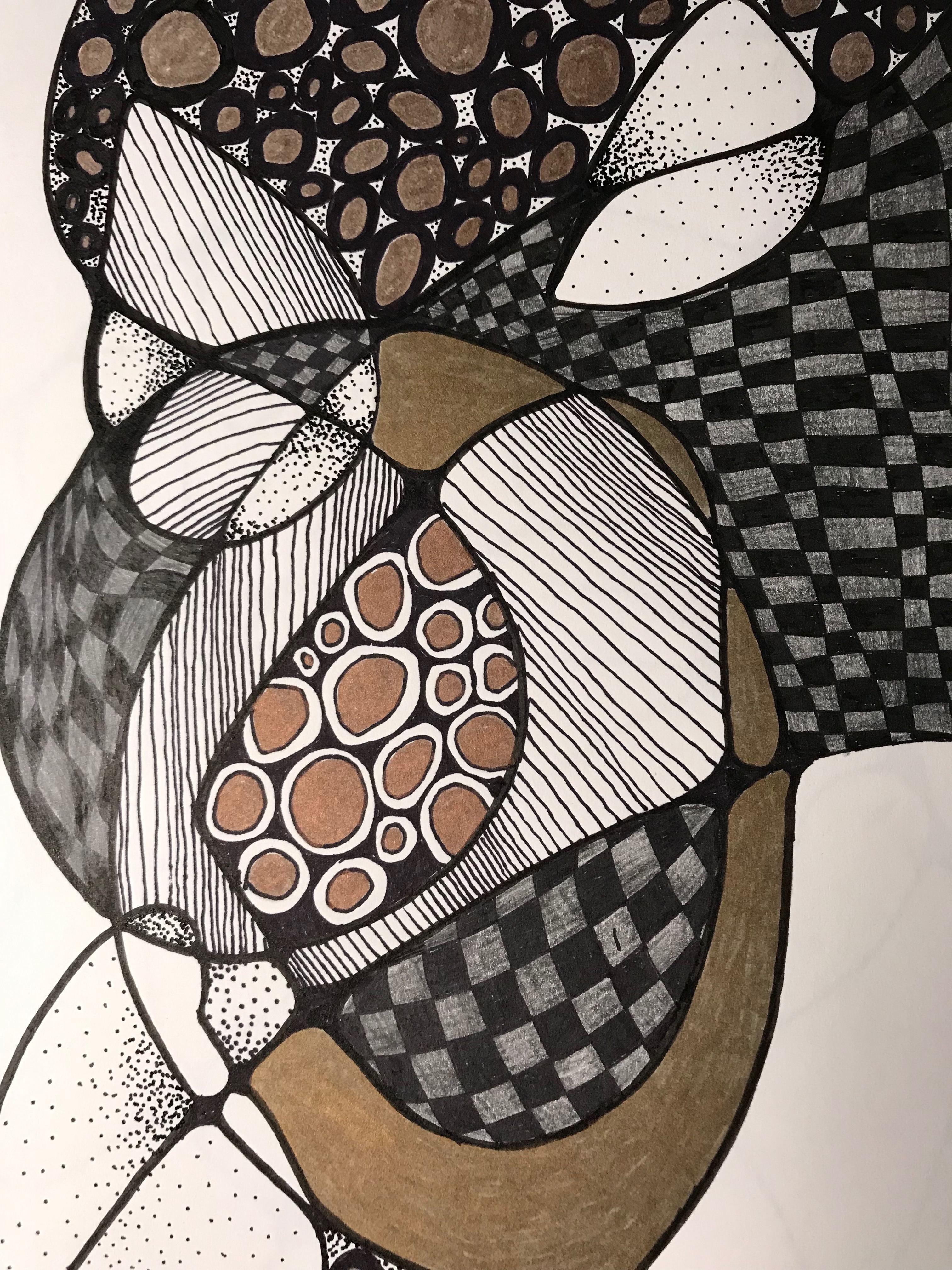
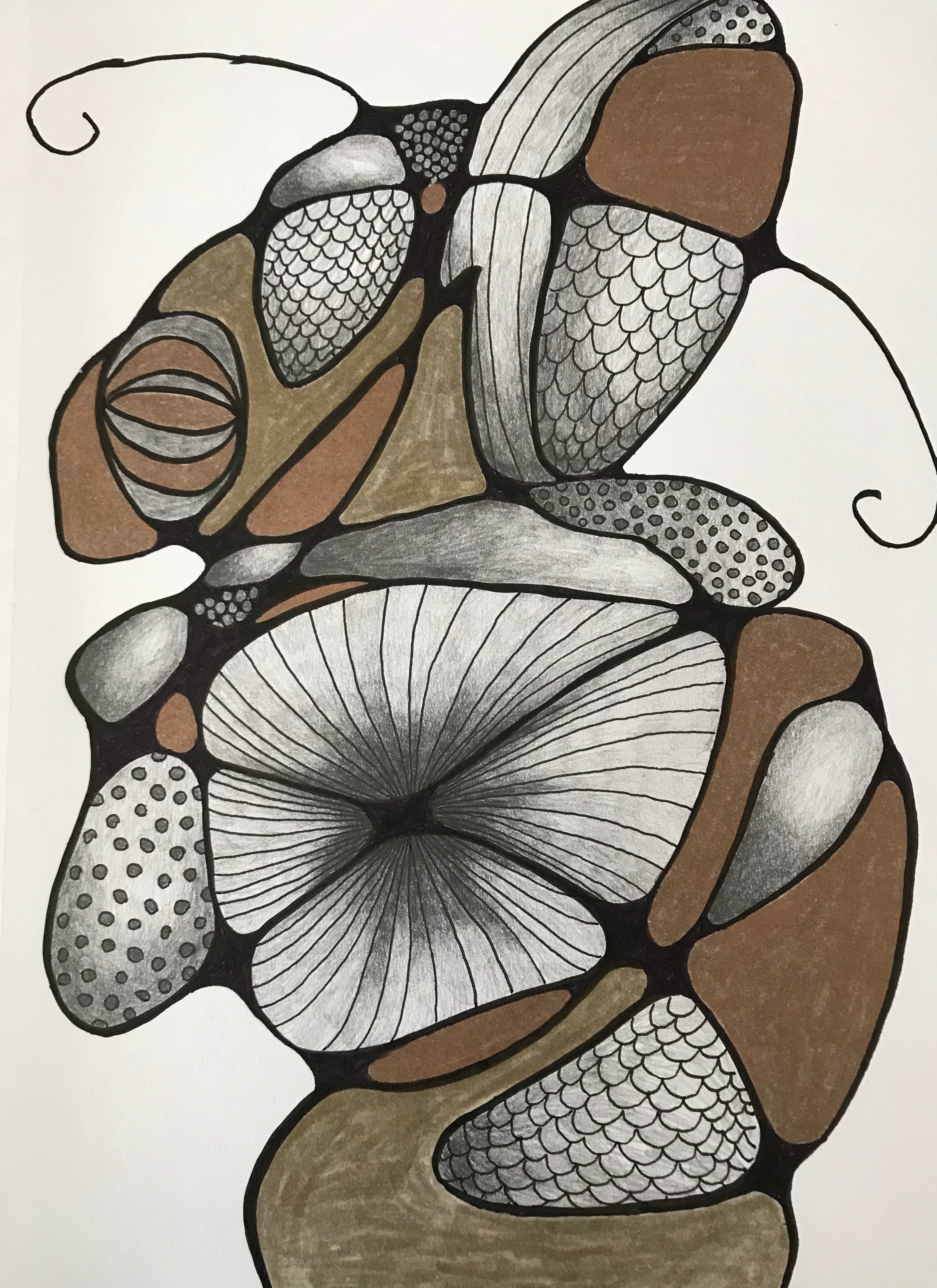
And so I’ve decided to draw. My art supplies are packed and so all I have to work with are a few sharpies and a mechanical pencil. But that’s all I need for neurographic drawing. The technique, a distant cousin to SoulCollage®, begins with just a thought. A quiet thought, a few shapes and a single line. So simple and yet it doesn’t take long before my energy settles. The jumbled words and racing thoughts become quiet, and I’m lost in the shapes I’ve drawn. I’m lost in the moment, which is a nice place to rest.