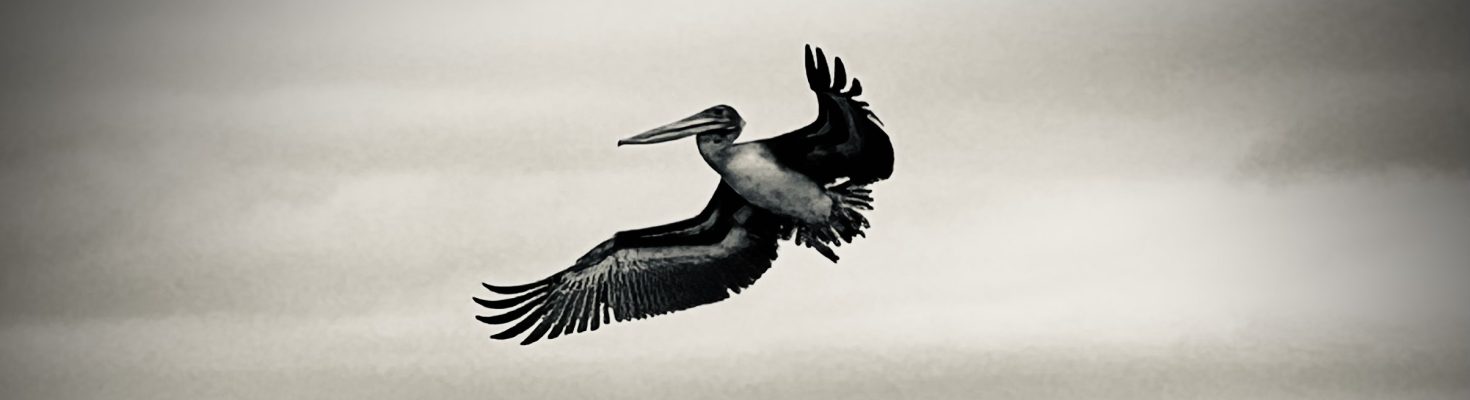

From the air, if you’re high enough, the green carpet of trees could be anywhere. It could even be home. But as the plane descends the coconut trees begin to distinguish themselves. The river cuts into the earth in a way that is different to what you’ve known. Banana plantations define themselves in stiff squares of land. The roofs of homes are not the familiar red clay tiles you remember but are instead the bright blue color of tarps stretched across cinder blocks and corrugated tin. Yet, in the distance, an ornate and sparkling church calls the eye.
This is not home. This is unlike any place I’ve ever been. This is Kerala.
Kochi
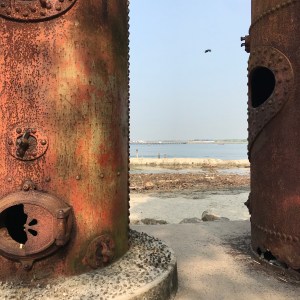 The sunlight in Kochi is diffused by heavy, moist air. The December heat keeps my skin sticky and my ankles puffed. But it’s a beautiful light – intense and muted at the same time. It brightens colors and softens the edges of the Chinese fishermen nets that, since the 14th century, have pulled fish from Kochi’s harbour. The nets are fascinating structures built from teak and bamboo. They’re cantilevered and require nothing more than the weight of a man to lower themselves into the water.
 Along the embankment men dressed in lungis, their heads wrapped in wet and frayed cloth as protection against the sun, prepare to sell the fish whose gills still move, desperate to find water. Interspersed between the fishmongers are stalls filled with wares available to purchase for the tourists fresh off cruise ships in port from Mumbai and Singapore. Follow the cobbled path from the nets to the jetty and you’ll find fish for your supper, leather belts, straw hats, toy tuk-tuks for the kids at home, plastic pasta makers and hand-held sewing machines the size of a stapler.
 Nearby is a respite. The Church of Saint Francis is a short walk from the jetty. Built in 1503 and the original burial place of Vasco de Gama, it is a beautiful but unassuming building.
 Its stone interior, lined with dark wooden pews, is cooled with a mechanism built of rope, pulleys and embroidered fabric attached to poles that run the length of the nave. The poles are lowered and when they swing the congregation is fanned by the movement of the fabric.
Munnar
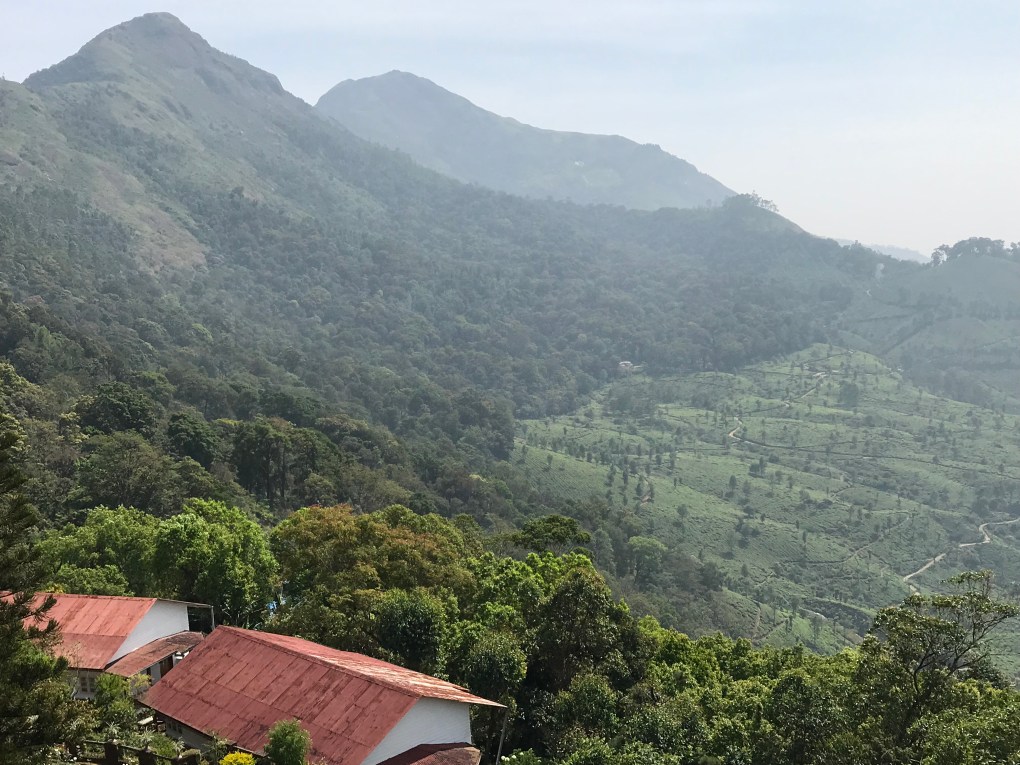 The first two close calls were flukes. It was only after I saw my life pass before my eyes for the third time that I began to question our sanity. By the time we were in our fifth hour of winding switchbacks on a road so narrow we frequently stopped to accomodate traffic barreling down the steep grade toward us I knew we were doomed. We were headed toward a former hill station in Munnar now named Windermere Estate.
Just before we arrive at our destination we cross a one-lane bridge. The river is a good thirty feet below and calm. It’s difficult to believe that four months previous the same river turned violent and rose high enough to cover the span. Munnar was devastated in the floods that killed over one hundred and fifty people last August. Windermere Estate was cut off by landslides for fourteen days. There is still evidence of the landslides but with the exception of road damage evidenced on the long climb life has returned to normal.
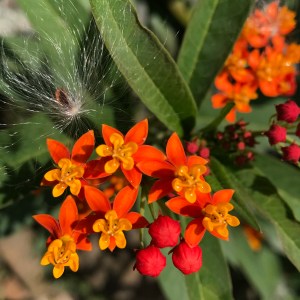 It’s beautiful here. The air is warm but fresh and we awoke this morning to the song of the red whiskered bulbul and not the noise of car horns. From a vantage point reached by climbing a set of stairs cut into stone we have a view of mist covered tea plantations, deep valleys and a rugged mountain ridge on which, we’re told, wild elephants sometimes roam into view.
 Our one day at Windermere is a day of rest. The grounds of the estate are too beautiful to contemplate leaving. With the exception of one short walk to a small village just below the estate grounds, we are content to watch the world go by from the little porch attached to our room.
Tomorrow we’ll make our way back down the mountain to Alleppey.




 I was uncomfortable with the idea of my turning sixty, which is going to happen in late November.
  M I submitted my first book proposal to the wonderful Claire Wilson at
  I’m at a four-day yoga therapy conference at a Hyatt Regency in Virginia. I’m sitting on the floor of a large, carpeted ballroom. It’s filled with one hundred beautiful, mostly mid-life women dripping in Lululemon, Om symbols, prayer beads and diaphanous Shakti-printed shawls purchased at the ashram in Buffalo where they attended their last silent retreat.
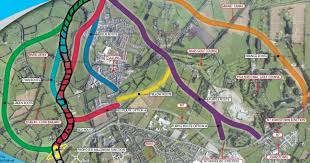 The Naas Bypass, opened in 1983, was the first of its kind in Ireland. Otherwise known as the M7, the highway connects the town Naas in County Kildare to the town of Limerick one hundred and sixty-eight miles to the southwest. In the thirty-four years since the ribbon cutting, new and upgraded bypasses have woven there way across the country. But the Naas Bypass has the honor of being the first road in Ireland to take a driver around rather than through a town. In doing so it relieves congestion in Naas’s town center and slices minutes from the journey.
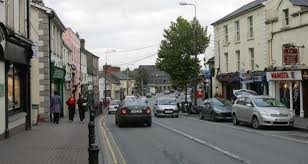 It’s a nice trade-off. We crave speed and ease and so when the goal is to get from Naas to Limerick as fast as possible then the town’s charming character, with its retro Eddie Rocket’s diner and Carphone Warehouse, is not a priority. We can avoid being slowed by the locals on their way to do a weekly shop at Supervalu. We don’t have to dodge truant children chasing runaway pups across the street. We can avoid anything at all that threatens our smooth journey to someplace else and enjoy the open road. The bypass is an alternative that’s both fast and direct.

 I can’t tell you how many times I’ve been asked that question. My answer is ‘yes’ – all yoga is, of course, therapeutic. And so, one might wonder, what is yoga therapy and how is it different from our day-to-day practice?
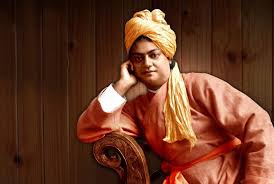 It was Vivekananda’s arrival at the World Parliament of Religion, however, that sowed the seeds of yoga across a wider receptive audience. His delivery of twelve off-the-cuff speeches stole the show and made him a sought-after teacher of the yama and niyamas, pranayama and Kundalini. Vivekananda’s yoga was Raja (Royal) Yoga. Raja Yoga is the practice of attaining unity with the mind, body and spirit. In other words, attaining a state of yoga. It differs from Hatha Yoga in that while Hatha intends to still the mind through the body and breath, Raja brings the practitioner to a state of yoga through the control of the mind. Hatha prepares the student of yoga to practice Raja. The practice of asana is not the key element in Raja Yoga as it seems to be in Western Hatha Yoga, and Vivekananda ignored asana. That doesn’t mean the practice of asana isn’t important, but the practice is intended to build strength and flexibility in order to tolerate long hours of sitting in meditation.
 Mimm Patterson