

Ok.
So Maybe Yoga Therapy Isn’t Everything
For example, it’s not yoga. And when Gary Kraftstow took us on a journey from the roots to the fruits of yoga therapy during his keynote address on Thursday evening he described a yoga therapist as someone who has “a specialised knowledge base and skill set differentiating them from a yoga teacher.” Our yoga therapy training must teach us the skills that allow us to understand a client’s limitations. It should support our ability to build a practice with the client and for the client that takes into account their needs and their goals. A yoga therapist will, according to Kraftstow, “inspire their client to practice, thus empowering them to become an active participant in their own health-care.” The work we do with clients and the partnership we develop with them should support their ability to connect to “a deeper meaning and purpose in life.”
This is a huge responsibility. Yoga therapy is not simply “physical therapy plus yoga”
(an aside Kraftstow made that garnered a healthy round of applause). As yoga therapists, we should feel inspired to continue our education and to remain humble – to resist the urge to, as Kraftstow quietly demanded, “assume we know what we don’t know.”
The Case for Clear Knowing
We’re wise to follow Kraftstow’s advice. As yoga therapists we should continue our education, break our reliance on unverified beliefs and our habit of treating clients with similar issues with the same protocol. Yoga therapy is, after all, more than a series of asana.
But Carrie Demers, board-certified in internal medicine and who now blends modern medicine with holistic and traditional therapies, reminded us in her plenary session on Friday morning to listen deeply and to “know what we know.” She spoke to the devaluing of human intuition and asked us to “open up to the intuitive mind.” She asked us to “Listen deeply, with your eyes, ears and heart.” To do this, she said, is to hold space and to reflect the story back to the client. This gives room for our clients to reframe the story and to begin a new chapter.
Practice What We Preach
In their talks both Kraftstow and Demers told us that we can not offer to clients that which we do not practice. Without a strong practice of our own the work we do with clients lacks authenticity. In particular, the changes to our brain’s architecture that meditation promises connects us to the roots of yoga therapy that Kraftstow spoke of and, says Demers, it “keeps us compassionate and opens the door to our intuitive mind.”
What Have I Learned?
I still have one more day of talks and classes at SYTAR 18. My mind and heart are full and I wonder how much room is left in my brain for new knowledge…although I suppose there is always room in our hearts and minds and brains for more.
These three days have shown me that I am not alone on this journey. Yoga Therapy encompasses so much and can be given in so many ways: VA Hospitals, pain clinics, private clients, wellness centres, Dean Ornish programs, cardiac care units…even the Department of Defense (yes, I met someone who has a DOD contract to offer Yoga Therapy).
This can only mean that the roots Gary Kraftstow spoke of are very deep and numbered. The promised fruits are varied and beautiful. We nourish them through our personal practice, our continued education and our open hearts.


 I can’t tell you how many times I’ve been asked that question. My answer is ‘yes’ – all yoga is, of course, therapeutic. And so, one might wonder, what is yoga therapy and how is it different from our day-to-day practice?
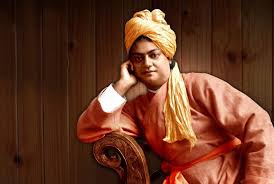 It was Vivekananda’s arrival at the World Parliament of Religion, however, that sowed the seeds of yoga across a wider receptive audience. His delivery of twelve off-the-cuff speeches stole the show and made him a sought-after teacher of the yama and niyamas, pranayama and Kundalini. Vivekananda’s yoga was Raja (Royal) Yoga. Raja Yoga is the practice of attaining unity with the mind, body and spirit. In other words, attaining a state of yoga. It differs from Hatha Yoga in that while Hatha intends to still the mind through the body and breath, Raja brings the practitioner to a state of yoga through the control of the mind. Hatha prepares the student of yoga to practice Raja. The practice of asana is not the key element in Raja Yoga as it seems to be in Western Hatha Yoga, and Vivekananda ignored asana. That doesn’t mean the practice of asana isn’t important, but the practice is intended to build strength and flexibility in order to tolerate long hours of sitting in meditation.
 I’m a judgmental woman. It’s not charming and not something of which I’m particularly proud. Nevertheless, I own my judgmental nature in the same way that I own my adorableness, my ability to empathize and to be kind, my sense of humor, my lack of math skills, my ability to organize and my fear of driving. I judge. Sometimes harshly, almost always unfairly.
 I love Ben. He’s been my friend and partner for four years this month. I have friends who have been married longer than I’ve been alive, and so I understand that four years is a very small stretch of time. Yet if feels long enough for life to have always been this way. Me and Ben.
 Sometimes it’s hard to think of those two words together: business and yoga. But yoga is a business. It’s a very big business. In fact, it’s a $27 billion dollar industry. And as yoga teachers we have a choice. It begins with asking the questions, “What does success as a yoga teacher mean to me? Is it about money? Fame?” Maybe it is. Maybe that’s your dharma. There’s no shame in being a yoga rock star who travels the world leading workshops or lands the cover of Yoga Journal. But what if your dharma is leading one class a week for seniors at the local recreation center? Or teaching underserved populations? Or not teaching at all?
 Last month I walked past the sandwich board outside of University Avenue’s Lululemon emporium twice every Tuesday and Thursday for two weeks and each time I wanted to kick it. In my wildest moments I envisioned myself carrying a can of spray paint so no one else would walk past, read its message, and have that little moment of feeling less than. What words did I find so offensive?


 Mimm Patterson