Age is Not a Number

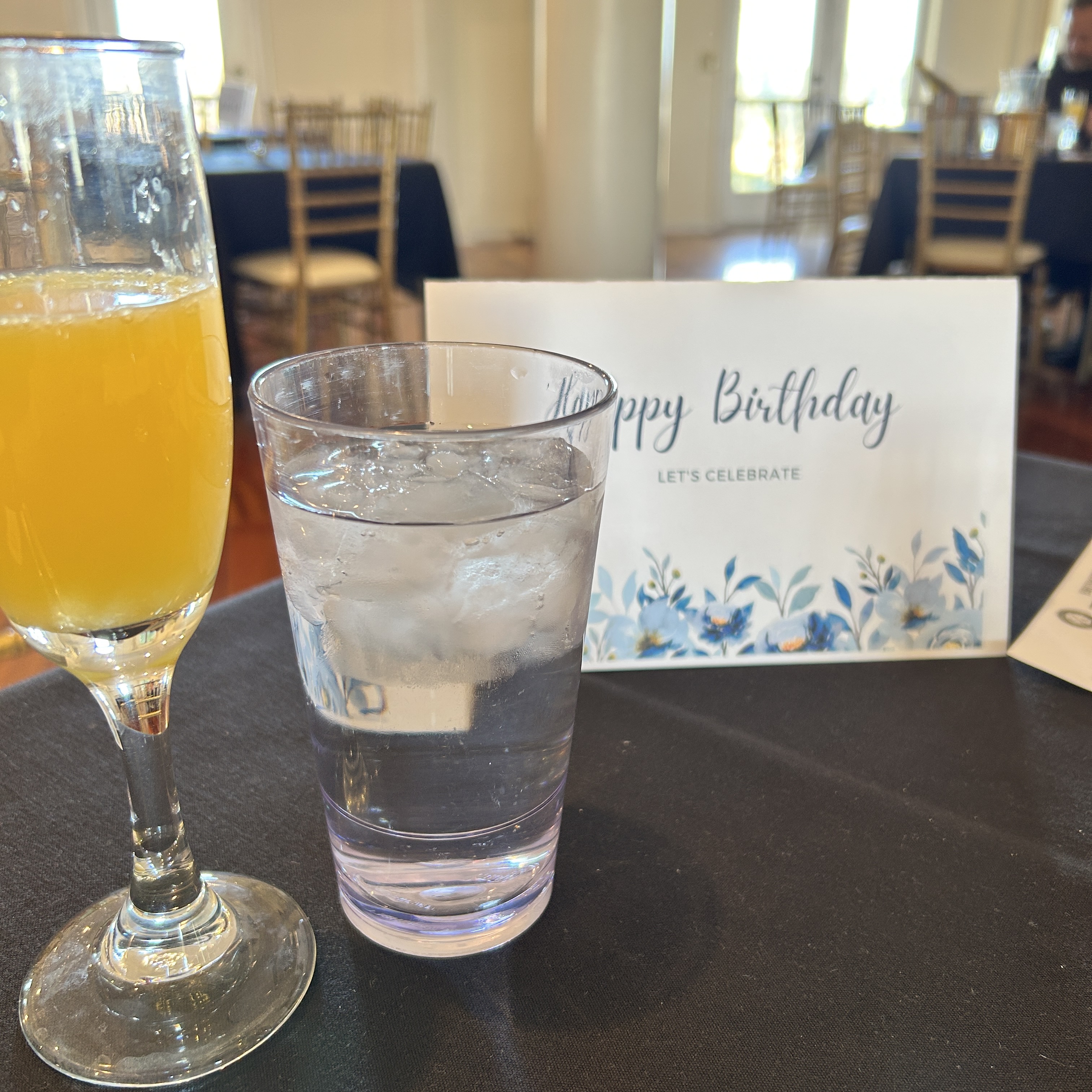
Today is my birthday. I’m sixty-seven years old. And I’m here to tell you that age is not a number.

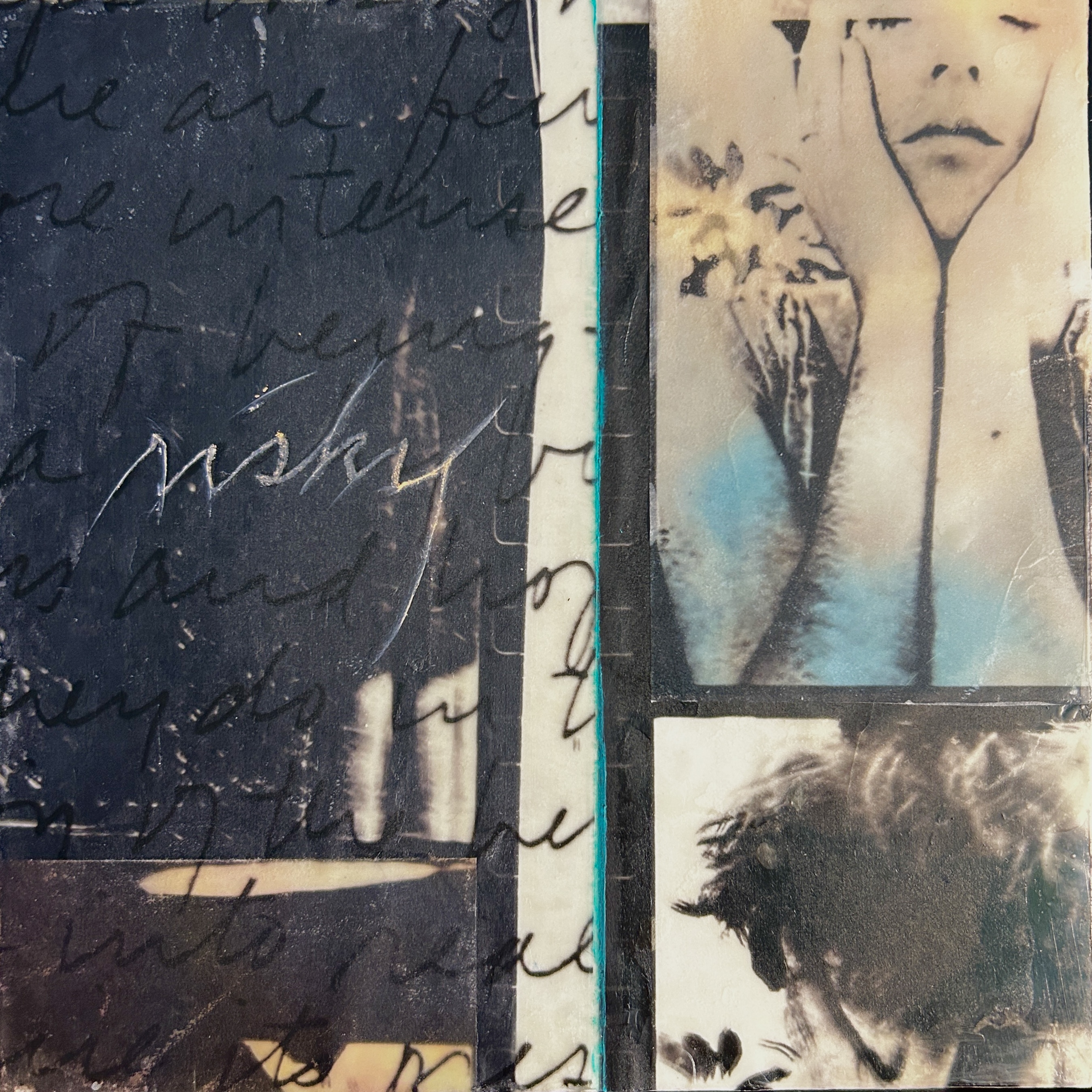
Age – aging – happens and by believing that age is simply a number bypasses the truth that as the years roll on we change. For example, the hair on my legs is now growing out of my chin and the hair on my head is thinning. My first step in the morning is more like a first limp (yoga hip). My skin is wrinkling, my eyes have gone dry, and over the past year I’ve developed the same hammer toe my mother was blessed with.

So age is not ‘just a number’. I know people mean well. I know the phrase is meant to comfort. But the words also imply that I should ignore reality. The words imply that if I repeat them like a mantra my body at sixty-seven will perform like it did when I was twenty-seven.

I’d rather embrace all the circles I’ve made around the sun. I’d rather embrace all the changes. The not so great changes but the good changes, too. I’m sixty-seven years old today. I have greying hair and I’ve put on weight but I’ve also let go of the envy that consumed me forty years ago. I’ve become more appreciative of the small moments in life. I laugh more. I go to bed early so that I’m awake to see dawn. I want to remember to accept it all.

Acceptance isn’t curling up in a ball waiting for the end. Acceptance puts me on a path of exploration. What can I do now that I couldn’t do forty years ago? What attitudes have shifted? Moving forward, what steps will I put in place to ensure good mental and physical health? What will I do to commit to living a creative life of purpose – a life that has heart and meaning? 

This week I will reflect on these questions – I understand the answers will change over the years as I continue to grow and change. But where am I right now, in this moment? And how can I use the insights I gain by reflecting on these questions? How will these insights impact my art practice? My yoga practice?


What Do Gardening, Health & Art Have in Common? Kinds of Kindness.

There was a time when the level of happiness I felt in a day was determined by the number I saw on the scale upon weighing myself each and every morning. As I aged I saw the futility and ridiculousness of that ritual and stopped weighing myself. For many years I lived without a scale in the house. If I’m being truthful, however, to this day, on those rare occasions when I do check in on my weight the number I see still has the power to set my mood.

Something similar happens when I am in my studio. If the work is going well then I’m all smiles. If I’m struggling with the materials, or if I’m certain I’ve ruined a new piece I was enamored with just the day before, I question why I even bother. Then there’s the mental baggage that accompanies me when I’m headed to the studio. If by chance I open that baggage and spill it’s contents then navigating my studio and doing the work my heart wants me to do is made more difficult by the messy mental stumbling blocks I’ve placed in my way. Like my ever-present impostor syndrome, for example. Or the envy I sometimes feel for another artist – their gorgeous work, their incredible success. And when there is envy, shame for feeling envious is not far behind.  

As I write these thoughts I can look out the window and see that the team of gardeners we’ve hired have arrived. It will take some time to clear out decades of overgrowth, to repair a stone wall and to remove the non-native ivy climbing the trunks of our trees. But when the work is finished I will begin to prepare one small bed at the base of the largest tree for planting in spring. Which reminds me of something someone told me a few weeks ago. They told me that gardening is not a project, it’s a process. Indeed.

Two and a half decades ago I joined Weight Watchers and lost sixty unnecessary pounds. I lost the weight so quickly that I gained more than a few gallstones and a nasty case of disordered eating but we can save that story for another day. The mistake I made at the time was thinking of my weight loss journey as a project. And once those pounds were dropped the project was complete. Silly me.

Three years ago, when we moved to Virginia, I was determined to find the artist I abandoned when the need to have a steady income was more urgent than the need to create. Somehow the universe felt my determination and opened a few doors for me. She built a solid foundation for me when I was accepted into the Incubator Program at McGuffey Art Center in Charlottesville.

In 2023 I took on the year-long residency at McGuffey as a project. Show up. Do the work. Exhibit the work. Sell the work. Repeat. What was I thinking?

Gardening is not a project, it’s a process. Holding on to good health is not a project, it’s a process. Creating art that resonates is not a project, it’s a process. I guess it follows, then, that life is not a project. It’s a process. 

It’s a process that begins with kindness. Being kind to my home. Planting seeds. Nourishing the earth beneath my feet. Hard and rewarding work. Being kind to others. Admitting when I’ve made mistakes or when my words have hurt someone. Showing gratitude for deep friendships. Remembering anniversaries and birthdays.

But being kind to my breathing heart? Being kind to my creative heart? That can be challenging.

Manifesting kindness towards myself when I’ve spent seven decades judging and comparing myself to my wealthier friends, to the skinny models I see in magazines, to the artists that speak with eloquence and passion about their work is a struggle. Maybe it requires breaking the habits that keep my self-care and kindness at bay.

Maybe it begins with embracing the truth that the process – whether it’s planting a garden, celebrating good health or creating art  – doesn’t run in a straight line. It meanders and curls and doubles back on itself and then forges ahead. It moves around obstacles, plows through roadblocks, climbs metaphorical mountains and charges down steep hills like a child on a Schwinn Stingray Chopper, bugs in her teeth from smiling too much and bright colored vinyl ribbons dancing from the handlebars.

Each moment of the journey – the bumps, the stumbles, the thrills and delights – they all require different kinds of kindness. Sometimes I have to be forgiving. Sometimes I have to be honest. Sometimes I need to put my nose to the grindstone and sometimes I need to rest. Figuring that out is exasperating. And kinda fun.

Don’t forget…Practically Twisted is disappearing in a few months. If you appreciate my musings, join me at Mimm Patterson Art.


Nests & Vessels

Reminder: Practically Twisted is going to practically disappear soon.

If you’d like to continue to receive my sporadic meanderings please visit mimmpattersonart.com and sign up. Thanks!

It’s funny how one word can change everything. Until a few months ago I wore the label ‘mixed media artist’. But it never felt right. Did that mean I was a dabbler? Unable to settle? At best it was an easy way to not have to talk too much about specifics. At worse it made me feel at times like a dilettante. I’ve come to realize that, for me, ‘multidisciplinary’ is a much better fit. It’s a word that grounds me. It’s a word that denotes serious dedication to the work.

Being an artist is an evolving process. Re-framing how I identify as an artist is moving my process forward and bringing me closer to something I consider my authentic voice. 

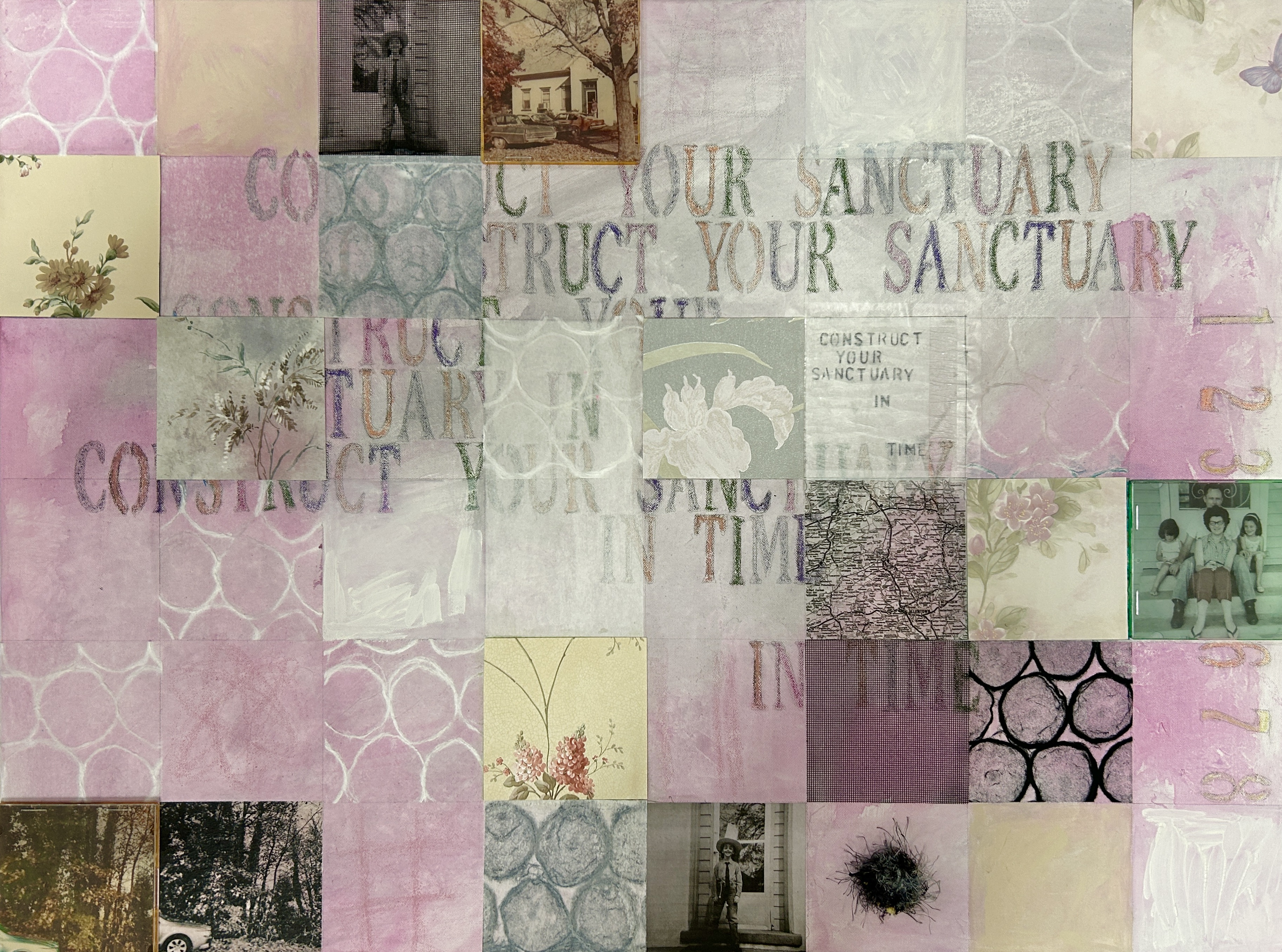
My work has experienced a dramatic shift over the last two years.  Despite this I remain compelled to explore the energetic imprint we leave behind on the objects we touch and the moments we share with others. Through that exploration I am drawn toward themes of impermanence and fragility.

In 2024 these themes were represented by images very personal to me: my grandmother’s silk hankies, the vase left to me by a late friend. But over time the photo-encaustic work became too literal. At the start of 2025 I began adding encaustic paint and oil pastel over photographs to suggest what I call the ‘ash of memory’. These pieces engage the viewers curiosity as they study the image. They encourage the viewer to find the story I am trying to tell or to create one of their own. 

My latest body of work, however, moves away from story-telling. All art is personal, of course, but I’m tired of my stories. I feel drawn to create work that is less anchored to specific moments experienced and more tethered to feelings for which there are no words. 

I’m releasing my attachment to the artist I believed I should be. I’m learning to trust my intuition, to embrace happy accidents and to break rules.

We are living through unusual, precarious times and I believe my work has been transformed by this new world. The work is my coping mechanism.

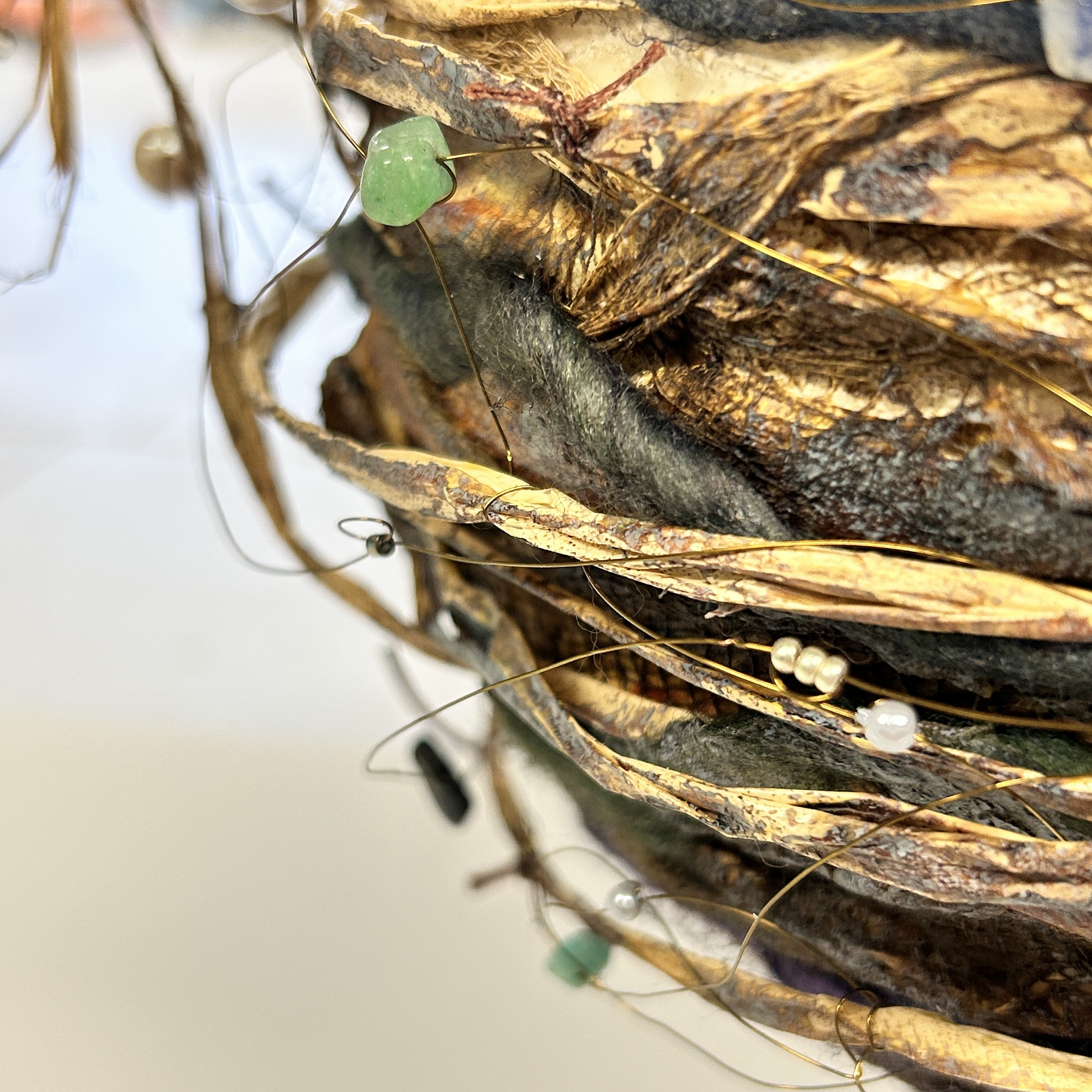
And so, for now, I’ll continue to build nests and vessels. Little containers to hold our hopes.


Moving Day

Note: I’ll be shutting down my WordPress site in a few months. If you signed up to receive my little posts – thank you! If you would like to keep up with my art, my online yoga classes or just the ups and downs of life, please visit my new Squarespace website.

Some people thrive under pressure and chaos. But I’m one of those people who prefer order. I like routine. I perform best when there’s a place for everything and everything is in its place. This isn’t limited to the objects I choose to keep around me. I need a place for my thoughts and feelings, my reactions to the world around me. I need a place for unfinished conversations, my hopes and my fears.

The home we loved. Until we didn’t.

Order is a little tricky to find right now. My beloved and I moved house over the weekend. We’ve downsized and our new home – a late 1990’s duplex on the other side of town – is lovely but it is also much smaller than the townhome we left. And it lacks a garage which is, of course, the space in every house that collects the detritus of life. That being said, our new home is much larger than the five hundred square foot condo we shared in California with our dearly departed cat Bruce (naturally Bruce took over most of the real estate). We lived there for almost a decade – even through the pandemic – so if we managed that small space I’m certain that with a bit of determination and perhaps more than a little compromise we’ll manage this space, too.

Besides, trading square footage on a high trafficked main street for a quiet cul-de-sac and a back garden was an easy choice. Right now that back garden is more a dense carpet of weeds and broken branches but you ought to see what it looks like in my mind’s eye.

But it hasn’t been an easy move. Is any move easy? This one – just two miles down the road – has been one of the most difficult I’ve experienced. My beloved agrees. It doesn’t make us less grateful. We’re just aware that the last few months haven’t been easy.

I’m reluctant to blame age and more inclined to blame circumstances that are too boring to get into. Let’s just say, for the time being, chaos and clutter reign supreme.  No matter. We both know that it won’t always be like this. At some point order will be restored.

I hope.

I hope because I have a solo exhibit in four months and then another just five months later and of course I’m excited and grateful but after a week away from the studio the deep unease of slow rising panic was beginning to overwhelm me. 

But today, after seven long days, I got back to the work. And in doing the work I found a place for my thoughts and feelings, my reactions to the world around me. I found a place for my hopes and fears.

My beloved and I will be living with a few more weeks worth of chaos and clutter in our new home but for now, for me, a little bit of order has been restored. 


Fresh Start! New Website!

I’m a person who enjoys choosing the path of least resistance. In other words, I lean toward the lazy. I settle in the middle of humdrum. When I could choose to apply a bit of concentrated focus in order to bring clarity to the path forward I choose instead to distract myself with anything other than the task at hand. 

This doesn’t mean I don’t work hard. I do. But when confronted with a challenge I’ll procrastinate or avoid it altogether. Especially when it comes to taking care of business. And by ‘business’ I mean the business end of being an artist. The whole self-promotion thing has always felt a little unseemly to me. 

Or maybe naming the business of art as ‘unseemly’ is my excuse. My avoidance mechanism. Maybe the truth is that the self-promotion required in the 21st century to find enough success to justify the expense of being an artist means I need to be both vulnerable and confident. Vulnerable? Confident?

Eww.

Holing up in my studio with the hope that the right person finds my work feels so much easier.

But – sigh –  it’s time for me to pull up my wax splattered big girl pants and get real. There is art. And there is the business of art. One nurtures my soul. The other provides an opportunity to share stories that cannot be expressed with words in order to create an ineffable connection with those touched by my work. 

And so…welcome to my new website. If you follow me here please connect with me there. I promise to not fill your inbox with photos of what I had for breakfast. The occasional blog post? Sure. Notice of upcoming shows? Definitely (I have TWO solo exhibits in the next eight months!). And that’s about it.


Family Jewels

At the start of each Guided Autobiography workshop I present the next meetings theme and the sensitizing questions. Two weeks ago I introduced the theme ‘jewelry’ with these prompts:

Is there a piece of jewelry that has been passed down from one generation to another? If so, what significance does that piece of jewelry hold for you? Is there a piece of jewelry that you would like to pass on to someone? To whom? Why?

Did you ever lose a piece of jewelry that you treasured? What did you do to try to find it? Was it ever found? If not, how did you deal with the loss? 

Did someone in your family wear a piece of jewelry every day? Was it a ring? A necklace? Perhaps a string of pearls? As a child did you wonder about that jewelry? Did you want to wear it yourself?

Two weeks later we shared our stories. Here’s mine:

Jewelry

My personal style leans toward Shaker plain. One Fitbit on my left wrist. For years my FitBits were worn with the company’s standard black neoprene watch band. Last year, when I purchased an upgrade, I decided it was time to push the boat out – you know – mix things up – go a bit girly. So I traded in the standard black for a delightful beige. Fancy!

But wait. There’s more. When I’m dressing up I add thin silver hoops to my pierced ears. 

That’s not to say I don’t wish I wore more bling. Good lord I’ve tried. After all, I have plenty from which to choose. I have jewelry boxes filled with generations of cheap cocktail rings from the 1950’s, necklaces my great-grandmother wore, a huge cameo ring – black onyx set in gold – that belonged to my grandfather, and a heap of cubic zirconium I have reason to believe my sister purchased alone, late at night, from the Home Shopping Network. And of course I have beautiful gifts of jewelry from my beloved.

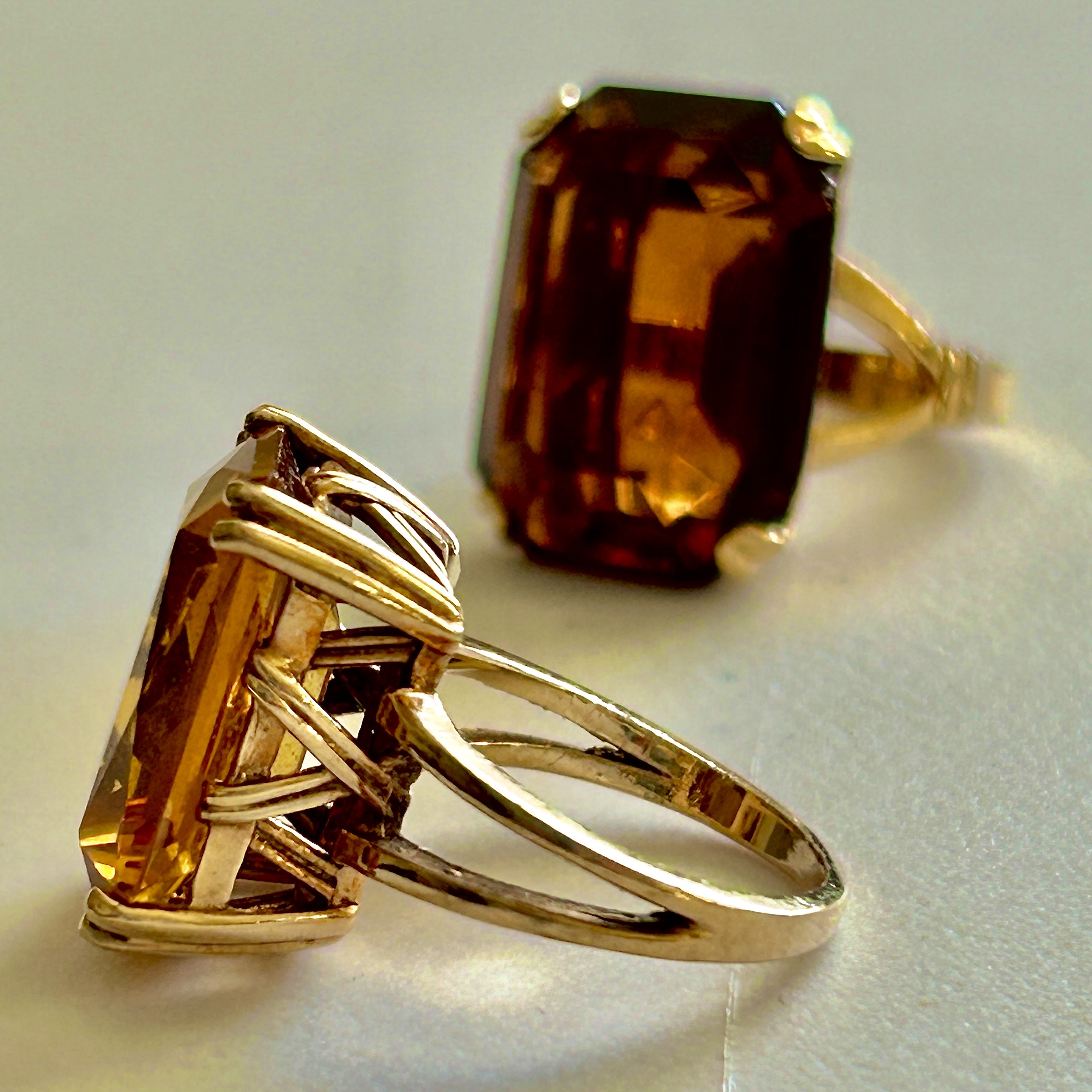
My mom loved bling. Especially on her fingers. In my jewelry box are huge gold rings with large citron, smoky topaz and aquamarine stones. I remember seeing her wear the smoky topaz as a child but I think the other rings were given to her by suitors after I left home. Their settings give off a late 1970’s big hair lounge lizard vibe.

Just ten years earlier the vibe leaned more toward Mother Nature, hippies, peace and love. My favorite ring of hers from that era is a large swirl of silver made to look like two feathers circling one around the other. The ring is set with large cabochons of turquoise and red coral. I love this ring. The truth is I’ve even worn it once or twice – but only to gallery openings – because it reminds of the type of jewelry older women artists wear. Of course that’s not even really a thing. Like, there’s no law that says older women artists have to wear chunky rings and statement necklaces. But some do. And I love a fabulous statement necklace on black cashmere. On someone else, of course. Far be it from me to even attempt to pull that off! But what I love most is the way this ring looks on an older hand that has spent a lifetime working hard and has the broken nails and torn cuticles as proof. 

There’s another ring from my mother’s collection that I remember from childhood. It’s a thick band of a unknown material made to look silver and carved with all the symbols of the late 1960’s – a smiling sun, a piece sign, an Egyptian ankh. I remember it belonged to a boy my sister Margaret was dating. And I remember  9-year-old me performing my version of Bob Dylan’s ‘Mr. Tamborine Man’ for him. Singing lyrics I carefully (and wrongly) transcribed from the record and accompanying myself with my baritone ukulele. He gave the ring to my sister and somehow it ended up in my mother’s jewelry box and now, a lifetime later, it rests in mine. I have no idea what happened to that boy but I want him to know his ring is in safe hands.

My sister loved bling, too. For as much as they disliked one another, my mom and my sister were two bitter, bling loving peas in a pod.

Margaret’s weakness was fake diamond engagement rings. A week after she died I arrived at her tiny one-bedroom apartment in Norfolk, Virginia with an empty duffel bag and a little more than 24 hours to find anything of importance. At this point what was left of my family was my mother and me and the deep chasm of estrangement seasoned with secrets never spoken. And that’s how I was left with the task of convincing the manager of the apartment complex that I was who I said I was and that’s how I was left with the pain of leaving so much behind. 

My sister hoarded. There were five vacuum cleaners in her bedroom. A closet filled to the breaking point with possibly every item of clothing she had ever worn as an adult. Dozens and dozens of rubber flip flop sandals. Shoeboxes filled with clothing she had sewn for her Barbie doll collection decades before. A freezer stuffed with frozen meals and cans of frozen vodka tonics. Stacks of books. Overflowing ashtrays. Half drunk cups of black coffee. Sadder still, a large box filled with a least one hundred unopened Beanie Babies – those popular, deliberately understuffed toys that during the late 1990’s people collected and resold for profit.

And then there was the jewelry. When I found the rings I hoped so much that the stones were genuine but of course, with a closer look, it was clear they were not.

Still, I put them in the duffle bag, along with three Beanie Babies (one for my mom and two for me), and a pair of orange rubber sandals. Other things, too. My sister’s tarot cards, some photo albums and other mementos that would remind me that she once lived. That I once had an older sister who, like our mother, loved bling. 

I hope they’re together now. Reconciled. Making jokes at my expense and trying on whatever heavenly jewels they can find.


Art Imitates Yoga

For as long as I’ve been writing and posting – which must be at least twenty years – I’ve held the intention that I will post each week and each post will be a reflection on my experience as a yoga student and teacher. 

That has never come close to happening.

My last post was on September 9th, 2024, when I introduced the world to the incredible Tondu, the senior feline companion who moved in and filled the gap left by dear Brucie’s departure. After that post I found myself struggling to put together a few paragraphs describing the fear and anxiety so many of us are experiencing as our country moves toward a darker age. I finally abandoned all hope and hit the delete button.

Because I can’t write on command. Writing about a specific topic with a self-imposed deadline sucks any ability I possess to string two words together from my brain. I suspect that with discipline (if I showed up daily for myself and for my writing practice) the issue would right itself (pun intentional). But until I do that I’m going to have to be content with writing when the mood strikes.

Which makes me question whether, at the dawn of 2025, I want a writing practice as much as I wanted it in 2010. Fifteen years ago I wrote a full-length manuscript (90,000 words!) about a young woman eager to fly at the start of WWII. The story was inspired by a woman I knew who had been an WASP. In my story she falls in love with a neighbor boy who is Japanese and is sent to an internment camp. Forbidden love! Separation! War! Oh the Drama!

I was never happy with the ending. Do they reunite? Have they been changed so much by their experiences that love dies? Or is love the one true thing? Oh the Potential Heartbreak!

I was going through my own heartbreaking drama at the time and the joy I found living with these characters in my brain was lost. And so the finished manuscript sits in a dusty box, unedited. I always tell myself I’ll get back to it one day but that day has yet to arrive.

Practicing a visual art feels different. Maybe because, fifteen years older, I’ve learned to take myself less seriously. Or maybe I’ve learned to not make creating a competition. Showing up for my art practice is not a chore. It’s a joy. And although when I’m in the art studio I experience the same struggles and setbacks as I do when I write they are never enough to make me push it to the back burner. If anything I grow more determined to find a solution.

For the past two years I’ve been exploring encaustic photography. The process is this: I take a photograph with my camera. I edit the image on my laptop. I print the image on a sheet of tissue paper and then adhere the paper to cradled birch with encaustic medium, which is a combination of bees wax and damar resin. The tissue paper becomes transparent from the melted wax. I build on this with further layers of tissue paper on which images, texture and text have been printed.

Late last year I found the process becoming rote. I struggled with a few technical issues and when they were resolved I produced work like a robot on an assembly line. The process became a race to see how much I could create in a day. The idea of art as a practice was lost.

The truth is, since my intention is for my art practice to also be a business – in other words I want to exhibit and to sell the work I create – then my time in the studio should be both business and practice. But I was listing heavy toward ‘produce at all costs’. My art had lost its heart. 

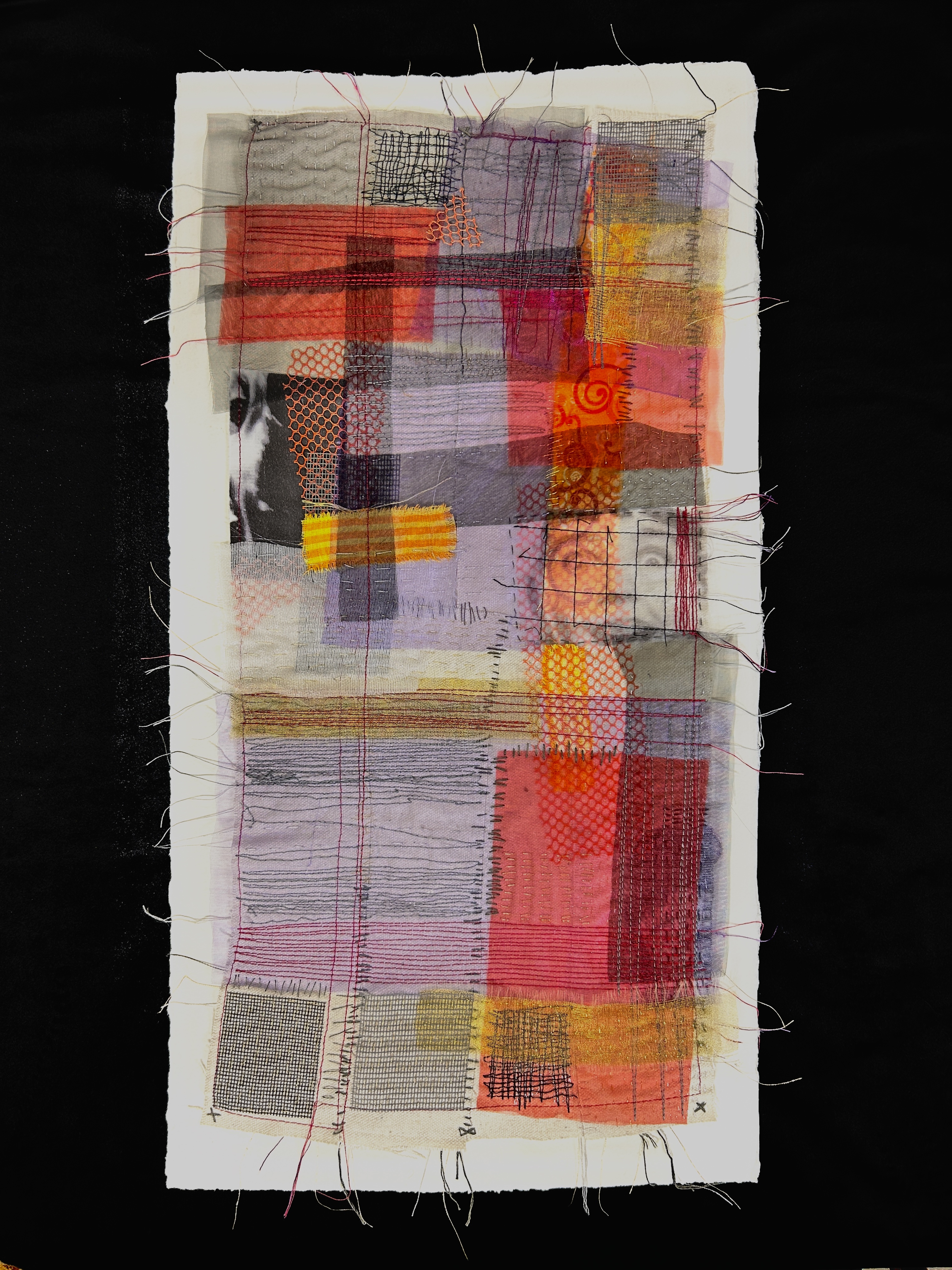
So I put the camera, the wax and the tissue paper and I pulled out my scraps of fabric.

And yesterday, as I stitched layers of rust-stained cotton and dreamy organza together, I thought about yoga. I thought about the verbal cues I use with the women and men with whom I practice. I thought about how I ask them to move with care. To move with intention and to be thoughtful. I thought about how I ask them to meet their bodies where they are in that moment. How I ask them to be present with their bodies and with their breath.

Yoga is a practice. Writing is a practice. Art is a practice, too. And as I move forward in my art practice I’m going to apply all the cues I provide for others during our sessions on the yoga mat. I want the work I bring into the world to be intentional, not rote. I want the work to be thoughtful, not thoughtless. I want to remain present for the making of the work and not to be thinking about what comes next.

I believe this new awareness will serve me well. 


A Fresh Dawn

IMG_6311My bookclub met via Zoom on Wednesday. The book up for discussion was Pema Chodron’s When Things Fall Apart. It was published fifteen years ago but the gifts it offers are timeless. In these extraordinary times we would be well served to keep a copy nearby to dip into when life teeters on the precipice.

Something that was said last night has stuck with me. It was one of those observations that takes us from one point in the conversation to another. Just a toss off – nothing that we lingered on. In the book Pema advices us to breathe. We all agreed it’s easier to watch the news or scroll through Facebook or find a hundred other reasons why sitting still and taking a simple breath is not an option. This morning it’s the plaintive mews from Bruce the Cat.

My alarm rings at 5 AM. Bruce the Cat receives a bit of attention and a dollop of Oh My Cod or Salmon Enchanted Evening.  I’m at my desk with a cup of coffee by 5:15 AM. Five mornings a week I gift myself this wonderful hour of quiet solitude but the truth is that, until today, it’s been wasted on me.

My intention is to use this hour that glows with the breaking dawn to write or meditate or do both but as I sip my brew I’m reading daily briefing emails from Huff Post, CNN and the New York Times. Then I’m responding to messages that landed during the night. I cuddle Bruce the Cat for a moment and the next time I look at the clock that golden hour is gone. It’s time to say good morning to Ben the Human, to strap on my running shoes and begin my day.

Distractions. The emails, the social media, the news – during the first hour of my new day they fill my brain until there’s no more room for what fills my heart the same way eating candy before a meal leaves no room for nutrition.

What distracts you from the calls of your heart? 

My morning cruise through the news is nothing but a habit. The solution is simple. Break the habit. Create a new routine. Answer the call. Breathe.

We can find the motivation to do this by asking ourselves why it’s important. When we lost the structure to our days a few months ago we laid a new foundation and built a new structure. The foundation for my new reality is this hour. When I choose to scroll through emails the foundation weakens. When I answer the call of my heart – when I write – I feel strengthened.

This dawn hour is important to me because the discipline of writing sets the tone for my day. What do you do to set the tone for your day? To keep your foundation strong?

The 5:40 train to San Francisco rumbled through ten minutes ago and Ben’s alarm just rang. Red finches are spreading their wings and with raucous chirps are bullying their way around the feeder outside my door. The world is waking up and my hour is winding down.

It was a good hour. I think I’ll do the same thing tomorrow.


Guided Autobiography

9F61C78F-98F4-4952-B808-307B50D191E1_1_201_aThe global pandemic is forcing social isolation but technology can bring us together – at least electronically. When we come together with the intention of actively listening to the stories that have shaped our lives – even if it’s through Zoom – our hearts break open. We connect on a level that isn’t available in our day to day interactions. 

This June I’m offering a four-week Guided Autobiography experience. The date will be confirmed when I have the minimum number of participants. If you’re interested, continue reading then reach out via email (mimmpatterson@gmail.com) and I’ll send further details.

What is Guided Autobiography?

Guided Autobiography, a method developed by James E. Birren, is a semi-structured process of life review – an opportunity to reflect on our life story and to share it with others. Reflecting on our life through story supports our health and wellness and offers many emotional and mental benefits. Guided Autobiography creates the space for that reflection. It shines a warm light on memories and helps us to process ‘what came before’. It brings meaning to our lives and helps us to better understand our past and our present. Guided Autobiography shifts perspective.

Our introductory course will be just four weeks, with each weekly session ninety minutes long. We will work through four themes (the first being introduced via email) and each week share with others a two-page reflection written on that theme. We will ‘prime’ each theme with a series of sensitizing questions that are designed to assist in the recollection of memories related to the theme. The sensitizing questions encourage us to look at aspects of our histories that have been overlooked.

This is not a traditional writing class. We won’t be offering critiques to one another. Instead, we’ll be exploring self-awareness and human development. We’ll be sharing personal experiences. For that reason participants must agree to attend all sessions, to complete all writing assignments and to honor confidentiality – what is shared in Guided Autobiography stays in Guided Autobiography. We will create a supportive environment that accepts individual differences and will listen actively while others are sharing. 

I’ve been wanting to become a Guided Autobiography facilitator since I first stumbled upon the process while falling down an internet rabbit hole (the same way I discovered SoulCollage®). The pandemic and shelter-in-place order offered space for that to happen. I’m excited to now be able to share the process with others. 

Join me for this four-week, donation based course. Class size is limited to six.


Kerala

From the air, if you’re high enough, the green carpet of trees could be anywhere. It could even be home. But as the plane descends the coconut trees begin to distinguish themselves. The river cuts into the earth in a way that is different to what you’ve known. Banana plantations define themselves in stiff squares of land. The roofs of homes are not the familiar red clay tiles you remember but are instead the bright blue color of tarps stretched across cinder blocks and corrugated tin. Yet, in the distance, an ornate and sparkling church calls the eye.

This is not home. This is unlike any place I’ve ever been. This is Kerala.

Kochi

The sunlight in Kochi is diffused by heavy, moist air. The December heat keeps my skin sticky and my ankles puffed. But it’s a beautiful light – intense and muted at the same time. It brightens colors and softens the edges of the Chinese fishermen nets that, since the 14th century, have pulled fish from Kochi’s harbour. The nets are fascinating structures built from teak and bamboo. They’re cantilevered and require nothing more than the weight of a man to lower themselves into the water.

Along the embankment men dressed in lungis, their heads wrapped in wet and frayed cloth as protection against the sun, prepare to sell the fish whose gills still move, desperate to find water. Interspersed between the fishmongers are stalls filled with wares available to purchase for the tourists fresh off cruise ships in port from Mumbai and Singapore. Follow the cobbled path from the nets to the jetty and you’ll find fish for your supper, leather belts, straw hats, toy tuk-tuks for the kids at home, plastic pasta makers and hand-held sewing machines the size of a stapler.

Nearby is a respite. The Church of Saint Francis is a short walk from the jetty. Built in 1503 and the original burial place of Vasco de Gama, it is a beautiful but unassuming building.

Its stone interior, lined with dark wooden pews, is cooled with a mechanism built of rope, pulleys and embroidered fabric attached to poles that run the length of the nave. The poles are lowered and when they swing the congregation is fanned by the movement of the fabric.


Munnar

The first two close calls were flukes. It was only after I saw my life pass before my eyes for the third time that I began to question our sanity. By the time we were in our fifth hour of winding switchbacks on a road so narrow we frequently stopped to accomodate traffic barreling down the steep grade toward us I knew we were doomed. We were headed toward a former hill station in Munnar now named Windermere Estate.

Just before we arrive at our destination we cross a one-lane bridge. The river is a good thirty feet below and calm. It’s difficult to believe that four months previous the same river turned violent and rose high enough to cover the span. Munnar was devastated in the floods that killed over one hundred and fifty people last August. Windermere Estate was cut off by landslides for fourteen days. There is still evidence of the landslides but with the exception of road damage evidenced on the long climb life has returned to normal.

It’s beautiful here. The air is warm but fresh and we awoke this morning to the song of the red whiskered bulbul and not the noise of car horns. From a vantage point reached by climbing a set of stairs cut into stone we have a view of mist covered tea plantations, deep valleys and a rugged mountain ridge on which, we’re told, wild elephants sometimes roam into view.

Our one day at Windermere is a day of rest. The grounds of the estate are too beautiful to contemplate leaving. With the exception of one short walk to a small village just below the estate grounds, we are content to watch the world go by from the little porch attached to our room.

Tomorrow we’ll make our way back down the mountain to Alleppey.