

I’ll be honest. The word ‘gratitude’ annoys me. Feeling grateful is wonderful, of course. I felt grateful this past Friday morning when I was awake early enough to see the brilliant sunrise in all her glory. But gratitude? It’s a trending buzzword and after awhile trending buzzwords relinquish their impact to the next buzzword that comes along. There’s plenty of joy to be found, however, in feeling grateful.
Studies suggest that remembering what brings us joy and recording those moments of gratitude in a journal benefits our mental and physical health. The deliberate act of shifting our energy toward the positive rather than nurturing our habit of catastrophizing the difficulties we encounter builds our emotional resilience and reminds us that living is a group experience. In other words, reflecting on the shared experience of Friday’s sunrise is healthier than reflecting on the shared experience of the pandemic.
Another reason why the word ‘gratitude’ annoys me is this: sometimes the concept just feels too big. It’s difficult for me to winnow down all the moments in my day for which I might be grateful. Am I grateful for the morning cup of fresh-pressed coffee my partner Ben brought to me while I stayed in bed? Sure. Am I grateful for the purrs of contentment my cat Bruce shares when we cuddle? Of course. Am I grateful for the roof over my head? Without a doubt. But while the simple act of opening a journal and creating a daily gratitude list of well-meaning gestures, happy accidents and unexpected outcomes might remind me of the good in life, it fails to satisfy the yearning I feel in my heart to understand how acknowledging these moments feeds my soul.
How can we add depth to the act of recognizing the positive in life?
In yogic philosophy we study Patanjali’s Sutras. In the Sutras, Patanjali describes five Yamas and five Niyamas. The Yamas describe restraints to practice: non-harming, truthfulness, non-stealing, moderation and freedom from grasping. The Niyamas are a collection of five virtues: cleanliness, contentment, self-discipline, self-study and surrender. Anchoring the contemplation of gratitude in the fourth Niyama self-study (‘svadhyaya’ in Sanskrit) encourages us to explore the nature of gratitude. It supports our understanding of how we express our gratitude as we walk through life. With that understanding we can more fully embrace those moments for which we are grateful.
If we want to add a deeper dimension to our gratitude practice we can turn to Naikan – the Japanese practice of introspection. When we practice Naikan we ask three simple questions:
- What have I received?
- What have I given?
- What difficulties have I caused?
The questions might focus on a relationship, a situation, an individual or even an event. For example, if I choose to practice Naikan with my focus on Ben then the questions I ask are:
- What have I received from Ben?
- What have I given to Ben?
- What difficulties have I caused Ben?
The obvious fourth question, “What difficulties has Ben caused me?” is ignored. It is human nature to shine a spotlight on that question. It is, however, through the examination of our answers to the first three questions that we discover aspects of ourselves we didn’t know existed. We learn more about our relationship to gratitude. We move toward enlightenment.
When we open our journal tonight, how will self-study or a Naikan practice influence how we consider gratitude? What would happen if we chose to frame a Naikan practice around those things in our life that cause pain?
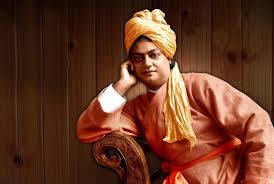 It was Vivekananda’s arrival at the World Parliament of Religion, however, that sowed the seeds of yoga across a wider receptive audience. His delivery of twelve off-the-cuff speeches stole the show and made him a sought-after teacher of the yama and niyamas, pranayama and Kundalini. Vivekananda’s yoga was Raja (Royal) Yoga. Raja Yoga is the practice of attaining unity with the mind, body and spirit. In other words, attaining a state of yoga. It differs from Hatha Yoga in that while Hatha intends to still the mind through the body and breath, Raja brings the practitioner to a state of yoga through the control of the mind. Hatha prepares the student of yoga to practice Raja. The practice of asana is not the key element in Raja Yoga as it seems to be in Western Hatha Yoga, and Vivekananda ignored asana. That doesn’t mean the practice of asana isn’t important, but the practice is intended to build strength and flexibility in order to tolerate long hours of sitting in meditation.
 Several years ago a friend gave me a huge leather chair. It’s green and it has a matching hassock. The chair was her father’s, and you can see through the stains and the scratches that the chair was well loved. My friend’s father felt content in that chair. He read the paper or told bedtime stories to his children. I’m content in that chair, too. It’s soft and easy and wraps around my body. The chair has wide arms that I can stretch my legs across and I’ve filled it with pillows that support my back. But the contentment I feel in that giant green chair is not the same contentment that is asked of us when we embrace Patanjali’s second Niyama, Santosha. The contentment I feel when wrapped in that chair is easy to come by.
 Mimm Patterson