Samyama


The term samyama refers to the combined practice of dharana (concentration), dhyana (meditation) and samadhi (union). It is a technique we can utilize to cultivate deeper understanding of the qualities of an object or a person or a concept. It’s said that the yogi who successfully practices samyama will experience the lightness of being freed from the mental constructs – the kleshas – that bind us to the ‘real world’. In other words, samyama liberates us from obstacles, hindrances, troubles and suffering.

Samyama is also the name of the new yoga studio opening in Midtown, Palo Alto in October (just in time for Diwali).

Samyama isn’t your ordinary yoga studio. It’s one man’s vision manifested. To read the history of how Samyama began, click here.

Two months ago John Berg and I met for coffee at Philz – John’s office until the new one is built. The following week he invited me to teach at Samyama. I’ll be joining local yoga master Anirudh Shastri plus Louis Jackson, Annika Williams, Hillary Easom and Bethany Sala. One or two others have yet to be confirmed but the truth is John is keeping the teaching staff small for a reason – he’s not creating a yoga mini-mart with 48 available flavors . He’s creating a yoga home.

And I can’t wait to move in.


Give a Little

“Therefore, without being attached to the fruits of activities, one should act as a matter of duty, for by working without attachment one attains the Supreme.”

Bhagavad-Gita, Chapter 3, Text 13


How Do We Live Our Yoga?

In the beginning, most of us are one quick namaste’ from the daily grind.  When class ends we roll up our mat, stack the studio bolsters and on our way out the door hope the parking meter has enough time remaining for a quick run to Starbucks before we head back to work.  There’s no time to embrace the yoga that is more than skin deep.  Forget the philosophy – we’re in it for the workout.  We want a toned body. Yoga Class is Tuesday from nine to ten in the morning. Everything else is life.

With dedicated practice, however, a subtle shift occurs. The edge between our yoga practice and “real” life blurs.  Yoga begins to follow us home.  We move deeper into our practice and yoga becomes a part of who we are.  When we embrace the notion that yoga has not only strengthened our bodies but has also strengthened our spirit then it’s time to ask again:

How do we live our yoga?

Step Off the Mat

In 2007 Seane Corne decided to move her yoga beyond the mat and confines of the studio walls when, along with Hala Khouri and Suzanne Sterling, she founded Off the Mat and Into the World. This inspiring organization embraces the philosophy of seva.  Selfless service.

According to their website Off the Mat’s mission is “to use the power of yoga to inspire conscious, sustainable activism and ignite grassroots social change.” Today, Off the Mat and Into the World has international scope.  It supports humanitarian efforts in Haiti with the Global Seva Challenge.  Off the Mat’s Empowered Youth Initiative believes a commitment to the next generation has a profound impact on social justice and environmental issues.  This year the initiative has programs focused on assisting urban youth in Los Angeles.  They also support community initiatives working for disadvantaged populations.

Think Creatively

One such community initiative is The Art of Yoga Project, located an hour south of San Francisco in leafy Palo Alto, California. Art of Yoga’s mission is “to lead teen girls in the California juvenile justice system toward accountability to self, others and community by providing practical tools to affect behavioral change.”

The Art of Yoga Project improves the lives of disadvantaged and incarcerated young women by nurturing their creativity while encouraging a daily yoga and mindfulness practice.

Transform Your Practice

The practice of yoga is a transformative experience.  But how many of us allow that transformation to move beyond our inner spirit?  What happens when we stop clinging to the yoga experience we love and allow it to touch the lives of those around us?  Supporting others’ lives through yoga will transform your own.  Mary Lynn Fitton, founder of The Art of Yoga Project, knows first hand the profound effect of selfless service. “Since starting The Art of Yoga Project my personal practice has deepened considerably,” she said. “Teaching the principles of yoga to incarcerated teen girls, who have had very difficult life experiences, has called all of us at the project to a higher standard. For example, since we are teaching the girls about satya, we are looking closer at how we’re living in our own truths, watching our speech, avoiding gossip.  Teaching the girls yoga principles keeps them alive and fresh in my mind so I have daily reminders of how I want to be in this world. I am thankful to the girls for that. They are such heroes to me as they shine through their tragic pasts. They inspire me to be ever grateful of my circumstances and to do as much as I can to relieve suffering. 

The Small Gestures Count

Founded in 1978 by Dr. Larry Brilliant in Berkeley, California, The Seva Foundation has restored eyesight to millions of people in Tibet, Nepal, Cambodia, Bangladesh and Africa.  In the process they have reduced the cost of cataract surgery to just $50.00.  As individuals, our small gestures may never match the scope of Off the Mat Into the World or The Art of Yoga Project, but we can still hold in our hearts this simple idea from the Seva FoundationTo become fully human we must translate our compassion and concern into useful service.

What is useful service?  For most it does not entail forming a non-profit.  Most of us will not have the opportunity to restore sight to the blind or teach yoga to groups of incarcerated young women.  But in our daily lives we can still bear witness to the power of selfless contribution.  Mary Lynn Fitton says,

“I am blessed by this work. I wish everyone could experience the joy, connection and fulfillment that comes to you through being a part of positive social change. And you don’t need to start a non-profit to make a difference; but do take the time to discover what really matters to you and carve out space in your life to contribute to that somehow. Start with having conversations that matter. Then set your intention to serve. The rest will come.

So how do I want to live my yoga?  In service.  One breath at a time.

This article originally appeared in Yoga Living Magazine.

Heart, Soul and Purple Doc Marten Boots

I prefer to not surround myself with too much stuff.  I hesitate to put down roots and hold the belief that I can pack up and take off at a moment’s notice.  A friend tells me I’m looking for something that I haven’t found.  I’m more inclined to think I suffer from chronic commitment issues and spiritual claustrophobia.

And so I clear my closet of clothes not worn for years.  I purge the shelves of books rarely opened and cull the desk of knick-knacks whose sole purpose for existing is to catch dust.

With the space around me cleared, so somehow is my heart.  Yet what I’ve done is create a fleeting illusion of space that requires tender care.  Only mindful vigilance will prevent a new collection of bits and bobs from building a jumbled barrier that distracts and blocks my path.

It has been one hundred and eighty days since my last hefty donation to Goodwill. Pride in accomplishment allowed my guard to drop.    The space around me has filled. As a consequence, so has my spirit.  It’s time.   Time to plunge into the mess.  Time to choose.  Time to let go.  Again.

The questions I’m asking are simple.  What do I need for my life to have heart and meaning?  How many layers do I have to strip away before I find Truth?

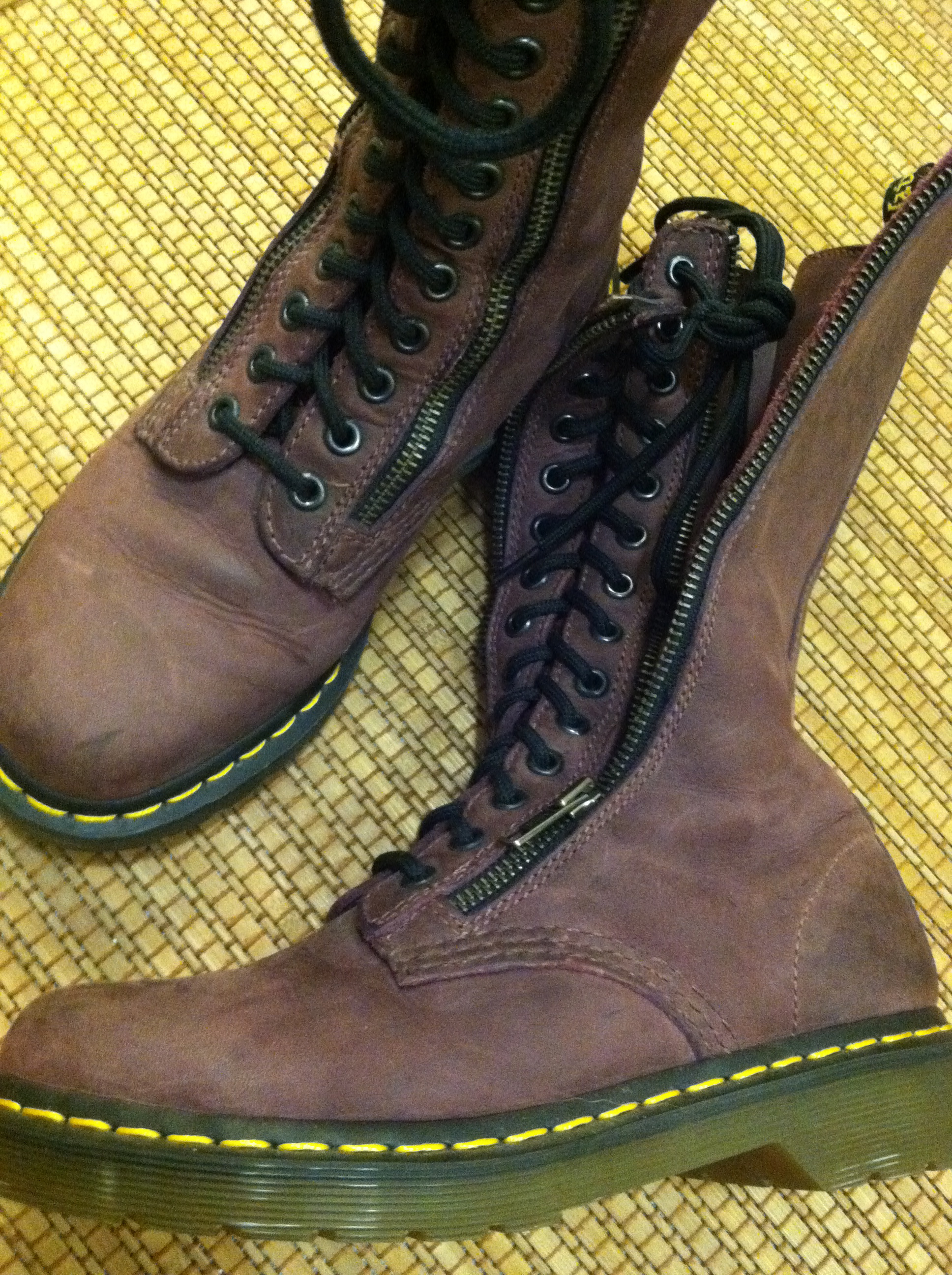
I am beginning to realize that my constant craving to pare back the physical layers is not enough.  Taking away the stuff around me – breaking down the barriers – isn’t enough.  Maybe my friend is right.  Maybe I am looking for something.  But I won’t find it in the space where my purple Doc Marten boots used to be.


Fessin’ Up and Clearing the Decks

My…ahem…tens of readers will know that over the past few months I’ve attempted to take a proactive approach to self-improvement.  Improving one’s ‘Self’ is unique to each individual.  Some folks want to abandon bad habits; others look to be more social.  If you read THIS post or THIS one, you’ll remember that I wanted to let go of my addiction to Hulu.  Having already given my television to Goodwill I had slipped into the bad habit of watching Hulu from bed with the laptop perched on my belly. I hoped the hours formerly spent glued to the boob tube would now be spent reading.  I went so far as to challenge myself to read one book per week.

I also wanted to create a meditation practice.

Now that winter has turned to spring, how am I doing?  Just fine.  Thanks for asking.

It took a bit of negotiation with my psyche and more than a little self-compassion, but I’m doing just fine.

My 21-hours per week television/Hulu addiction is down to about two or three hours per week (unless I’m house sitting – who can ignore a flat screen TV the size of a wall and surround sound???)

Did I read all the books I wanted to read?  No.  But I’m reading.  All the time.  But a little necessity called work prevented me from maintaining the breakneck pace I set for myself.

The meditation practice is blossoming.  Establishing a good habit is a process of repetition.  For several weeks I struggled to remember to practice.  But then the corner was turned and now I miss it when my practice slips.  And it does slip.

Last week was one of those weeks when I fell off the wagon.  Nothing prevented me from enjoying my regular daily mediation except the story I was spinning in my head about being overwhelmed and overworked.  A few days into my lapsed practice a friend turned to me and said, “You haven’t been meditating.”

How could he have noticed?  How could he not have noticed?

I slipped back into regular practice the next day.

We make choices about how we want to live our lives.  We set goals, we plot a course.  We hope.

And then life happens.  Extraordinary, brilliant, tragic, wonderful life.

Sometimes we fall.  Sometimes we need to change course.  But always we pick ourselves back up and head into the wind.  And then we soar.

And that’s how I’m doing.

ps…in my quest to crush my writer’s block I’ve given an old blog a new name:  Your Daily Prompt.  If you’re a writer – even if you’re not – take a look.


The Baffling Case of the Rigid Mimm Day

I had the day marked on my calendar.  Sunday the 4th of March.  Mimm Day.  My first day of freedom.  No teacher training.  No dog sitting.  No private clients.  I was commitment free for the first time in months.  Come hell or high water I was going to celebrate and it was going to be perfect.

The day I planned included an early morning drive to Santa Cruz with a friend.

After a few hours of Dance Church at the 418 Project we take a leisurely stroll downtown until we find the perfect café where we enjoy a quiet brunch.  A table is waiting for us under the shade of a tree with the sunlight filtered to shield our eyes but not so much that it can’t keep us warm.  My friend reaches down and pulls a book from his grey backpack and with our second cup of tea we take turns reading to one another.  We’re generous with our tip – a compensation for keeping the café table too long. We continue our stroll and find an old record shop around the corner or maybe a shop full of bric-a-brac to bury ourselves in for a bit before making our way to a pristine beach that, miraculously, is empty except for an older couple and their two Golden Retrievers. The sound of the gulls, the crashing waves and the solar warmth of the sand lulls us to sleep just long enough to refresh but not so long as to make us cranky when we wake.

Another bite to eat and then a drive home along Highway 1 with a few stops to enjoy the view of a setting sun as the credits roll…

Mimm Day.  My perfect day.

But on designated Mimm Day I opened my eyes and discovered the alarm clock had never been set and we were already two hours too late to attend Dance Church. I cried like a ten-year-old who had slept through Christmas.  It was only 9:30 but the day, as far as I was concerned, was ruined.  And if I was wrong – if the day wasn’t really ruined – I was still going to nurture my disappointment and bad temper.  I didn’t get what I wanted and I was too swept up into the movie I had written in my head about what Mimm Day was supposed to be that I couldn’t see that the day was still perfect.  It was sunny and warm, it was a gorgeous morning – there was plenty of day left.  And I was still free to do whatever I wanted.

But I couldn’t see it.   I was blind to what I had right in front of me: my best friend, a blue sky and eight more hours of sunlight.

How many times are we guilty of placing emotional importance on an unpredictable future?  How often do we trip over ourselves reaching for paper tigers and ghosts that we can never hold and that never live up to the movies we make in our mind?

I’ve been reading to my students from Sharon Salzberg’s book Lovingkindness:  The Revolutionary Art of Happiness.  She writes:

When we become lost in desire, we are put firmly into the framework of linear time.  We become focused on getting what we do not yet have or on keeping what we do have.  We become oriented toward the future.  To be caught in this concept of linear time brings us to what in Buddhist teachings is called bhava, or becoming, always falling into the next moment.  It is as if before each breath ends, we are leaning forward to grasp at the next breath.

On March 4th I leaned so far forward I fell flat on my face.

Thinking about the future is not a bad thing.  But clinging to an ideal of what I believe the future should be does not allow room for change or perspective.  It leaves no room for living.

And isn’t it time to live a little?


Perfectionism: The Voice of the Oppressor

Cover of "Bird by Bird: Some Instructions...

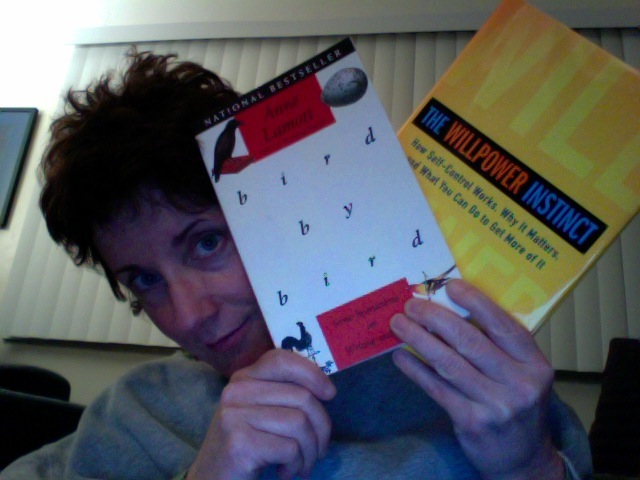
I don’t know that I could have picked two better books to read simultaneously.  If Kelly McGonigal’s The Willpower Instinct is the brain of the operation, then Anne Lamott’s Bird by Bird is the heart.

I know everyone has already read Bird by Bird.   Most likely in 1994, when it was published. I was a little busy that year.  Plus, I have a stubborn streak and if someone says to me, Oh, you’ve just got to read this book! (or see this movie, or meet that person), I won’t.  Just to be stubborn.  It took me twenty years to see E.T. the Extraterrestrial.

Still, even if you loved Bird by Bird when you read it seventeen years ago chances are you’ve forgotten why. I’ll remind you:

Here are Anne Lamott’s thoughts on perfectionism:

Perfectionism is the voice of the oppressor, the enemy of the people.  It will keep you cramped and insane your whole life, and it is the main obstacle between you and a shitty first draft.  I think perfectionism is based on the obsessive belief that if you run carefully enough, hitting each stepping-stone just right, you won’t have to die.  The truth is that you will die anyway and that a lot of people who aren’t even looking at their feet are going to do a whole lot better than you, and have a lot more fun while they’re doing it.

Meanwhile, back on the pages of Kelly McGonigal’s The Willpower Instinct we find studies that support Anne’s heartfelt commentary and advice on how to relinquish the desire to be perfect.  Kelly explains why offering compassion and forgiveness to ourselves instead of layering on the guilt for our missteps strengthens our ability to see the big picture. 

I didn’t expect Bird by Bird to make me smile as often as it has.  And I didn’t expect The Willpower Instinct to be so easy to take.  I expected an overly sweet Bird by Bird to have me in a literary sugar coma by page forty, but Anne Lamott’s practical advice is seasoned with just the right enough bite to balance the moments that bring tears to your eyes.

I thought Kelly McGonigal’s book would be like any other book I’ve read about goal setting.  I thought I’d be writing lists, repeating affirmations and by the end of the day – with few items on the list accomplished – calling myself a failure.

The truth is, Kelly’s book is about forgiveness. It’s about settling down.  Giving yourself a break.  And she has all the scientific evidence we need to see why this is important.

My intention was to break my Hulu habit by reading eight books in six weeks.  That’s not going to happen.  Why?  Because I chose an astoundingly unrealistic goal.  That’s typical of me and, according to McGonigal, typical for many of us.  But don’t blame Hulu. While I haven’t severed my attachment to Hulu completely (a once-a-week, twenty-two minute dose of The Big Bang Theory after a long day is medicinal) I’m certainly no longer sliding down a steep slippery slope toward a self-inflicted Hulu-lobotomy.

A more realistic goal is four books in six weeks.  Today Bird by Bird returns to the bookshelf.  The Willpower Instinct, however, is staying out.  Now that I’ve read it from cover to cover my intention is to go back and read it again – this time actively working through the exercises provided.  I’ll keep you posted how all that works out.

The book I’m beginning today is John Green’s The Fault in Our Stars. No, it wasn’t on my original list. I’ve chosen this young adult novel because I’m working on a young adult novel (yes, again). The book has a bit of buzz on it and I’m looking forward to digging in.

Next time:  An update on the meditation practice I committed to in January or A Funny Thing Happened on the Way to Whole Food’s Meat Counter


Day One. Reading, Writing and Meditation

I’ll be the first to admit that I lean a bit toward the odd.  In a good way I hope, but still.  I allowed myself one last moment with Jimmy Fallon (“I Gotta Have More Cowbell!”) and then broke the news to Hulu:

“I think I need a break.”

“Did I do something wrong?”

“No, Hulu – it’s not you.  It’s me.”

“You want to spend more time with Facebook, don’t you?  I know the two of you are tweeting.”

“No – that’s not it at all, Hulu!  It’s just that…well…it’s just that I want to…”

“You want to what?  Go on, Mimm.  Tell me.”

“I want to read.”

“What do you mean you want to read?”

“You know.  Books.”

“Is this a joke?”

“No, Hulu, it’s true.  I want to read books. I have a goal.  Eight books in six weeks.”

“Don’t make me laugh.  You’ll never do it.  Two days from now when the latest episode of Glee is available you’ll come crawling back.”

“I don’t think so, Hulu.  Not this time.”

At that point I said good night.  I thought I heard a sniffle as I closed the laptop, and then I set my alarm, rolled to my side and went to sleep.

Today I determined that all eight books amounted to about 2300 pages.  I have thirty-six days to make it from cover to cover on all of them.  That means reading at least sixty-three pages per day.  No problem.  I hope.

I’ve begun with Kelly McGonigal’s The Willpower Instinct.  Even though I had dipped into the book earlier, I decided to begin at the beginning.  Here’s what I discovered today:

It turns out my recent commitment to meditation is doing more than creating a calmer Mimmsy.  Meditation is helping my brain to build grey matter in the prefrontal cortex and other regions of the brain that support self-awareness.  In other words, my meditation practice strengthens my will power and bolsters any skill that involves self-control.  Like reading.

In addition to Kelly’s book I’ve decided to read a chapter per day of Bird by Bird, the wonderful book about our writing life by Anne Lamott.  Today I read the introduction.  I’ll leave you with a Wendell Berry poem, The Wild Rose.  Written for his wife but used by Anne to describe how writing feels to her sometimes – like a person – “the person who,” Anne writes, “after all these years, still makes sense to me.”

Sometimes hidden from me

in daily custom and in trust,

so that I live by you unaware

as by the beating of my heart,

Suddenly you flare in my sight,

a wild rose blooming a the edge

of thicket, grace and light

where yesterday was only shade,

And once again I am blessed, choosing

again what I chose before.


The Care and Feeding of Your Spirit

If you do anything for yourself this year, let it be that you give yourself just one thing.  I’m not talking about a new car or a pair of shoes.  I don’t mean a night out.

What I mean is this:  give yourself that one thing that feeds your spirit like nothing else can.  And give yourself that gift as often as possible.

If I ask you now, “What is that one thing?  What is the one thing that feeds your spirit?” Do you have an answer?  Do you know?

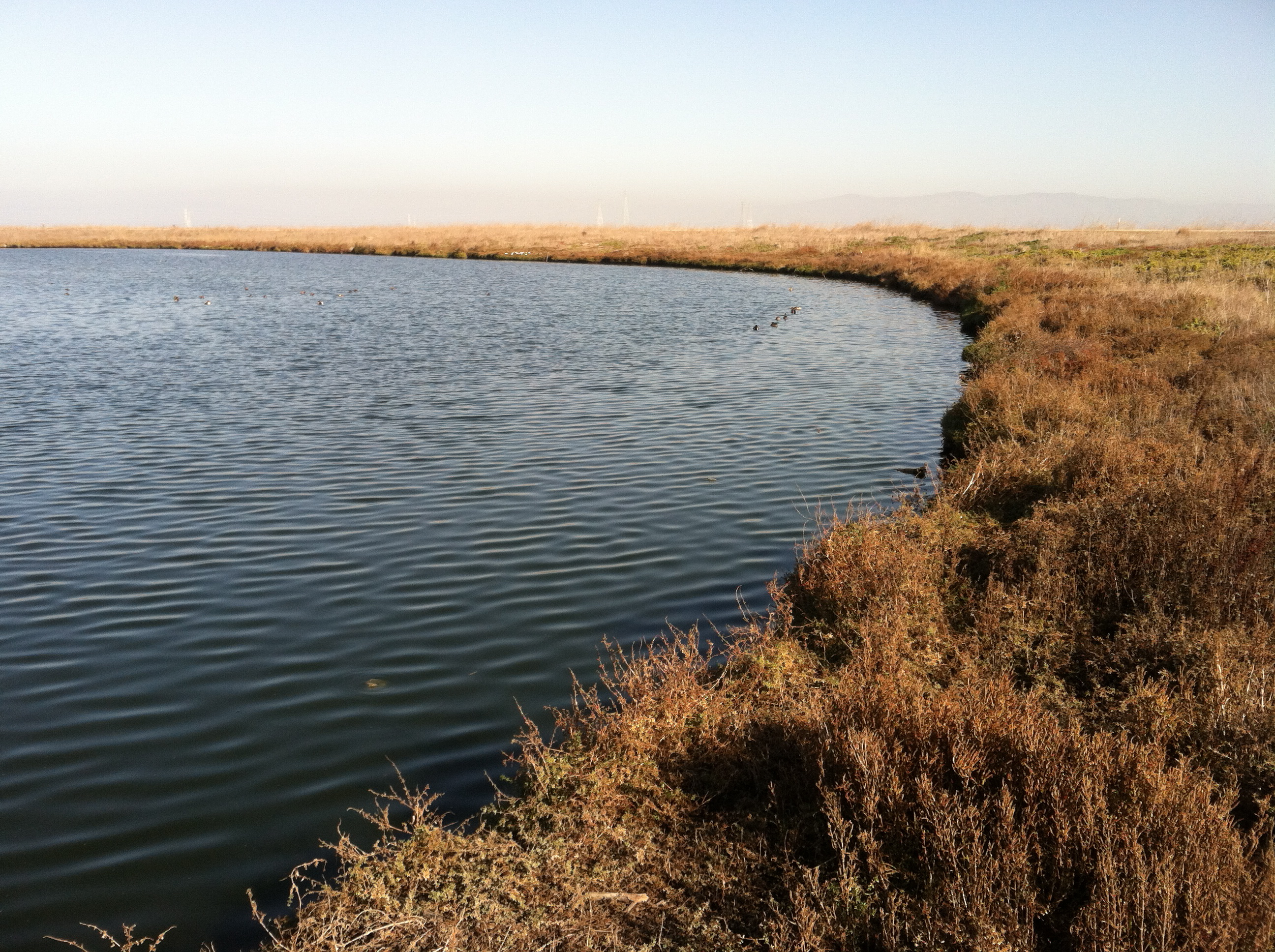
Back in the 1980’s when I lived in Mountain View a morning walk at Shoreline to watch burrowing owls warming themselves against the rocks as they faced the rising sun warmed me, too.  Those were the days when yoga was a simple asana practice – the days before I understood the depth of yoga.

I walked the path at Shoreline almost every day.  Early in the morning, before anyone else and while remnants of dawn still hung on the water.  But I needed to have a reason for being there or else I wouldn’t make the effort.  Fitness. Weight loss.  Exercise.  There had to be a reason.  A walk at Shoreline was something to tick off my “to do” list for the day.  Another chore.

And then I moved a few miles up the road, my work schedule changed, and walks at Shoreline became less frequent and were finally forgotten.

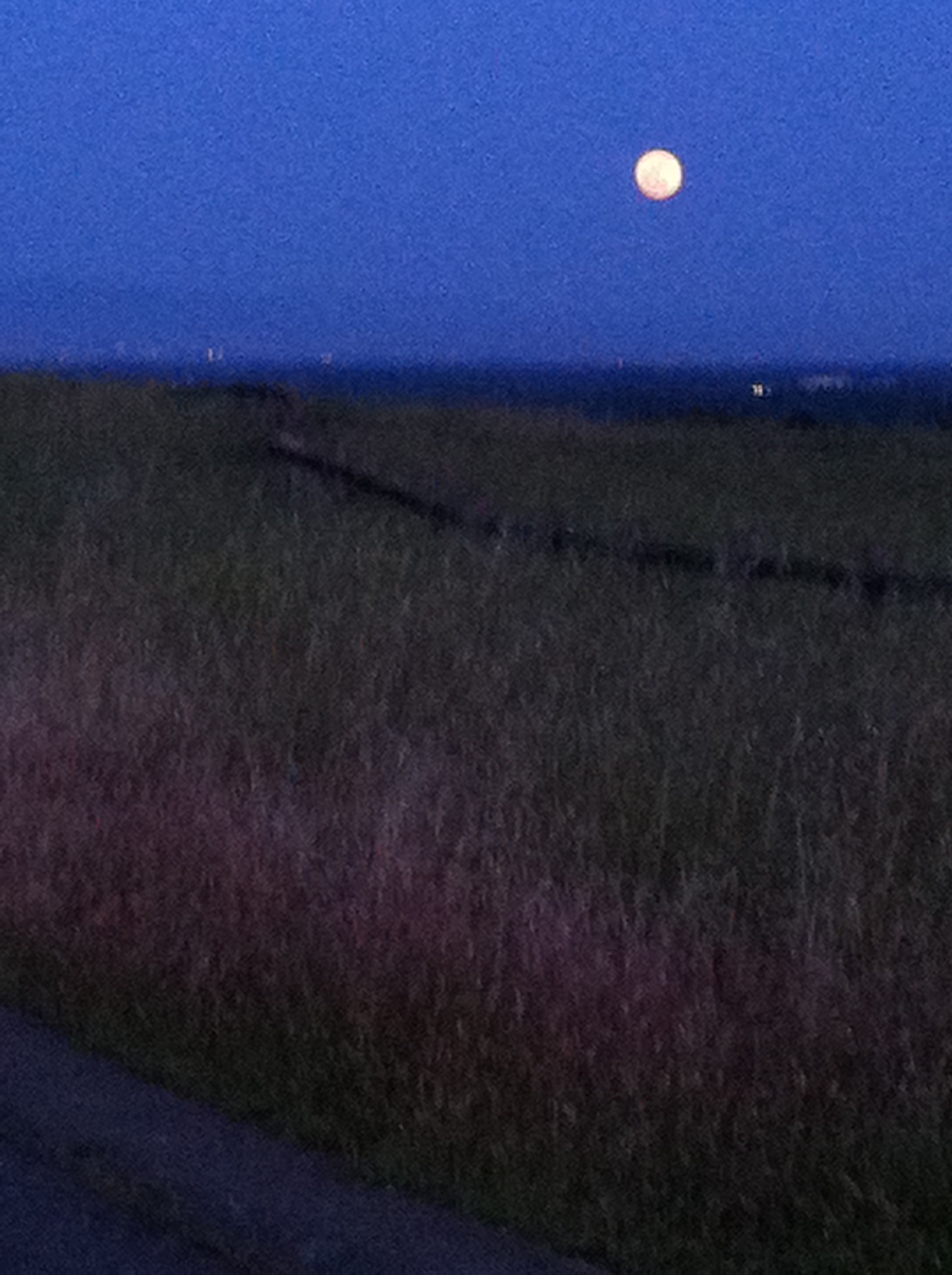
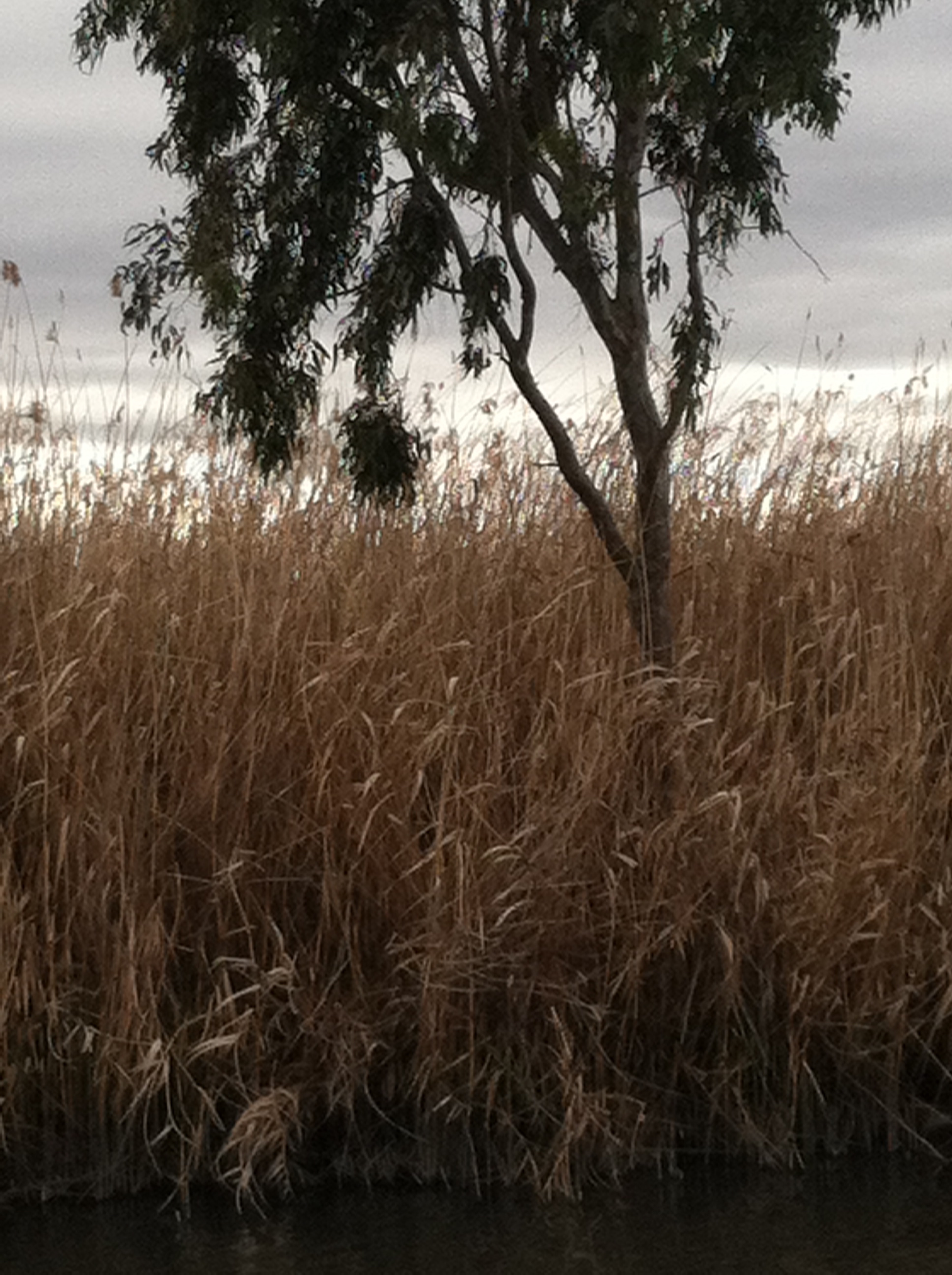
A few months ago I returned to Shoreline.  This time around it’s different.  I walk at Shoreline a two or three times each week because I walk at Shoreline.  That’s it.  My spirit feels embraced at Shoreline. The flat horizontal lines of the landscape and the calm water soothe me.  I feel nourished.  After a walk along water’s edge I’m ready to walk back into the remainder of my work day.

If you do anything for yourself today find that thing.  Find that one thing that feeds your spirit.


Rainbows and Light and the Absence of Free Will

1990 photograph of Pluto and Charon. Taken by ...

I want to blame Pluto.

Not Uncle Walt’s golden and gloriously floppy-eared animated canine of indeterminate breed.  Nope.  I mean the recently demoted former planet, now dwarf planet, Pluto.

According to my favorite stargazing Texan Pluto teased its way into my sign back in 1995 a few weeks before I sold everything I owned and took off for my “lost decade” in Ireland with little more than an overstuffed duffel bag and a guitar.  Now, sixteen years later, cold little Pluto has hemmed, hawed and finally committed to leaving the astrological sign of Sagittarius.  I’d like to say “don’t let the door hit you on the way out” and “good luck, Capricorns!” but can I really blame a lump of rock a couple dozen astronomical units away from sunny California for events over the last twelve months?  Given that an astronomical unit is about 92 million miles it seems unlikely.

Then again, 2011 was the year when the thinkers among us speculated that free will doesn’t exit.  Of course, philosophers have always pondered the nature of free will, but for one moment in 2011 the existence of free will garnered more water cooler buzz than a Hollywood tartlet’s lip plumped wedding.

So who knows?  If I had no choice over my choices, then perhaps it was a rock 2 billion miles away that provided all the entertainment the previous twelve months.

Personally, though, I’m putting my money on the absence of free will.  I know.  It sits in my craw kind of funny, too. But isn’t it liberating to discover we’re not the general contractor of our lives?  Knowing that the control we believe we have doesn’t exist eliminates any need for goals or resolutions.  We can stop struggling.  There’s no need to swim upstream.

Surrendering a belief in free will doesn’t mean I’m waving a white flag and crawling under the duvet for the remainder.  On the contrary, the absence of free will has a clarifying effect.  The intentions I’ve set for my life seem certain and reasonable.  Moving toward those intentions in the absence of control makes their achievement all the more precious.

The absence of free will makes all that yoga talk about ‘Being Present’ and ‘Embracing the Now’ sparkle.  If we don’t have free will, then it follows we should be content with this perfect moment because we are exactly where we are meant to be.  If that place is dark and frightening – and sometimes it is – know that things change.  And if that place is light and wondrous? Know that things change.  Embrace it all.


Eknath Easwaren’s Passage Meditation

At first I was put off by Eknath Easwaran’s Passage Meditation.  The prose was too anecdotal, the advice too simple.  The book was for beginners.  Didn’t I already know all of this?  I wanted the answers to my deeper questions, not a parable on the hectic pace of life.

But because I promised my meditation teacher I would finish the book, I continued to read. And once I tucked my ego and arrogance away (and admitted I am a beginner!) I discovered that this book is a gem of subtle yet powerful insights.

Embracing a daily meditation practice requires discipline that, quite honestly, isn’t easy for me to summon.  I keep trying.  There are rare mornings when finding my seat and watching my breath feels like my natural state.  As if this is how it has always been and always will be.  On most mornings, however, the clarity and stillness I’m looking for spends most of the thirty minutes competing with random thoughts about clients, classes and topics for my next blog post.  On these days I sit, I breathe, I wait and then, when the timer sounds, I smile.  Have I failed?  No.  I showed up.  And as long as I continue to show up I know that eventually the days I feel meditation is my natural state will outnumber the days when stillness has to compete with my chattering mind.

Tonight I was reading about the power of thoughts and control of the senses.  Easwaran writes that this is our goal:


When we stimulate the senses unduly, vitality flows out through them like water from a leaky pail, leaving us drained physically, emotionally and spiritually.  Those who indulge themselves in sense stimulation throughout their lives often end up exhausted, with an enfeebled will and little capacity to love others.  But when we train the senses we conserve our vital energy, the very stuff of life.  Patient and secure within we do not have to look to externals for satisfaction.  No matter what happens outside – whether events are for or against us, however people behave towards us, whether we get what pleases us or do not – we are in no way dependent. 

Then it is that we can give freely to others; then it is that we can love.


Initially I thought I’d write that Passage Meditation is a simple book.  It feels like a simple book.  But once the heart and mind are open to its teaching, it becomes a rich and layered set of ideas that will move us forward in our practice.