Moving Day

Note: I’ll be shutting down my WordPress site in a few months. If you signed up to receive my little posts – thank you! If you would like to keep up with my art, my online yoga classes or just the ups and downs of life, please visit my new Squarespace website.

Some people thrive under pressure and chaos. But I’m one of those people who prefer order. I like routine. I perform best when there’s a place for everything and everything is in its place. This isn’t limited to the objects I choose to keep around me. I need a place for my thoughts and feelings, my reactions to the world around me. I need a place for unfinished conversations, my hopes and my fears.

The home we loved. Until we didn’t.

Order is a little tricky to find right now. My beloved and I moved house over the weekend. We’ve downsized and our new home – a late 1990’s duplex on the other side of town – is lovely but it is also much smaller than the townhome we left. And it lacks a garage which is, of course, the space in every house that collects the detritus of life. That being said, our new home is much larger than the five hundred square foot condo we shared in California with our dearly departed cat Bruce (naturally Bruce took over most of the real estate). We lived there for almost a decade – even through the pandemic – so if we managed that small space I’m certain that with a bit of determination and perhaps more than a little compromise we’ll manage this space, too.

Besides, trading square footage on a high trafficked main street for a quiet cul-de-sac and a back garden was an easy choice. Right now that back garden is more a dense carpet of weeds and broken branches but you ought to see what it looks like in my mind’s eye.

But it hasn’t been an easy move. Is any move easy? This one – just two miles down the road – has been one of the most difficult I’ve experienced. My beloved agrees. It doesn’t make us less grateful. We’re just aware that the last few months haven’t been easy.

I’m reluctant to blame age and more inclined to blame circumstances that are too boring to get into. Let’s just say, for the time being, chaos and clutter reign supreme.  No matter. We both know that it won’t always be like this. At some point order will be restored.

I hope.

I hope because I have a solo exhibit in four months and then another just five months later and of course I’m excited and grateful but after a week away from the studio the deep unease of slow rising panic was beginning to overwhelm me. 

But today, after seven long days, I got back to the work. And in doing the work I found a place for my thoughts and feelings, my reactions to the world around me. I found a place for my hopes and fears.

My beloved and I will be living with a few more weeks worth of chaos and clutter in our new home but for now, for me, a little bit of order has been restored. 

Brucie

The Stoics remind us to contemplate our death each day. I contemplate Bruce the Cat’s.

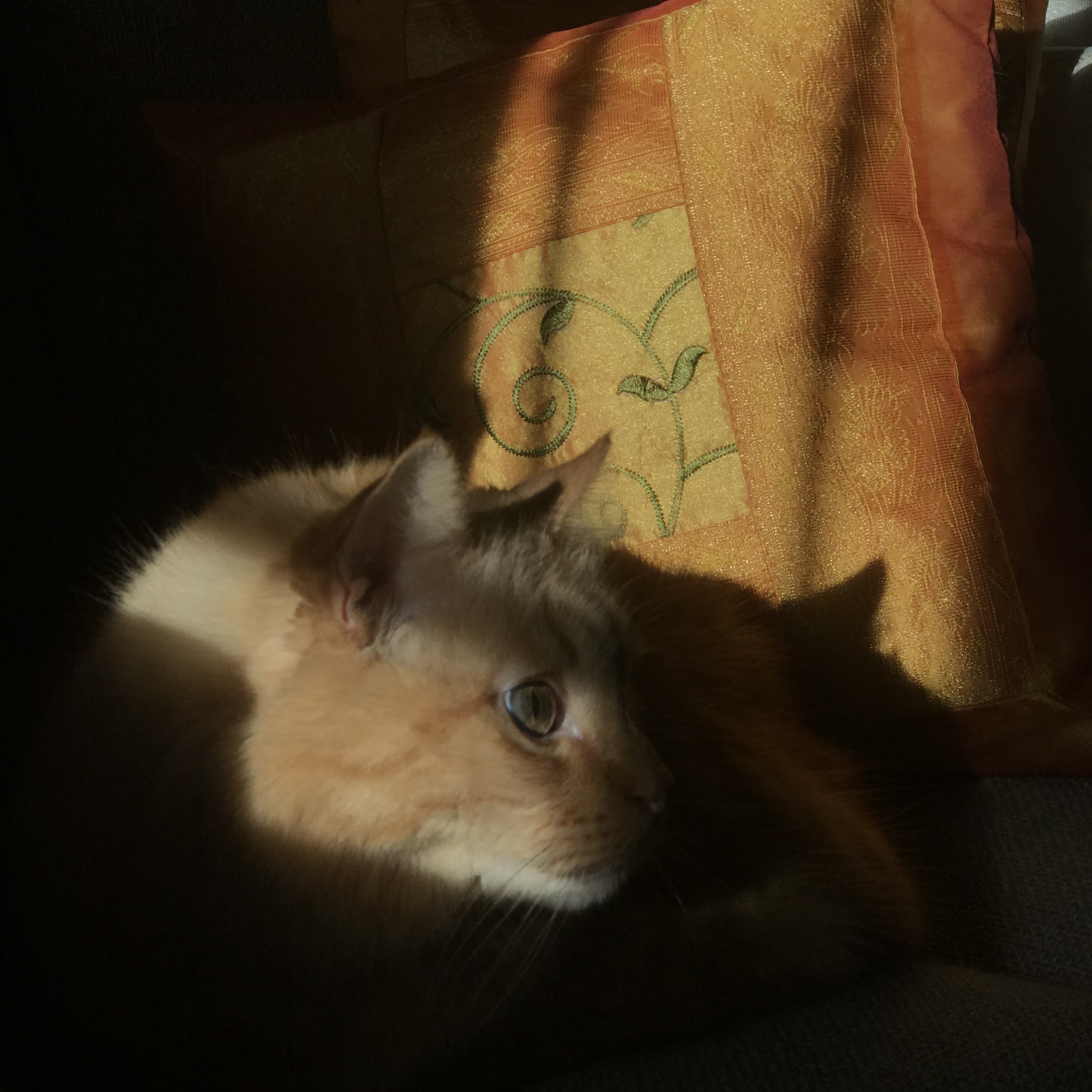
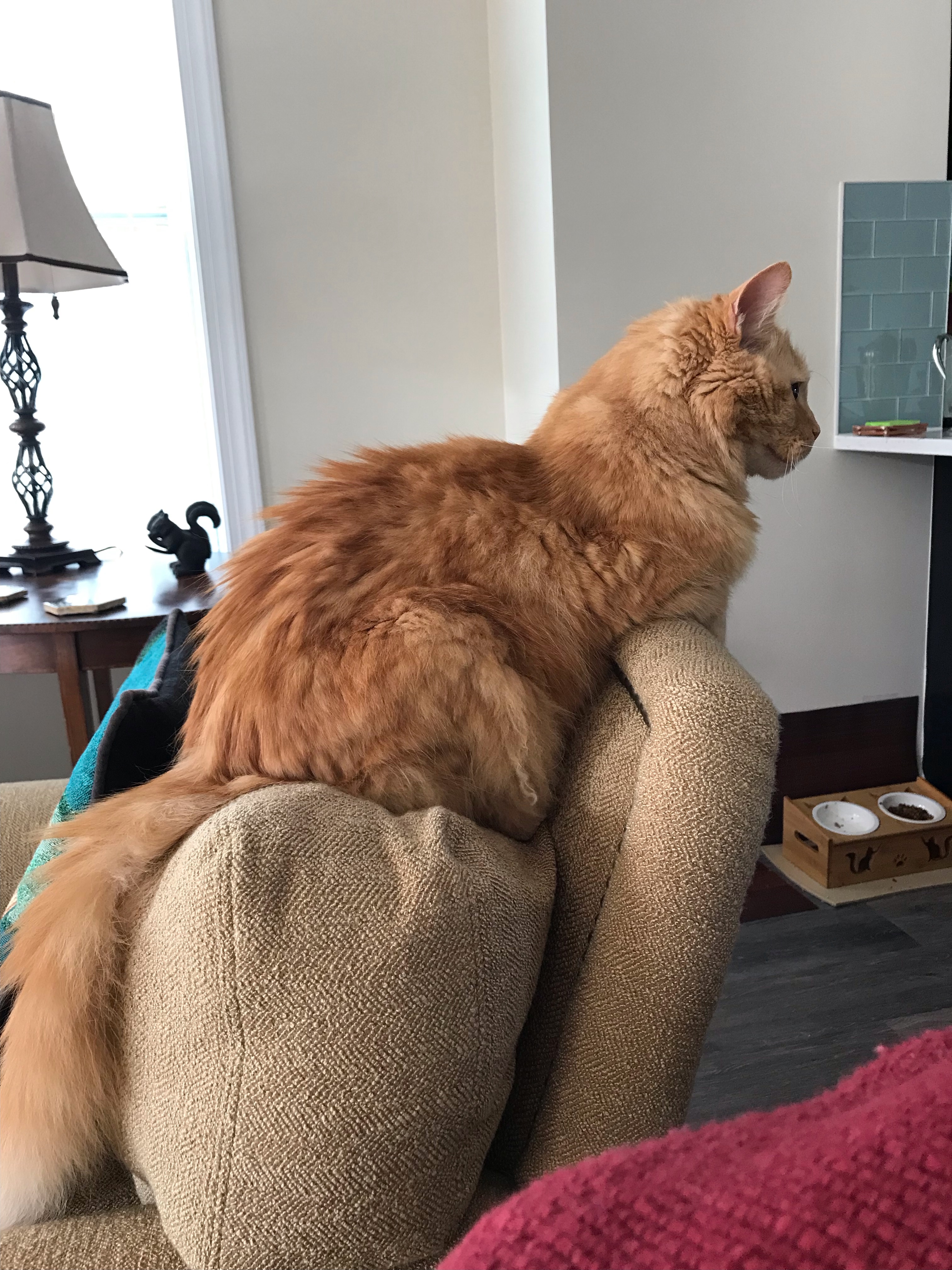
Bruce the Cat turned twenty-one in September. I’ve known him since he was fourteen, when his previous human companion passed away and Bruce came to live with me and Ben. Over the years, and especially since our move to Virginia almost two years ago, Bruce and I have developed a morning routine. He wakes me sometime between 5:00 and 5:30 AM. I follow him down the stairs into the kitchen. He stands by the door to be let out onto our porch, where he searches in vain for a nibble of the mint or Thai basil I grow in pots during the summer. But it’s gone now, pulled out just after the first frost. Back inside he paces and cries at my feet while I brew coffee in my stainless steel cafetière and shred the chicken I cooked for him the night before. He turns his nose up at it until I add two of his favorite treats. After his breakfast he sits at my feet for a moment, then gracefully jumps onto my lap and squeezes in between the laptop and my belly for cuddles while I read headlines from the New York Times website and try to conquer the day’s Connections. After twenty minutes cuddles are complete. Bruce jumps from my lap, ponders a detour to his litter box, but decides instead to lumber over to his chair. The same chair that I once envisioned as my ‘writing chair’. But instead of being my writing chair it has become – and this is non-negotiable – Bruce’s chair. Covered in a mound of blankets to protect the upholstery, it is the throne from where King Bruce the Cat holds court. It’s where he sleeps and dreams wild dreams of chasing rabbits. I can see why he likes it. First of all, the chair is positioned at an angle that provides the royal feline a view of everything his subjects are up to in the living room and kitchen. It has the added benefit of being placed near a window that has afternoon sun, which is perfect for nap-taking when counting the number of times Ben and I putter about in the kitchen becomes too boring. 

But one day soon Bruce’s throne will become my chair. When it does my heart will be broken because it will mean King Bruce the Cat is gone. But I know my sadness at his passing will gently transition to happy memories I’ll keep of having had the honor of being his human companion.

I wrote those words on a cold pre-dawn morning in early November. And this past Saturday Bruce’s throne became my chair. His health had been declining for a few months and then, over this past week, Ben and I witnessed a rapid decline. On Saturday we knew it was time. An appointment was made for early evening and so we had one last day with our most wonderful Brucie.

The vet techs and doctor were compassionate and with gentle assurance promised to take care of Bruce. Promised we were making the right decision. We can never know for certain but Bruce seemed ready. I scratched his chin, gave him a kiss. Ben stroked his head and talked to him. Then we said goodbye.

Bruce and I first said ‘hello’ eight years ago, while Ben was out of town on business. I made the executive decision to adopt Bruce after seeing his photo on NextDoor. Ben, not a fan of felines and convinced he was allergic to dander, reluctantly agreed via Zoom (yes, he loves me that much). But when Ben returned from his business trip a few days after Bruce the Cat moved in he made it clear that ‘the cat’ was not allowed on our bed. ‘No problem’, I said. ‘It’ll never happen’, I said. ‘Bruce is too old and too fat’, I said.

Not long after that conversation Bruce decided Ben and I would suffice as human companions. He wiggled his sixteen pound frame out from under the sofa where he’d been hiding for the first three days in his new home, waddled past us with his head and tail held high, and in one graceful leap jumped on the bed.

It was clear to Ben and me there was a new boss in town.

And now our boss is gone and we are bereft.

The connections we share with our non-human animal companions are unlike any we share with our human animal companions. The love language Bruce and I used to communicate had no words. It was energy based, instinctual and intuitive. Bruce asked for few things: food, water, shelter, cuddles and a clean litter box. Easy things to provide. In return he provided warm, comforting purrs and the occasional, perfectly formed hairball. We met each others’ needs without speaking a word.

I want to go on and on about the impact Bruce had on Ben’s and my life. His antics. The trouble he sometimes caused. The many smiles and laughs he provided. His willfulness. These stories are what make mourning Bruce’s loss a beautiful process. Because the massive waves of sadness I felt on Saturday are gentler now as all those memories wash over me. 

So I won’t bore you with stories about Bruce. I sorta wanna keep them to myself anyway. I’ll just tell you this: Brucie was a wonderful cat. The house is empty without him and we will miss him very much.


The Iris Apfel of Trees…and My Hair

It’s August. Almost September. And there’s change in the air. It’s as if the trees are tired of being green (and we all know being green is not easy). Stealth like a ninja, Autumn is approaching. It gives itself away, though, by helping those tired trees dress themselves in fall glory. There’s one tree in particular, just outside my window, that begins to show its true colors early. While the doubly tall and slender trees that form a line of sentries behind it appear too shy to offer anything but hints of drab yellow, this little tree has crisp hits of gold along the edges of its leaves and muddled russet on its lower branches. This time of year it is the Iris Apfel of trees. And it is a tree that offers me comfort. A tree that provides cooling shade in the summer for all the deer and other critters that drink from the creek that tickles its roots. A tree that becomes a vibrant, flaming show off in autumn, cuts the sky into hard edged shapes with its bare, black branches in winter and sweetly blossoms in spring. I’ve watched my tree embrace each version of itself for one full year.

I love having four distinct seasons and their clear reminder of time’s passing. (But do I? Really? Four distinct seasons – definitely. Time’s passing? Maybe not so much.)

Early next month I’m having my hair cut by a stylist for the first time in three years. Throughout the pandemic I relied on my tried and true electric trimmer to keep my hair well shorn with a number five blade guard. I didn’t mind that there was no attempt at style. I just wanted my hair to stay out of my face in downward dog. But the east coast humidity curls my hair in a way that others sometimes envy and for a brief moment I considered letting myself transform into one of those beautiful crones with flowing locks who look like they’ve just stepped away from their floor loom to go fill their seagrass basket with wild blackberries plucked from the forest. And then I looked in the mirror and realized I am not that woman. I’m more likely to morph into Rosie the Riveter. In other words, my unkempt curls have to go.

But time has passed and I can no longer pull off the Sinead O’Connor-esque buzz cut I wore with my vintage dresses, fishnets, costume jewelry and combat boots in 1990. Damn you, time. It was my favorite look. The look the made me feel most like me. Now I’m afraid I’ll walk away from my date with hair destiny looking like I have a ‘do’ – a poofy, teased, too perfect coif. I guess that’s easily remedied with a tussle of fingers but still I can’t help but believe that being sixty-four and eight months old is a really weird age for a woman. I no longer look like the woman I feel like and I have no clue how to embrace the woman I’m becoming. More than that, I’m not seen by others as the woman that I feel like.

I know I’m being silly. If I can manage the journey through puberty and adolescence I can survive this journey, too. At the end of the day we’re not measured by how we look and how our looks change. 

Are we?


Love, Dirt & A Ruby-Throated Radish

The truth is I did not love the man who was about to become my husband. What I loved was the romantic notion I had in my head about being the wife of a man who, with his father and his younger brother, farmed the sixteen hundred acres of Red Willow County land thirteen miles outside of McCook, Nebraska that his grandfather farmed before him. 

It’s Alive!!!

They grew acres of golden wheat that was harvested the first week of July. They grew corn and alfalfa that was gathered in the autumn as feed for the cattle. Not far from the main house was a barn and corral from which the hogs would sometimes escape. Next to that, I seem to remember, was the chicken coop.

There was a part of me for whom choosing that life – a life connected to the earth and one that I imagined felt purposeful and authentic – felt like a calling. But I was only eighteen and the story I was telling myself about a life on the windswept prairie was just that. A story. And my heart knew that it was a story because another part of me knew being a farmer’s wife would not be the whole of my life. 

(To be honest, I didn’t need my heart to tell me. In one brief summer break from college I had a few minor misadventures – including being seconds away from having my head crushed in a bale catcher – that were proof enough I wasn’t cut out for farm life.)

We married on June 18th, 1977, next to the farmhouse, under an arbor built by cousin Tom and laced with fresh cut grape vines. Colleen, a friend from college, played ‘Come Saturday Morning’ on her mandolin as I walked down the grassy aisle in my beige off-the-rack Gunne Sax dress. Seventeen months later, on November 24th, 1978 my husband drove me to the bus station in McCook. I boarded the Greyhound mid-morning on an overcast day and rode Interstate 80 for four hours across Nebraska’s earnest landscape. Back to our one-bedroom apartment south of Lincoln and within walking distance of my college campus. I turned twenty years old the day I separated from my husband. It was the last time I would see the ranch. It was the last time I would call myself a married woman. A farmer’s wife. I would spend the rest of the winter, into early spring, with my bare necessities packed in black bin bags, sleeping on dorm room floors or the art building’s threadbare sofa and stealing meals from the campus cafeteria while the lunch ladies turned a blind eye. I wasn’t happy but I was stupid enough to never doubt that my life would turn around. I spent the next four decades living metaphorically out of a black bin bag but in the end – albeit a little late in the game – my life did turn around.

What does an eighteen year old girl know about romantic love? I’m not proud that I married a man I didn’t have feelings for. I’m not proud of the hurt that caused. He was a good man but he was also a means to an end. An escape route. 

What I loved was the possibility of wide open spaces. It’s not that I’m a great outdoorswoman. You won’t find me camping in the wilderness or scaling mountain peaks. After decades in California I’ve never been to Yosemite. 

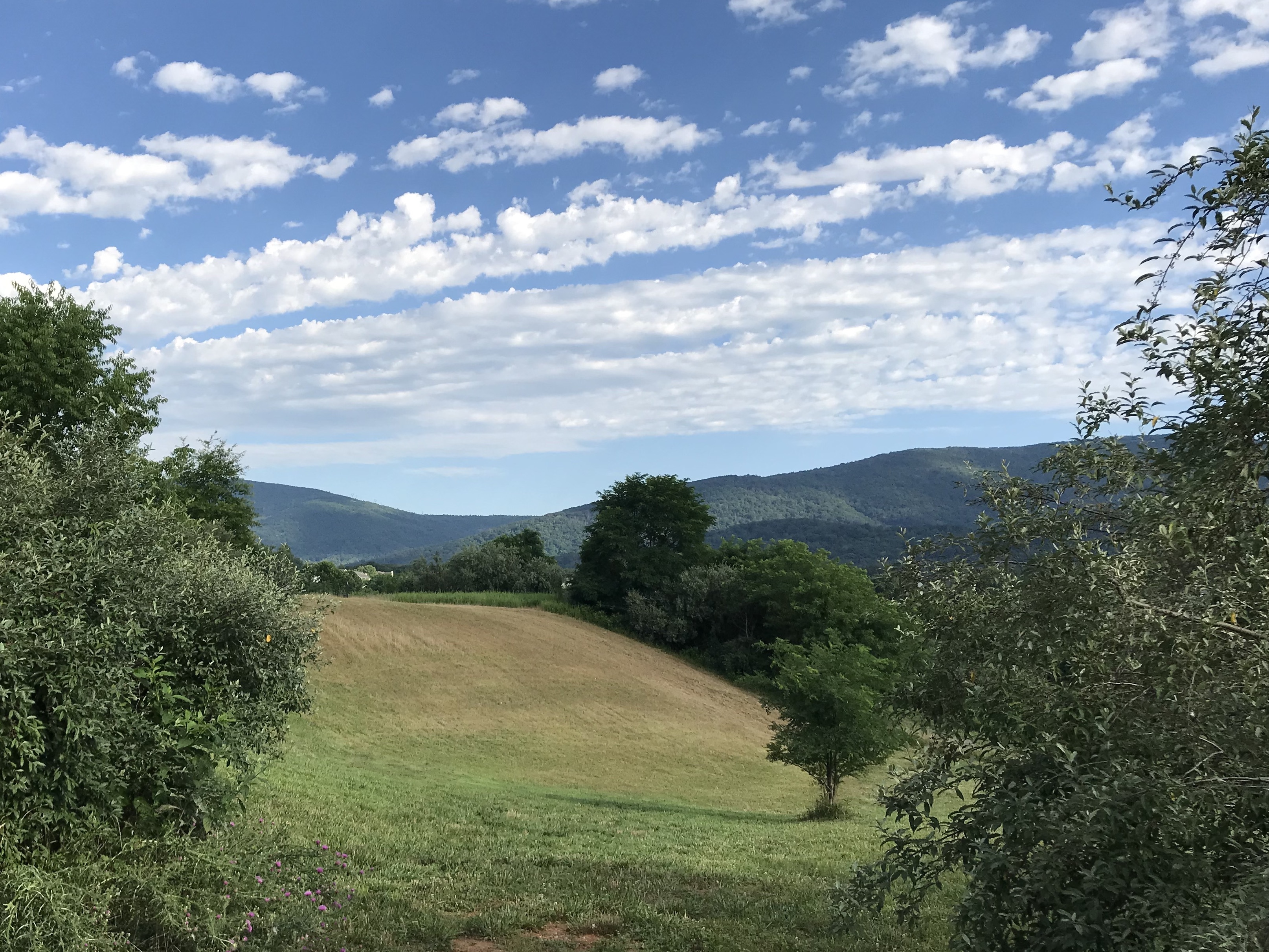
It’s the small things I’m in love with. The dirt beneath my feet. The earth. Fog banks hovering over the mountains. The sky and the stream. Birdsong and flowers waking up in the spring. And that has never faltered. This morning, just outside my living room window, I’m in awe of the mist that rolled down from the Blue Ridge to drape a sparkling grey scrim over the trees – the same trees whose bare black branches will slice into the pink dawn tomorrow. Later today, when I take my walk, the dank perfume of decaying leaves and muck rising up with each step from the muddy trail will anchor and soothe me. I’ll hear the the red shouldered hawks calling back and forth and see the turkey vultures circle over the hill. Bright red cardinals will flit before me from branch to branch, as if showing me the path to take. In a few weeks time, as seasons change, I’ll wonder when the bears will wake from their winter slumber and if my hiking poles will be a reasonable defense. 

And, as seasons change and the earth warms, Ben and I will embrace our first growing season in Virginia and the romantic notion we have in our heads about the joy we’ll find in the growing of our own food. The sprawling fourteen hundred acres I married into all those decades ago is now a fourteen square foot mirpeset at the back of our townhome plus a slim little balcony off the living room and a small shaded porch next to the front door. Just enough for a kitchen garden: herbs, radishes, tomatoes and lettuce. Maybe some short and stubby variety of carrot. I’ve read that a potted fig can do well in our hardening zone if we protect it during the coldest part of winter. Ben loves figs and I love Ben. And we both love our cat Bruce so we’ll have catnip growing, too.

I’m certain the soft-focused images Ben and I have in our heads about our lush, verdant paradise have no basis in reality. No matter. There’s something primal about driving our hands into a freshly opened bag of potting soil. A tenuous connection is made with the generations who plowed the land before us to feed their community. Plus, there are no bale catchers or combine harvesters or flatbeds full of irrigation pipe to threaten injury. The worse that can happen (knock on wood) is a strained muscle from too much lifting or maybe a splinter or two from my refusal to wear gardening gloves.

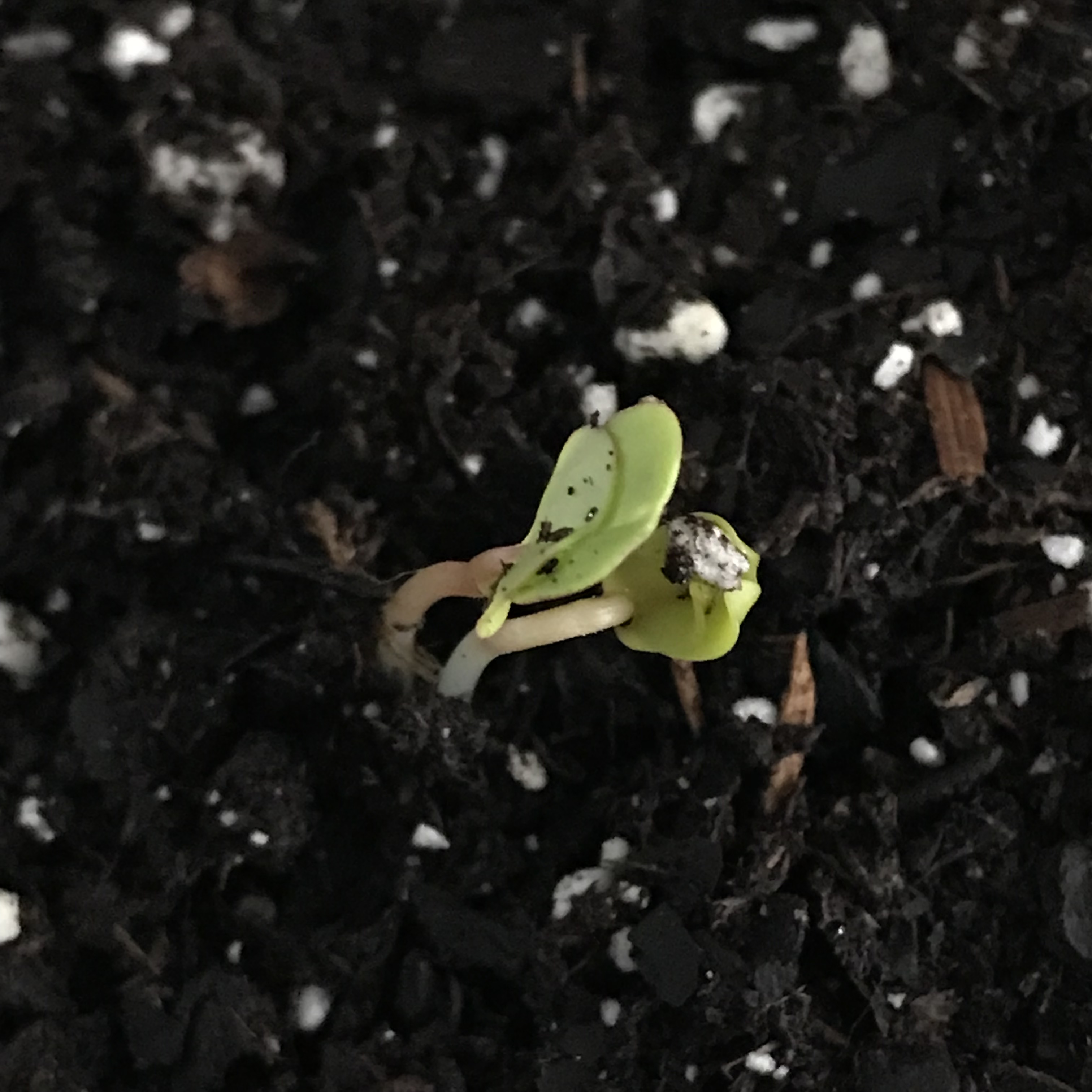
Of course, it’s still too cold to plant anything outside. Even though it was eighty degrees in Virginia last week (and snowing in Bay Area!!!) the threat of another frost has not passed. And so I’ve taken over half of our dining table, using re-purposed salad containers as mini-greenhouses for two varieties of radish and cut toilet paper rolls as compostable seed starters for cherry tomatoes. The bell pepper and poblano pepper seeds are resting comfortably in little egg cartons.

The anticipation that builds as we wait for that first bright green sprout to find its way through the moist dirt toward the sun, and then to see it burst from the compost of our little toy garden is worth a sore back or bandaged finger. It’s enough to make Ben verklempt as I shout at the top of my lungs, “It’s alive!”

Six weeks from now, when our first harvest arrives, we’ll pull a ruby throated radish from the soil, brush it clean, slice it in half and – with a sprinkling of salt and perhaps a bit of butter – take one small, spicy bite and declare that radish to be the best radish ever grown. Ever.


Touching Life: Change Takes Patience

Bruce the Cat is living his best life.

I can’t say the same for his favorite human companion. It’s been a wonderful and an exhausting month but I won’t feel at home until my brain can shift its thinking from ‘I moved to Virginia’ towards ‘I live in Virginia’. My body is here but my energy is somewhere over a cornfield in Iowa and until the two can meet this sense of being unmoored will stay with me. It’s as if there’s a glitch and my spirit is biding its time somewhere in the air between California and Crozet, like a little spinning rainbow waiting for the new software update to download. But that’s what a move is like, isn’t it? The body and the spirit need space to forge their alignment. Until then, balance and equilibrium is off kilter. Just ask my Vrksasana.

Change takes time. We know that. It might be a cross country move, a bad habit we’re trying to break or a new perspective we’re trying to find. Change takes time. And if we don’t see change for what it is – an opportunity to practice patience – then the disappointment we feel when the new conditions we’re expecting don’t arrive fast enough can mess with our head. It has definitely messed with mine. This past month – in between the excitement and moments of joy – I’ve been irritable and frustrated. I’ve lost focus. I’ve had trouble sleeping. To be clear, I haven’t once questioned our decision to relocate but the firm grip I had on the vision for my life and the purpose I knew was mine has slipped away. I don’t yet know who I am in this new home. And my brain won’t be able to transition to ‘I live in Virginia’ until all the things I can’t seem to find – including me – are found.

Change has its own rhythm. It’s own schedule. 

I need to take to heart the words I write. Change is an opportunity to practice patience.

Which means I need to stop worrying about the damaged refrigerator sitting like a monolith in the middle of my kitchen and take joy in the truth that there’s a new, undamaged refrigerator in its place. By next week it the broken monolith will be gone. By next week shelves for the garage will arrive and trying to find the car won’t require navigating a maze of cardboard. After that the boxes still unpacked will be open. And after that we’ll have a few chairs for the patio and will be able to enjoy hot tea in the cool mornings as the sun rises. I’ll begin to learn how I fit in this new place, this new world.

Until then I will continue to repeat the mantra ‘Change is an opportunity to practice patience’. And the first place I will practice patience is with myself.


Touching Life: Notes from the New Homestead

On Saturday our red CRV was filled with flattened cardboard boxes, bubble wrap, assorted other papers and questionable plastics. After an eighteen mile drive we had arrived at the McIntire Recycling Center, where Ben and I met a man named John.

John knew everything about recycling and was eager to show us what from our bounty of trash we could distribute among his many large green crushing machines and what would be coming home with us, destined for landfill. He taught us, for example, about what plastics are useful to the composite deck making industry: ‘if it stretches and doesn’t stick to itself they can use it..’. So our bubble wrap and bread bags were a ‘go’ but the mountains of cling film the movers wrapped our furniture in were, unfortunately, a ‘no’

This was a very hands on, prepare to do the hard work, old school recycling experience that forced Ben and I to consider how much we consume and to reflect on the environmental cost of our move across the country. It was hot and sticky work that was eye opening and, with all that we learned, sorta fun in that ‘I can’t wait to get home to take a shower’ sorta way. 

Home for Ben, Bruce the Cat and me is now a pre-planned suburbia, the end townhome in a short row of townhomes that wiggle uphill like caterpillars enjoying a juicy nasturtium leaf toward our ever blooming ‘town center’. And if you’re old enough to remember ‘little boxes made of ticky tacky’ then you get the idea. But we love where we are. We are surrounded by mountains and wooded trails. The view from our kitchen deck looks toward a thick forest that is bound on one side by bright single family homes and a crisp white cement walkway. The difference between the two conditions – one put in order by man and the other by nature – is a constant reminder of our impact on the earth. And somehow it is teaching Ben and I to be better caretakers.

A few evenings ago, just before dusk, I was looking out from my kitchen toward the shadowed woods and saw a slim, young deer enjoying a meal of wild weeds and flowers as she made her way down the grassy verge between the sidewalk and the forest. I called Ben over and as we watched we saw the deer’s fawn – not more than a few days old, all spots and gangly legs – run to catch up to its mother. We watched as they made their way around the pond to disappear back into the thick brush. Another reminder that Ben and I are temporary stake holders. Interlopers.

When we first arrived at our new home we noticed that we had some tenants already living in a vent on the back patio. Two Eastern bluebirds had built a nest and were nurturing their newly hatched brood. A few days after our furniture arrived the bluebirds lost one of their young when it fell from the nest. The next day they lost another. But the parents continued to fly back and forth, feeding what children remained a constant stream of grubs and grasshoppers.

Until Saturday. 

I found Bruce the Cat staring through the glass door in a state of high excitement and agitation. I was happy that Bruce had something to entertain him until I realized what was happening. On the patio was a disaster of Hitchcockian proportions. Two dozen sparrows perched on our railing, harassing the bluebirds. Their last two fledglings had been pulled from the nest and were now writhing on the patio floor. At this point they had feathers but I don’t think they knew how to fly. Their suffering and distress was horrifying. In a panic, one fledgling ran and fell off the patio and down a full story to the earth below. The parents continue to fight off the attacking sparrows to protect their last remaining baby while the sparrow spectators watched in what I imagined was bloodthirsty glee.

When it became obvious that there was nothing more to see the sparrows disappeared. But the parents were still in distress and the young bird was still suffering. Ben and I did not know what to do. Put it out of its misery? Wait for the inevitable? What we decided to do was to cut a hole in the end of a shoe box to create a shelter for the baby bird. We covered the shoebox with a plastic bag and built a sort of dam in front of the box with a rolled towel in order to keep out the rain.

What happened next was astounding. Within an hour the parents were feeding their last offspring an endless meal of grubs and grasshoppers again. Ben and I feel privileged that we were able to witness this remarkable process of feeding, healing and protection for two days. 

Today the box looked undisturbed but there was no sign of the fledgling’s parents. When an hour went by and there was still no activity I ventured out and looked in the box. 

It was empty.

I need to begin this week believing that we saved that young bluebird’s life and that at dawn, with encouragement from its parents, the fledgling spread its wings and took flight. That might not be true but it’s what I need to believe.

I have one more story to share.

On Sunday afternoon Ben and I thought dinner at the Thai restaurant just a five minute walk away would be nice. Delicious food. Friendly service. A mojito that will knock your socks off. What could go wrong?

An hour earlier it had rained. As we enjoyed our drunken noodles and tum yum soup the sky was still grey but there were slices of sunshine. It was only after we paid our bill that the clouds turned black and ominous. We began our short walk home in faltering sunlight. A block later we stayed just two steps ahead of the thick plops of water that began to follow us down the sidewalk. It was less like rain and more like a slow leak in an old ceiling. We were still confident we would make it home. Besides, we had umbrellas. As if they were going beat back the onslaught about to happen.

Just past the roundabout the skies ripped open. And I mean ripped opened. We ran, we screamed, we laughed, we submitted to the inevitable. Ben’s flat cap blew from his head at the same time that our umbrella turned inside out. We ran back to catch the hat before it was lost to the deluge. By the time we reached our doorstep there was not one square inch that wasn’t soaked. It was magical.

I can’t remember having so much fun in the rain.

Over this past week I’ve touched life in ways I never have never touched life before.


Last Time Land

Last Sunday Ben turned left onto Fruitvale Avenue and I began to cry. The afternoon had turned from hot and humid to bright and breezy. We spent it enjoying cold pizza from Terun and chilled ice tea in Pat and Bob’s garden while their eight-month old Golden Doodle ran in playful circles around us. A few hours later we stood at their door not wanting to leave but knowing it was time. I wanted to hug them both – a simple gesture of love and affection – but Pat is immunocompromised and we were not willing to risk COVID. The best I could do to let these dear friends know how my life changed from knowing them was to say,

“I’m hugging you in my heart.”

Pat replied, “I know.”

The day that we move to Virginia is two weeks away. And now we can’t help but say, ‘that’s the last time we’ll grab coffee at Printer’s Cafe’ or ‘that’s the last time we’ll be up in the City’ or ‘that’s the last time we’ll sit in their garden with a glass of summer wine’. In other words, sadness and excitement have locked horns. We’re living in Last Time Land.

Last Time Land is an odd place. It’s full of sun bright joy – like the joy felt a few Tuesdays ago. That was the clear blue sky morning when a few dozen friends who have been gathering with me to practice yoga on Zoom gathered instead in Susan’s garden. It was less a ‘going away’ party and more a celebration saturated with love and appreciation for one another. I’m so happy that morning happened. It was an experience I didn’t know I needed.

It’s difficult to describe the other side of Last Time Land. It’s like a deep sigh more than anything. It’s not sad or melancholy. It’s a letting go.

Like the letting go of a good job with good people and where I learned so much. But I’m not sad to be leaving my work at the pain clinic because the space I once occupied there is now occupied by someone else. Nothing has ended, only grown.

It’s the true endings that make this side of Last Time Land difficult to navigate. I had a true ending this week. The experience that came to an end this week was one that created so much possibility for me and over the past ten years influenced so much of who I am as a human and how I walk through the world. I feel a deep sense of loss in this true ending.

A true ending creates a void and an unknowing that leaves us with an imbalance that can’t be made right until we sit in that void and grieve. But in time the void closes, grief softens, balance is regained and surety in the journey forward is found.


Neurographic Drawing

At the start of the year I set the intention of building a writing practice that would allow me to post every two weeks. I created a spread sheet of topics around these obvious themes: yoga, coaching and craft. I hoped I would have the strength and energy (and the technical prowess) to have a brief video accompany the posts I wrote about aspects of our yoga practice. I managed one video, but my posts over the past six months have been consistent. Not what I intended, but consistent. Until now.

Writing, like yoga or art, is a practice that requires our presence. We have to show up. And I find it difficult to show up for writing practice when my brain is full. And right now my brain is full. My beloved and I are three weeks away from a major life transition – our move to the ‘other coast’. Our home has become a storage unit filled with boxes and I’m obsessed with worry about how Bruce – our amazing, elderly, deaf ginger cat – will manage the flight to Virginia and how he will adjust to a new home. There are so many details that need to be attended to that there is no room in my brain for putting words down on a page.

And don’t even mention my preoccupation with…well…everything else.

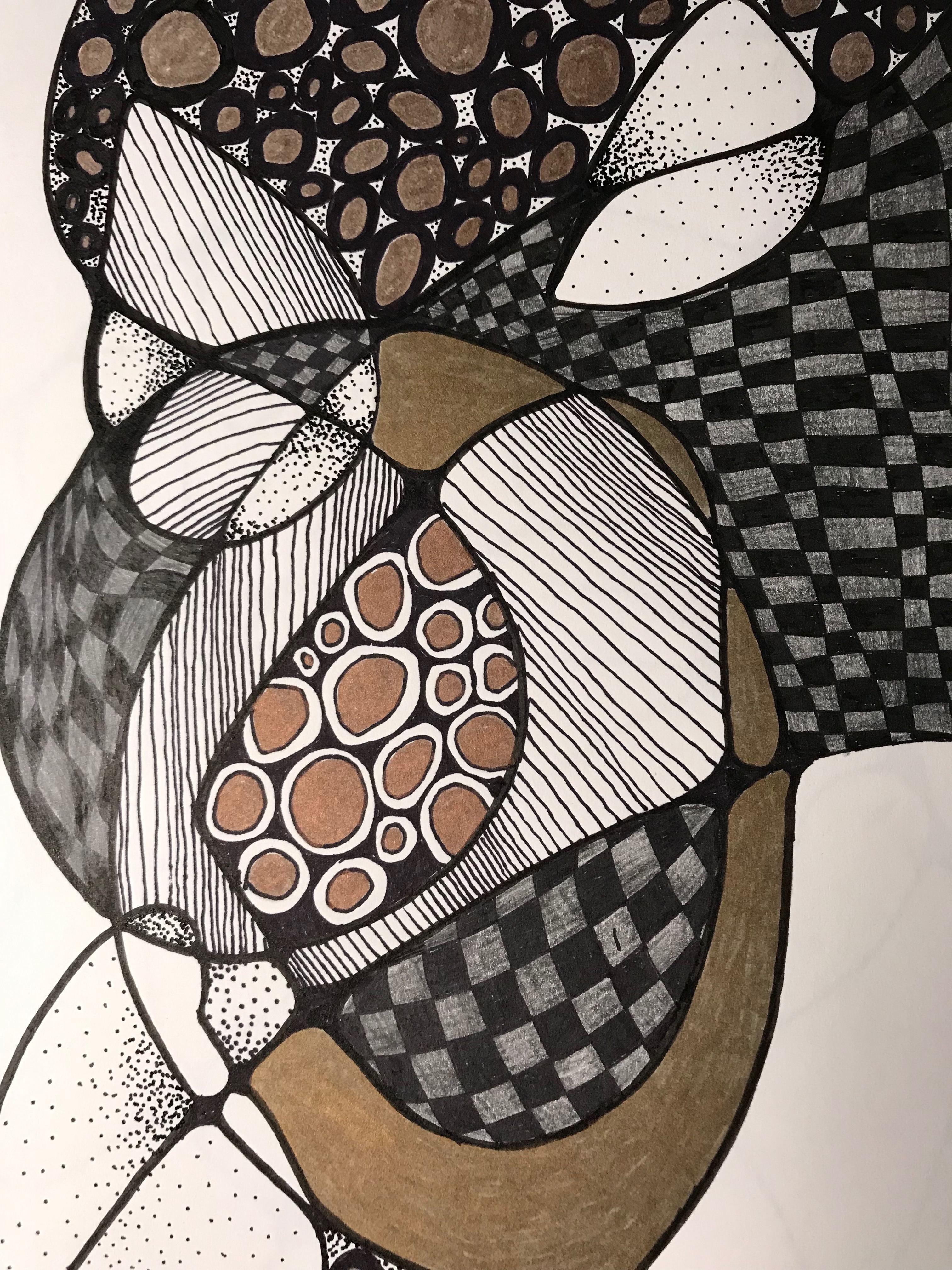
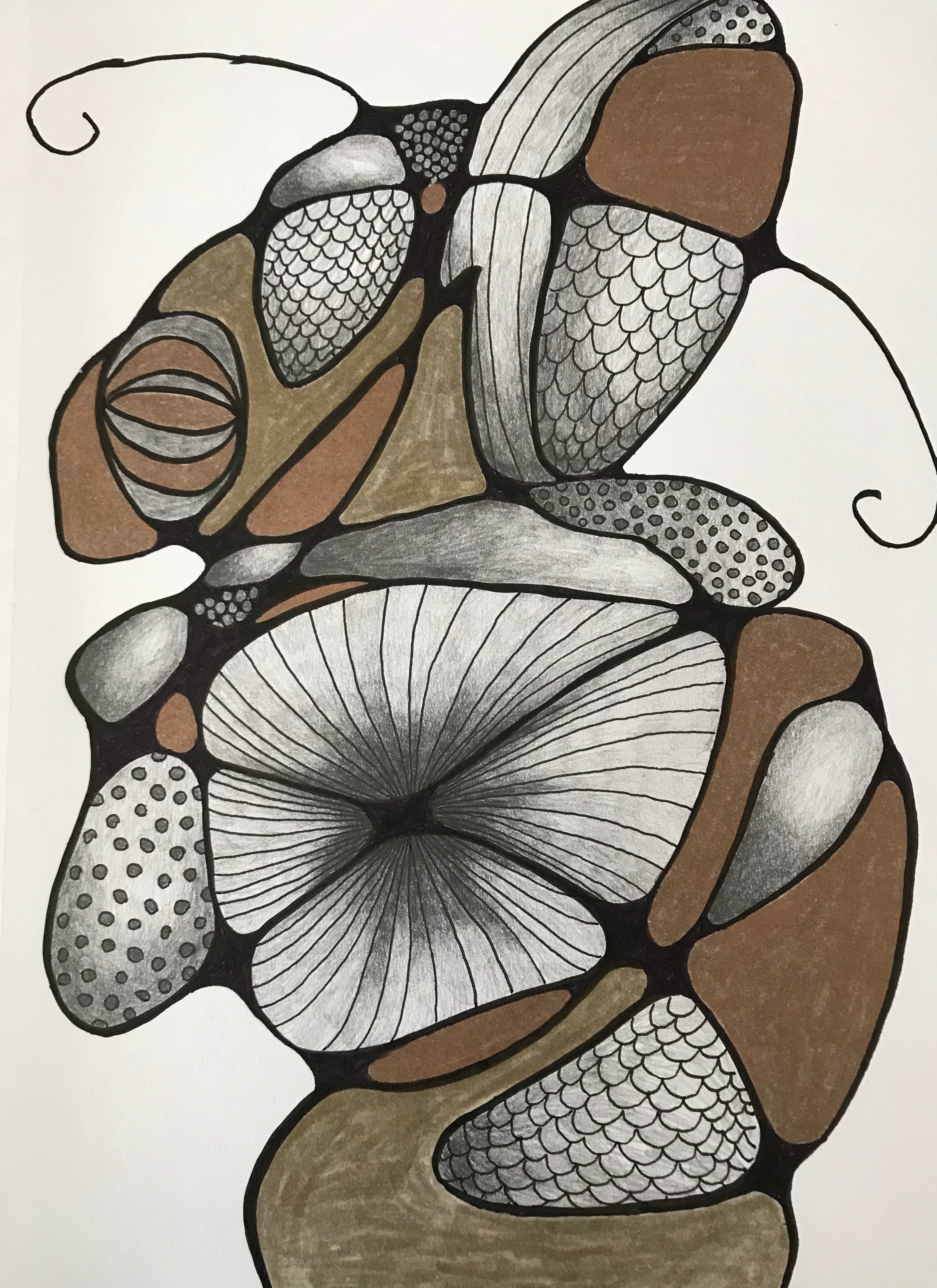
And so I’ve decided to draw. My art supplies are packed and so all I have to work with are a few sharpies and a mechanical pencil. But that’s all I need for neurographic drawing. The technique, a distant cousin to SoulCollage®, begins with just a thought. A quiet thought, a few shapes and a single line. So simple and yet it doesn’t take long before my energy settles. The jumbled words and racing thoughts become quiet, and I’m lost in the shapes I’ve drawn. I’m lost in the moment, which is a nice place to rest.


Growing Freer

I’ve been thinking about balance.

At the start of the pandemic, which now feels a lifetime ago, I decided that my new found spare time offered me room to begin running again. It didn’t matter that over the previous two decades I moved no faster than a brisk walk. In college I ran to relieve the stress of studies and an unhappy marriage. After college and well into my thirties I ran because when I ran I felt strong and invincible. I wanted to feel that way again. And so I made my preparations. I researched the best shoes for my finicky feet and purchased what I could afford. I found websites and apps with titles like Running for Women, Running for Seniors and Running for Senior Women. I downloaded training schedules and created a list of routes to run and calculated the distances. It didn’t take long for me to graduate from brisk walk to shuffle to an actual jog and in those first weeks I looked forward to a healthy body, a clear mind and the lean, organized structure to my life that I craved.

And then a broken side walk came between my toe and my hopes. While my knees and my thumbs healed I considered giving up. A few months later, when I had a second hard fall, I did give up. 

Falling down was not a rare occurrence when I was a child. My mom would tease, You can trip over thin air, she’d say. When I was in sixth grade one of our teachers who was fresh out of college watched me stumble my way through a tangle of classroom chairs and then, dripping sarcasm, joked about my ‘grace’. It’s funny how we remember these things and not our moments of actual grace. To be fair, it’s true that my knees were skinned more often than not throughout my childhood. But I don’t believe it was because I was clumsy or awkward. I was too busy thinking about the next adventure to notice where I was going. My head was always a million miles ahead of my feet.

And I didn’t think too much about having skinned knees when I was a kid. I always bounced back up, brushed myself off, stuck a bandaid on my scrapes and moved on with life.

But last year the cracks in the sidewalk that sent me flying caught me by surprise. I didn’t bounce back like I did when I was a girl. Something was different. For the first time the trust I had in my body, that all would be well, was questioned. For the first time I found myself afraid of the future and the changes my body would continue to go through as I aged. 

When I stopped catastrophizing about a future that is a mystery to me and began to think clearly I realized that there was plenty I could do now to improve my strength and my balance. How I take care of my body now will inform how my body thrives in the future. I can eat more vegetables. Especially cruciferous ones. I can take Vitamin D. I can add more weight bearing exercises to my routine to keep my bones strong. I can remember that physical balance can be practiced. And then I can make sure to include standing balance poses to my yoga practice.

I don’t really have a formal game plan. It doesn’t mean that I don’t care or that I’m not working toward my healthy future. It means I’m letting go of some of the anxiety I hold about the future. Over the last few weeks I’ve realized that a balanced body goes hand-in-hand with a balanced mind. And to keep a healthy, balanced mind I need to remain present with what is rather than focused on what might be. I can smile more. I can reach out to friends more often. I can immerse myself in the things that I love like art and reading and cooking. 

And I can remember that sometimes we sing the body electric’. Sometimes we fall down. 

This Pablo Neruda poem appeared in my Facebook feed this morning along with this advice: we are growing freer…not older.

You Start Dying Slowly

You start dying slowly

if you do not travel,

if you do not read,

If you do not listen to the sounds of life,

If you do not appreciate yourself.

You start dying slowly

When you kill your self-esteem;

When you do not let others help you.

You start dying slowly

If you become a slave of your habits,

Walking everyday on the same paths…

If you do not change your routine,

If you do not wear different colors

Or you do not speak to those you don’t know.

You start dying slowly

If you avoid to feel passion

And their turbulent emotions;

Those which make your eyes glisten

And your heart beat fast.

You start dying slowly

If you do not change your life when you are not satisfied with your job, or with your love,

If you do not risk what is safe for the uncertain,

If you do not go after a dream,

If you do not allow yourself,

At least once in your lifetime,

To run away from sensible advice.”

– Pablo Neruda


What Would You Carry?

As of this week I’ve filled eighty-six small to medium sized boxes that are light enough for a sixty-three year old woman in good health to lift with relative ease. Each box is numbered, the contents roughly noted on a Google spreadsheet. In twelve weeks – give or take a few days – those boxes that I’ve filled with treasures, junk, books – oh so many books – cookware and memories will be loaded onto a truck by a couple of burly strangers and driven across the country. 

When I was young a move required nothing more than a backpack and a few boxes. I had my life pared down to bare necessities and when the weight of possession became too much I happily gave it away. But to flit about as I did in my youth required a lightness for which I no longer yearn. What I want now, more than anything, is an anchor. I want to feel tied to a place and a people. I want a home. I want family and the sense of belonging that’s alluded me since the days when I was able to pack almost everything I owned into a cardboard box. 

I feel some guilt around my selfish wants. I know there is a difference between a ‘want’ and a ‘need’. I have everything I need and for that I’m grateful. But still, I want these things. Wanting pretty things like porcelain teacups from Japan. Wanting furniture made from wood and not multi-density fiberboard. Wanting a dining room table with extendable leaves and room enough for my beloved’s sisters, his nieces and nephews and their children. Cloaked around the knowledge that it can be taken away without warning is a deep want for stability. But this morning I’m wondering if a stability is determined by your environment or how you experience your environment.

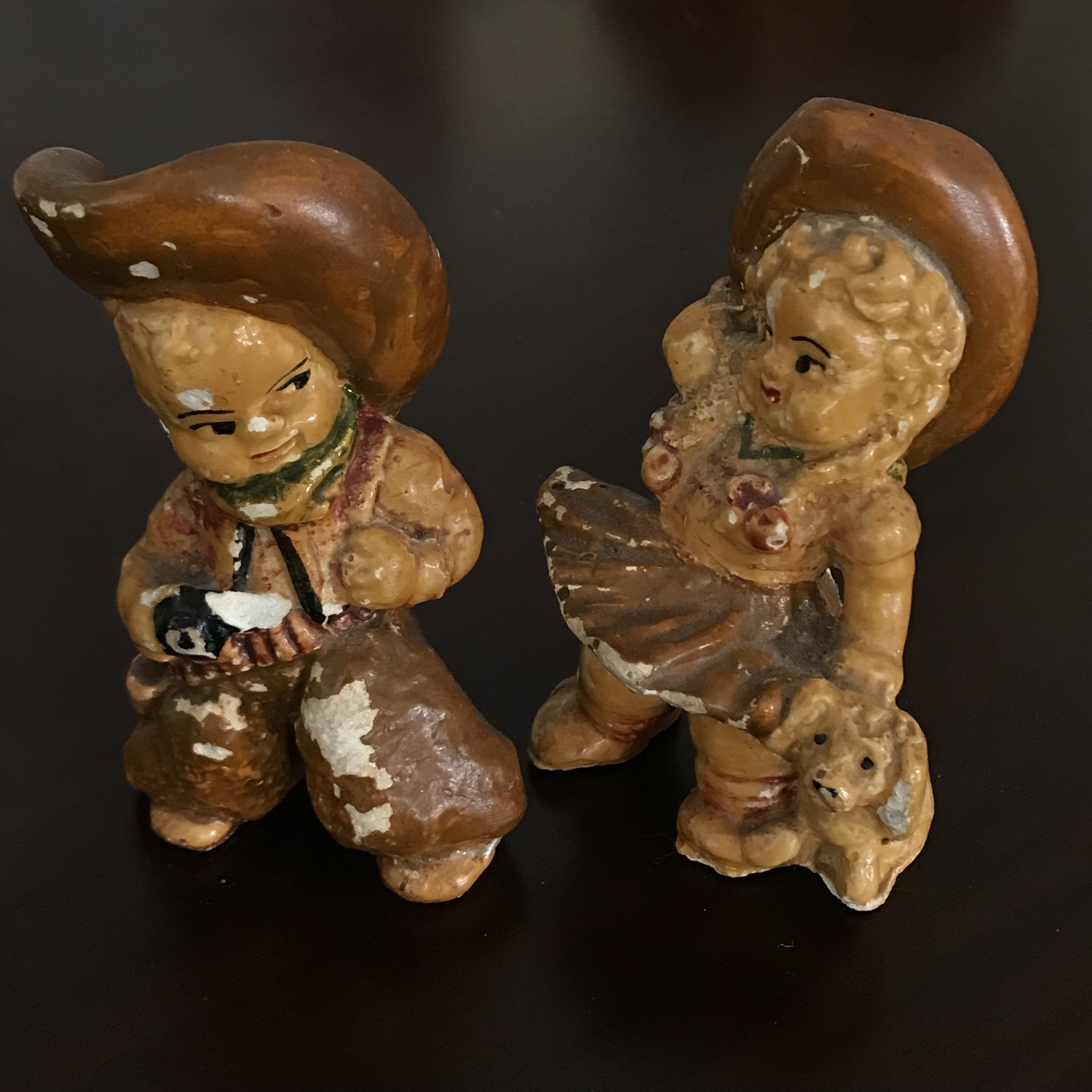
What’s interesting about the process of packing is that as our moving date approaches we’re finding it easier to let go. But I struggle with the precious things. The little things. The tchotchkes that serve no purpose but are the keepers of such potent memories. The carnival chalk ware figurines I found at a car boot sale in Letterkenny, County Donegal twenty years ago. The elf shaped, never-been-burned three inch candle that my beloved keeps at his desk and refuses to abandon. What do we do with the precious things and what would our lives be without them?

The things we choose to keep around us tell our story. They remind us of the places we’ve been, the people we’ve loved, the dreams we’ve lost and the dreams that came true. 

But if I had to chose between these things and my life I would abandon everything without question in order to survive. What must it be like, do you think, to be forced to do that with a moment’s notice? What must it be like to wake up to the sound of explosions and to realize that everything you know, everything you assume will always be there – the school, the hospital, the corner market – is about to be destroyed?

For five weeks we’ve watched missiles rain down on homes that look like the homes we live in and on cities that look like the cities we love. Two weeks ago we saw a mother with her two children, two family dogs and the family friend leading them to safety. One moment they were alive and when the dust cleared they were dead. What did they carry with them? If we opened Tetiana’s rolling suitcase what would we find? What precious toy did her daughter Alise find room for in her backpack? What book was so important to Mykyta that he would choose to carry it with him on their futile attempt to escape a savage war?

What would you bring? What book would you carry?