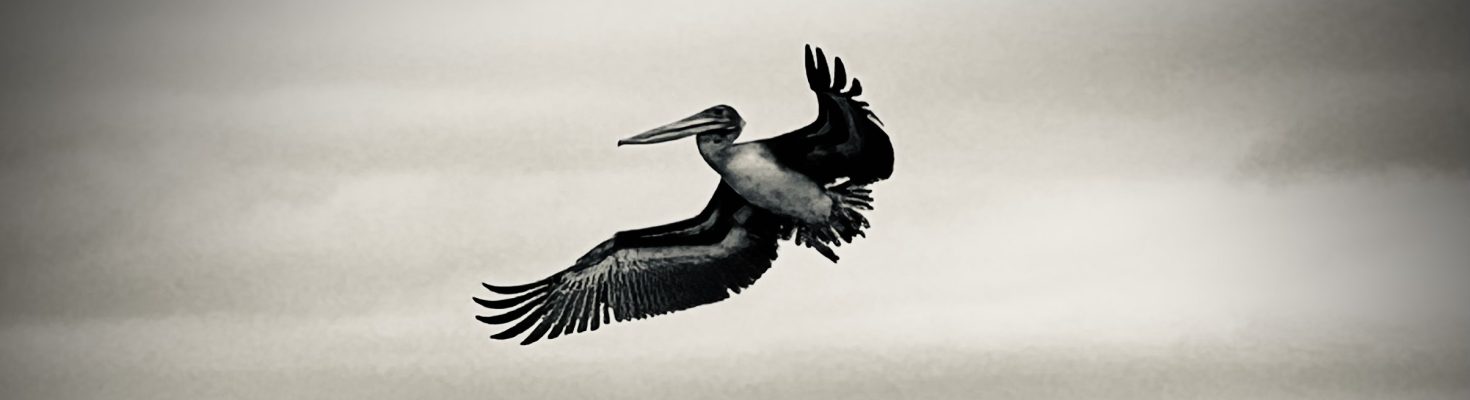

 My favorite sweatshirt is from The Lost Whale, a bed and breakfast near Trinidad, California. On the front, in bold blue Times New Roman, is the word ‘lost’. On the back, of course, is the word ‘found’.
I was much better at being lost when I was younger. I thought nothing of exploring foreign cities or wandering off marked trails when hiking the hills near my childhood home.
I now prefer leaving the getting lost to others. I want to believe my resilient and brave self of the past now clings to safety – clings to what is known – because the world has changed. But as much as the world has changed, so have I. My fearlessness has been tempered by sixty years of life experience. It emerges from time to time but for the most part I enjoy cheering others as they take great leaps of faith.
Months ago I had a conversation with a student weeks away from graduating from a 200-hour yoga teacher training about how it feels to be lost. This student was filled with deep uncertainty and considered leaving the teacher training and abandoning his yoga practice. Reading a recently published book about yoga in the West triggered deep self-doubt and distrust in a tradition thousands of years old. He felt lost.
My advice? I counseled the student to stay true to himself. I told him to read more books and to embrace feeling unmoored. To trust the unknowing and to not be afraid if he found himself wandering from a well-trod path.
I don’t know if my advice was sound but I can empathize with his dilemma. How do we continue to teach yoga when the practice we love evolves into something that feels far removed from what we understood yoga practice to be when we first began? Change is constant. Are we obligated to be carried along? It can be a positive force but change can be detrimental, too. So how do we discern the difference between change that elevates our practice and change that dilutes the power of our practice?
 Remaining true – living authentic lives – leans against the change that arrives unexpected and uninvited. It leans against the change that is slow and stealth*. Leaning against the latter – against the change that can’t be felt until we look behind and see how it all once was – requires a steadfast awareness of who we are as individuals and what we offer as yoga teachers.
We’re encouraged to ‘be the change we want to see’. That’s nice advice. But what if we turned it around. What if we decided to be a North Star? What if, as teachers, instead of riding change and trends what if we became a shining light? I guess what I’m trying to say is this: be true north for your students. Keep studying. Keep learning. Understand the depths of the tradition we teach.
*the rise of the YIC (Yoga Industrial Complex), the need for yoga teachers to also be adept at creating mix tapes, the presumed need for Yoga Alliance, the glut of factory-like teacher training programs, the focus on asana at the expense of seven other limbs, the revelations of teacher misconduct and the assumption that if you see the words ‘guru’ or ‘master teacher’ in front a name then it must be so, the loss of humility…
 I’m at a four-day yoga therapy conference at a Hyatt Regency in Virginia. I’m sitting on the floor of a large, carpeted ballroom. It’s filled with one hundred beautiful, mostly mid-life women dripping in Lululemon, Om symbols, prayer beads and diaphanous Shakti-printed shawls purchased at the ashram in Buffalo where they attended their last silent retreat.
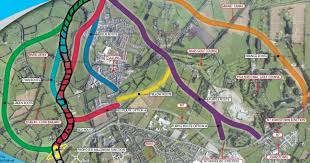 The Naas Bypass, opened in 1983, was the first of its kind in Ireland. Otherwise known as the M7, the highway connects the town Naas in County Kildare to the town of Limerick one hundred and sixty-eight miles to the southwest. In the thirty-four years since the ribbon cutting, new and upgraded bypasses have woven there way across the country. But the Naas Bypass has the honor of being the first road in Ireland to take a driver around rather than through a town. In doing so it relieves congestion in Naas’s town center and slices minutes from the journey.
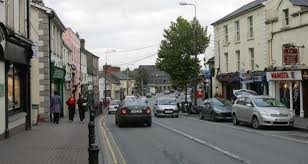 It’s a nice trade-off. We crave speed and ease and so when the goal is to get from Naas to Limerick as fast as possible then the town’s charming character, with its retro Eddie Rocket’s diner and Carphone Warehouse, is not a priority. We can avoid being slowed by the locals on their way to do a weekly shop at Supervalu. We don’t have to dodge truant children chasing runaway pups across the street. We can avoid anything at all that threatens our smooth journey to someplace else and enjoy the open road. The bypass is an alternative that’s both fast and direct.

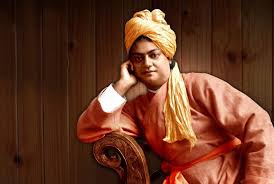 It was Vivekananda’s arrival at the World Parliament of Religion, however, that sowed the seeds of yoga across a wider receptive audience. His delivery of twelve off-the-cuff speeches stole the show and made him a sought-after teacher of the yama and niyamas, pranayama and Kundalini. Vivekananda’s yoga was Raja (Royal) Yoga. Raja Yoga is the practice of attaining unity with the mind, body and spirit. In other words, attaining a state of yoga. It differs from Hatha Yoga in that while Hatha intends to still the mind through the body and breath, Raja brings the practitioner to a state of yoga through the control of the mind. Hatha prepares the student of yoga to practice Raja. The practice of asana is not the key element in Raja Yoga as it seems to be in Western Hatha Yoga, and Vivekananda ignored asana. That doesn’t mean the practice of asana isn’t important, but the practice is intended to build strength and flexibility in order to tolerate long hours of sitting in meditation.
 Last month I walked past the sandwich board outside of University Avenue’s Lululemon emporium twice every Tuesday and Thursday for two weeks and each time I wanted to kick it. In my wildest moments I envisioned myself carrying a can of spray paint so no one else would walk past, read its message, and have that little moment of feeling less than. What words did I find so offensive?


 Mimm Patterson
