How Do We Know How to Teach?

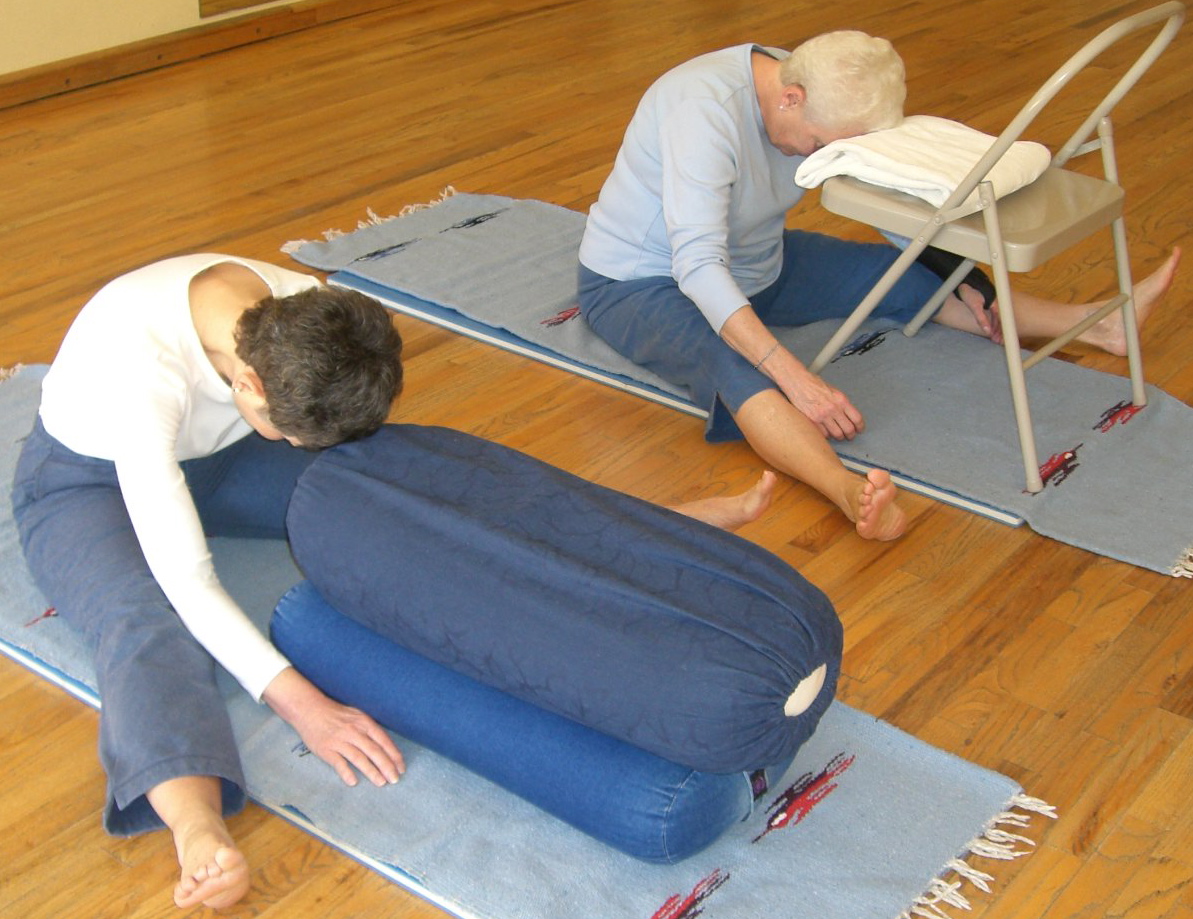
CIMG0701There are yoga teachers who prepare for each moment of each class with intention and crystalline clarity. These are the teachers who write a script and a set list of poses. They’ve chosen a pranayama practice, cued a playlist on their iPad and have bookmarked a Pema Chodron quote.

Being prepared for the roomful of students we are about to teach is absolutely necessary and this type of teacher is, if anything, prepared. But is that truly being present for your students? Or is it the means to an entertaining end? I don’t know the answer to that question. Perhaps it depends on the collective intentions of the individuals in the studio – the expectations we have for the practice.

I’ve just stepped into my third decade of teaching and there are still times when my confidence takes a hit. Perhaps my attendance has temporarily faltered or a student unfamiliar with my teaching style offers criticism. No matter. Out of some misguided belief that all good yoga teachers create detailed lesson plans, I will find myself writing a set list of asanas. I’ll maintain this routine for a few weeks before realizing that I am not that teacher. It’s not how my asanas roll.

It has been my experience that teaching from a script inevitably results – for me – a less successful class. While this won’t be true for all teachers, my scripted classes lack connection and the seamless organic flow that I enjoy and believe are a necessary component of all good yoga practices.

But that doesn’t mean I’m not prepared.

While I have a set of intentions for each and every class I teach, it’s not until I arrive at the studio and can feel the energy of the room, the energy of my students and the energy contained within me as the teacher do I decide on the direction the class will take and the sequence of poses.

My decision is based on intuition and instinct. The trust I have in my teaching intuition took time to manifest and it is something that I now value and hold near to my heart.

I don’t believe it is something that can be taught. The qualities of intuition and instinct we develop are nurtured through our successes and our failures as teachers. And I’ve had plenty of both.

But – and as teachers we know this – intuition and instinct or the ability to create a great playlist are not the only qualities on which we should rely. As long as we teach we are also and always students. As long as we teach we are also and always beginners.

← Back

Thank you for your response. ✨


Emotionally Bypassing Joy and Sorrow

Shadow Bridge IEach week I open and close my yoga classes with a reading.  I try to choose passages that have heart and meaning in my own life.  I hope that if the words I share touch my emotional center then they may have resonance for others.  It doesnt matter to me where I find inspiration.  Over the past month Ive read quotes from F. Scott Fitzgerald, Martha Graham and Albert Einstein.  This past week, however, I was reading from The Pocket Pema Chödrön.  Each day last week, sometimes several times each day, I heard myself deliver Pemas thoughts on our desire for certainty and happiness.  I heard myself, through Pema, encourage my students to touch the center of their pain and to be present with it.  In that way, rather than becoming weaker through our endless craving for security we might be opened.  We might find strength.

These are powerful ideas.  Not only does she want us to sit in our own discomfort, she wants us to sit with the suffering of the person to our right and to our left.  She wants us to take on all suffering so that we can learn to find a way to be at home in our own.  Pema wants us to be still in the suffering.

Yet I cant help but believe that we must also be still in the joy of each moment.  I dont know that its true we brush by suffering in order to find our happy.  What I see in my life is this:  I brush by everything (the joy and the sorrow) in order to tick one more to do off my daily list.  I wrap myself in a façade of good intentioned optimism that functions as an emotional bypass.  And so, while I fail to touch the center of my pain I also dont touch the center of my joy.

This week I will hold space for both sorrow and joy. I will resolve to not rush by the sadness I feel for a friends suffering.  Instead I will notice how it feels in my breath and my body.  I will resolve to not rush by the joy I feel for life – for the birdsong outside my window or the sweet stubble of the nasturtiums seeds I planted that are just now beginning to break out of the soil.

There is suffering all around us.  But there is joy, too.  Take time for both.


← Back

Thank you for your response. ✨


Vision, Clarity and Cataracts

A few hours after surgery.

A few hours after surgery.

For the twenty-four months that I was in graduate school I struggled to complete reading assignments. I labeled myself lazy. I was convinced I lacked discipline when it felt impossible to read more than three or four pages at a time.

The truth was I struggled to complete reading assignments because I was struggling to see.

Over twenty million Americans over the age of forty have cataracts and in 2015 approximately three million will have cataract surgery. I am one of those three million. Two weeks ago the vision in my left eye hovered around 20/400. Today my distance vision in the same eye is 20/20. In a few months I’ll have the cataract in my right eye removed. I hope for the same sparkling results.

It’s true. The world, through my left eye, sparkles. I’m shocked by the clarity and crisp edges, the color and the detail. How did I not know what I was missing?

I guess cataracts sneak up on us. The diminishing light isn’t noticed. It’s not until an ophthalmologist sees the clouding of the lens and says, “Oh! You have a cataract!” that we realize we’ve been missing out. We’ve not been able to see all that this beautiful world has to offer.

In that way, cataracts are a bit like habits we ignore until we can no longer notice the impact they have on our lives.

I have some habits, some cycles I go through, that diminish the quality of my life in the same way that pesky cataract diminished my vision. The patterns that I bump into again and again dull my spirit. They include disparaging thought loops and actions that I know are harmful. They include choices that do not support health and wellness and spoken words that weaken the positive energy I wish to carry into the studio classes I teach, my work with individual clients and the loving relationships I’m blessed to have in my life.

Becoming aware of the patterns that make it difficult to live our best and brightest life and then taking action to bring about a return to clarity reminds us that we all hold a vision in our hearts.

This simple procedure to repair my broken vision has led me to ask myself once again, “How do I want to walk through this life?”

For now, at least, I can see that walk a little more clearly.


Joy and the Fearless Heart

IMG_2910My hair went through a few changes last year. From spirals to straight and back again. No bangs to total bangs. And then last April, just when I was finally learning to embrace the curl and the fringe, without a second thought I chopped it all off.

There was a time when I believed that changing my hair would change my life. In my thirties I kept my hair in a graduated bob that would make Mary Crowley proud. And then, influenced by my new-found crush on all things Irish I took an electric razor to my head. I wasn’t quite brave enough to cut as close a shave as Sinead O’Connor but it was enough to turn a few heads – especially those times that I forgot to attach my #5 blade and carved random bald spots onto my pate.

Sigh. Those were the days.

Then there was the color. Various shades of red sometimes verging on purple. Dark brown leaning toward black. Platinum blond (just once for about ten days).

Not to mention the clothes. Vintage dresses layered with suit jackets and vests from the men’s section of the local charity shop. A cheap knock-off of the black Doc Marten boots I craved and fishnet stockings. Paisley with hound’s-tooth with plaid.

Those were, indeed, the days.

Each time I changed my hair or wore a new tattered treasure I thought, “If I look like this then I’ll be more like that.By ‘that I think I meant whatever quality I believed I lacked. In those years I hoped to be brave and confident, artful and hip. Those were the years I struggled as an artist and I hoped that if looked more like what I believed an artist should look like then I’d have a better chance at success. It didn’t occur to me that showing up each day and working hard, allowing my authentic voice to speak through my images and facing the world with a fearless heart would be more effective than a haircut or a pair of boots.

I’m thinking about my past and I’m thinking about how, from time to time, those same ideas rise up in me. About how I need to be a certain body type or wear a certain brand of yoga attire in order to look like what I think yoga teachers should look like.

Fortunately I’m older and maybe I’m a bit wiser, too. It’s not long before I remember all those things I wish I knew back when I was shaving my head with a #5 blade.   It’s not long before I remember my authentic voice and who I am as a teacher. It’s not long before I remember that who I am is someone who shows up to the studio with a fearless heart. It’s not what I look like that makes me a yoga teacher. If you asked me I think I’d say it’s the joy I feel when I teach. That’s what makes me a yoga teacher. The fact that I am filled with joy each time I walk into a studio. Even those days when my alter ego Snarky McSnarkington tries to take over. Joy still wins.

February was a fierce month. But now it’s March. I’ve settled into my new home and my new life. Those cravings and longings that I wrote about just a few weeks ago belong to someone else. Those couldn’t be my words. Those emotions, the desperation, they were all fleeting moments. But I moved through them. And I’m home.

← Back

Thank you for your response. ✨