
Note: Like everything, Practically Twisted in impermanent and due to disappear in a few months. Please follow me at www.mimmpattersonart.com.
Artist and teacher Lyn Belisle recently wrote about the question, “Is it archival?” on her blog, Shards. Her post got me thinking about permanence, and how differently I answer that question now than I would have thirty years ago.
Much of my work is about memory. A single moment. A fleeting feeling. A fragment of a story that refuses to let go. And memories are not archival. They shift over time. They soften at the edges. Details disappear while others become strangely amplified. We revisit them, reshape them, and sometimes rewrite them altogether.
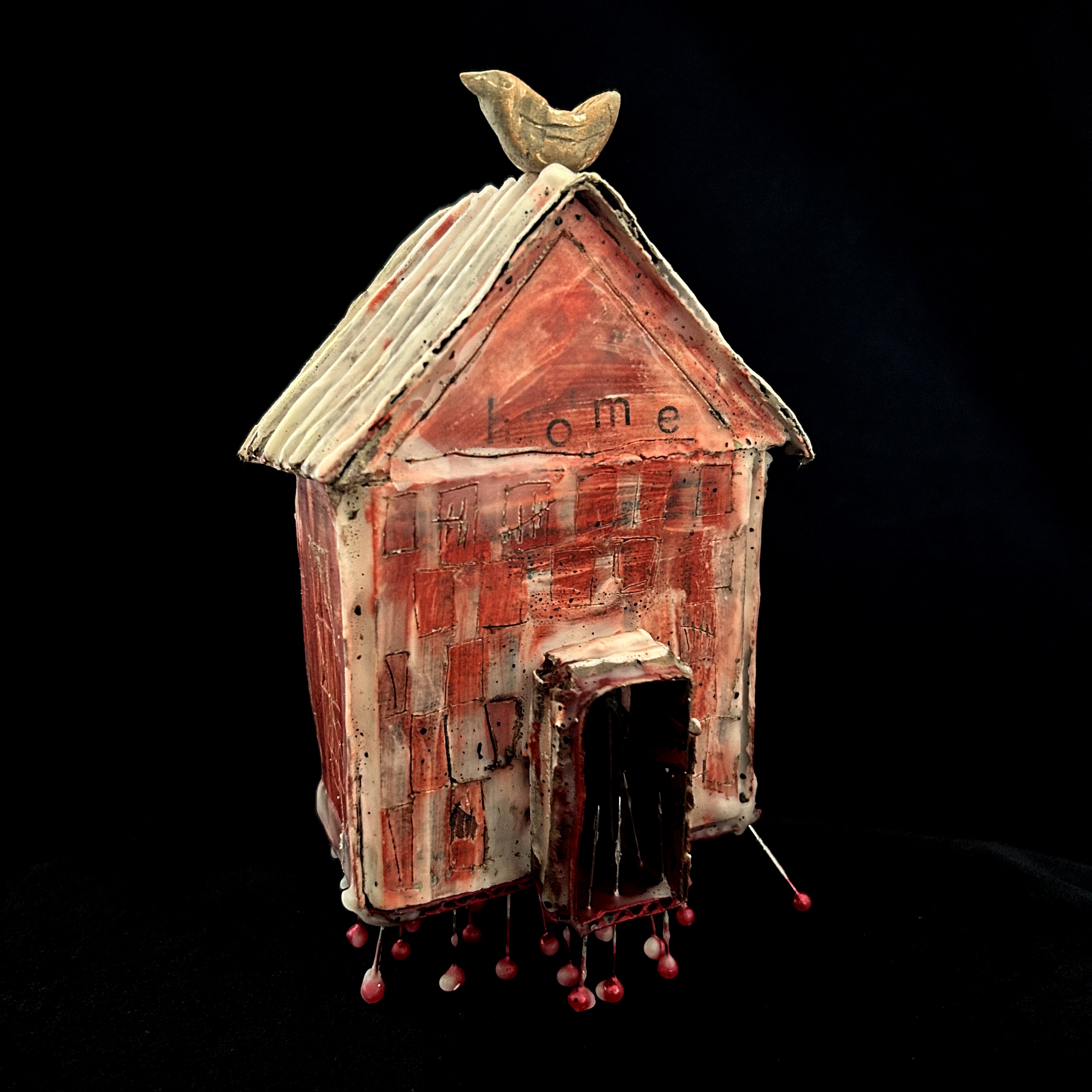
Yet for years, I worried about making work that would last forever.
When I was an artist the first time around, conversations about “acid-free this” and “archival that” were everywhere. I was creating monotypes and beginning my exploration of alternative photographic processes like Van Dyke printing and cyanotype. I chose the best paper I could afford, backed framed pieces with acid-free foam core, and worried about fading, discoloration, and deterioration. I wanted the work to endure unchanged.
Now, I find myself less concerned.
I still build my work carefully. I want it to be strong and thoughtfully made. But if a piece changes over time, it no longer feels like a failure. Newsprint yellows. Spackle cracks. Wax shifts. Materials age just as we do.
And perhaps that’s appropriate.
If my work is rooted in memory, why shouldn’t it carry some of memory’s qualities? Why shouldn’t it bear evidence of time passing? Why shouldn’t it evolve?
Letting go of the need to create something permanent has been surprisingly freeing. It has opened the door to experimentation and curiosity. Instead of asking whether a material will last forever, I find myself asking whether it is the right material to tell the story I want to tell.
There is another kind of permanence I have also let go of: the desire to own my ideas and methods.
The first time around, I guarded my techniques carefully. I didn’t want anyone to know how I wrapped cheesecloth and cut-up hosiery around the lens of my enlarger. I didn’t want to explain how I blurred images during processing or transformed black-and-white photographs with oil-based pigments. I treated those discoveries as secrets.
Looking back, I realize that mindset came from insecurity.
And it cost me more than it protected me.
By holding tightly to what I knew, I missed opportunities to learn from others. I missed collaboration, conversation, and community. I missed the chance to see where an idea might lead when shared freely.
This second journey as an artist feels different. I’m happier traveling light.
I’ve stopped worrying so much about permanence, whether in materials or methods. I don’t need my work to remain unchanged forever, and I don’t need to protect every technique I discover. Both approaches assume a kind of permanence that life rarely offers.
Instead, I’m interested in what happens when things change.
Materials change. Memories change. Artists change.
And maybe that’s the point.
I’ve also discovered that sharing what I know brings me far more joy than guarding it. To that end, I’ll be teaching a two-day vessel-building workshop at McGuffey Art Center in October. More details will be available closer to the date.
As artists, what stories are you trying to tell? How important is permanence in your work? Has another artist ever shared a technique, tool, or piece of wisdom that changed the way you create?

