Impermanence

Note: Like everything, Practically Twisted in impermanent and due to disappear in a few months. Please follow me at www.mimmpattersonart.com.

Artist and teacher Lyn Belisle recently wrote about the question, “Is it archival?” on her blog, Shards. Her post got me thinking about permanence, and how differently I answer that question now than I would have thirty years ago.

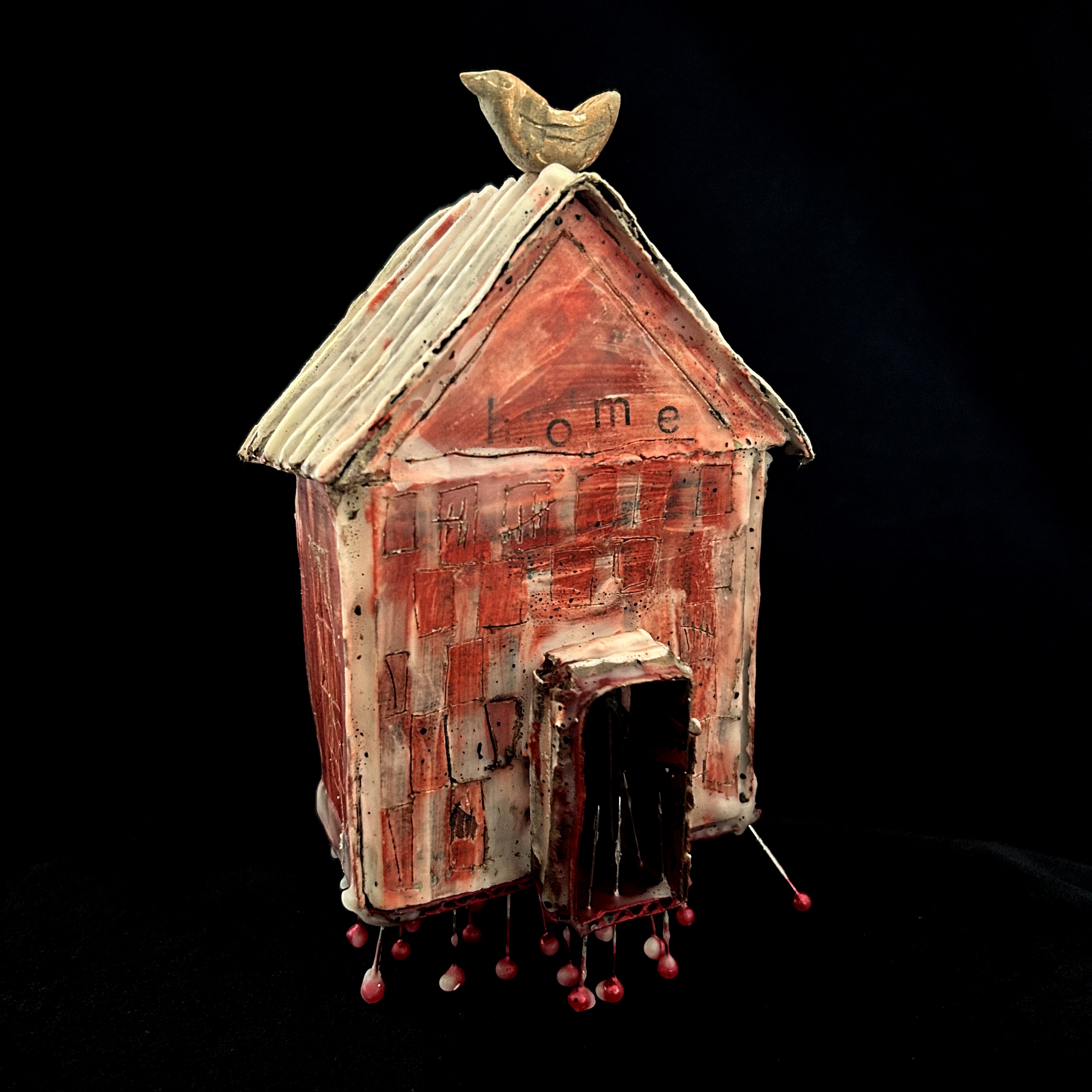
Much of my work is about memory. A single moment. A fleeting feeling. A fragment of a story that refuses to let go. And memories are not archival. They shift over time. They soften at the edges. Details disappear while others become strangely amplified. We revisit them, reshape them, and sometimes rewrite them altogether.
Yet for years, I worried about making work that would last forever.

When I was an artist the first time around, conversations about “acid-free this” and “archival that” were everywhere. I was creating monotypes and beginning my exploration of alternative photographic processes like Van Dyke printing and cyanotype. I chose the best paper I could afford, backed framed pieces with acid-free foam core, and worried about fading, discoloration, and deterioration. I wanted the work to endure unchanged.

Now, I find myself less concerned.

I still build my work carefully. I want it to be strong and thoughtfully made. But if a piece changes over time, it no longer feels like a failure. Newsprint yellows. Spackle cracks. Wax shifts. Materials age just as we do.

And perhaps that’s appropriate.

If my work is rooted in memory, why shouldn’t it carry some of memory’s qualities? Why shouldn’t it bear evidence of time passing? Why shouldn’t it evolve?

Letting go of the need to create something permanent has been surprisingly freeing. It has opened the door to experimentation and curiosity. Instead of asking whether a material will last forever, I find myself asking whether it is the right material to tell the story I want to tell.

There is another kind of permanence I have also let go of: the desire to own my ideas and methods.

The first time around, I guarded my techniques carefully. I didn’t want anyone to know how I wrapped cheesecloth and cut-up hosiery around the lens of my enlarger. I didn’t want to explain how I blurred images during processing or transformed black-and-white photographs with oil-based pigments. I treated those discoveries as secrets.

Looking back, I realize that mindset came from insecurity.

And it cost me more than it protected me.

By holding tightly to what I knew, I missed opportunities to learn from others. I missed collaboration, conversation, and community. I missed the chance to see where an idea might lead when shared freely.

This second journey as an artist feels different. I’m happier traveling light.

I’ve stopped worrying so much about permanence, whether in materials or methods. I don’t need my work to remain unchanged forever, and I don’t need to protect every technique I discover. Both approaches assume a kind of permanence that life rarely offers.

Instead, I’m interested in what happens when things change.

Materials change. Memories change. Artists change.

And maybe that’s the point.

I’ve also discovered that sharing what I know brings me far more joy than guarding it. To that end, I’ll be teaching a two-day vessel-building workshop at McGuffey Art Center in October. More details will be available closer to the date.

As artists, what stories are you trying to tell? How important is permanence in your work? Has another artist ever shared a technique, tool, or piece of wisdom that changed the way you create?

The Enso Circle Residency

Quick reminder. Practically Twisted is going away soon. Please follow me here.

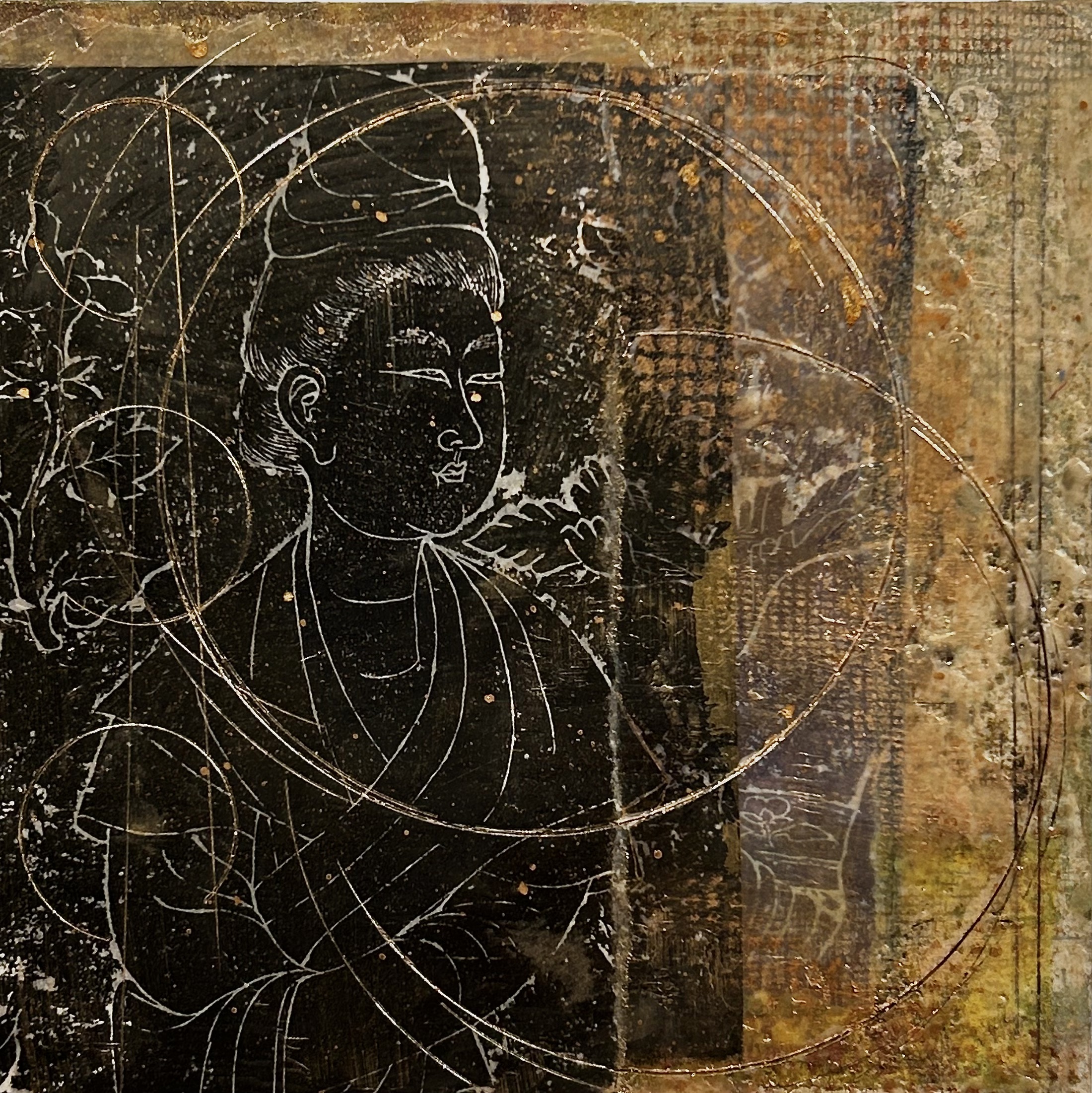
Last year I submitted my application and was selected to be part of the Enso Circle 12-week online residency. But the timing felt off and, with reluctance, I put the residency on hold.

The timing was perfect this year. My exhibit at McGuffey was installed. The opening was on the first Friday in March, and the residency began the following Monday. What better way to process that weird, restless feeling I experience between the end of one intensive burst of creative energy and the beginning of whatever happens next?

I have a few more weeks with my Enso Circle cohort, and as the residency begins to wind down, I’m reflecting on what our time together is adding to my creative process.

I’ve shared this time with six other artists from across the country and our two facilitators, the Enso Circle creators Lyn Belisle and Michelle Belto. I was very familiar with Lyn’s gorgeous work, having taken several online classes with her via Teachable and being charmed by her relaxed and honest approach to instruction (case in point: in one video she accidentally replaces the word “methylcellulose” with “Metamucil” — more than once — and does not edit out the malapropism). I knew Michelle’s work but wasn’t as familiar with her teaching; I’ve come to love her calm, quiet, almost Zen-like approach.

Every Monday begins with a morning email and concludes with a gathering over Zoom to learn, to discuss, and to share. But I have an aversion to sitting in circles and talking about feelings, so I don’t always look forward to the check-ins, which feel like the online equivalent. That being said, Lyn and Michelle manage these meetings beautifully, and over the weeks I’ve come to appreciate my cohort’s varied experiences, the wounds we lay bare, and the hopes we share.

Yesterday’s discussion danced around impostor syndrome, authenticity, and the self-talk we cling to as a reminder that we’re not good enough. By the end, I’d loosened my grip on negative self-talk (at least a little) and embraced the idea that my Enso cohort and I are continuing a long lineage of women artists. What Lyn and Michelle share with us they learned from their own teachers, who learned from their teachers, who learned from their teachers. It grounds me and gives me strength to imagine our lineage traveling back to the first woman who dared to trace an ochre line around her hand.

Our online lesson guide provides the resources we need to move our studio practice forward and ideas to consider as we attempt to bring spirit and authenticity to our work.

We have a Slack channel — it’s the virtual hub of the residency, and I check in a few times each day. It’s here that we ask questions, submit weekly progress reports, post work-in-progress, and do our best to offer substantial yet compassionate critique.

The residency concludes with the creation of a catalog featuring the work created over the three months we’re together.

What I’ve appreciated about this residency is the focus it provides. I have a reason for returning to the studio to explore anew. I also appreciate the selflessness of Lyn and Michelle, who offer support by being available to answer questions, provide reams of resources, weekly challenges, and expert technical advice.

I’m grateful to be part of this circle of nine women artists. We are all so very different. At the start of March we determined our individual goals for the residency. One artist set the intention of being a witness to her creative process. She wasn’t concerned with making or doing—just watching. As someone whose studio practice leans toward “jump first, ask questions later,” I was enthralled. As much as I’ve learned about technique, as much as I’ve explored new tools, it’s this woman’s contemplative approach to understanding her process that might be the most important lesson.

Or maybe jumping in feet first is my process.

Whether it is or isn’t, I think that after my residency with the Enso Circle ends, I might take a week or two away from the studio. I might step back for a bit to absorb all that has happened to me—to my art—since I moved into Studio 6B at McGuffey Art Center sixteen months ago. After pushing, pushing, pushing for so long, it might be time to rest, reflect, and reset.