Family Jewels

At the start of each Guided Autobiography workshop I present the next meetings theme and the sensitizing questions. Two weeks ago I introduced the theme ‘jewelry’ with these prompts:

Is there a piece of jewelry that has been passed down from one generation to another? If so, what significance does that piece of jewelry hold for you? Is there a piece of jewelry that you would like to pass on to someone? To whom? Why?

Did you ever lose a piece of jewelry that you treasured? What did you do to try to find it? Was it ever found? If not, how did you deal with the loss? 

Did someone in your family wear a piece of jewelry every day? Was it a ring? A necklace? Perhaps a string of pearls? As a child did you wonder about that jewelry? Did you want to wear it yourself?

Two weeks later we shared our stories. Here’s mine:
Jewelry

My personal style leans toward Shaker plain. One Fitbit on my left wrist. For years my FitBits were worn with the company’s standard black neoprene watch band. Last year, when I purchased an upgrade, I decided it was time to push the boat out – you know – mix things up – go a bit girly. So I traded in the standard black for a delightful beige. Fancy!

But wait. There’s more. When I’m dressing up I add thin silver hoops to my pierced ears. 

That’s not to say I don’t wish I wore more bling. Good lord I’ve tried. After all, I have plenty from which to choose. I have jewelry boxes filled with generations of cheap cocktail rings from the 1950’s, necklaces my great-grandmother wore, a huge cameo ring – black onyx set in gold – that belonged to my grandfather, and a heap of cubic zirconium I have reason to believe my sister purchased alone, late at night, from the Home Shopping Network. And of course I have beautiful gifts of jewelry from my beloved.

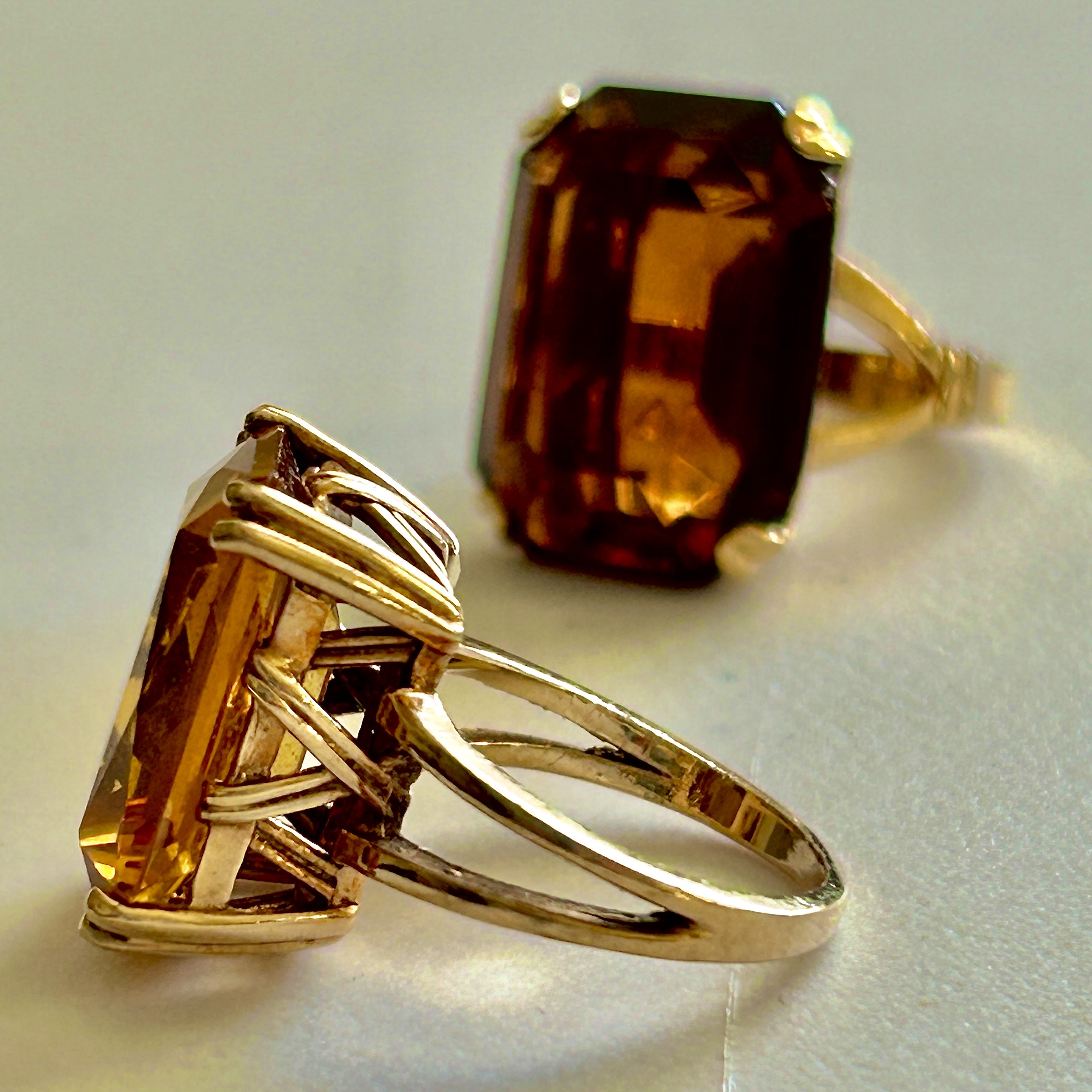
My mom loved bling. Especially on her fingers. In my jewelry box are huge gold rings with large citron, smoky topaz and aquamarine stones. I remember seeing her wear the smoky topaz as a child but I think the other rings were given to her by suitors after I left home. Their settings give off a late 1970’s big hair lounge lizard vibe.

Just ten years earlier the vibe leaned more toward Mother Nature, hippies, peace and love. My favorite ring of hers from that era is a large swirl of silver made to look like two feathers circling one around the other. The ring is set with large cabochons of turquoise and red coral. I love this ring. The truth is I’ve even worn it once or twice – but only to gallery openings – because it reminds of the type of jewelry older women artists wear. Of course that’s not even really a thing. Like, there’s no law that says older women artists have to wear chunky rings and statement necklaces. But some do. And I love a fabulous statement necklace on black cashmere. On someone else, of course. Far be it from me to even attempt to pull that off! But what I love most is the way this ring looks on an older hand that has spent a lifetime working hard and has the broken nails and torn cuticles as proof. 

There’s another ring from my mother’s collection that I remember from childhood. It’s a thick band of a unknown material made to look silver and carved with all the symbols of the late 1960’s – a smiling sun, a piece sign, an Egyptian ankh. I remember it belonged to a boy my sister Margaret was dating. And I remember  9-year-old me performing my version of Bob Dylan’s ‘Mr. Tamborine Man’ for him. Singing lyrics I carefully (and wrongly) transcribed from the record and accompanying myself with my baritone ukulele. He gave the ring to my sister and somehow it ended up in my mother’s jewelry box and now, a lifetime later, it rests in mine. I have no idea what happened to that boy but I want him to know his ring is in safe hands.

My sister loved bling, too. For as much as they disliked one another, my mom and my sister were two bitter, bling loving peas in a pod.

Margaret’s weakness was fake diamond engagement rings. A week after she died I arrived at her tiny one-bedroom apartment in Norfolk, Virginia with an empty duffel bag and a little more than 24 hours to find anything of importance. At this point what was left of my family was my mother and me and the deep chasm of estrangement seasoned with secrets never spoken. And that’s how I was left with the task of convincing the manager of the apartment complex that I was who I said I was and that’s how I was left with the pain of leaving so much behind. 

My sister hoarded. There were five vacuum cleaners in her bedroom. A closet filled to the breaking point with possibly every item of clothing she had ever worn as an adult. Dozens and dozens of rubber flip flop sandals. Shoeboxes filled with clothing she had sewn for her Barbie doll collection decades before. A freezer stuffed with frozen meals and cans of frozen vodka tonics. Stacks of books. Overflowing ashtrays. Half drunk cups of black coffee. Sadder still, a large box filled with a least one hundred unopened Beanie Babies – those popular, deliberately understuffed toys that during the late 1990’s people collected and resold for profit.

And then there was the jewelry. When I found the rings I hoped so much that the stones were genuine but of course, with a closer look, it was clear they were not.

Still, I put them in the duffle bag, along with three Beanie Babies (one for my mom and two for me), and a pair of orange rubber sandals. Other things, too. My sister’s tarot cards, some photo albums and other mementos that would remind me that she once lived. That I once had an older sister who, like our mother, loved bling. 

I hope they’re together now. Reconciled. Making jokes at my expense and trying on whatever heavenly jewels they can find.

Applesauce and a Jam

I returned to facilitating Guided Autobiography (GAB) online last week. I have an unconventional approach to these workshops. We’re working our way through the alphabet and for this series of workshops we are choosing prompts beginning with the letter ‘j’. Our first prompt was the word ‘jam’. The sensitizing questions encouraged us to consider jams we’ve made or help make, or jams we’ve experienced. I never made jam – I only ever made applesauce. But I’ve been in a few jams. Here’s a story about making applesauce with my grandmother and getting myself out of a jam.

My grandmother and I never made jam. We always made applesauce. My grandmother, Pauline, lived with her husband, Robert, in a red brick corner row home across the street from McKinley Elementary School on Poplar Street in Allentown, Pennsylvania. The school, red and as imposing to a young child as Uluru, was built in 1880. It was where I attended kindergarten and its playground where I learned to ride a bike. My grandfather hated having the school’s playground a stone’s throw away from the overstuffed chair where he read the Morning Call Chronicle, smoked his Chesterfield cigarettes and chased his whiskey with cans of Schmidt’s beer. In the summer, when his window was open and the kids on the playground were laughing too loud he’d hold himself up at the front door and cuss at them to shut up. That only made the kids laugh louder. 

While I was still in grade school my grandfather would on occasion settle behind the driver’s seat of his massive beige Chevrolet Bel Air and drive my grandmother the thirty minutes from Allentown to our home in Lynnport. This was before my grandfather’s smoking and diabetes caught up with him and doctors took his leg. It was before a tumor took his voice and the cancer took his life. 

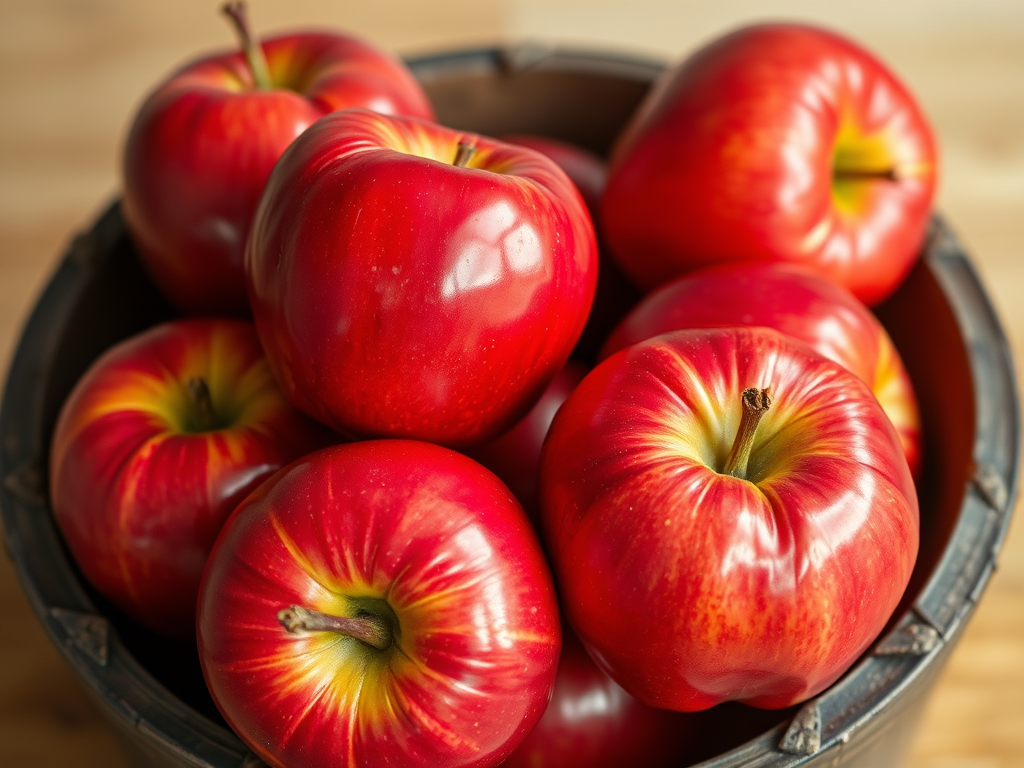
But when he still drove, my grandparent’s would visit their only daughter, my mother Barbara. If it was late summer and the start of apple picking season in Pennsylvania my grandmother would bring the tools we needed to turn the apples into sauce – a large, well-worn aluminum cone-shaped strainer, the wire stand that held the strainer upright and the massive wooden pestle with which we forced the peeled and cooked apples through the strainer’s tiny holes. The apples were bought in bushels from local farmers and by the end of my grandparent’s stay my grandmother and I had made enough sweet apple sauce to see us through the winter.

It was always applesauce. I don’t know why we never made jam.

Where I lived in Pennsylvania blackberries and raspberries grew in hedgerows and were free for the taking.

When the berries were ripe the kids in my gang (some names I remember and some names I’ve lost) would walk along the railroad tracks, past the swimming hole under the silver bridge, dodging deer flies and muskrats, to an abandoned house. Along the way we’d pick berries until our fingers were sticky and blue.

I don’t know the house’s story, who owned it and why it was left abandoned. But I remember the outer walls were all but gone filling what remained of the rooms with light dappled by overgrown trees, brambles and poison ivy. I remember, too, the smell of dust and mold and animals. I remember the shattered piano that had fallen through the first floor to the basement. And I remember climbing broken stairs to the attic. I was brave then, and climbed the stairs alone. Half the roof was gone but at the gabled end, resting on a wooden rafter, was an owl. In my memory he is huge and regal and the most majestic thing I’ve ever seen. There’s a moment when we look at one another, startled and in awe. But then my excitement gets the better of me and I shout to my friends. The raptor flies from one side of the attic and then escapes through the shattered roof and disappears into the woods.

It was in the 1970’s when we could leave in the morning, wade through creeks, explore abandoned homes and not come home until dusk.

I guess that’s why my mother never asked where I’d been.

That one day I’m thinking about, I’d been in a jam. 

He was a year older and already smoked cigarettes. He had piercing blue eyes and dark hair and most girls in my grade had a crush on him. So when he called me one afternoon – I didn’t even know he knew my phone number – to ask about an assignment he had for his history class and would I help him my racing heart said ‘yes’ even though it made absolutely no sense that he would ask for my help. When I arrived a friend of his was there, too. They’d just made a great fort in the barn from bales of hay and wanted to show it to me. I followed them into the barn. I was shown where to crawl in and it was only after I was halfway through the tunnel that I realized one boy was behind me and the other had entered through the other side. I was trapped between them.

These two silly boys thought they were going to get away with something but they didn’t. I wasn’t the girl they thought I was. I wasn’t ‘easy’. I didn’t ‘give out’. Even thought here really wasn’t that much else to do in Lynnport, Pennsylvania in 1974.

After twenty minutes we crawled out from the tunnel and I began to walk home with hay in my hair and the feeling that I dodged a bullet. As soon as I walked into the house I filled our clawfoot tub with scalding hot water and scrubbed myself clean.


Tell Your Joyful Story

Our experiences shape us. Define who we are. Our experiences influence our perspective on life. And the stories we keep of these experiences are important to share. Sharing stories from our life with others builds deep connections that otherwise may have never been made.

That’s what drew me to Guided Autobiography (GAB) and that’s why I lead 6-week Guided Autobiography workshops four times a year.

But there’s a problem with Guided Autobiography. The themes we are presented with more often than not lead us to explore in 800 words or less moments that are sad or heartbreaking. And while sharing our heartbreak helps us to process the event that caused our heartbreak, for our September session of Guided Autobiography I’ve decided we’re going to take a different approach.

We’re going to process our moments of joy. Because those moments, too, shape our perspective on life. Our next GAB workshop will offer themes that encourage us to recall experiences that made us happy. That brought us joy. Experiences that surprised us with a positive outcome.

There are a few spaces left in our Guided Autobiography: Lean into Joy workshop. The workshop begins on Thursday, September 15th from 2-3:30 PM PT/5-6:30 PM ET. Registration is as simple as an email. Tuition is on a sliding scale between $60-$120. Once I receive payment via check or PayPal you’ll receive GAB’s Zoom link.

Our past is filled with profound experiences that shaped us into the people we are today. Isn’t it time to remember the joyful ones?

A short video we more details about Guided Autobiography plus one of my essays written for GAB.

Guided Autobiography: Not a Writing Class

Our next six-week Guided Autobiography session begins Thursday, January 6th, 2022 from 2:00-3:30 PM/PST. Tuition is on a sliding scale of $60-$120.

Curious? Ready to dive in? Contact me for details.

Guided Autobiography is a powerful catalyst for improved self-esteem, self-confidence and communication within our communities and our families. 

Guided Autobiography is not a writing class and no previous writing experience is necessary. Guided Autobiography is a class that will make you laugh and cry. It will break you open in the most wonderful way. It’s an exhausting, exhilarating and soothing balm for the soul.

Since the mid-1970’s Guided Autobiography (GAB) has been a method for helping people document their life stories. Researched and developed by Dr. James Birrin, GAB leads us through themes and priming questions that evoke memories of events once known but filed away and forgotten. A new theme is introduced each week. We have seven days to ponder, remember and write two pages inspired by that theme. When we meet again we share our story. The sharing process forges a deep connection within the group. We gain a greater appreciation not only for our own lives but for the lives of other. Writing and sharing our life stories with one another in a safe space is an ideal way to find new meaning in life and to put life events into perspective.

Doesn’t that sound like a wonderful way to begin the New Year?