Moving Day

Note: I’ll be shutting down my WordPress site in a few months. If you signed up to receive my little posts – thank you! If you would like to keep up with my art, my online yoga classes or just the ups and downs of life, please visit my new Squarespace website.

Some people thrive under pressure and chaos. But I’m one of those people who prefer order. I like routine. I perform best when there’s a place for everything and everything is in its place. This isn’t limited to the objects I choose to keep around me. I need a place for my thoughts and feelings, my reactions to the world around me. I need a place for unfinished conversations, my hopes and my fears.

The home we loved. Until we didn’t.

Order is a little tricky to find right now. My beloved and I moved house over the weekend. We’ve downsized and our new home – a late 1990’s duplex on the other side of town – is lovely but it is also much smaller than the townhome we left. And it lacks a garage which is, of course, the space in every house that collects the detritus of life. That being said, our new home is much larger than the five hundred square foot condo we shared in California with our dearly departed cat Bruce (naturally Bruce took over most of the real estate). We lived there for almost a decade – even through the pandemic – so if we managed that small space I’m certain that with a bit of determination and perhaps more than a little compromise we’ll manage this space, too.

Besides, trading square footage on a high trafficked main street for a quiet cul-de-sac and a back garden was an easy choice. Right now that back garden is more a dense carpet of weeds and broken branches but you ought to see what it looks like in my mind’s eye.

But it hasn’t been an easy move. Is any move easy? This one – just two miles down the road – has been one of the most difficult I’ve experienced. My beloved agrees. It doesn’t make us less grateful. We’re just aware that the last few months haven’t been easy.

I’m reluctant to blame age and more inclined to blame circumstances that are too boring to get into. Let’s just say, for the time being, chaos and clutter reign supreme.  No matter. We both know that it won’t always be like this. At some point order will be restored.

I hope.

I hope because I have a solo exhibit in four months and then another just five months later and of course I’m excited and grateful but after a week away from the studio the deep unease of slow rising panic was beginning to overwhelm me. 

But today, after seven long days, I got back to the work. And in doing the work I found a place for my thoughts and feelings, my reactions to the world around me. I found a place for my hopes and fears.

My beloved and I will be living with a few more weeks worth of chaos and clutter in our new home but for now, for me, a little bit of order has been restored. 


Family Jewels

At the start of each Guided Autobiography workshop I present the next meetings theme and the sensitizing questions. Two weeks ago I introduced the theme ‘jewelry’ with these prompts:

Is there a piece of jewelry that has been passed down from one generation to another? If so, what significance does that piece of jewelry hold for you? Is there a piece of jewelry that you would like to pass on to someone? To whom? Why?

Did you ever lose a piece of jewelry that you treasured? What did you do to try to find it? Was it ever found? If not, how did you deal with the loss? 

Did someone in your family wear a piece of jewelry every day? Was it a ring? A necklace? Perhaps a string of pearls? As a child did you wonder about that jewelry? Did you want to wear it yourself?

Two weeks later we shared our stories. Here’s mine:

Jewelry

My personal style leans toward Shaker plain. One Fitbit on my left wrist. For years my FitBits were worn with the company’s standard black neoprene watch band. Last year, when I purchased an upgrade, I decided it was time to push the boat out – you know – mix things up – go a bit girly. So I traded in the standard black for a delightful beige. Fancy!

But wait. There’s more. When I’m dressing up I add thin silver hoops to my pierced ears. 

That’s not to say I don’t wish I wore more bling. Good lord I’ve tried. After all, I have plenty from which to choose. I have jewelry boxes filled with generations of cheap cocktail rings from the 1950’s, necklaces my great-grandmother wore, a huge cameo ring – black onyx set in gold – that belonged to my grandfather, and a heap of cubic zirconium I have reason to believe my sister purchased alone, late at night, from the Home Shopping Network. And of course I have beautiful gifts of jewelry from my beloved.

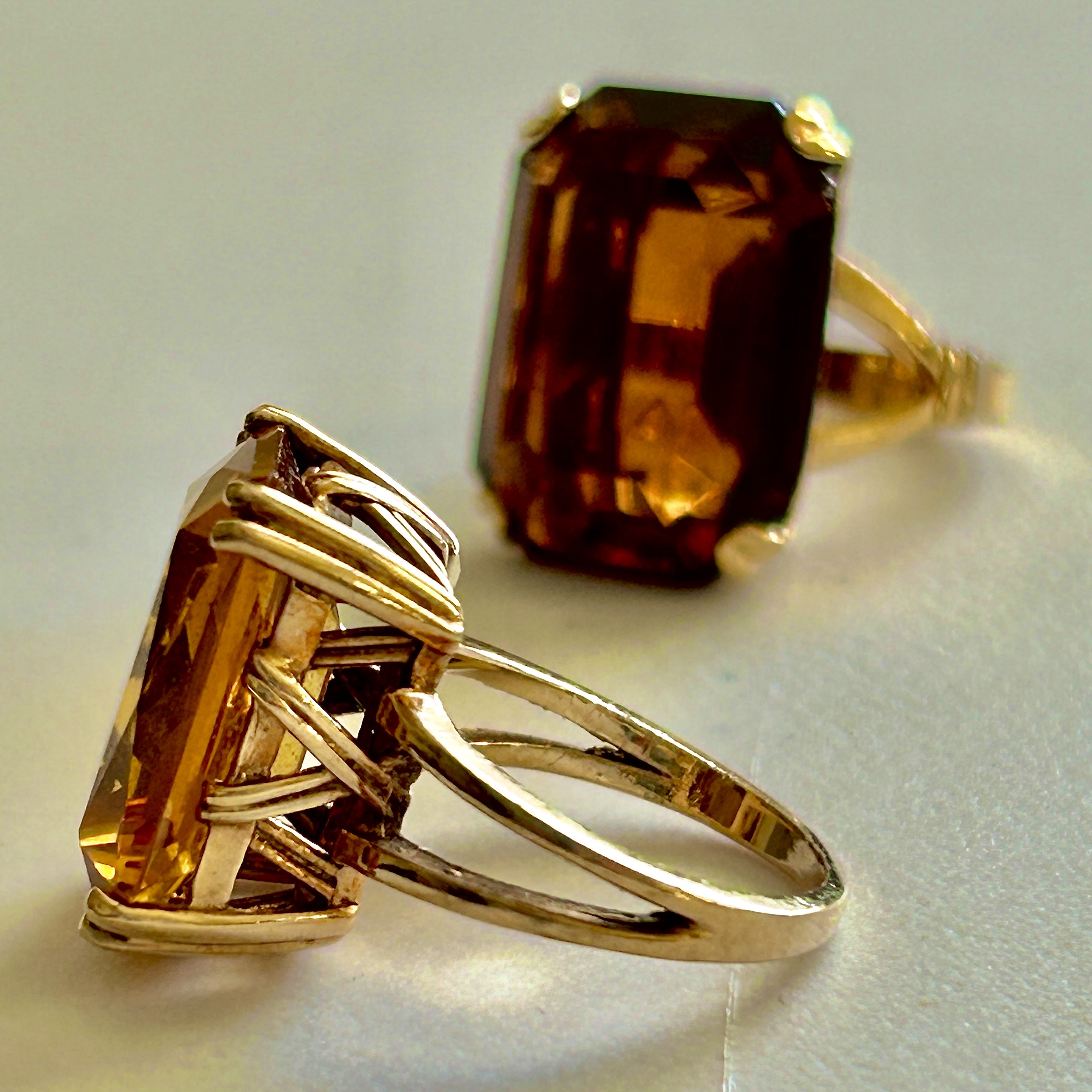
My mom loved bling. Especially on her fingers. In my jewelry box are huge gold rings with large citron, smoky topaz and aquamarine stones. I remember seeing her wear the smoky topaz as a child but I think the other rings were given to her by suitors after I left home. Their settings give off a late 1970’s big hair lounge lizard vibe.

Just ten years earlier the vibe leaned more toward Mother Nature, hippies, peace and love. My favorite ring of hers from that era is a large swirl of silver made to look like two feathers circling one around the other. The ring is set with large cabochons of turquoise and red coral. I love this ring. The truth is I’ve even worn it once or twice – but only to gallery openings – because it reminds of the type of jewelry older women artists wear. Of course that’s not even really a thing. Like, there’s no law that says older women artists have to wear chunky rings and statement necklaces. But some do. And I love a fabulous statement necklace on black cashmere. On someone else, of course. Far be it from me to even attempt to pull that off! But what I love most is the way this ring looks on an older hand that has spent a lifetime working hard and has the broken nails and torn cuticles as proof. 

There’s another ring from my mother’s collection that I remember from childhood. It’s a thick band of a unknown material made to look silver and carved with all the symbols of the late 1960’s – a smiling sun, a piece sign, an Egyptian ankh. I remember it belonged to a boy my sister Margaret was dating. And I remember  9-year-old me performing my version of Bob Dylan’s ‘Mr. Tamborine Man’ for him. Singing lyrics I carefully (and wrongly) transcribed from the record and accompanying myself with my baritone ukulele. He gave the ring to my sister and somehow it ended up in my mother’s jewelry box and now, a lifetime later, it rests in mine. I have no idea what happened to that boy but I want him to know his ring is in safe hands.

My sister loved bling, too. For as much as they disliked one another, my mom and my sister were two bitter, bling loving peas in a pod.

Margaret’s weakness was fake diamond engagement rings. A week after she died I arrived at her tiny one-bedroom apartment in Norfolk, Virginia with an empty duffel bag and a little more than 24 hours to find anything of importance. At this point what was left of my family was my mother and me and the deep chasm of estrangement seasoned with secrets never spoken. And that’s how I was left with the task of convincing the manager of the apartment complex that I was who I said I was and that’s how I was left with the pain of leaving so much behind. 

My sister hoarded. There were five vacuum cleaners in her bedroom. A closet filled to the breaking point with possibly every item of clothing she had ever worn as an adult. Dozens and dozens of rubber flip flop sandals. Shoeboxes filled with clothing she had sewn for her Barbie doll collection decades before. A freezer stuffed with frozen meals and cans of frozen vodka tonics. Stacks of books. Overflowing ashtrays. Half drunk cups of black coffee. Sadder still, a large box filled with a least one hundred unopened Beanie Babies – those popular, deliberately understuffed toys that during the late 1990’s people collected and resold for profit.

And then there was the jewelry. When I found the rings I hoped so much that the stones were genuine but of course, with a closer look, it was clear they were not.

Still, I put them in the duffle bag, along with three Beanie Babies (one for my mom and two for me), and a pair of orange rubber sandals. Other things, too. My sister’s tarot cards, some photo albums and other mementos that would remind me that she once lived. That I once had an older sister who, like our mother, loved bling. 

I hope they’re together now. Reconciled. Making jokes at my expense and trying on whatever heavenly jewels they can find.

Applesauce and a Jam

I returned to facilitating Guided Autobiography (GAB) online last week. I have an unconventional approach to these workshops. We’re working our way through the alphabet and for this series of workshops we are choosing prompts beginning with the letter ‘j’. Our first prompt was the word ‘jam’. The sensitizing questions encouraged us to consider jams we’ve made or help make, or jams we’ve experienced. I never made jam – I only ever made applesauce. But I’ve been in a few jams. Here’s a story about making applesauce with my grandmother and getting myself out of a jam.

My grandmother and I never made jam. We always made applesauce. My grandmother, Pauline, lived with her husband, Robert, in a red brick corner row home across the street from McKinley Elementary School on Poplar Street in Allentown, Pennsylvania. The school, red and as imposing to a young child as Uluru, was built in 1880. It was where I attended kindergarten and its playground where I learned to ride a bike. My grandfather hated having the school’s playground a stone’s throw away from the overstuffed chair where he read the Morning Call Chronicle, smoked his Chesterfield cigarettes and chased his whiskey with cans of Schmidt’s beer. In the summer, when his window was open and the kids on the playground were laughing too loud he’d hold himself up at the front door and cuss at them to shut up. That only made the kids laugh louder. 

While I was still in grade school my grandfather would on occasion settle behind the driver’s seat of his massive beige Chevrolet Bel Air and drive my grandmother the thirty minutes from Allentown to our home in Lynnport. This was before my grandfather’s smoking and diabetes caught up with him and doctors took his leg. It was before a tumor took his voice and the cancer took his life. 

But when he still drove, my grandparent’s would visit their only daughter, my mother Barbara. If it was late summer and the start of apple picking season in Pennsylvania my grandmother would bring the tools we needed to turn the apples into sauce – a large, well-worn aluminum cone-shaped strainer, the wire stand that held the strainer upright and the massive wooden pestle with which we forced the peeled and cooked apples through the strainer’s tiny holes. The apples were bought in bushels from local farmers and by the end of my grandparent’s stay my grandmother and I had made enough sweet apple sauce to see us through the winter.

It was always applesauce. I don’t know why we never made jam.

Where I lived in Pennsylvania blackberries and raspberries grew in hedgerows and were free for the taking.

When the berries were ripe the kids in my gang (some names I remember and some names I’ve lost) would walk along the railroad tracks, past the swimming hole under the silver bridge, dodging deer flies and muskrats, to an abandoned house. Along the way we’d pick berries until our fingers were sticky and blue.

I don’t know the house’s story, who owned it and why it was left abandoned. But I remember the outer walls were all but gone filling what remained of the rooms with light dappled by overgrown trees, brambles and poison ivy. I remember, too, the smell of dust and mold and animals. I remember the shattered piano that had fallen through the first floor to the basement. And I remember climbing broken stairs to the attic. I was brave then, and climbed the stairs alone. Half the roof was gone but at the gabled end, resting on a wooden rafter, was an owl. In my memory he is huge and regal and the most majestic thing I’ve ever seen. There’s a moment when we look at one another, startled and in awe. But then my excitement gets the better of me and I shout to my friends. The raptor flies from one side of the attic and then escapes through the shattered roof and disappears into the woods.

It was in the 1970’s when we could leave in the morning, wade through creeks, explore abandoned homes and not come home until dusk.

I guess that’s why my mother never asked where I’d been.

That one day I’m thinking about, I’d been in a jam. 

He was a year older and already smoked cigarettes. He had piercing blue eyes and dark hair and most girls in my grade had a crush on him. So when he called me one afternoon – I didn’t even know he knew my phone number – to ask about an assignment he had for his history class and would I help him my racing heart said ‘yes’ even though it made absolutely no sense that he would ask for my help. When I arrived a friend of his was there, too. They’d just made a great fort in the barn from bales of hay and wanted to show it to me. I followed them into the barn. I was shown where to crawl in and it was only after I was halfway through the tunnel that I realized one boy was behind me and the other had entered through the other side. I was trapped between them.

These two silly boys thought they were going to get away with something but they didn’t. I wasn’t the girl they thought I was. I wasn’t ‘easy’. I didn’t ‘give out’. Even thought here really wasn’t that much else to do in Lynnport, Pennsylvania in 1974.

After twenty minutes we crawled out from the tunnel and I began to walk home with hay in my hair and the feeling that I dodged a bullet. As soon as I walked into the house I filled our clawfoot tub with scalding hot water and scrubbed myself clean.


Peace and Reconciliation

images-2I landed in Ireland around the same time that peace and reconciliation was breaking out. It was a wonderful time. It coincided with the Celtic Tiger – that period of great economic growth – and people were happy. There seemed to be more space in everyone’s lives. Yoga classes and wellness centers were popping up like the thorny yellow gorse on the Donegal hills in springtime. It seemed everyone was in training to become a massage therapist or reflexologist, myself included. All of this happened in part because the air was temporarily cleared of anger and hate. It was a little easier for hearts to love and for hands to reach out.

Peace and reconciliation can be a far reaching movement that builds communities, as it was in Ireland twenty years ago. It can also be something that we struggle with on our own.

My mother is an elderly woman with whom I did not speak during my entire decade in Donegal. From 1994 until 2010 we were completely and, I was certain, irrevocably estranged. This is something of which I am not proud. As someone who has worked most of her adult life to walk a yogic path, this shames me.

When I did, finally, reach out it was because I believed I was strong enough to be a good child. But despite my dutiful phone calls and yearly visits, the pain I still feel from the real and imagined wounds of my youth prevent me from being the woman I want to be – the daughter all mothers hope for.

Maybe the peace and reconciliation I need in order to shape a compassionate relationship with my mother is, like yoga, a practice. What holds my heart back from giving her the love she craves is this: My mother is a racist who glues herself to Fox news. She does not seem capable of finding the good in people. The good in the world. She is also an elderly woman who lives alone and depends upon social assistance to keep her in the crusty single-wide trailer she has lived in since I left for college over forty years ago.

Two days ago the rent she pays for the land on which her trailer rests was increased by twenty-eight dollars and she is terrified of losing her home.

I will, of course, help her. I will help her because I do believe that people are good. I believe there is good in the world. And I’ll help her because I know that there is no peace without reconciliation.


The Strike

pall-mall_trans_NvBQzQNjv4BqzyQdcCpPOOS38rrQ0wuMX6qLSLVZhK3e2pU3liKIgNIIsn’t it funny how just when we are beginning to believe that our feelings or thoughts will remain the same forever, they change like the direction of the wind? How does that happen? Is it the food we eat? An unexpected smile from a stranger? A happy memory that floats to the surface or a dream that sweetens and soothes our subconscious? Maybe it’s the perfect yoga practice or a soothing few moments of quiet meditation.
All I know is that there has been a welcome shift. I have too many good things piled on my plate to spend time in the stinky muck of overcooked wallow.

I didn’t find it easy to write my last post’s pity fest. To be honest, I haven’t found writing easy at all. The world is overwhelmed and overwhelming. Stepping away from a writing practice was my way of holding space for others to tell more important stories.

But all stories are important. Even the small stories because they are the stories that bring us together. They are the stories we’ve all experienced.

When I was a girl – I may have still been in elementary school – my mother decided to go on strike. She set up camp on the orange Levitt Brothers sofa in our living room with our black and white television console, the afghan my great aunt had crocheted and the coffee table pulled close. My mother piled the coffee table high with supplies including several good novels, a few packs of Pall Malls, a ceramic ash tray and her ever-present plastic mug of black percolated coffee. She was never without that mug. It was white with a turquoise rim. The inside of the mug was stained dirty brown by endless cups of Maxwell House and so, from time to time, she would scrub it clean with Ajax.

My mother’s strike lasted at least a week and possibly two. During this time she refused to cook or clean.

My sister and I were old enough to walk ourselves to the bus stop in the morning and to heat up a can of Campbell’s Cream of Mushroom soup at night and in all honesty our mother probably roused herself enough to make certain her children remained alive. It’s possible, too, that Margaret and I enjoyed the brief respite from rules and order.

What I remember most about my mother’s strike is coming home from school in the afternoon and seeing her stretched out on the couch watching Mike Douglas.

I also remember the cold silence that rose above the sound of the television and that made me walk through the house as though I was walking on shards of shattered ice.

As a girl I didn’t understand the anger between my parents or why my mother might want to teach us the lesson of what our lives might be like without her. But now, looking back, I think she believed there was no outlet for her unhappiness and no cure for her invisibility except for that orange Levitt Brothers sofa, her stack of books, a lukewarm cup of coffee to go along with her smoldering Pall Mall and Mike Douglas in the afternoon.

This is the point in the story where I am supposed to describe the lesson we all learned from my mother’s strike. The thing is, the strike ended and nobody noticed. I came home from school on a sticky afternoon and my mother was in the kitchen, once again resigned to standing over the stove with a spoon in one hand and cigarette in the other, exhaling a cloud of grey over the evening’s meal.

We didn’t know then what we know now. Maybe that is the lesson.


Maybe I Have His Smile

Today I decided I wasn’t a writer.  I was done.  Not up to it.  Why did I want to write anyway?  Didn’t all that time spent jotting down ideas, taking notes and blogging simply distract me from my “true” calling?  Didn’t it take away from the time I could be practicing Yoga, nurturing a tenuous connection to what might be the beginning of a social life, or watching So You Think You Can Dance?  Besides, the plastic bins of research gathering dust in my kitchen took up too much floor space in my already cramped studio.  I’d be better off taking them down to my storage locker.

Nope.  I was done.  Finished.  Finito.

And then this happened:

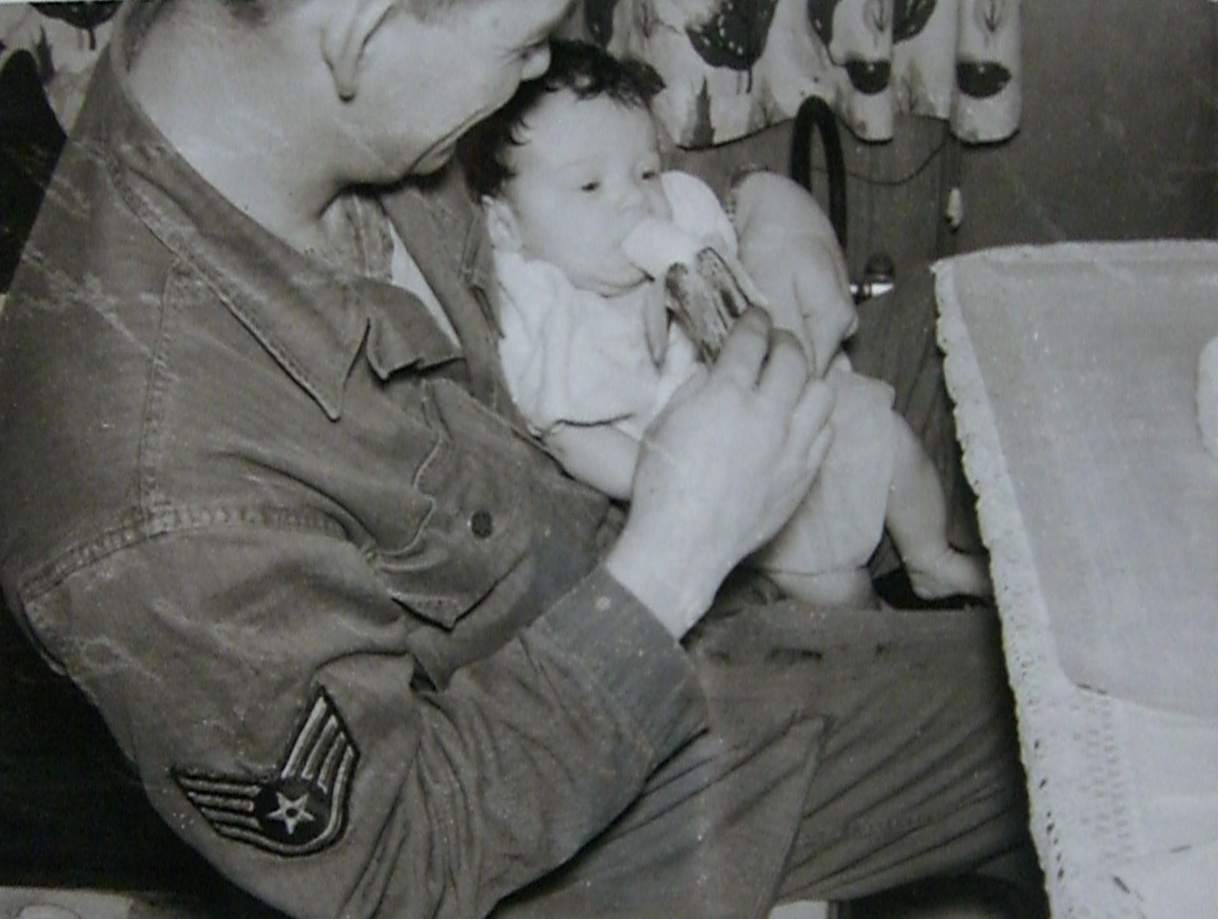
I went back to the family photographs my mother gave me when I visited her last September.  Only a few include images of the father I never met. I have no idea if I walk like him or if I have his sense of humor.  I won’t find out if I’m impatient because he was, or if he liked spicy food.  But maybe if I looked hard enough I could see something in his face.  Tonight I needed to be convinced he and I shared something.  I held the photographs close and then, with my face just inches away from the mirror, I searched my eyes, my cheeks, my nose.  Like almost every other middle-aged woman, all I could see was my mother looking back at me.  I stared at the photographs and back again at my reflection.  I compared his image to my mom’s and then me until finally I could see it.  There it was.  His smile.  I’m pretty certain I have a bit of his smile.

As I slipped the photos back into the treasure box I keep them in, I thought about the protagonist in the manuscript taking up space on my kitchen floor.  She’s just sixteen, but she’s missing a dad, too.  I wondered what she might feel, how she might react, seeing her father for the first time.

I opened my laptop and took a few pages of notes for a manuscript I haven’t touched for three months.

It turns out maybe I am a writer after all.