Sit. Stand. Breathe. Live.

yoga

Sometimes we forget. We forget we’re not teaching yoga. We are teaching asana. And we forget Patanjali’s teachings: that asana is just one of the eight limbs. Most classes called yoga focus their intention on asana. Pranayama receives a cursory mention. The other six limbs – yama, niyama, pratyahara, dharana, dhyana and samadhi – are left dangling in the breeze of our ujjiay breath.

I think that as asana teachers we find ourselves caught in trends. From practicing postures on paddle boards to holding shapes in slings, fitness trends are fine but they are like rainbows. Beautiful, fun and illusory. As fast as one trend disappears another arcs across to fill the sky – or the yoga industry – with light and color.

I’ll be honest. There’s a part of me that would love to be that teacher who enthusiastically embraces every trend and explores its possibility. But you won’t find me practicing asana on a paddle board – even though it looks like fun. And you won’t find me hanging in a sling or holding dhanurasana while balanced on the soles of my partner’s feet.

More than anything I would like to begin a new trend. I want to begin the trend that sees asana teachers coming back home to yoga. I want those of us who call ourselves yoga teachers – including me – to be yoga teachers.

A few nights ago I attended a class. A yoga class. You read that right. Not an asana class. A yoga class.

When I told fellow teachers and friends I was going to John Berg’s Intro to Yoga class on Tuesday night at Samyama they looked at me a bit funny. “Don’t you mean his Vinyasa class?” Nope. I meant what I said. After thirty years of practice and nineteen years of teaching I was a beginner. And, as a beginner, I wanted a beginner’s class.

In ninety minutes we sat, we stood, we practiced vrkasana, we breathed. In between we reviewed the eight limbs. We listened to a brief talk on yama and niyama. We spoke of intention. And forgiveness. I spent that hour and one half in a state of moving meditation, grateful to John and his teaching but equally grateful that I followed my heart through the studio doors of Samyama.

I believe, as teachers and as students, there are times for expansion. Times when focus on heat building asana is the right path. But I also believe that we abandon ourselves when we fail to listen for the quiet times. The times when we need to step back – contract –  and remember that as much as yoga is about the body, it is about so much more.


Yin Yoga and Chronic Pain

IMG_2289Day One: The fear is obvious. Something in their eyes. The slow, shuffling steps. The wariness as they drag bolsters and blocks from the shelves. Attempts to muffle timidity with parchment thin bravura and the fierce slap of a fresh sticky mat hitting the floor don’t work. I know how they feel. I’m afraid, too. I’m as afraid of hurting them as they are of being hurt.

When practice begins a woman whispers, “I can’t get to the floor.” I offer a chair. Ten minutes later a man grumbles and stands in order to walk off a spasm’s flair. I encourage the group of six to have open boundaries; to roam and move as needed. But at the same time I want them to look for stillness. But they won’t find it. Not yet.

Asana demonstrations are met with disbelief and so I use a soft tone and gentle words to coax their worn bodies into shapes. I offer support with pillows and props. When they discover that what I’m asking them to do is not impossible after all their fears – and mine – begin to subside. Within a few sessions confidence has taken a tentative hold as pain is accepted not as the victor but as something with which one might co-exist.

Up to seventy-five million Americans endure persistent chronic pain. According to statistics from the National Institute of Health the cost of chronic pain in medical expenses, lost income and lost productivity is more than five hundred billion dollars per year. Chronic pain is too often either untreated, under-treated or masked by drugs leaving 42% of patients with symptoms so severe they are unable to work and up to 63% unable to engage in activities those of us who are pain-free take for granted.

I began teaching yoga to chronic pain patients at Feinberg Medical Group in Palo Alto, California in 2010. FMG offers a Functional Restoration Program that is an interdisciplinary outpatient management approach for patients with persistent pain. The goal is for patients to acquire the skills needed to facilitate the behavioral changes necessary to restore function and to improve the quality of life. This is achieved through an individualized curriculum of exercise and psychotherapy, group wellness classes, stress and medication management, the development of relaxation skills and – of course – yoga.

The men and women entering the program have no yoga experience and are burdened by the consequences of chronic pain: low self-esteem, appetite and sleep disturbances, a sense of powerlessness, hopelessness and depression. My job is to find a way to move them beyond these states and to help each patient build a new relationship with their body.

But these are individuals whose pain has become like a brick wall separating them from health and wellness. They don’t want to know about gunas or gurus, Sanskrit or sutras. At least not yet. What they want is to feel better. The practice has to be personal. Clear and immediate. Achievable.

I ask myself, “What is it that I can I do, right now, to help?” My answer is simple. Build trust. Build trust in the process. And build trust in me.

I was introduced to Yin Yoga in 2009 by a student who had attended a Sarah Powers workshop in nearby Menlo Park. She described a practice that was deceptively challenging but deeply soothing. Intrigued, I attended my first Paul Grilley workshop a few months later and by September of the following year had been certified to teach Yin.

Yin Yoga applies stress to the connective tissue: fascia, tendon, ligament and even bone. Intellectually this might feel counterintuitive, and indeed we can all agree that over-stretching any tissue whether it’s muscle tissue or connective tissue will be injurious. But a mindful Yin practice does not overstretch – it gently stresses and unwinds. It doesn’t require tremendous strength or flexibility and yet it delivers profound physical and mental release. A Yin practice asks the body to open to the discomfort of the pose and to accept the stillness required to maintain the pose without grasping or grabbing either physically or mentally. Working to an appropriate depth for the appropriate amount of time gives the connective tissue, the heart and the spirit space to open and, in a sense, breathe.

At first they are resistant, as unyielding as their bodies. I talk about the importance of our intentions. I remind them that what we have is this moment and this body and this one constant – change. But if we want to see change in our bodies we have to listen to what our bodies are trying to tell us about pain and healing.

We alternate between a manageable Hatha practice that includes chair yoga and longer held floor poses. They find the silence of Yin a challenging aspect of the practice. I ask the group to watch their breath and the sensations they experience. We manage for sixty seconds one week, ninety the next. And then, eventually and collectively, it begins to work.

A few months later a young client stops me after class and with tears in her eyes thanks me.

“I don’t know what we did but it held for three hours.”

This is a woman with cervical pain and radiculopathy so severe she can not lift her arms. But during our practice she found the strength to be fully present and subsequently experienced Yin’s benefits. Michelle remained relatively pain-free for the remainder of the afternoon. In this population, that is considered a victory.

I’m not suggesting Yin cured her. All the components of FMG’s Functional Restoration Program work together to support healing. What happened during one Yin practice on a rainy afternoon is that a beautiful young woman discovered wellness was possible. Within a few months she had returned to school, returned to driving and was attending a weekly Hatha yoga class.

For chronic pain patients, Yin teaches trust. Clients demonstrate this trust in the questions they ask and in the confidence they have in creating their own modifications during our practice. They know the difference between challenge and pain, moderate stress and injurious stretch. Our work is slow and they appreciate the opportunity to explore and release, to hold and to melt.

Clients enter into a six to eight week commitment with the Functional Restoration Program at FMG. During that time new clients will enter while others graduate to the Aftercare Program. The “rolling” nature of participants contributes to the program’s success. New attendees are unofficially mentored by clients who have been in the program for a number of weeks. Patients nearing the end of their training will look in the nervous eyes of a new client and say, “I used to be you. But now look at me. Look at what I can do. You’re going to be able to do this, too.” And then they lift a bolster from the shelf with ease. They pick up two blocks and one strap. The slap of the sticky mat as it unfurls on the floor is a reassuring sound. As they lie down I see them slip into stillness as they settle into another hour of Yin.


Keeping Promises

IMG_2207I promised myself Hawk Mountain when I forced myself to book my airline tickets. I was going back to Breinigsville to visit my mother for a week in spring.

She didn’t like the idea of my going to the mountain. She felt slighted. A bit abandoned.

But if I was being inconsiderate, I didn’t care. I had to give myself a few short hours to visit a place I loved as a girl, when I was desperate to find a refuge from a violent home. Hawk Mountain spoke to my heart decades ago when I was a child. All these years later I still long for its beauty. To deny my heart time on the mountain would have broken it.

The place I love is part of the Appalachian Trail in eastern Pennsylvania. Opened as a bird sanctuary in 1934, its trails skirt the edge of the Blue Ridge and are situated beneath a major migratory path for raptors and other soaring winged wonders.

The climb to North Lookout was easier than I remembered.  The trail was wide and clean with rough-hewn benches every hundred yards or so.  The limestone outcrop my high school friends and I huddled beneath on chilly Saturdays during our senior year was now fenced off and deemed too dangerous to climb.  Stairs to the lookout helped those who could not manage the boulders I scrambled over at sixteen.  But the view from the lookout was untouched and stretched in front of me as it had for generations  I could follow the course of the Schuylkill River and the train tracks from Kempton.  I could see Bake Oven Knob in the distance and below me the bare plowed earth.

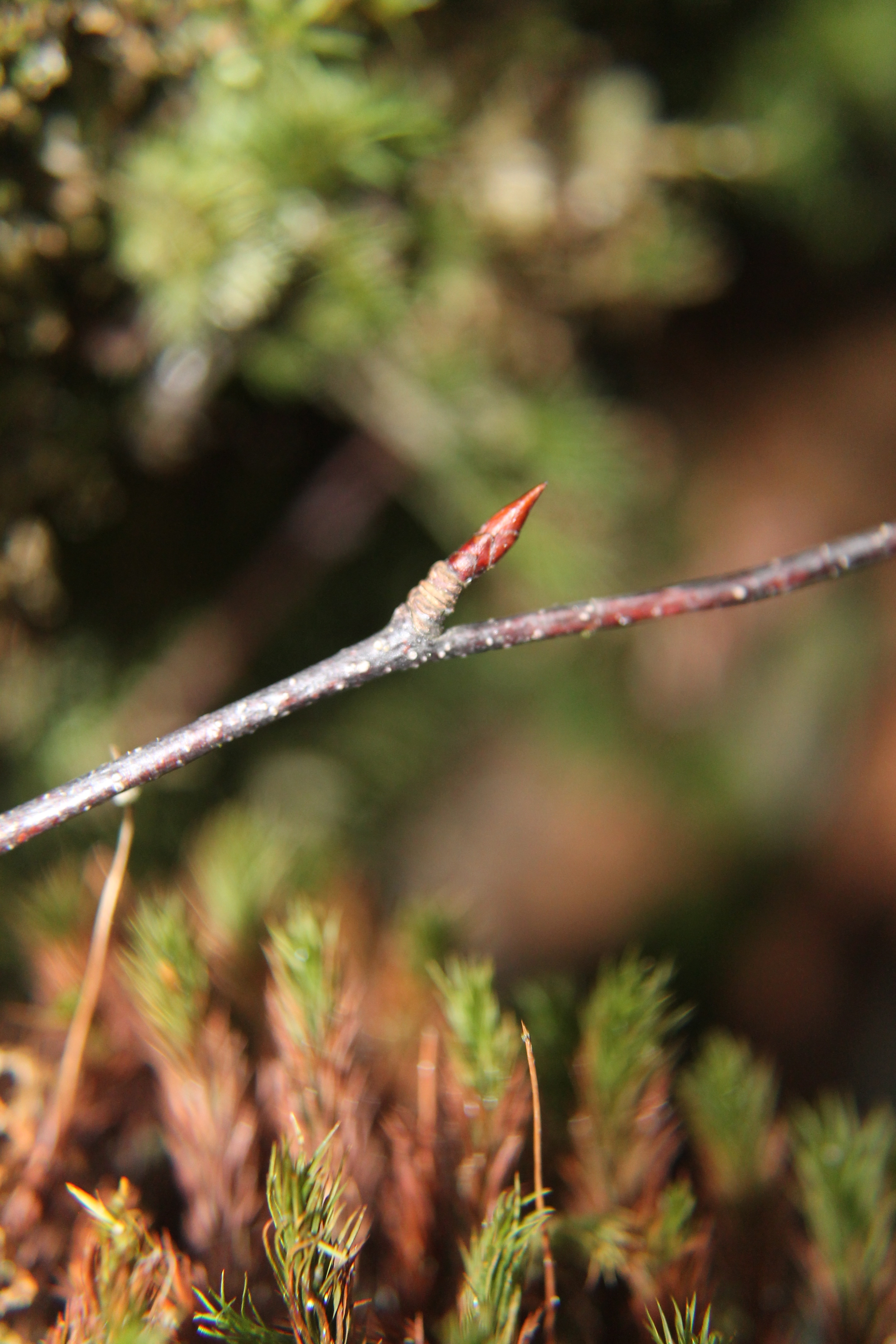
I climbed the rocks and searched the skies.  I breathed the late spring air made damp by rain clouds moving in from the next town over.  I crawled beneath boulders to photograph the stalks and spores of spawning green moss and then knelt next to the grey lichen clinging to glacial debris ten thousand years old.

During my morning on the mountain I opened to the space around me.  I pushed against the wind and felt the wind push back.  I stretched into the sky and curled under rocks.  Hard granite pressed against my bones and when the sky finally opened the rain washed my skin.

IMG_2221


There was new life on that mountain. The new growth of a warm spring. I was new life on that mountain, too. I returned home to visit a mother I don’t know, to learn about a family who are strangers to me. On that grey morning, the morning I gave to myself as a gift, I listened to what the mountain had to teach me about memories and moving on.

And as I drove away from Hawk Mountain through the slashing rain, I knew I was ready at last to hear the stories my mother needed to tell.

IMG_2265

 As part of an assignment for the class Psychology of the Body, I was asked to write about my relationship with the land.  We all have a landscape we hold in our soul.  A place we love and return to if not with our bodies then in spirit.  I feel so lucky to have had the chance to walk Hawk Mountain once again.


Teaching Your Truth

yoga

Saturday afternoon proved interesting. I suppose it began with a FB post I read from a well-known local teacher. He was thrilled that his morning class had them hanging from the ceiling. That’s cool. We all love a full class. But as I scrolled through the comments to read what students were saying one comment caught my eye: “great play list.”

My reaction was visceral. My teeth clenched and my eyebrows furrowed.Damn. When did yoga teachers become dj’s?

Over the past few weeks I’ve been feeling overworked and overextended which means I’m also feeling vulnerable. And so such things – like a great playlist being the reason why a yoga class is full – has me doubting myself.

My unwarranted self-doubt nevertheless has an impact. It pokes at my confidence and makes me question how I teach and even why I teach.

Taking a jab at my confidence doesn’t feel so wonderful. But questioning why and how I teach? That’s a good thing. We should always question our teaching. And we should always teach our truth.

I’m not averse to using music in class. In fact, at Samyama, where the sound system is so gorgeous it’s almost a sin to not use music, I play a mix of Tibetan bells, Robert Fripp and Brian Eno. It’s airy but not new-agey and I keep the volume at about the level of sun-dried laundry – not ear bleeding heady perfume.

Our lives are bombarded by sensory stimuli. During my practice, and while I teach, I want to remove the distractions. I want to connect with my body. I want to feel the asana in me. I want to breathe into it, and I want the rhythm of my breath to connect with the expansion and contraction of my body’s tide. I want to breathe with my muscles, my bones, my fascia. I want to feel the course of cerebral spinal fluid from my crown to my root.

I can’t do that if I’m grooving to Roxy Music.

But I doubted all this yesterday. I spent two hours making a play list. And it was a good play list. Maybe even a great one.  Until I accidentally deleted it while attempting to download it to my iPod.

I took that as a sign that the Universe supports my truth. A friend suggested it was a sign I should learn how to use my iPod.  The point is, my truth may not be your truth.  And it may not always be my truth.

But for now it is.

And so, until further notice, my classes will continue to be silent, slow and focused.

And when we leave the studio to plug back into the world, we won’t be talking about play lists. I hope we won’t be talking much at all because we’ll still be taking in the silence and the wonder of feeling our bodies and our breath connected.


Everything is Different.

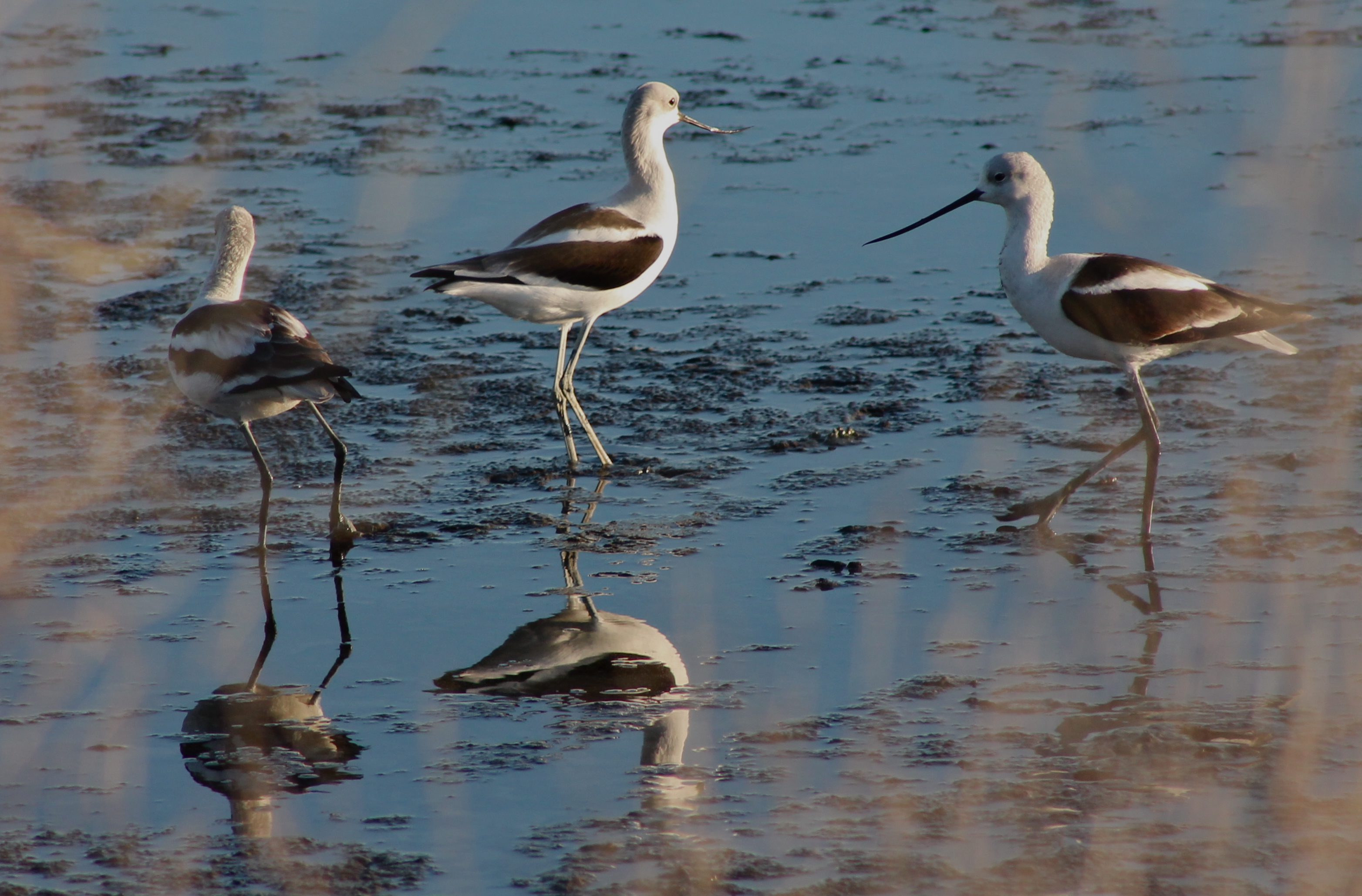
IMG_0035This morning, for the first time in six weeks, I took an hour’s walk at Shoreline. Everything is different. The colors, the sounds, the temperature. I saw a young Avocet – still fuzzy and tentative and brand new to the world – take a walk on the mudflats while its protective parents kept guard. And I saw five scarlet winged blackbirds. As they landed on the spring green bushes the flash of red from the underside of their extended wings startled my eyes.

Shoreline was warm and wonderful and it felt brand new.

This morning, for the first time in six weeks, I looked at this blog and knew it was time to post. I was away for a while, attending to other parts of my life. Now I’m back, everything is different, and I don’t know where to begin my story.

Maybe with this question:

How do you inhabit your body?

And this one:

Where does intuition rest?


The Accidental Vegan

Vegetables


Remember this post? The one where I proclaimed that my omnivorous ways did not make me a bad person? How times have changed. Turns out I’m a very fickle woman.

Eating meat worked well for me during the winter months. A nice stew of vegetables and grass-fed beef on a cold day warmed my bones and blood. But at the time I was sharing most of my meals with a friend. It was easier to prepare one meal, and even if I’d wanted to I knew I didn’t have the discipline to say “no” to bacon on a Sunday morning. So I was an omnivore. And I loved it. What I noticed, however, was that when I was on my own the foods I craved were foods that hadn’t been born. They didn’t have a face and they didn’t have a mother. They were grown from the earth.

When spring arrived our schedules changed and my friend and I had to say goodbye to the beautiful tradition of breaking bread together. I miss sitting down at a table and sharing a meal. It’s a ritual good for the soul. I miss the conversation and the laughter and I even miss cleaning away the dishes.

But I don’t miss the meat. Or the eggs. Or the dairy…except for the feta cheese I used to add to my kale salad.

I remember attempting a vegan diet about six years ago. I don’t think I lasted two weeks.

But I’m a different person now, and being a vegan wasn’t really something I thought I was moving towards. It just sort of snuck up on me. First I let go of the meat. The eggs came next – that was easy. The goat milk was more difficult because I love it warmed with honey before bed and I love milk in my coffee. But I did it. Last was the feta cheese.

So here I am. My favorite meal these days is a bowl of steamed veg with a spicy tahini sauce. Go figure.

How long will this last? Who knows. That’s the thing. I’m not really putting any pressure on myself to eat any one way or be any one thing.

I have to say, though, that this time it feels different. My first challenge arrived yesterday when the staff and teachers of Samyama had a dim sum celebration with owner John Berg at Ming’s. I passed the challenge. The next big test will be in two weeks when I fly home to Pennsylvania for my mother’s 80th birthday. I don’t know how to break it to her that I really don’t want pork chops fried in butter and mock seafood salad in mayonnaise.

I think sometimes you have to choose your battles. Besides, you just can’t argue with an eighty-year-old woman with a cigar in one hand and a slab of raw pig hanging from a fork in the other. Sigh.

Wish me luck.


Spring, Samyama and Teaching Myself to Read

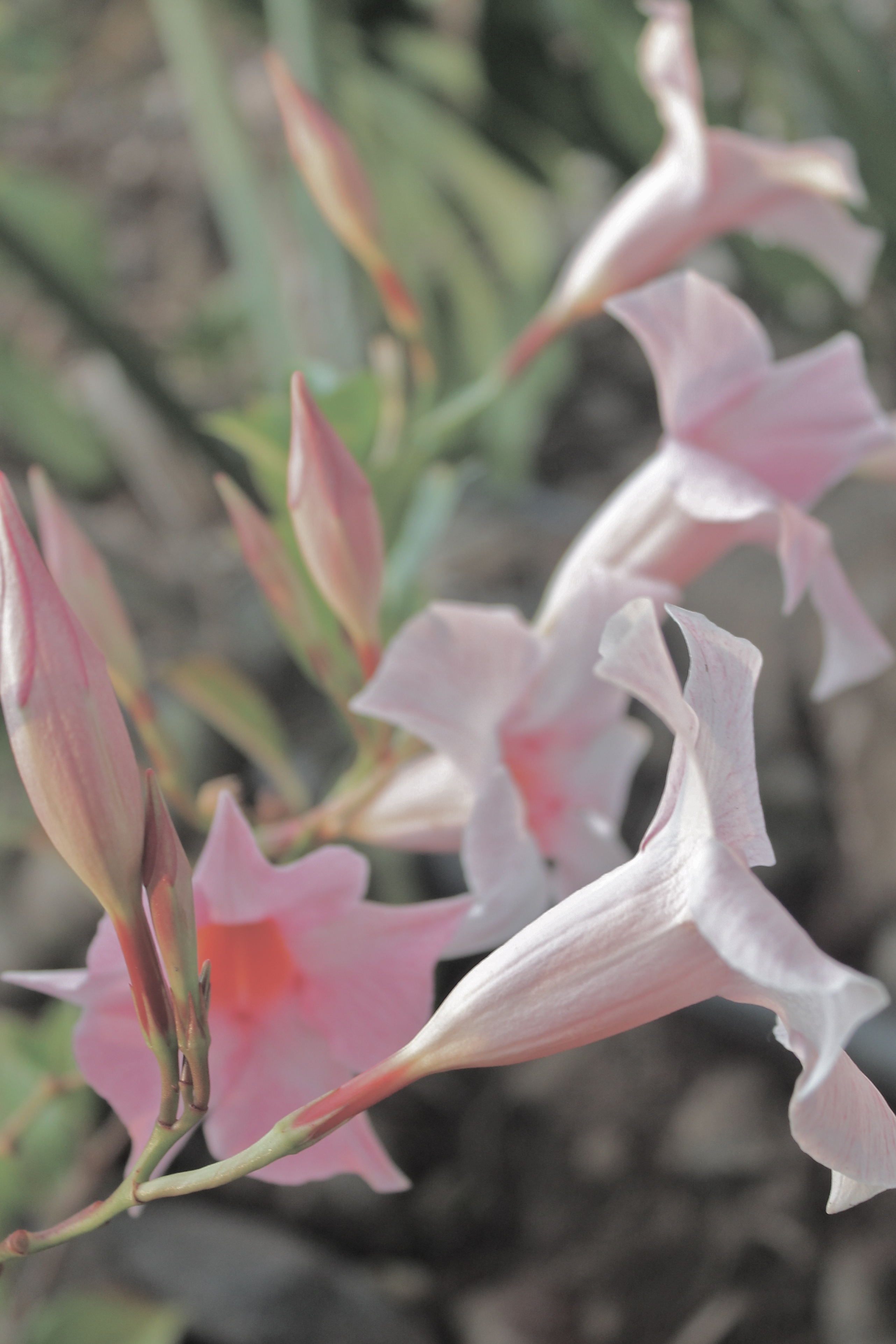
IMG_0617The start of spring is a wonderful thing. Today in Northern California spring is at its best. Clear and crisp with the scent of climbing jasmine in the air. Pale pink cherry blossoms dust the sky. Simply beautiful.

Spring is about rebirth. New beginnings. Happy anticipation. And my life is full of new beginnings and happy, giddy anticipation.

Samyama Yoga Center will host an Open House on Sunday, April 7th. Classes will begin the following day. Samyama is a very special studio. Everyone affiliated with Samyama feels as though they’re part of a family. My first class at Samyama will be on Tuesday, April 9th. I’ll be the 7:00 AM Hatha class on Tuesday and Thursday, a Yin flow class on Friday’s at 1:30 in the afternoon and another afternoon Hatha class on Saturday’s at 4:00.

This week was spring break at Sofia University. I spent the time teaching myself to read. Seriously. Reading for leisure and reading for comprehension are two different skills. I was deficient in the latter, but a few days of practicing the techniques we were taught back in high school – read, identify key points, summarize – has cleared out a few cobwebs. And that’s a good thing. The course that I’ll be diving into next week, Introduction to Transpersonal Theory, promises to be challenge for me.

So four new yoga classes to teach and a new course to tuck into at school. What more could a woman want at the start of a stunning spring?

I can think of a few things I’ll choose to not divulge…

…and A Woman’s Face.


My Completed Spiritual Autobiography

I didn’t expect to be directing my professor and fellow cohorts to Practically Twisted  in order to view my  version of our final assignment. But the truth is the file was too for Angel. And that was after I’d removed some of the images!  So here I am, posting my spiritual autobiography on WordPress for the whole world to see.  No matter.  It was a challenging and thought provoking project.  And I can’t wait to see yours.

Spiritual Autobiography: A Collection of Reliquaries

Mimm Patterson

Spiritual Perspectives

March, 2013
IMG_1783

IMG_1802

IMG_1944
IMG_1916

IMG_1902

IMG_1934

Introduction

I’ve always been fascinated by reliquaries. From Oliver Plunkett’s head to Saint Valentine’s heart or threads from the Shroud of Turin reliquaries inspire mystery, hope and story. Religious reliquaries are potent objects. Viewing the remains of a seer or saint housed in ornate, gold, gilt and jeweled boxes fosters deeper faith and humility. Reliquaries are spiritual magic.

I believe we can each build our own reliquaries. These objects and images mark the turning of a page. They mark a spiritual death and subsequent rebirth. William Bridges might suggest that they occupy the Neutral Ground and their creation is a necessary part of transformation. We instinctively collect and hold sacred a bird’s feather found at the funeral of a friend, a dried rose bud from a former lover or even a Chinese fortune we want so much to believe. In their own way, They are all reliquaries.

I knew it would be difficult to put into words the spiritual path I have walked. I knew my journey had to be described with images and objects. Choosing a visual medium allowed me to reinterpret the form and tradition of the reliquary. It allowed me to infuse and inform my story with color, texture and shape. As a child I pushed myself toward a religious practice. I wanted to be the good girl. Later I leaned into spirituality as a balm and prayed it wasn’t a placebo. But the journey was difficult. I didn’t have the strength to hold my practice and abandoned all belief. Walking through life surrounded by the fog of nonchalance did not serve me. I was aware of something missing, a lack of authenticity. I felt empty. But fogs clear. Even mine. I felt something in me shift about fifteen years ago. I’ve been looking and feeling and exploring ever since.

At first, when my first, new steps were still very tentative, I looked for labels. I looked for words that might describe the walk I am on. But how I’m moving through life these days – how my body, my heart and my soul are charging down this new road – it has no name. No label.

In this work I’ve tried to create reliquaries that mark an event on this journey. The details are unimportant. What is mourned or celebrated in each piece is a single moment of awareness. They each mark a change in trajectory. A shift in perspective.

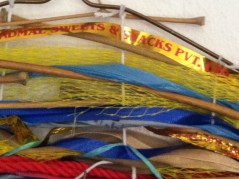
There are six in all: Ashes from a Lost Heart, Suppose a Wound is Received, I Don’t Remember That at All, The Heart is a Fragile Vessel, Sweets and Snacks and Truth. A brief description of the work and a short paragraph describing where I was on my journey accompanies the images.
Ash of a Lost Heart

IMG_1783


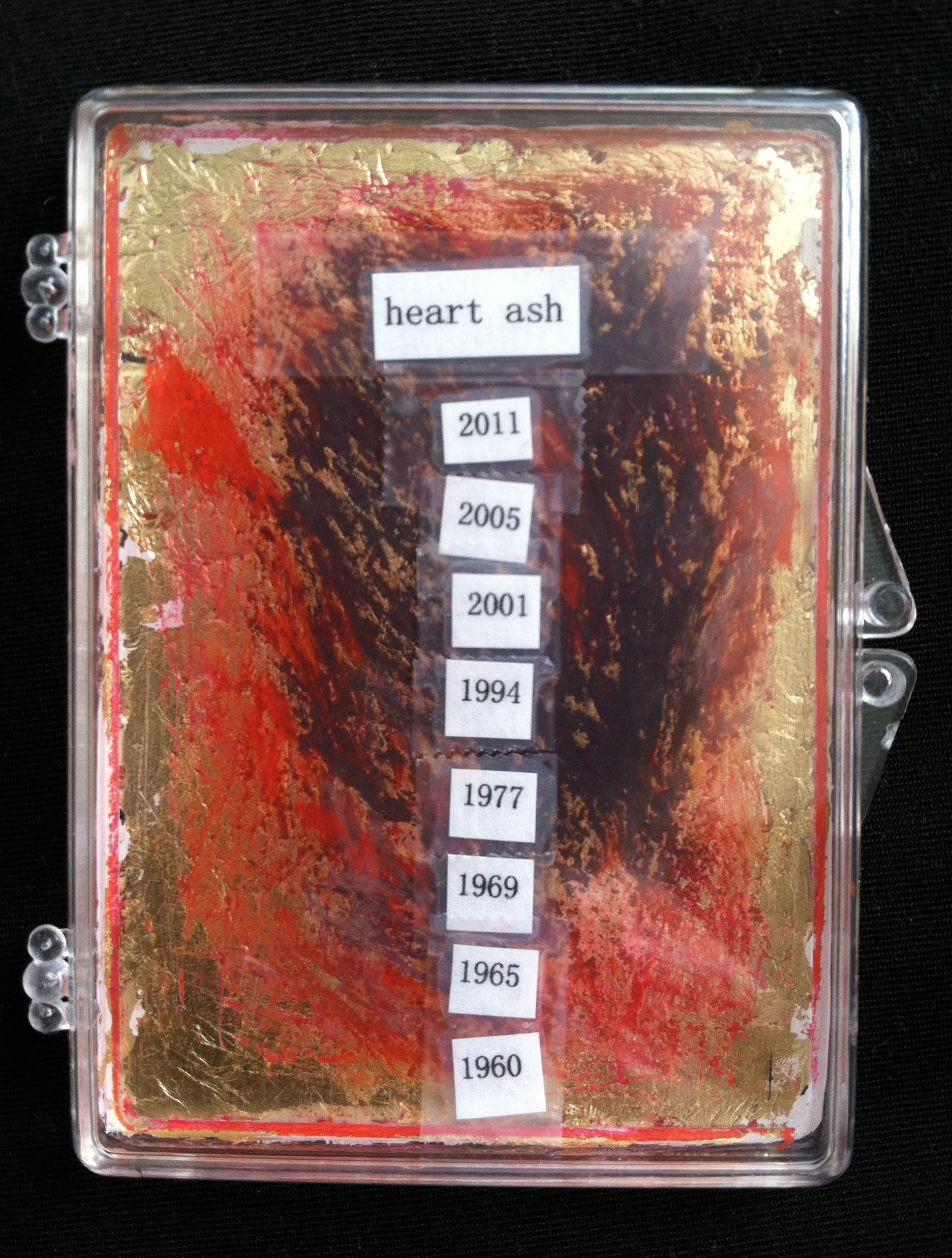
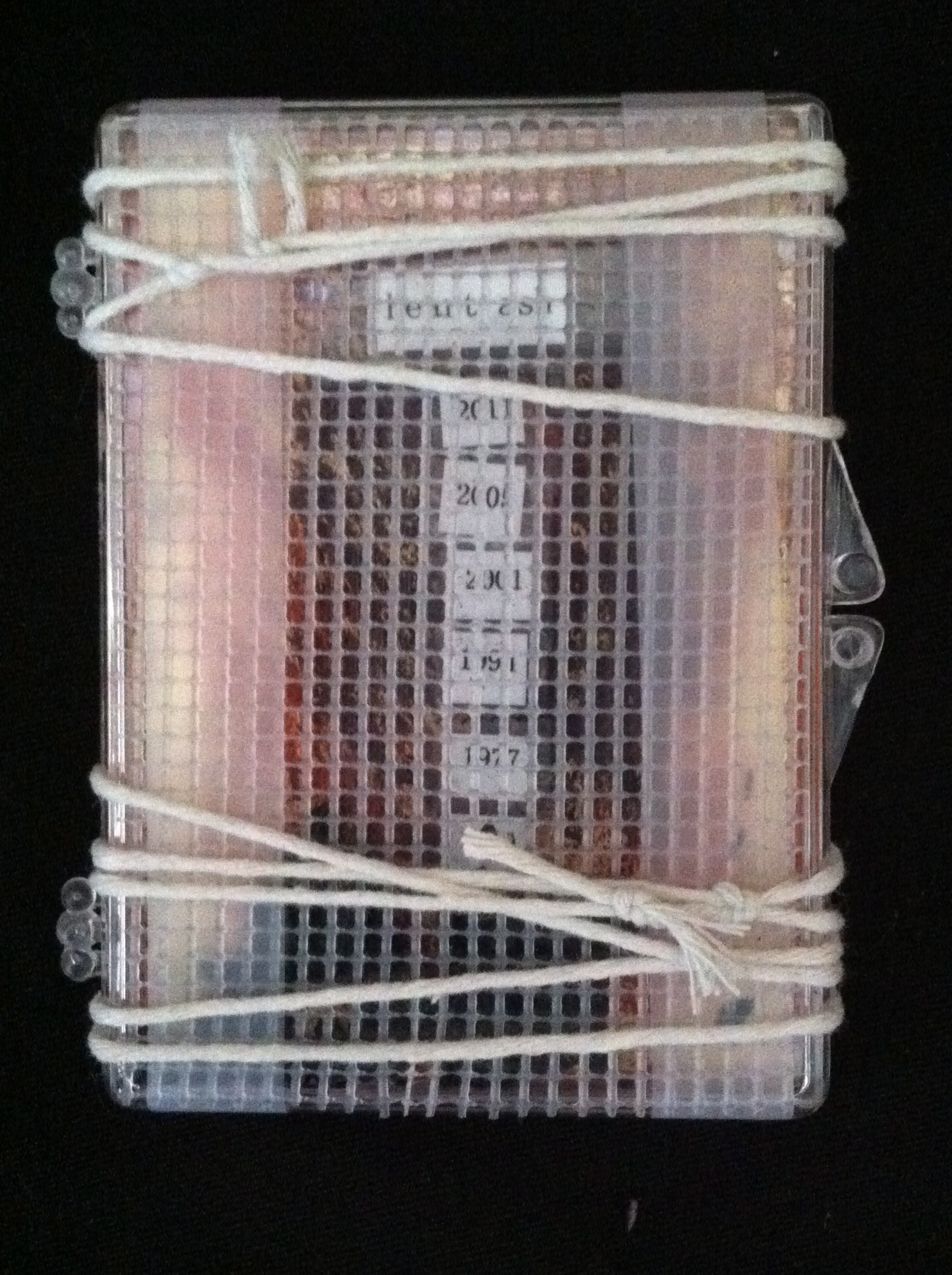
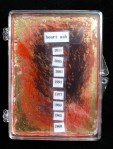
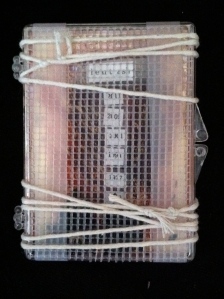
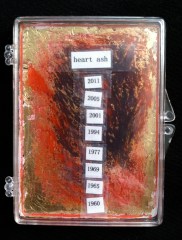
Ashes from a Lost Heart,2.5 x 3.5 inches, plastic box, gold leaf, oil pastel, text,silicon grid, ash and twine.

Sometimes I don’t know what happened to me. I don’t understand how I came to be lost.  How my heart came to be so bound.  This first reliquary represents the bound heart. My journey begins with my futile attempts to break down the barricade around my heart. Sometimes events liberate our hearts. 

Sometimes they add another brick to the wall around it.
 

IMG_1918


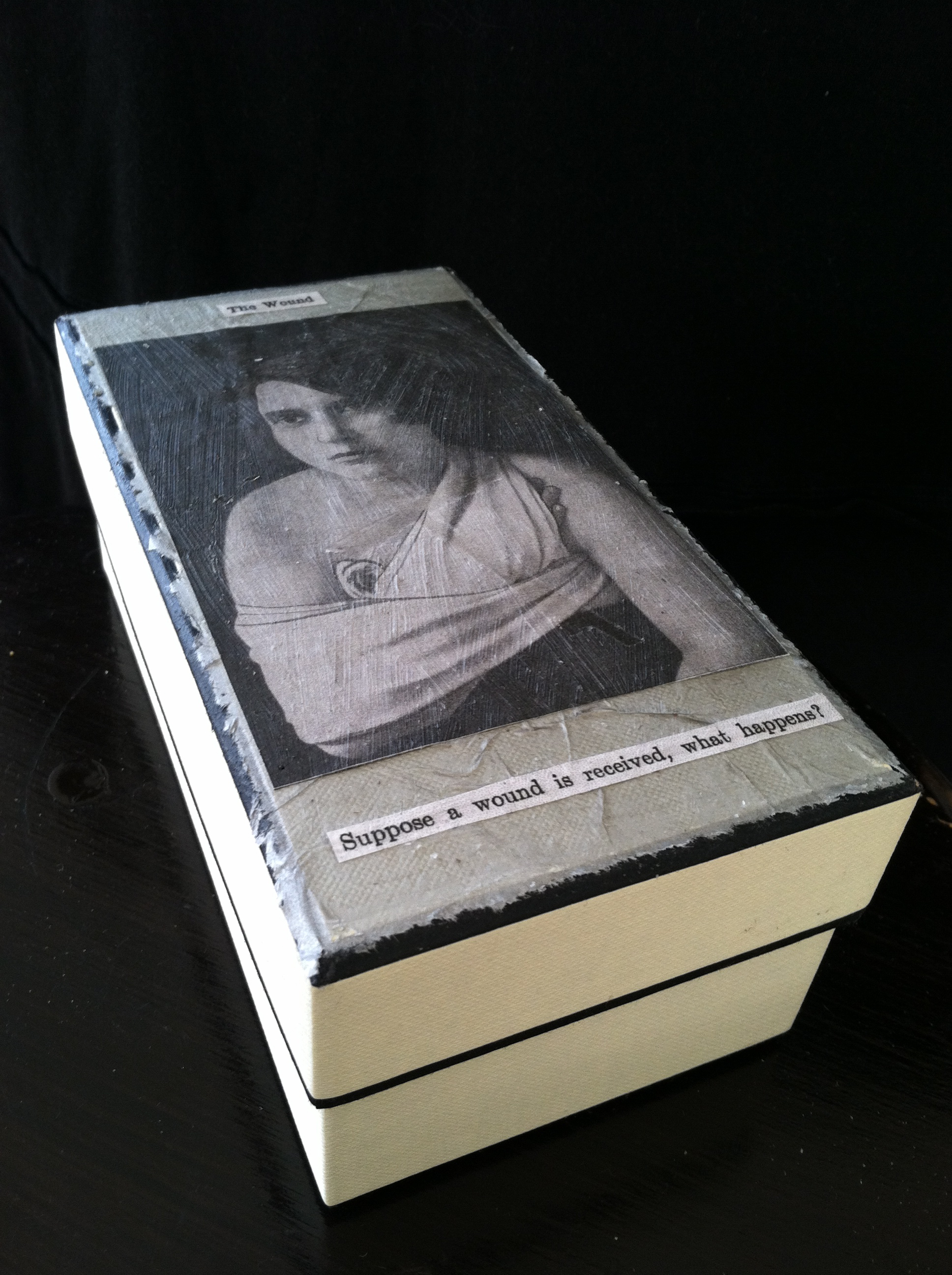
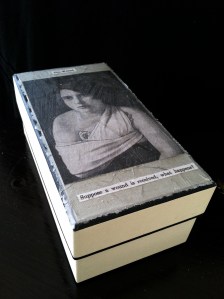
Suppose a Wound is Received, What Happens?, 3.5 x 7 x 3 inches, found box, vintage text & images, wax and found object
IMG_1793

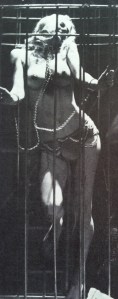
This is my wound. I lived in an unstable and abusive environment filled with secrets and lies, inappropriate sexual relationships and violence. This reliquary is a box.  Because that is what we do sometimes.  We put our wounds in a box and close the lid. 

We hope that if we keep them tucked away everything will be all right. We become the Good Girl and look to God for all our wishes to come true.


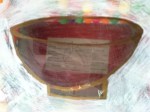
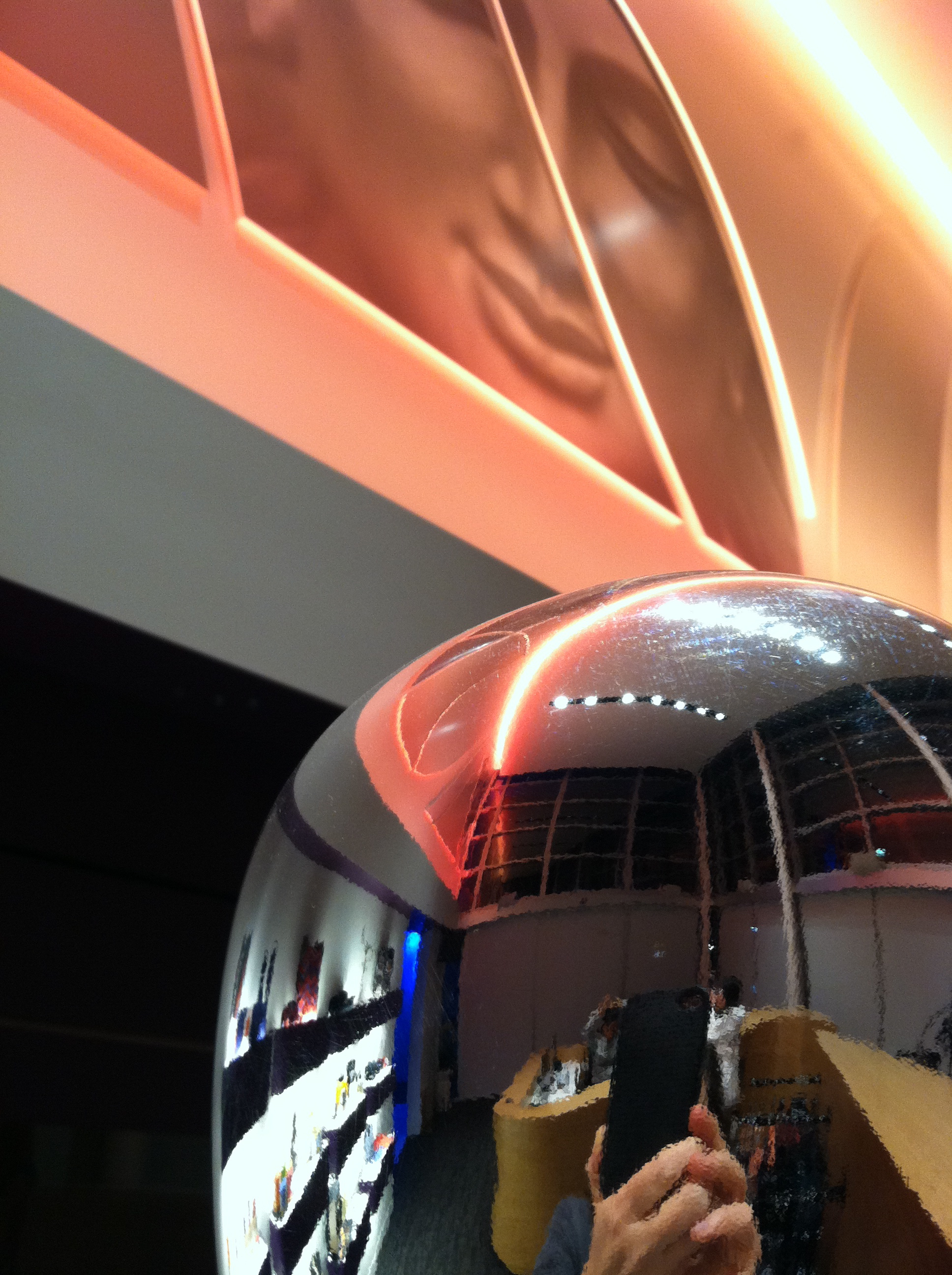
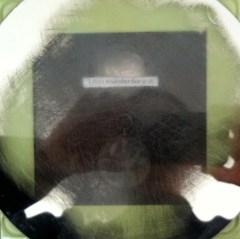
I Don’t Remember That at All, 5.75 x 5.75 x 3 inches, found box, compass, plastic optical dome, distressed mirror,text.
IMG_1942

IMG_1824

I struggled to find my way in the world.  I moved from Pennsylvania to a year-long marriage in Nebraska to the sunshine of California and then to Ireland.  During that time I floated between Catholic Mass, Christian prayer vigils, the one-ness of Bahaullah, the silence of the Quakers and the nothingness of atheism.  I was looking for direction.  A place to be not only in the world, but a place to be in my heart.


IMG_1916


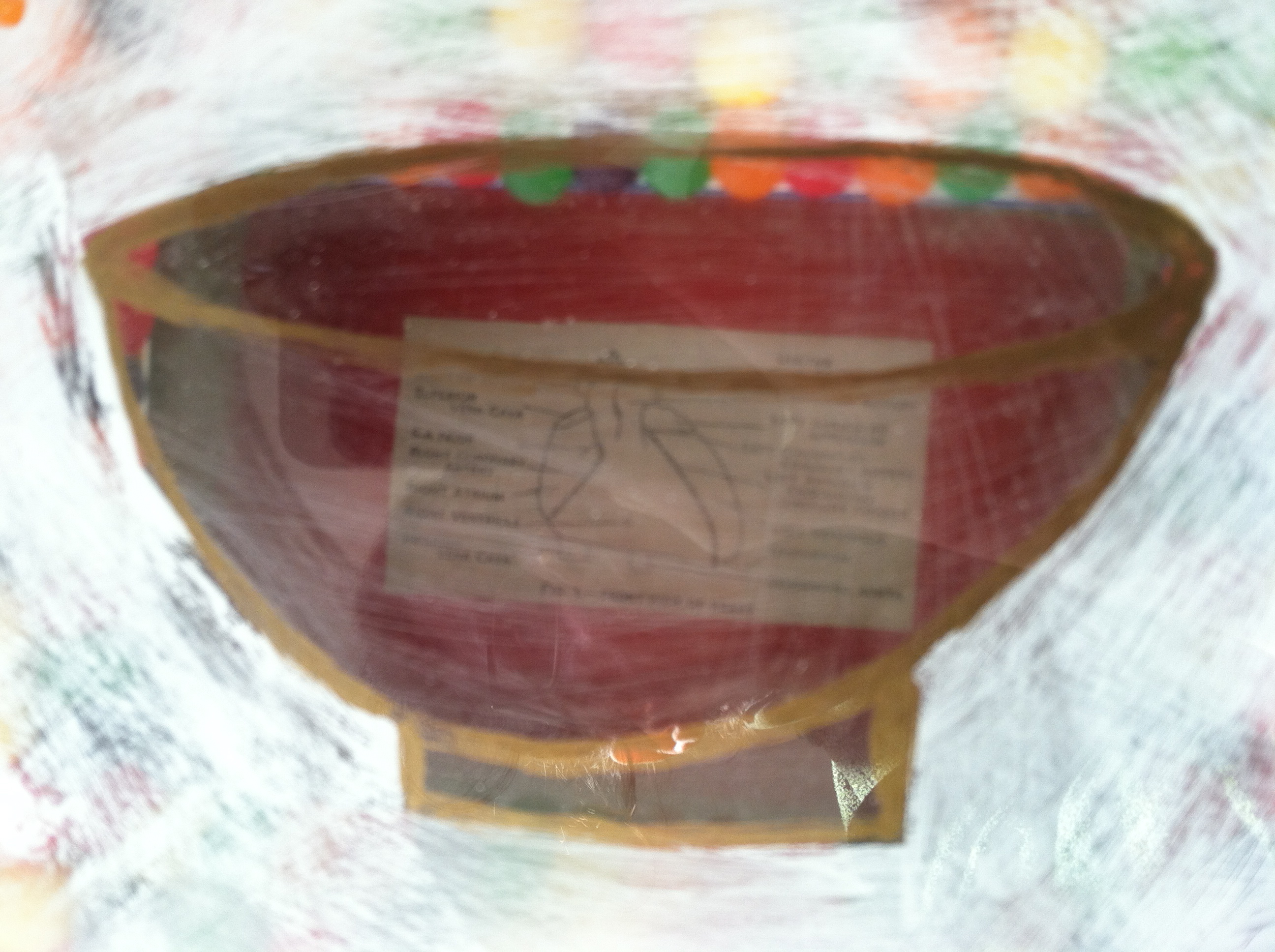
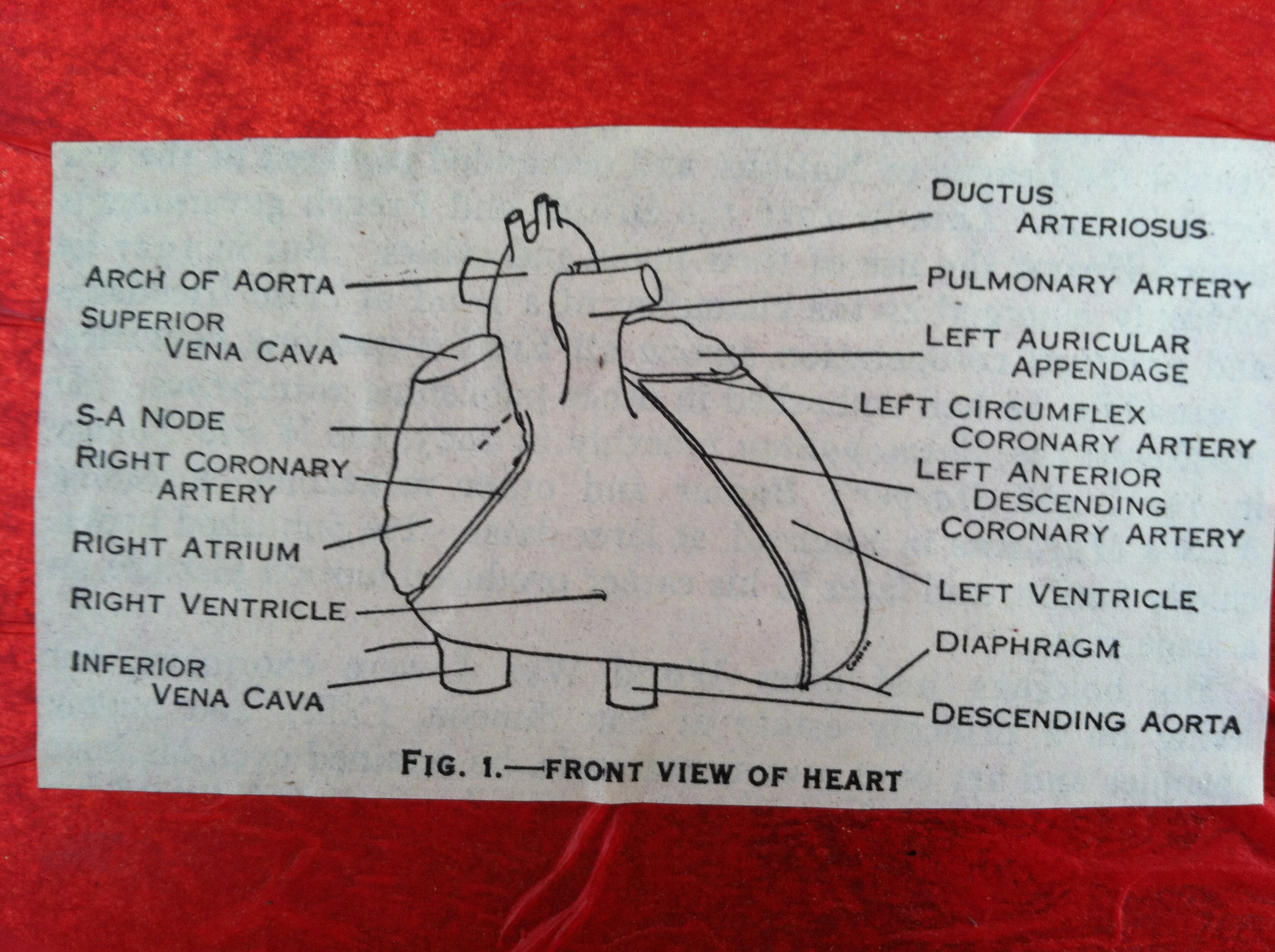
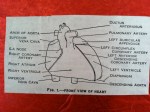
The Heart is a Fragile Vessel 6 x 8 x 2 inches, tin box,vintage text,distressed  plexiglas, jujube candies, jaw breaker  candies, acrylic paint, bubble wrap.
IMG_1881

IMG_1914

There is a point where I realized I had to treat my heart with more  kindness. More love.  Because the heart is fragile. I  backed away from my flirting with  various faiths and settled into a  period of practicing yoga and quiet contemplation with no particular direction or outcome in mind.


IMG_1936

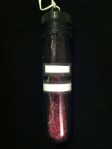
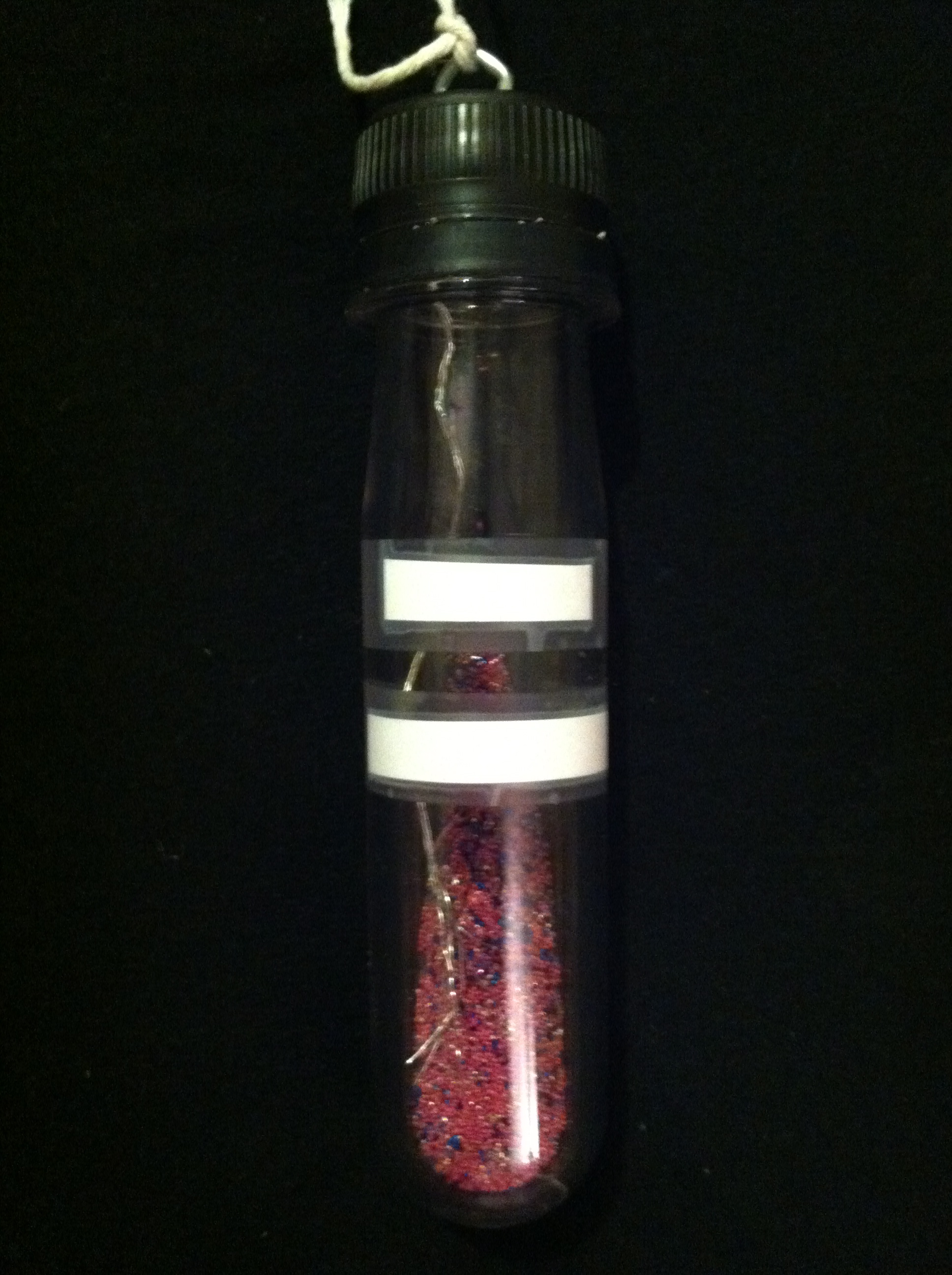
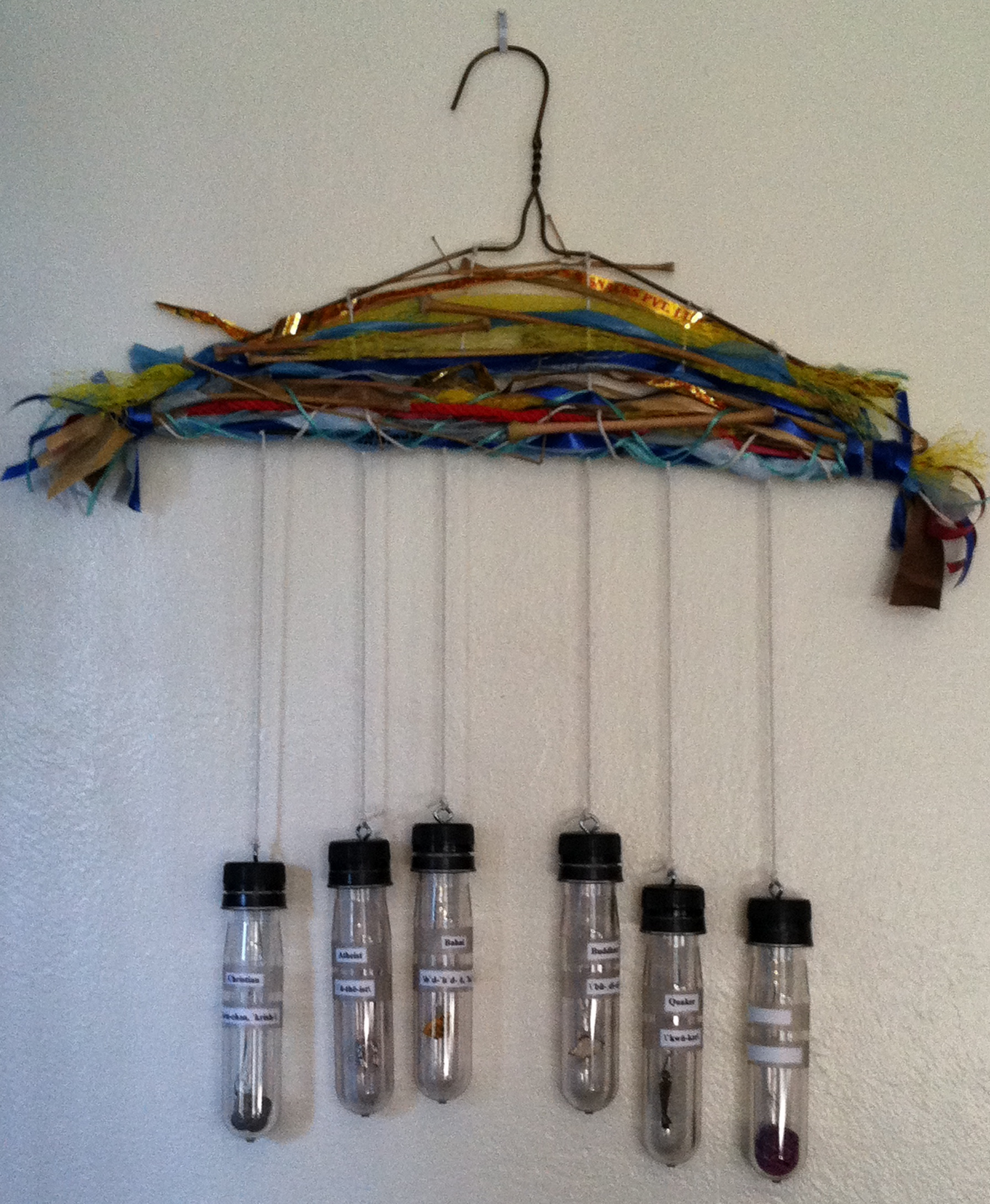
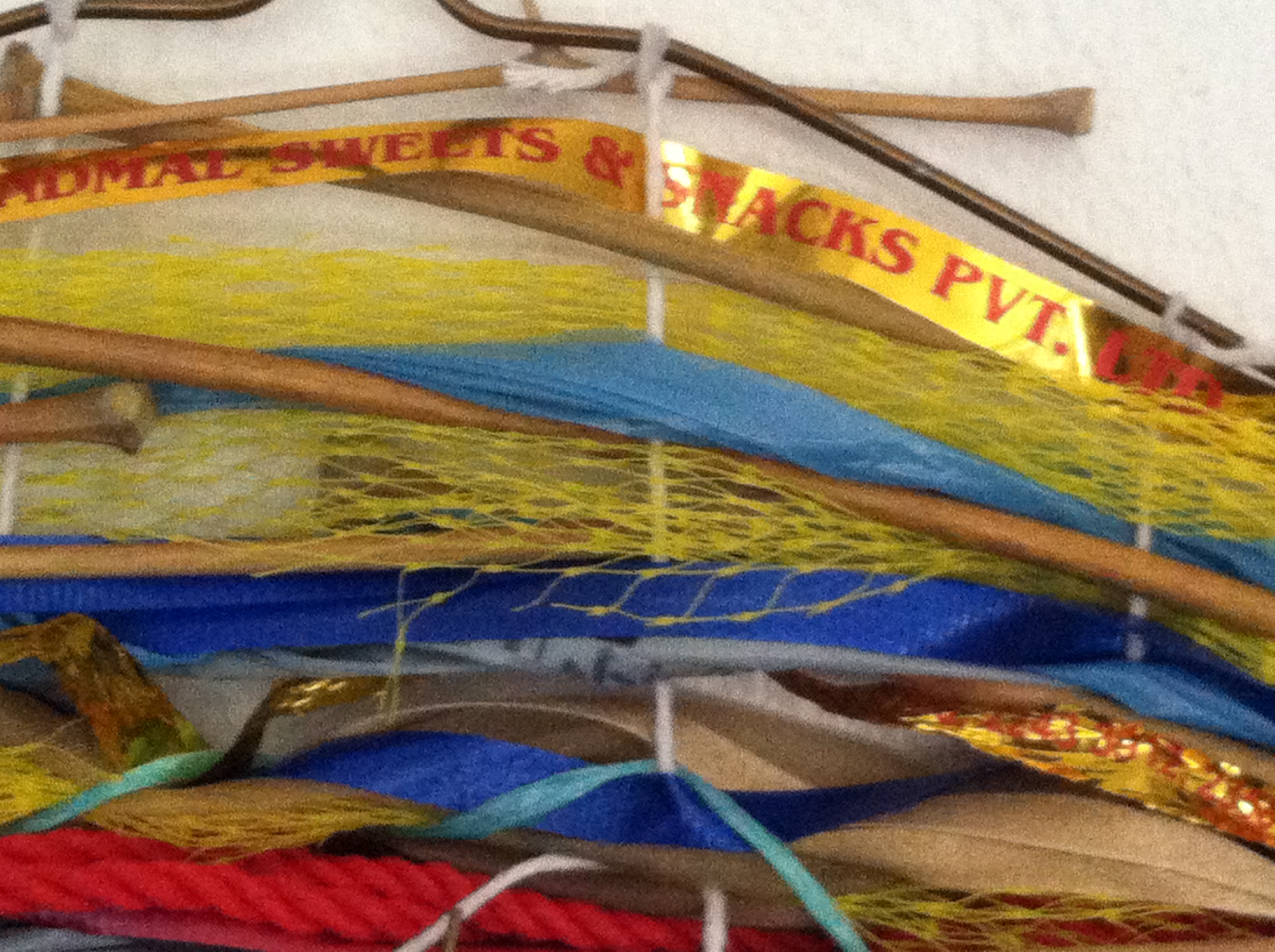
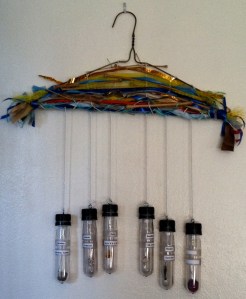
Sweets and Snacks wire coat hanger, plastic tubes, twine, twigs, plastic bag, found objects, frictionless beads

 This penultimate reliquary shows the primary faiths and philosophies I have explored.  The last, unlabeled tube explains where I am now:  at a place that requires no name and with the tentative understanding that maybe it really is all right to pick and choose.  Maybe our spiritual journey is a like a buffet.  Maybe it really is all right to choose a mixed bag of heart and meaning, even if our choices have no rhyme or reason. There is, after all, no one truth.  There are many truths.
IMG_1938


IMG_1902


IMG_1930

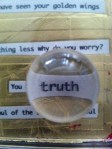
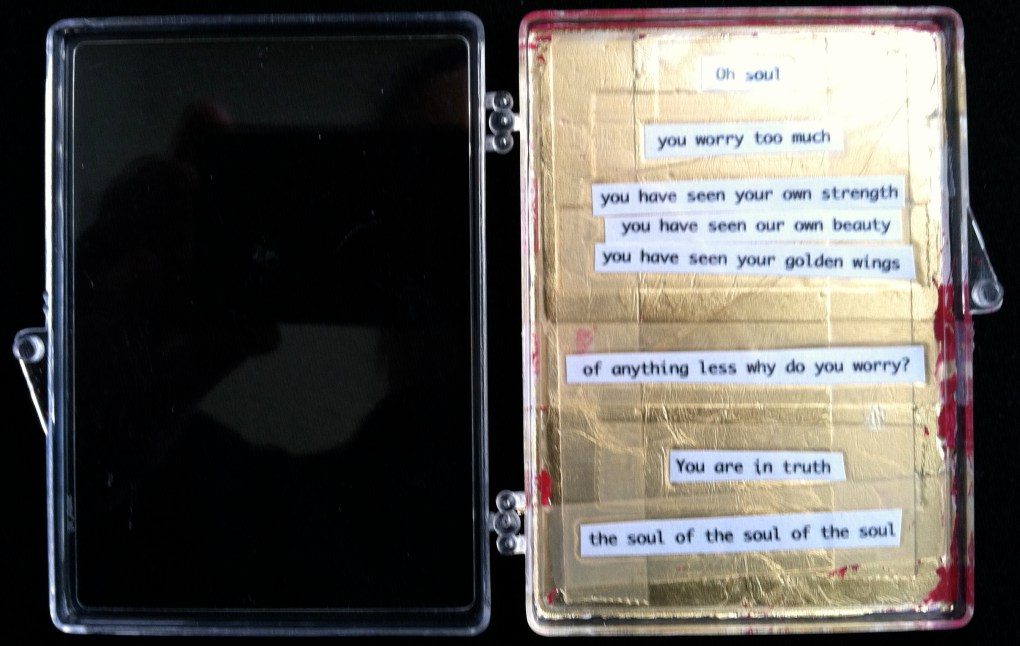
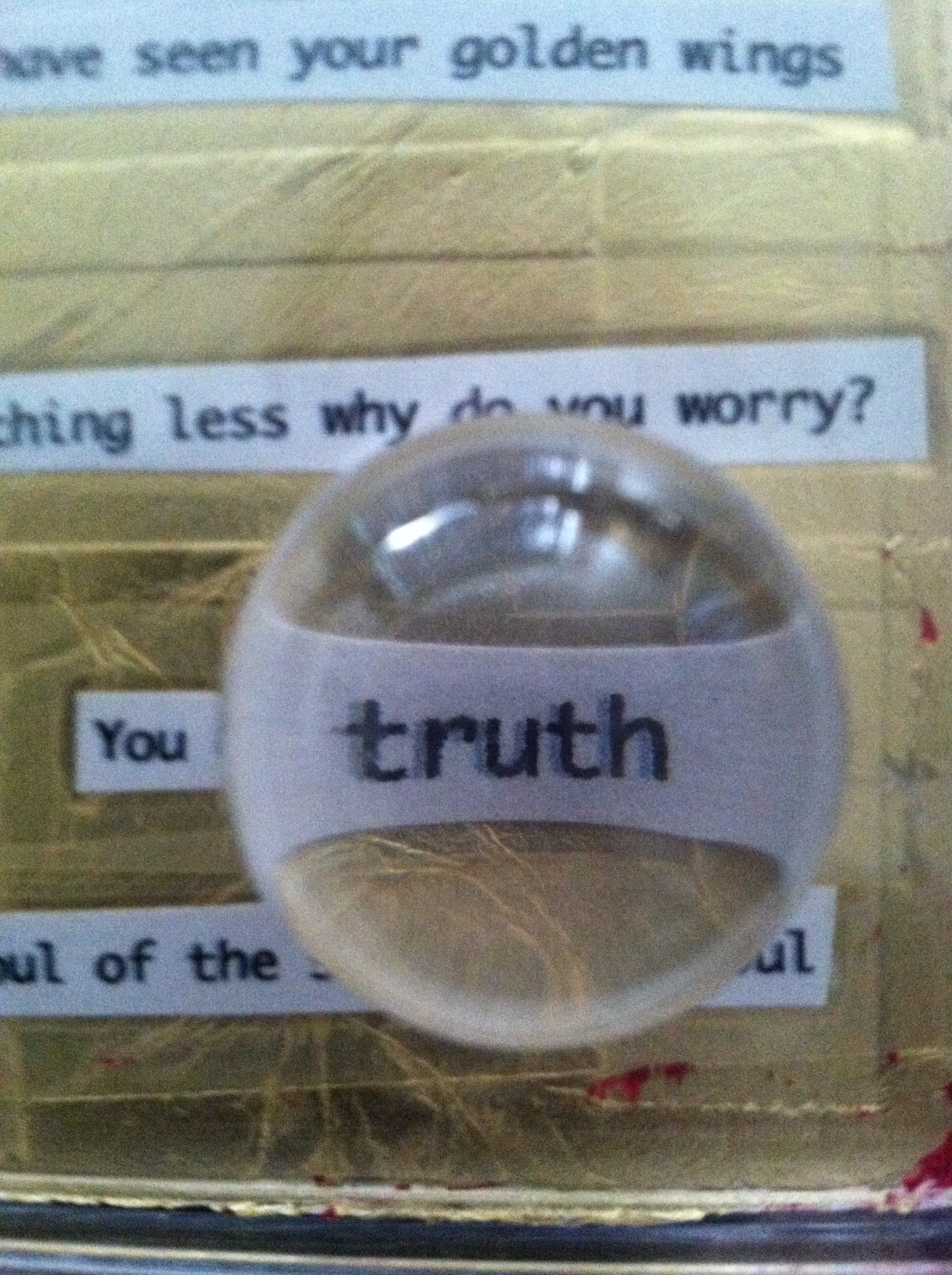
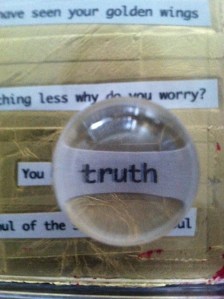
Truth, 2.5 x 3.5 inches, plastic box, gold  leaf, acrylic paint, text (Rumi)

And so, well into the second half of my life, my heart has finally taken flight.

Accepting of the wounds received so long ago and no longer constrained by the rules of religion I feel free to find my truth where I see it.

The Rumi verse in this piece is one of my favorites and seems an appropriate closure.
 IMG_1934

 “You are, in truth, the soul of the soul of the soul.”

Words, Walking and Making Art

One of the best things about my Spiritual Perspectives class are the projects we’re asked to complete. For example, on Tuesday I enjoyedAsh of a Lost Heart a three-hour walk as a meditation on the idea of ‘journey’. Today I began work on my spiritual autobiography. This project can take any form: song, essay, collage. We were asked simply to be authentic and inspired. I’m using the idea of reliquaries. I’m selecting one or two events from each decade of my life and creating an assemblage from found materials, text and photographs. The project is immensely challenging but creatively refreshing. Thinking in terms of symbols and images instead of words is a tonic for my brain.

It’s easy to look back on life and list by rote, “This happened and then that happened.” The challenge is to look back on life, remember the difficult moments and remember the astounding moments, too. And then contemplate how those moments transformed the spirit. Contemplate how those moments made you a better person. I’ve had so many stops and starts on the path – from a “Jesus-freak” in the 1970’s to a wannabe-atheist in the 1990’s. But in the past few years I’ve learned the lesson that so many of us have: that religion and spirituality are two very different things. I’ve learned that our journeys are intensely personal. I’ve learned that there is no one true path and that it’s all right to wander off the trail a bit from time to time.

I thought I’d share a bit of my essay about the walk I took on Tuesday.

Take ShelterThe wonderful thing about walking is that the rhythm of the foot falls become like a meditation. The chatter in the mind stops and the head suddenly has room to consider new ways of seeing. That happened to me around the two-hour mark. I remembered that, unlike all my other walks, this walk was different. This walk was not about non-stop movement. It was about a journey. A journey’s pace ebbs and flows, just like the tide. It slows down and it speeds up. Sometimes it even stops. And that’s what I did.

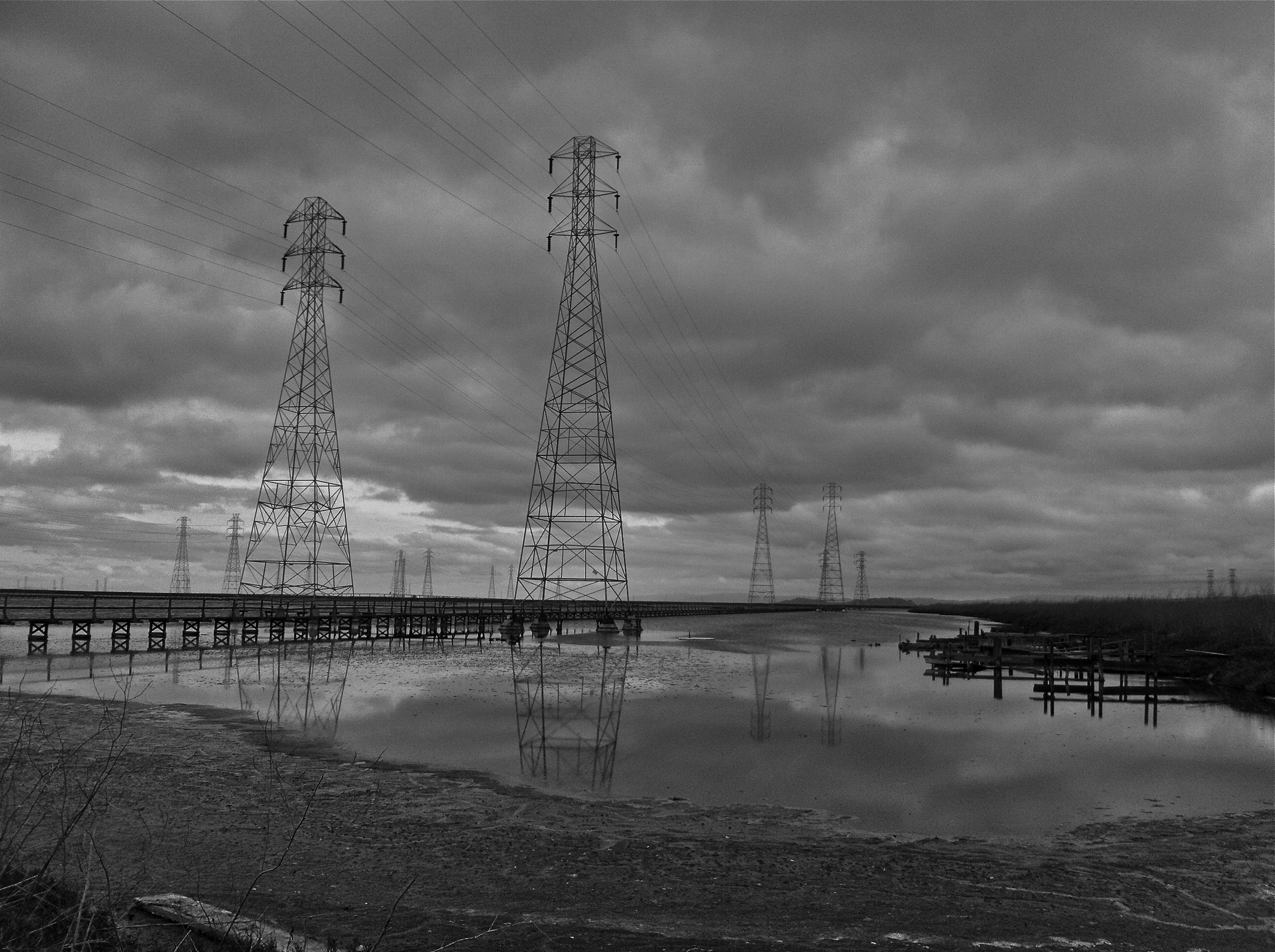
I stopped. Pedometer be damned I stopped right where I was. I looked across the water. I examined the banked earth for signs of burrowing owls. My eyes followed the small hawk who took off from the grass in front of me clutching her rodent lunch. And I took photographs of the bloated grey clouds blustering over the East Bay hills.

And nothing bad happened.

On our journey it’s fine to stop from time to time. To take it in. To witness from a fresh perspective. Today I was a witness.


My Aura Embraces Your Aura

Head wrap and ear plugs at the ready!

Head wrap and ear plugs at the ready!

I’m anxious. Fidgety, clutched and giggly. In a tizzy.

This is not the state-of-mind one would associate with a yoga teacher. Yet it happens.

Anxiety happens. Because anything could happen. And isn’t it the fear and anticipation of the unknown that trips us up? Starts the spiral and spins the story? But the unknown is just that – unknown. So what’s the problem? It’s all good. As my grandmother may have joked, “Isch ga bibble!”

Yet if I had fingernails, they’d be chewed to the quick. Because my life is going to change this year.

That’s the one thing we can count on. Change. Change is constant. Each moment is new. Some moments of change, however, are more profound than others. And the anxiety and anticipation I’m experiencing is a mix of fear, joy and impending adventure.

It’s as if I’m an audience of one, waiting for the curtain to be drawn back (and hoping that I overcome my aversion to hugs and sharing circles).

On Tuesday I begin two years of study at Sofia University. In March I begin teaching at Samyama Yoga Center. Yes, I’ve mentioned my admission to Sofia and the building of Samyama in previous posts. They are small things in the course of human events. Very big things in the course of this small life.

So how am I handling the anxiety? How do you think?

Yoga. Yoga. Yoga. Breathing. Yoga. Meditating. Yoga. With a few sandbags and head wraps thrown in for good measure.

More specifically:

  • A strong Yang practice featuring plenty of Flying Dragons to burn off the fidgets.
  • A soft Yin practice to open and release.
  • Restorative work featuring the placement of a sandbag on my forehead (yes, seriously).
  • Meditation featuring head wraps and earplugs (yes, seriously).

And finally, embracing this time of deep change and new beginnings with a living, ‘off-the-mat, into-the-world’ daily practice – a practice that will melt rigid trepidation.  A practice that will encourage blissful surrender to the unfamiliar journey I’m beginning.

As for my aversion to hugs and sharing circles? Well, that’s something for me to work on. In the meantime, Samyama’s owner John Berg offered this advice at our last staff meeting, “If someone goes in for the hug, just tell them ‘my aura is embracing your aura’. Works every time.”

And it does.