Family Jewels

At the start of each Guided Autobiography workshop I present the next meetings theme and the sensitizing questions. Two weeks ago I introduced the theme ‘jewelry’ with these prompts:

Is there a piece of jewelry that has been passed down from one generation to another? If so, what significance does that piece of jewelry hold for you? Is there a piece of jewelry that you would like to pass on to someone? To whom? Why?

Did you ever lose a piece of jewelry that you treasured? What did you do to try to find it? Was it ever found? If not, how did you deal with the loss? 

Did someone in your family wear a piece of jewelry every day? Was it a ring? A necklace? Perhaps a string of pearls? As a child did you wonder about that jewelry? Did you want to wear it yourself?

Two weeks later we shared our stories. Here’s mine:
Jewelry

My personal style leans toward Shaker plain. One Fitbit on my left wrist. For years my FitBits were worn with the company’s standard black neoprene watch band. Last year, when I purchased an upgrade, I decided it was time to push the boat out – you know – mix things up – go a bit girly. So I traded in the standard black for a delightful beige. Fancy!

But wait. There’s more. When I’m dressing up I add thin silver hoops to my pierced ears. 

That’s not to say I don’t wish I wore more bling. Good lord I’ve tried. After all, I have plenty from which to choose. I have jewelry boxes filled with generations of cheap cocktail rings from the 1950’s, necklaces my great-grandmother wore, a huge cameo ring – black onyx set in gold – that belonged to my grandfather, and a heap of cubic zirconium I have reason to believe my sister purchased alone, late at night, from the Home Shopping Network. And of course I have beautiful gifts of jewelry from my beloved.

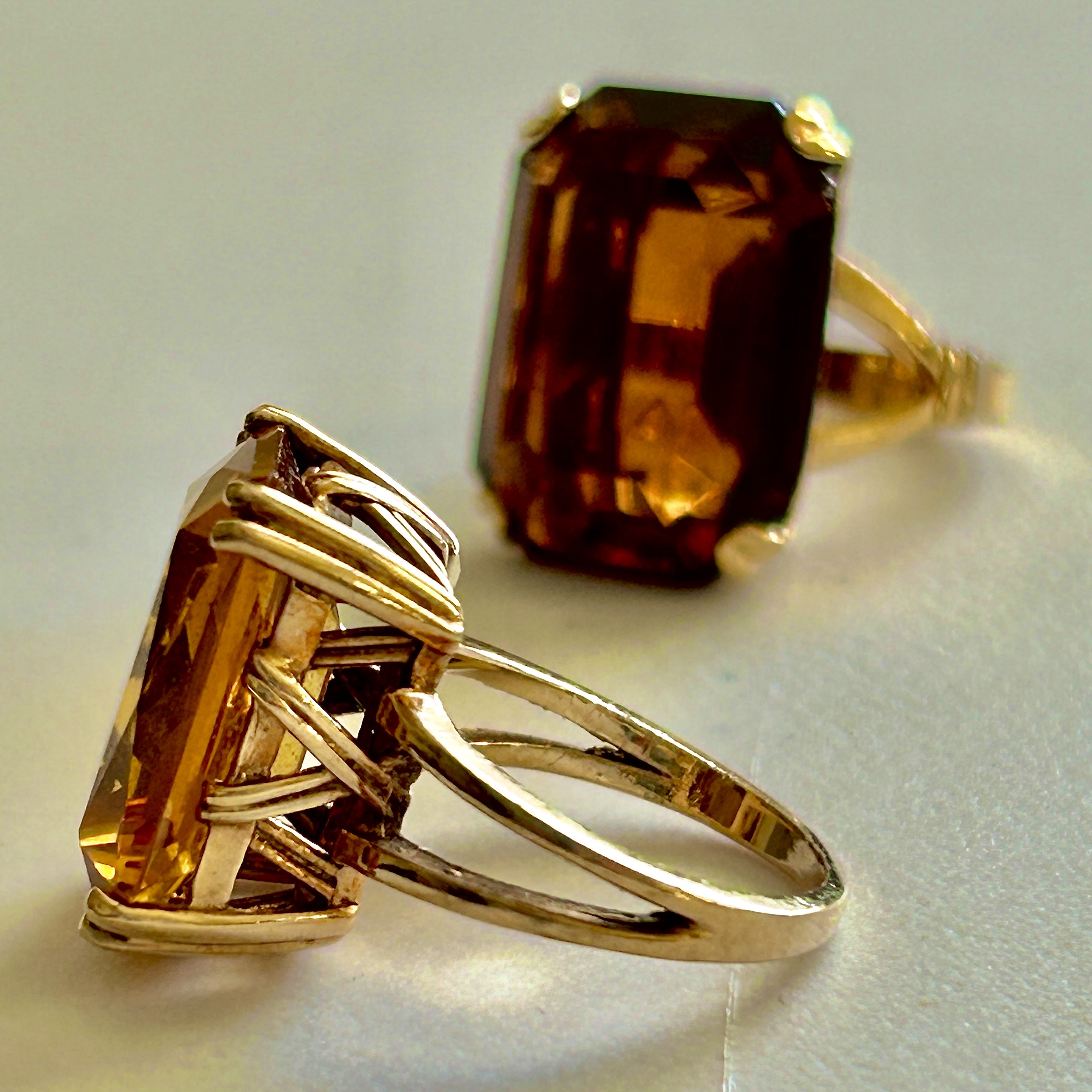
My mom loved bling. Especially on her fingers. In my jewelry box are huge gold rings with large citron, smoky topaz and aquamarine stones. I remember seeing her wear the smoky topaz as a child but I think the other rings were given to her by suitors after I left home. Their settings give off a late 1970’s big hair lounge lizard vibe.

Just ten years earlier the vibe leaned more toward Mother Nature, hippies, peace and love. My favorite ring of hers from that era is a large swirl of silver made to look like two feathers circling one around the other. The ring is set with large cabochons of turquoise and red coral. I love this ring. The truth is I’ve even worn it once or twice – but only to gallery openings – because it reminds of the type of jewelry older women artists wear. Of course that’s not even really a thing. Like, there’s no law that says older women artists have to wear chunky rings and statement necklaces. But some do. And I love a fabulous statement necklace on black cashmere. On someone else, of course. Far be it from me to even attempt to pull that off! But what I love most is the way this ring looks on an older hand that has spent a lifetime working hard and has the broken nails and torn cuticles as proof. 

There’s another ring from my mother’s collection that I remember from childhood. It’s a thick band of a unknown material made to look silver and carved with all the symbols of the late 1960’s – a smiling sun, a piece sign, an Egyptian ankh. I remember it belonged to a boy my sister Margaret was dating. And I remember  9-year-old me performing my version of Bob Dylan’s ‘Mr. Tamborine Man’ for him. Singing lyrics I carefully (and wrongly) transcribed from the record and accompanying myself with my baritone ukulele. He gave the ring to my sister and somehow it ended up in my mother’s jewelry box and now, a lifetime later, it rests in mine. I have no idea what happened to that boy but I want him to know his ring is in safe hands.

My sister loved bling, too. For as much as they disliked one another, my mom and my sister were two bitter, bling loving peas in a pod.

Margaret’s weakness was fake diamond engagement rings. A week after she died I arrived at her tiny one-bedroom apartment in Norfolk, Virginia with an empty duffel bag and a little more than 24 hours to find anything of importance. At this point what was left of my family was my mother and me and the deep chasm of estrangement seasoned with secrets never spoken. And that’s how I was left with the task of convincing the manager of the apartment complex that I was who I said I was and that’s how I was left with the pain of leaving so much behind. 

My sister hoarded. There were five vacuum cleaners in her bedroom. A closet filled to the breaking point with possibly every item of clothing she had ever worn as an adult. Dozens and dozens of rubber flip flop sandals. Shoeboxes filled with clothing she had sewn for her Barbie doll collection decades before. A freezer stuffed with frozen meals and cans of frozen vodka tonics. Stacks of books. Overflowing ashtrays. Half drunk cups of black coffee. Sadder still, a large box filled with a least one hundred unopened Beanie Babies – those popular, deliberately understuffed toys that during the late 1990’s people collected and resold for profit.

And then there was the jewelry. When I found the rings I hoped so much that the stones were genuine but of course, with a closer look, it was clear they were not.

Still, I put them in the duffle bag, along with three Beanie Babies (one for my mom and two for me), and a pair of orange rubber sandals. Other things, too. My sister’s tarot cards, some photo albums and other mementos that would remind me that she once lived. That I once had an older sister who, like our mother, loved bling. 

I hope they’re together now. Reconciled. Making jokes at my expense and trying on whatever heavenly jewels they can find.
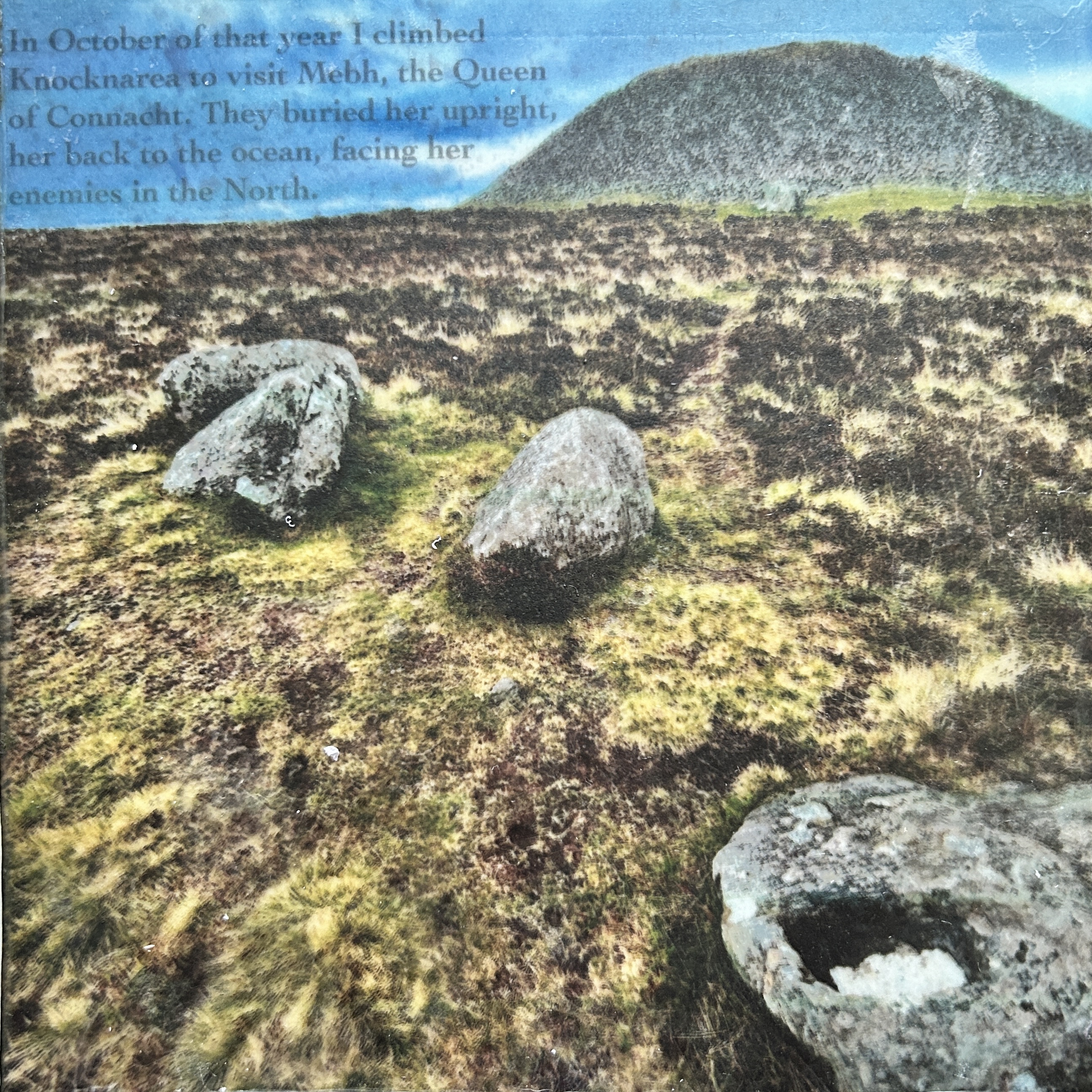
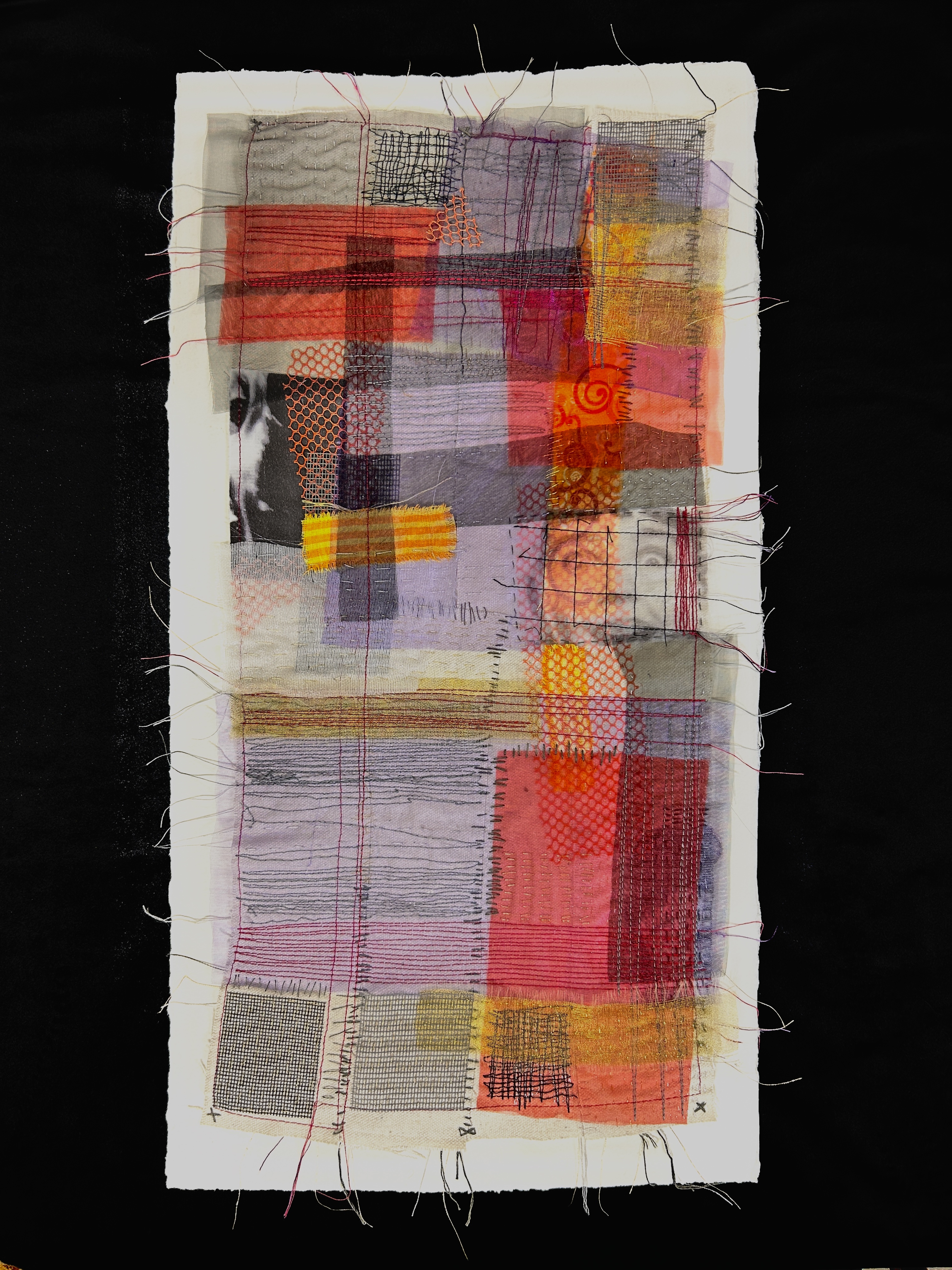
Applesauce and a Jam

I returned to facilitating Guided Autobiography (GAB) online last week. I have an unconventional approach to these workshops. We’re working our way through the alphabet and for this series of workshops we are choosing prompts beginning with the letter ‘j’. Our first prompt was the word ‘jam’. The sensitizing questions encouraged us to consider jams we’ve made or help make, or jams we’ve experienced. I never made jam – I only ever made applesauce. But I’ve been in a few jams. Here’s a story about making applesauce with my grandmother and getting myself out of a jam.

My grandmother and I never made jam. We always made applesauce. My grandmother, Pauline, lived with her husband, Robert, in a red brick corner row home across the street from McKinley Elementary School on Poplar Street in Allentown, Pennsylvania. The school, red and as imposing to a young child as Uluru, was built in 1880. It was where I attended kindergarten and its playground where I learned to ride a bike. My grandfather hated having the school’s playground a stone’s throw away from the overstuffed chair where he read the Morning Call Chronicle, smoked his Chesterfield cigarettes and chased his whiskey with cans of Schmidt’s beer. In the summer, when his window was open and the kids on the playground were laughing too loud he’d hold himself up at the front door and cuss at them to shut up. That only made the kids laugh louder. 

While I was still in grade school my grandfather would on occasion settle behind the driver’s seat of his massive beige Chevrolet Bel Air and drive my grandmother the thirty minutes from Allentown to our home in Lynnport. This was before my grandfather’s smoking and diabetes caught up with him and doctors took his leg. It was before a tumor took his voice and the cancer took his life. 

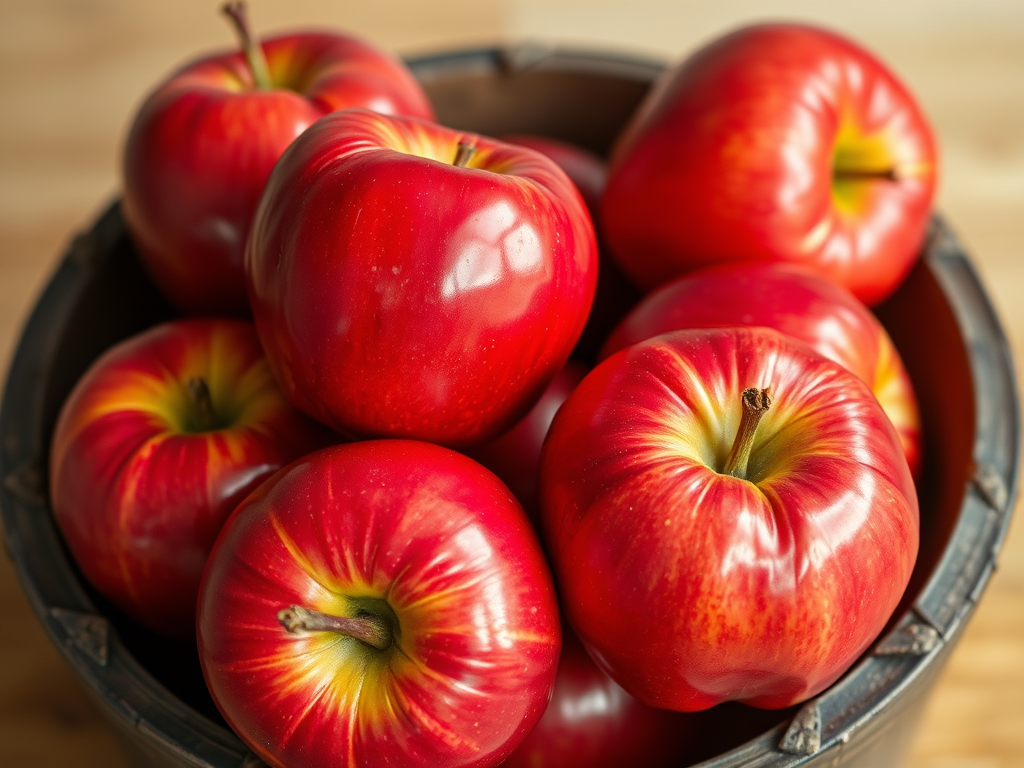
But when he still drove, my grandparent’s would visit their only daughter, my mother Barbara. If it was late summer and the start of apple picking season in Pennsylvania my grandmother would bring the tools we needed to turn the apples into sauce – a large, well-worn aluminum cone-shaped strainer, the wire stand that held the strainer upright and the massive wooden pestle with which we forced the peeled and cooked apples through the strainer’s tiny holes. The apples were bought in bushels from local farmers and by the end of my grandparent’s stay my grandmother and I had made enough sweet apple sauce to see us through the winter.

It was always applesauce. I don’t know why we never made jam.

Where I lived in Pennsylvania blackberries and raspberries grew in hedgerows and were free for the taking.

When the berries were ripe the kids in my gang (some names I remember and some names I’ve lost) would walk along the railroad tracks, past the swimming hole under the silver bridge, dodging deer flies and muskrats, to an abandoned house. Along the way we’d pick berries until our fingers were sticky and blue.

I don’t know the house’s story, who owned it and why it was left abandoned. But I remember the outer walls were all but gone filling what remained of the rooms with light dappled by overgrown trees, brambles and poison ivy. I remember, too, the smell of dust and mold and animals. I remember the shattered piano that had fallen through the first floor to the basement. And I remember climbing broken stairs to the attic. I was brave then, and climbed the stairs alone. Half the roof was gone but at the gabled end, resting on a wooden rafter, was an owl. In my memory he is huge and regal and the most majestic thing I’ve ever seen. There’s a moment when we look at one another, startled and in awe. But then my excitement gets the better of me and I shout to my friends. The raptor flies from one side of the attic and then escapes through the shattered roof and disappears into the woods.

It was in the 1970’s when we could leave in the morning, wade through creeks, explore abandoned homes and not come home until dusk.

I guess that’s why my mother never asked where I’d been.

That one day I’m thinking about, I’d been in a jam. 

He was a year older and already smoked cigarettes. He had piercing blue eyes and dark hair and most girls in my grade had a crush on him. So when he called me one afternoon – I didn’t even know he knew my phone number – to ask about an assignment he had for his history class and would I help him my racing heart said ‘yes’ even though it made absolutely no sense that he would ask for my help. When I arrived a friend of his was there, too. They’d just made a great fort in the barn from bales of hay and wanted to show it to me. I followed them into the barn. I was shown where to crawl in and it was only after I was halfway through the tunnel that I realized one boy was behind me and the other had entered through the other side. I was trapped between them.

These two silly boys thought they were going to get away with something but they didn’t. I wasn’t the girl they thought I was. I wasn’t ‘easy’. I didn’t ‘give out’. Even thought here really wasn’t that much else to do in Lynnport, Pennsylvania in 1974.

After twenty minutes we crawled out from the tunnel and I began to walk home with hay in my hair and the feeling that I dodged a bullet. As soon as I walked into the house I filled our clawfoot tub with scalding hot water and scrubbed myself clean.


Art Imitates Yoga

For as long as I’ve been writing and posting – which must be at least twenty years – I’ve held the intention that I will post each week and each post will be a reflection on my experience as a yoga student and teacher. 

That has never come close to happening.

My last post was on September 9th, 2024, when I introduced the world to the incredible Tondu, the senior feline companion who moved in and filled the gap left by dear Brucie’s departure. After that post I found myself struggling to put together a few paragraphs describing the fear and anxiety so many of us are experiencing as our country moves toward a darker age. I finally abandoned all hope and hit the delete button.

Because I can’t write on command. Writing about a specific topic with a self-imposed deadline sucks any ability I possess to string two words together from my brain. I suspect that with discipline (if I showed up daily for myself and for my writing practice) the issue would right itself (pun intentional). But until I do that I’m going to have to be content with writing when the mood strikes.

Which makes me question whether, at the dawn of 2025, I want a writing practice as much as I wanted it in 2010. Fifteen years ago I wrote a full-length manuscript (90,000 words!) about a young woman eager to fly at the start of WWII. The story was inspired by a woman I knew who had been an WASP. In my story she falls in love with a neighbor boy who is Japanese and is sent to an internment camp. Forbidden love! Separation! War! Oh the Drama!

I was never happy with the ending. Do they reunite? Have they been changed so much by their experiences that love dies? Or is love the one true thing? Oh the Potential Heartbreak!

I was going through my own heartbreaking drama at the time and the joy I found living with these characters in my brain was lost. And so the finished manuscript sits in a dusty box, unedited. I always tell myself I’ll get back to it one day but that day has yet to arrive.

Practicing a visual art feels different. Maybe because, fifteen years older, I’ve learned to take myself less seriously. Or maybe I’ve learned to not make creating a competition. Showing up for my art practice is not a chore. It’s a joy. And although when I’m in the art studio I experience the same struggles and setbacks as I do when I write they are never enough to make me push it to the back burner. If anything I grow more determined to find a solution.

For the past two years I’ve been exploring encaustic photography. The process is this: I take a photograph with my camera. I edit the image on my laptop. I print the image on a sheet of tissue paper and then adhere the paper to cradled birch with encaustic medium, which is a combination of bees wax and damar resin. The tissue paper becomes transparent from the melted wax. I build on this with further layers of tissue paper on which images, texture and text have been printed.

Late last year I found the process becoming rote. I struggled with a few technical issues and when they were resolved I produced work like a robot on an assembly line. The process became a race to see how much I could create in a day. The idea of art as a practice was lost.

The truth is, since my intention is for my art practice to also be a business – in other words I want to exhibit and to sell the work I create – then my time in the studio should be both business and practice. But I was listing heavy toward ‘produce at all costs’. My art had lost its heart. 

So I put the camera, the wax and the tissue paper and I pulled out my scraps of fabric.

And yesterday, as I stitched layers of rust-stained cotton and dreamy organza together, I thought about yoga. I thought about the verbal cues I use with the women and men with whom I practice. I thought about how I ask them to move with care. To move with intention and to be thoughtful. I thought about how I ask them to meet their bodies where they are in that moment. How I ask them to be present with their bodies and with their breath.

Yoga is a practice. Writing is a practice. Art is a practice, too. And as I move forward in my art practice I’m going to apply all the cues I provide for others during our sessions on the yoga mat. I want the work I bring into the world to be intentional, not rote. I want the work to be thoughtful, not thoughtless. I want to remain present for the making of the work and not to be thinking about what comes next.

I believe this new awareness will serve me well. 


Felis catus: Our Cat Companions

After Bruce the Amazing left us last February I swept up the last of the kitty litter, gave away his food and moved the living room furniture to a new configuration so that Ben and I no longer looked for his furry orange form curled in his favorite chair when we came down the stairs. After a suitable period of sadness and reflection on the years we shared with our cranky, lovable Brucie we settled into life without him. While it’s true our home felt a little empty Ben and I were enjoying not being responsible for a creature lacking opposable thumbs.

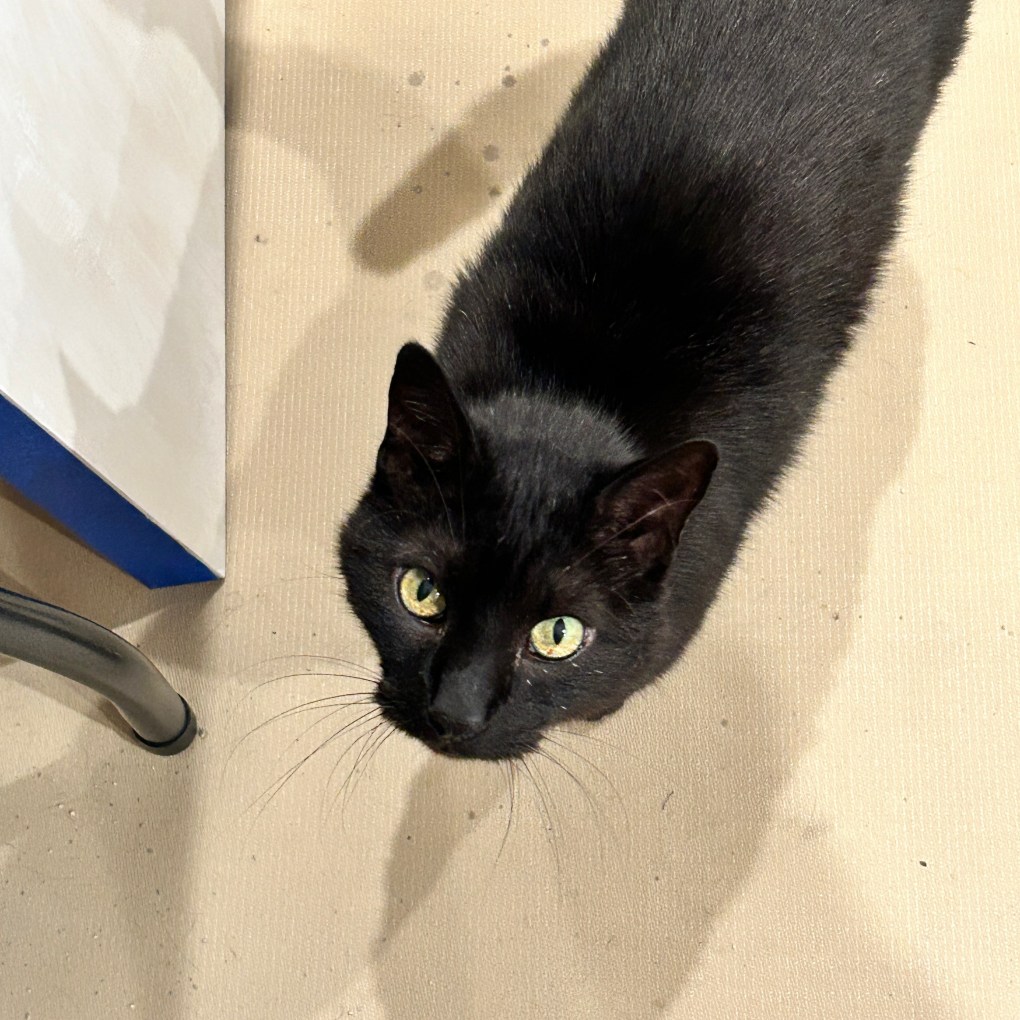
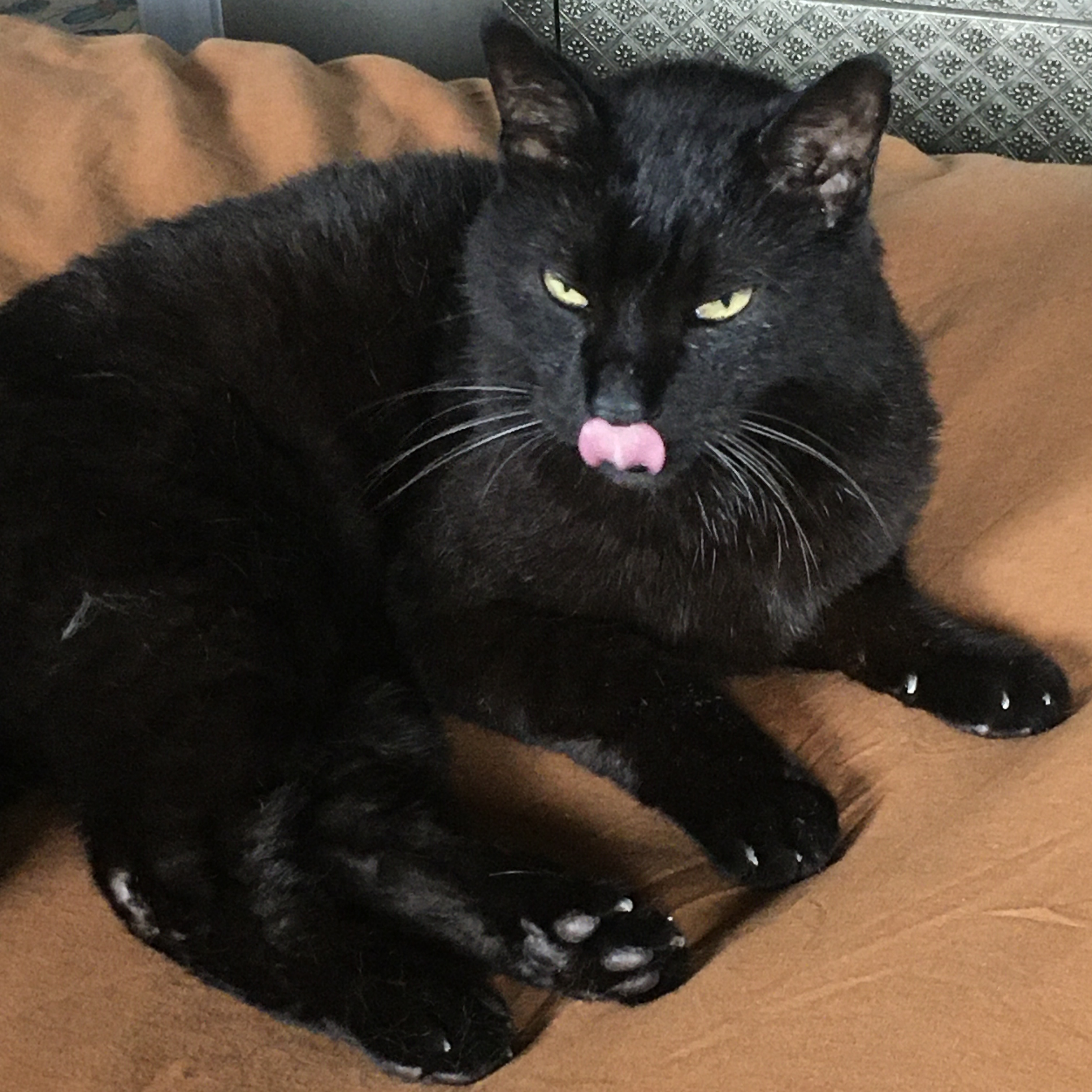
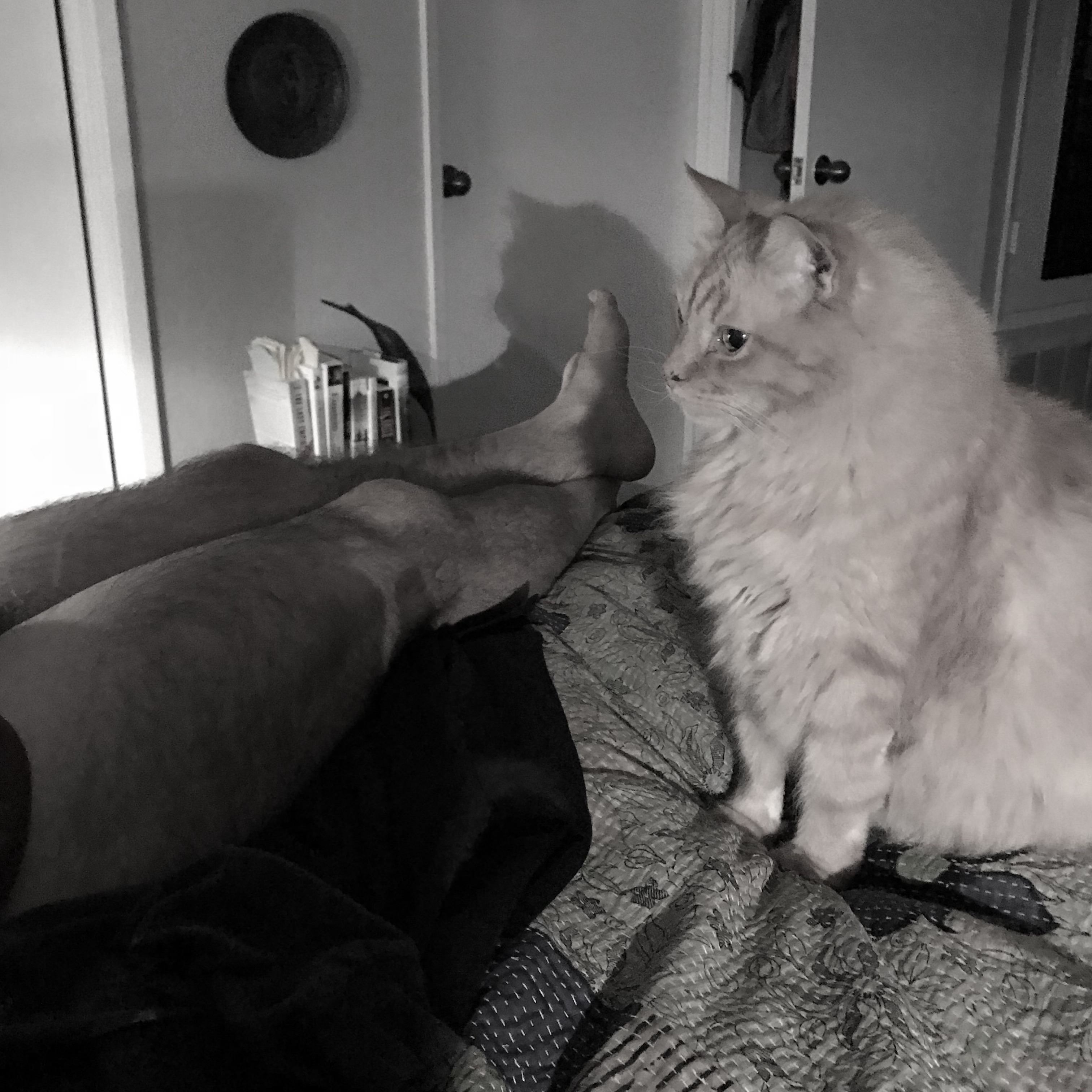
And then Tondu arrived.

The first time I saw Tondu, before I knew his name or that his purrs would soon be familiar, he was perched on the narrow edge outside of the railings around a patio two stories high at the back of the senior center where I teach yoga. Panther sleek, he was surveying his kingdom with fearless poise and confidence. I later learned he was the beloved feline companion of an older gentleman who was seriously ill.

Two weeks later Tondu moved in. 

He’s fourteen – the same age as Bruce when we first met him. Unlike Bruce, Tondu has a French passport. His human, before coming to Virginia two years ago, lived in France and bottle fed Tondu as a kitten after Tondu’s litter mates and mother died. Tondu and his human were inseparable. 

I didn’t meet Tondu until the day I brought him home and this so easily could have been a disastrous decision. But it’s been a wonderful decision for both Ben and I. And for Tondu, too.

Tondu’s personality is very different from our darling Brucie’s. Bruce loved being brushed. Tondu can’t tolerate it. Bruce loved eating the house plants and so they all had to be placed out of reach. Tondu could care less about the greenery around the house and on the porch. Bruce was not interested in jumping on tables and counters. Tondu has a four foot vertical leap. Bruce rolled his eyes at toys but loved his cat tree. Tondu ignores his cat tree but loves the little toy that arrived with it. Every evening he and I race up and down the stairs while he chases a grey little puff with a white string attached. I think it reminds him of his days as a mouser in France, when he was an indoor/outdoor kitty.

I know adopting seniors (cats, dogs or humans) comes with risks. I know we’ll be lucky to have him in our lives for as long as we had Bruce. I know that there will be health issues and decline and loss. Such is life. But Tondu has settled in and I am wrapped around his paw.


Guided Autobiography & Earworms

What did you do during the pandemic? Some folks adopted dogs. Some binge-watched their favorite shows on Netflix. My beloved Ben decided to study the Polish language. I wasn’t quite that ambitious. I completed my Guided Autobiography training and became a GAB facilitator. Since then I’ve offered online workshops based on the GAB principles envisioned by Guided Autobiography creator James Birren. GAB workshops are not writing classes. There is no critique, no correction. The workshops are a place where we can tell our story and find connection. I provide a theme and a series of questions that dust off our memories and help us to tap into our truth. On the new GAB website they quote the late, great Brian Doyle:

“Stories change lives; stories save lives...They crack open hearts, they open minds.”

If you are curious about my workshops and would like to learn more please reach out. I’d love to tell you more about this beautiful process. In the meantime, here’s the essay I wrote for this week’s workshop:

Earworms and the Soundtrack to My Life

I am constantly reminding us to find one little moment to write about. I encourage us to avoid the helicopter view and instead reflect on a single day, a small incident, a remembered conversation and to focus our story on those moments. That’s where we might find the learning. And when we do that the writing can be more personal. Intimate and insightful.

Yeah. So I did not do that. What I wrote in response to our prompt ‘hope’ is more of a prologue to the memoir I will never write. Plus, it is filled with adverbs. And you know how I feel about adverbs. Nevertheless, here’s my story:

I’ve been pondering the word ‘hope’. What is ‘hope’? What does it mean ‘to hope’?  Despite the deep contemplation, those four letters have failed to trigger a reaction. It’s as if the word has been bandied about so often that it’s lost its potency, like an open bottle of champagne gone flat or an elastic waistband that has outlived its stretch and recoil. 

Do you remember the song ‘High Hopes’? Exactly what did make that little ant move a rubber tree plant? I mean, anyone knows an ant can’t, and where was she trying to move it to anyway? But according to the song it was her irrepressible high hopes that made moving that rubber tree plant possible. And sure enough, that little ant’s success was a reminder that hope and hard work can make anything possible. Boy-oh-boy did my fifteen-year-old Pollyanna-tainted heart just love hearing that message. I knew with absolute certainty that if I believed in myself enough, if I worked hard enough, if I was nice enough, if I was pretty enough, if I hoped enough then anything was possible. No matter my circumstances or the obstacles placed in my path the life I envisioned was mine just for the hoping.

I was in my mid-thirties when I realized the error of my youthful ways. As it happened hope was nothing more than magical thinking because life had a way of diminishing our Disney-fied technicolor dreams.

No matter. 

I was in my forties and living in Donegal, Ireland about half way through my eleven-year odyssey. A stow-a-way escaping her chaotic Bay Area life. But life wasn’t going as planned. The details are silly and inconsequential. In order to survive the hurdles I faced, I set aside hope and instead channeled resilience. It wasn’t easy and I had to land on rock bottom with a decisive thud but then a new song hummed its way into my heart. Somehow I found a way to pick myself up, dust myself off and start all over again. Which I did. Again. And again. And again.

And we all know my story. I found my way out of Ireland. Back to California for twenty restless years. Wait. Can that be true? Twenty years? Has it been that long?

No matter.

I came back to California like a newborn. Once again I found myself full of hope. Ready to not only survive but to thrive. But magical thinking took me nowhere. Even when I channeled my inner ram and tried to bust holes in a billion kilowatt dam. I never did break through. I just got myself covered in dust. Which, of course, I happily brushed off so that I could start all over again. I suppose if you were on the outside looking in on my life you might think I was doing well. And don’t think for a moment that I’m not grateful for all the opportunities that sometimes fell into my lap and that sometimes I fought tooth and nail for. Some of those opportunities paved the way for what happened next. So, you might be wondering, what happened next?

Love. Love happened. Somehow, when I finally knew that love would never happen, he found me. The moment I looked in his eyes I muttered to myself, ‘dammit’, because I knew that the life I’d grown accustomed to – a life that left me never feeling quite like the woman I wanted to be – a life that felt perversely comfortable – was going to change.

And life did change. 

Ben’s and my move to Virginia changed our lives. Changed my life. I’ve come around to the idea of hope again, but it feels different this time. It feels…hmmm…the only word that comes up for me to describe the hope I feel is expansive. I’ve even embraced my inner Pollyanna (except, of course, when watching our country’s perilous descent into autocracy and fascism…but we can leave that story for another time). Hope and resilience are companions that keep me thinking less about the future and more about the present moment. Somehow they’ve slowed me down. I enjoy watching dawn break. I watch flowers grow. I even find myself saying ‘hello’ to the occasional lamppost. 

Because life? I love you. All is groovy.


On Seeing the Infinite

Moving northwest at midnight, seven strangers and two friends in a rented van. Driving into a pitch black wilderness with the southern cross as guide, we are bound together by faith that some force beyond our knowing will take us to the place where a tribe has gathered.

We find them on a hillside. There are hours still to wait. 

It begins at dawn. The orange sun rises behind the Queensland Hills. And then it slips behind the moon. It seems so simple to write these words: the sun slips behind the moon.

But in that moment – that singular moment – spirit is made visible. The universe becomes a sanctuary of peace.

No one can speak. The rhythmic click of shutters that sound like mechanical crickets continues to record the celestial sorcery but in my ecstasy they no longer register. As the world falls dark birds call to one another, confused. Sandy termite mounds turn red in the changing light. The air falls on my skin cool and moist.

We cry. Or at least some of us cry. We open our hearts to the truth of the cosmic order and our own insignificance. Or at least a few of us do.

And then the sun slips out from behind the moon and we take our first new breath. I expect my life to be different now. I expect my life to be different now that I’ve witnessed the infinite. That perfect black hole in the sky. Except I know it won’t be. This was an illusion. It’s only the moon. It’s been the moon all along.


Brucie

The Stoics remind us to contemplate our death each day. I contemplate Bruce the Cat’s.

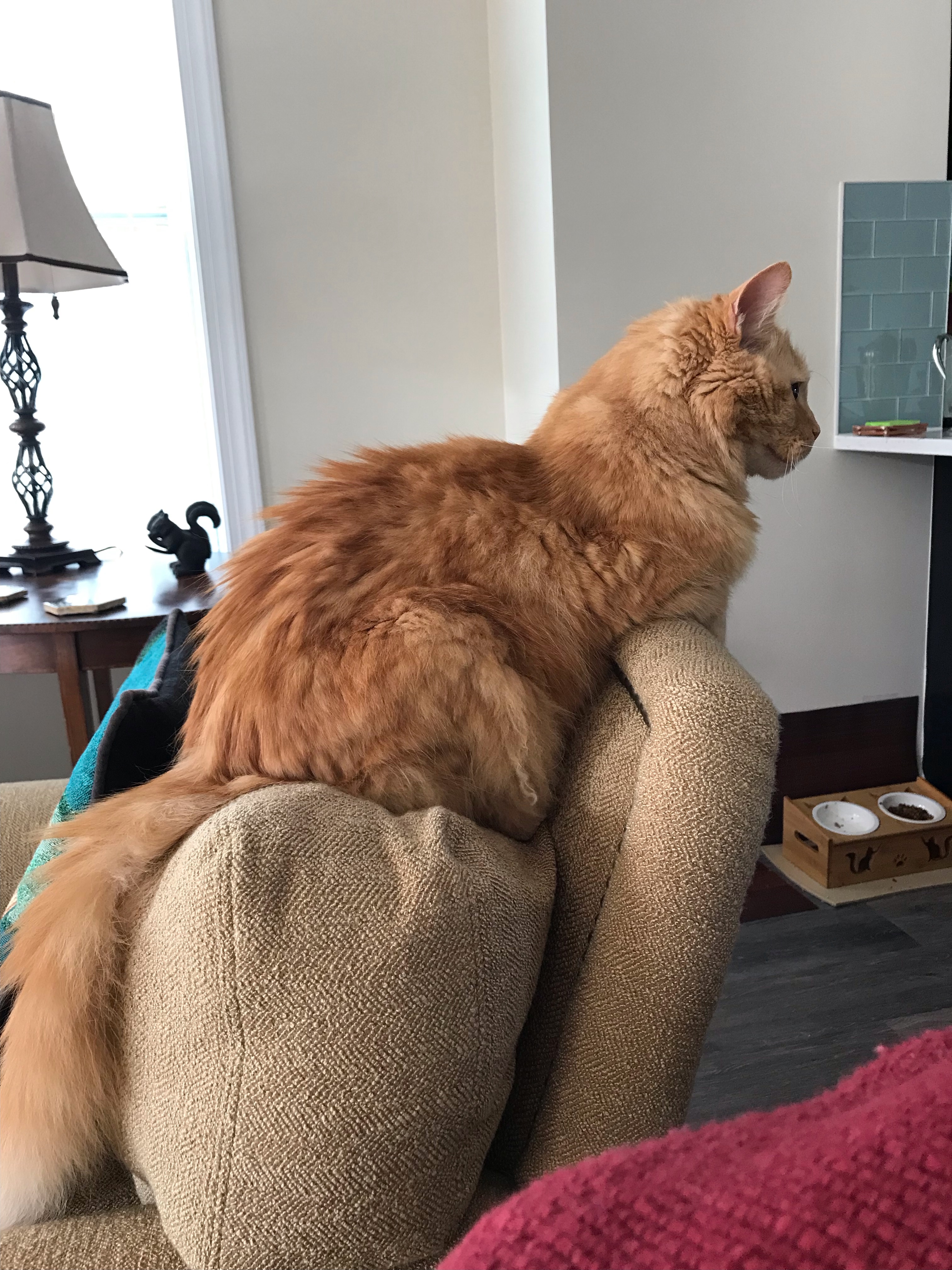
Bruce the Cat turned twenty-one in September. I’ve known him since he was fourteen, when his previous human companion passed away and Bruce came to live with me and Ben. Over the years, and especially since our move to Virginia almost two years ago, Bruce and I have developed a morning routine. He wakes me sometime between 5:00 and 5:30 AM. I follow him down the stairs into the kitchen. He stands by the door to be let out onto our porch, where he searches in vain for a nibble of the mint or Thai basil I grow in pots during the summer. But it’s gone now, pulled out just after the first frost. Back inside he paces and cries at my feet while I brew coffee in my stainless steel cafetière and shred the chicken I cooked for him the night before. He turns his nose up at it until I add two of his favorite treats. After his breakfast he sits at my feet for a moment, then gracefully jumps onto my lap and squeezes in between the laptop and my belly for cuddles while I read headlines from the New York Times website and try to conquer the day’s Connections. After twenty minutes cuddles are complete. Bruce jumps from my lap, ponders a detour to his litter box, but decides instead to lumber over to his chair. The same chair that I once envisioned as my ‘writing chair’. But instead of being my writing chair it has become – and this is non-negotiable – Bruce’s chair. Covered in a mound of blankets to protect the upholstery, it is the throne from where King Bruce the Cat holds court. It’s where he sleeps and dreams wild dreams of chasing rabbits. I can see why he likes it. First of all, the chair is positioned at an angle that provides the royal feline a view of everything his subjects are up to in the living room and kitchen. It has the added benefit of being placed near a window that has afternoon sun, which is perfect for nap-taking when counting the number of times Ben and I putter about in the kitchen becomes too boring. 

But one day soon Bruce’s throne will become my chair. When it does my heart will be broken because it will mean King Bruce the Cat is gone. But I know my sadness at his passing will gently transition to happy memories I’ll keep of having had the honor of being his human companion.

I wrote those words on a cold pre-dawn morning in early November. And this past Saturday Bruce’s throne became my chair. His health had been declining for a few months and then, over this past week, Ben and I witnessed a rapid decline. On Saturday we knew it was time. An appointment was made for early evening and so we had one last day with our most wonderful Brucie.

The vet techs and doctor were compassionate and with gentle assurance promised to take care of Bruce. Promised we were making the right decision. We can never know for certain but Bruce seemed ready. I scratched his chin, gave him a kiss. Ben stroked his head and talked to him. Then we said goodbye.

Bruce and I first said ‘hello’ eight years ago, while Ben was out of town on business. I made the executive decision to adopt Bruce after seeing his photo on NextDoor. Ben, not a fan of felines and convinced he was allergic to dander, reluctantly agreed via Zoom (yes, he loves me that much). But when Ben returned from his business trip a few days after Bruce the Cat moved in he made it clear that ‘the cat’ was not allowed on our bed. ‘No problem’, I said. ‘It’ll never happen’, I said. ‘Bruce is too old and too fat’, I said.

Not long after that conversation Bruce decided Ben and I would suffice as human companions. He wiggled his sixteen pound frame out from under the sofa where he’d been hiding for the first three days in his new home, waddled past us with his head and tail held high, and in one graceful leap jumped on the bed.

It was clear to Ben and me there was a new boss in town.

And now our boss is gone and we are bereft.

The connections we share with our non-human animal companions are unlike any we share with our human animal companions. The love language Bruce and I used to communicate had no words. It was energy based, instinctual and intuitive. Bruce asked for few things: food, water, shelter, cuddles and a clean litter box. Easy things to provide. In return he provided warm, comforting purrs and the occasional, perfectly formed hairball. We met each others’ needs without speaking a word.

I want to go on and on about the impact Bruce had on Ben’s and my life. His antics. The trouble he sometimes caused. The many smiles and laughs he provided. His willfulness. These stories are what make mourning Bruce’s loss a beautiful process. Because the massive waves of sadness I felt on Saturday are gentler now as all those memories wash over me. 

So I won’t bore you with stories about Bruce. I sorta wanna keep them to myself anyway. I’ll just tell you this: Brucie was a wonderful cat. The house is empty without him and we will miss him very much.


The Iris Apfel of Trees…and My Hair

It’s August. Almost September. And there’s change in the air. It’s as if the trees are tired of being green (and we all know being green is not easy). Stealth like a ninja, Autumn is approaching. It gives itself away, though, by helping those tired trees dress themselves in fall glory. There’s one tree in particular, just outside my window, that begins to show its true colors early. While the doubly tall and slender trees that form a line of sentries behind it appear too shy to offer anything but hints of drab yellow, this little tree has crisp hits of gold along the edges of its leaves and muddled russet on its lower branches. This time of year it is the Iris Apfel of trees. And it is a tree that offers me comfort. A tree that provides cooling shade in the summer for all the deer and other critters that drink from the creek that tickles its roots. A tree that becomes a vibrant, flaming show off in autumn, cuts the sky into hard edged shapes with its bare, black branches in winter and sweetly blossoms in spring. I’ve watched my tree embrace each version of itself for one full year.

I love having four distinct seasons and their clear reminder of time’s passing. (But do I? Really? Four distinct seasons – definitely. Time’s passing? Maybe not so much.)

Early next month I’m having my hair cut by a stylist for the first time in three years. Throughout the pandemic I relied on my tried and true electric trimmer to keep my hair well shorn with a number five blade guard. I didn’t mind that there was no attempt at style. I just wanted my hair to stay out of my face in downward dog. But the east coast humidity curls my hair in a way that others sometimes envy and for a brief moment I considered letting myself transform into one of those beautiful crones with flowing locks who look like they’ve just stepped away from their floor loom to go fill their seagrass basket with wild blackberries plucked from the forest. And then I looked in the mirror and realized I am not that woman. I’m more likely to morph into Rosie the Riveter. In other words, my unkempt curls have to go.

But time has passed and I can no longer pull off the Sinead O’Connor-esque buzz cut I wore with my vintage dresses, fishnets, costume jewelry and combat boots in 1990. Damn you, time. It was my favorite look. The look the made me feel most like me. Now I’m afraid I’ll walk away from my date with hair destiny looking like I have a ‘do’ – a poofy, teased, too perfect coif. I guess that’s easily remedied with a tussle of fingers but still I can’t help but believe that being sixty-four and eight months old is a really weird age for a woman. I no longer look like the woman I feel like and I have no clue how to embrace the woman I’m becoming. More than that, I’m not seen by others as the woman that I feel like.

I know I’m being silly. If I can manage the journey through puberty and adolescence I can survive this journey, too. At the end of the day we’re not measured by how we look and how our looks change. 

Are we?


A Year at McGuffey’s: The Artist Statement

I love writing artist statements for other artists. I hate writing artist statements about my own work. It’s torture. How do I put into words the story I am wanting to tell through line and shape and form? How do I find the language to describe the process by which I chose a particular color? A specific texture? How can I describe what the work means to me when I’m not yet certain I know?

It’s not easy.

Visual art transcends the written word. Art is its own language. A language that is difficult to translate.

In the middle of July our Incubator group was tasked with writing personal artist statements for the McGuffey website. For the past few weeks I fought with mine. It finally came together yesterday. I submitted my three hundred and fifty nine words and hoped for the best. I tried to be concise and tried to avoid all the things I dislike about most artist statements. That being said, ‘ash of memory’ was a darling I could not kill. Here’s what I wrote:

Fail better. Samual Beckett’s words of advice are Mimm Patterson’s goal for her year as an Incubator Artist at McGuffey Art Center. Mimm, who moved from California to Crozet in 2022, is a mixed-media artist, writer and trauma-informed yoga therapist. She is also someone who knows failure. 

“In my thirties, before I moved to Ireland, I worked as an artist” she says. In the 1990’s Mimm was the quintessential struggling artist in the San Francisco Bay Area. “I survived but I didn’t thrive. I think I lacked the self-belief required to create from a place of authenticity. I wasn’t brave enough to be vulnerable. But now I possess a grounded sense of purpose and the tenacity that comes with decades of life experience. I won’t feel shattered if I fail. I’ll feel stronger knowing that I tried.”  

Mimm’s work is informed by the belief that truth is malleable. Once we understand that our own truth is unfixed – that it is determined by the perspective from which it is viewed – we are able to reconcile our past with our perception of the present. 

This concept is critical to her current work, an exploration of her family and the dark mark its ash of memory has left on Mimm like an inky fingerprint that can’t be washed away.

“In some ways my new work is a practice of self-study. When my mother and I reunited after twenty years of estrangement I learned my family’s history for the first time. When she passed in 2019 she left behind several thick volumes of photographs and documents dating back to the mid-nineteenth century. I am learning who I am and how I came to be through these images and the stories they tell.”

Over the next year she hopes to share those stories through a body of work that inspires connection and shines with clarity and resonance. 

Mimm holds a BA in Studio Art and Education and a MFA in Transpersonal Psychology. She is an ICF certified coach as well as a SoulCollage® and Guided Autobiography facilitator. Mimm shares her new home in Crozet with her partner Ben and their twenty-year-old cat Bruce.


Bruce the Cat and Full Moon Mornings

The moon woke me this morning. Just like last month’s full moon. Suspended like a prison guard’s searchlight outside my living room window. So bright I can read by its light. That moon. Too stunning to turn away. I watch its stealth decent – soon half gone behind the trees across the way. Meanwhile, grey dawn begins to cast its own soft light through the kitchen window behind me. A reminder that soon there’ll be no time to be distracted by light bouncing from a pock marked rock floating in blue black space. My day is beginning. And in the last few minutes of pre-dawn stillness my task is to put down words to describe what I see and feel. 

But that’s impossible because the padded click of Bruce the Cat’s clawed feet across our luxury vinyl plank flooring tickles my ears as he approaches the overstuffed chair where I sit with my laptop resting – appropriately – on my knees. A fresh brewed cup of coffee is on the table to my right. 

Bruce the Cat is deaf. These days he compensates for his deafness with meows loud enough to wake the dead. They are meows that after twenty years are beginning to grow rough around the edges – a combination of Screech from Saved by the Bell, Urkel from Family Matters and a two-pack-a-day habit. And as his primary human companion I know what each meow means. 

‘Hold me. Love me. Feed me. Pet me. Take me out. Bring me in. Leave me alone.’

Despite a stagger in his step when he first wakes Bruce remains nimble and has no problem hopping onto the arm of the chair. He spends a good five minutes investigating – my computer, my face, my coffee cup – before settling on the sofa to watch the moon with me. Or to take a nap.

I adopted Bruce when he was fourteen-years-old the death of his first human companion. I saw his photo on NextDoor and was smitten by the cheeky look in his eyes and his long ginger coat. My own human companion, Ben, was not a ‘cat person’. But he loved me (miraculously he still does). He said ‘as long as Bruce doesn’t jump on the bed’. Not only was Bruce a senior cat, he was obese. So I said, ‘don’t worry, he’ll never be able to jump on our bed’. 

After three days, when Bruce the Cat decided that his new living accommodations were satisfactory, he crawled out from under the couch, sauntered into the bedroom, wiggled his butt to build maximum vertical lift, leapt onto the duvet and fell asleep on Ben’s and my pillows.

From that moment Ben and I knew who was boss. It wasn’t us.

And now, six years later, our lives revolve around Bruce the Cat. We’ve grown accustomed to being covered in cat fur. It’s become second nature to do a visual sweep of the kitchen floor in the morning to make certain there are no horked up hairballs. And we clean Bruce’s litter boxes with the ease and nonchalance of a mother changing a diaper. 

Bruce the Cat will be twenty-one in September and I know that means the time Ben and I have left with him is limited.

If I’m being truthful, knowing that Bruce’s best days are behind him, I feel compelled to spend time with him. To keep him nurtured and comfortable. I cook chicken for him and give him bonito flakes as a treat. I don’t like to upset his routine and avoid traumatizing Bruce with cat sitters. So I don’t leave the house for more than a day. And as the sun rises and the moon sets, I put off writing to offer Bruce the cuddles he and I both need. I love Bruce, I love Ben and I love my home. I feel immense gratitude for all three.