
For as long as I’ve been writing and posting – which must be at least twenty years – I’ve held the intention that I will post each week and each post will be a reflection on my experience as a yoga student and teacher.
That has never come close to happening.
My last post was on September 9th, 2024, when I introduced the world to the incredible Tondu, the senior feline companion who moved in and filled the gap left by dear Brucie’s departure. After that post I found myself struggling to put together a few paragraphs describing the fear and anxiety so many of us are experiencing as our country moves toward a darker age. I finally abandoned all hope and hit the delete button.
Because I can’t write on command. Writing about a specific topic with a self-imposed deadline sucks any ability I possess to string two words together from my brain. I suspect that with discipline (if I showed up daily for myself and for my writing practice) the issue would right itself (pun intentional). But until I do that I’m going to have to be content with writing when the mood strikes.
Which makes me question whether, at the dawn of 2025, I want a writing practice as much as I wanted it in 2010. Fifteen years ago I wrote a full-length manuscript (90,000 words!) about a young woman eager to fly at the start of WWII. The story was inspired by a woman I knew who had been an WASP. In my story she falls in love with a neighbor boy who is Japanese and is sent to an internment camp. Forbidden love! Separation! War! Oh the Drama!
I was never happy with the ending. Do they reunite? Have they been changed so much by their experiences that love dies? Or is love the one true thing? Oh the Potential Heartbreak!
I was going through my own heartbreaking drama at the time and the joy I found living with these characters in my brain was lost. And so the finished manuscript sits in a dusty box, unedited. I always tell myself I’ll get back to it one day but that day has yet to arrive.
Practicing a visual art feels different. Maybe because, fifteen years older, I’ve learned to take myself less seriously. Or maybe I’ve learned to not make creating a competition. Showing up for my art practice is not a chore. It’s a joy. And although when I’m in the art studio I experience the same struggles and setbacks as I do when I write they are never enough to make me push it to the back burner. If anything I grow more determined to find a solution.
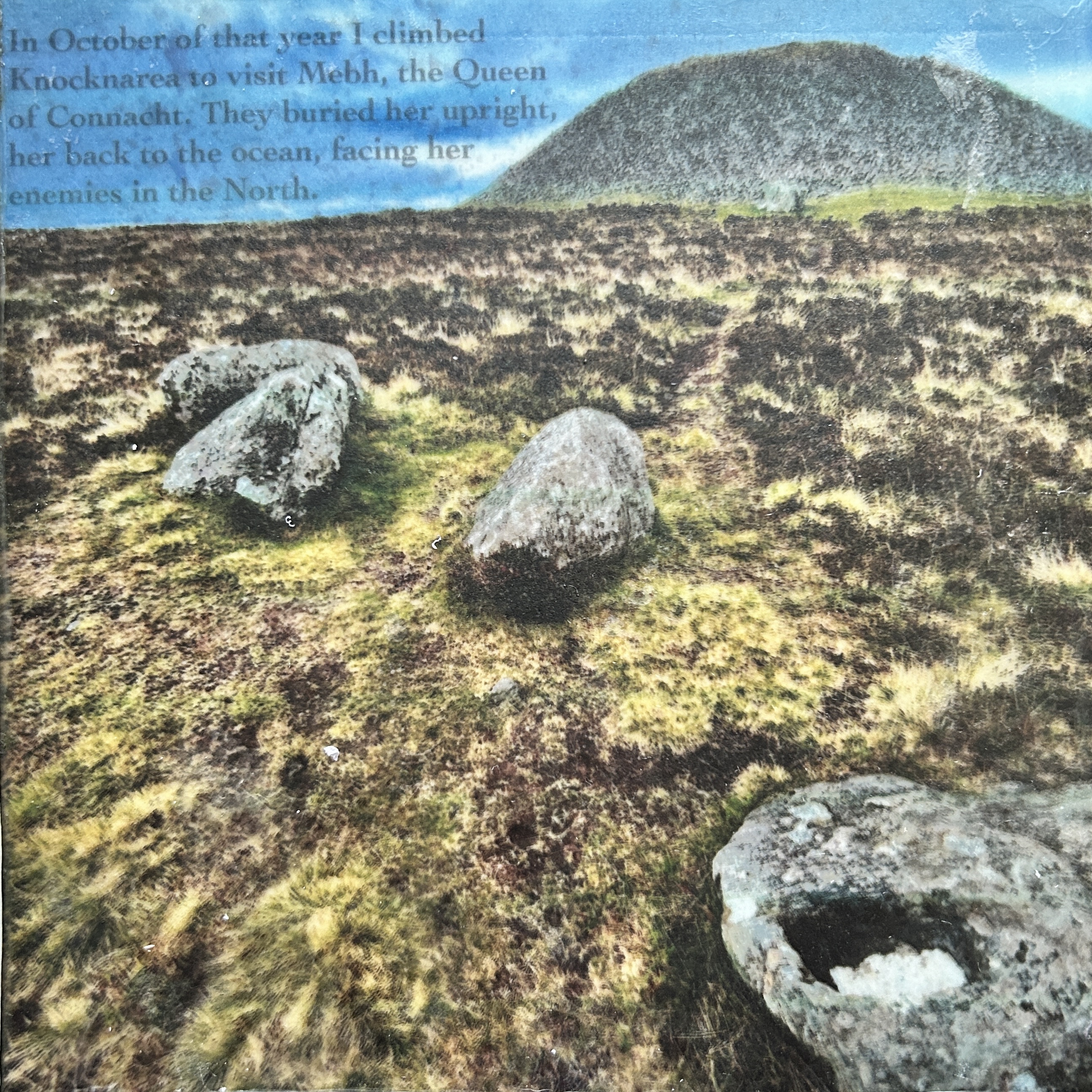
For the past two years I’ve been exploring encaustic photography. The process is this: I take a photograph with my camera. I edit the image on my laptop. I print the image on a sheet of tissue paper and then adhere the paper to cradled birch with encaustic medium, which is a combination of bees wax and damar resin. The tissue paper becomes transparent from the melted wax. I build on this with further layers of tissue paper on which images, texture and text have been printed.
Late last year I found the process becoming rote. I struggled with a few technical issues and when they were resolved I produced work like a robot on an assembly line. The process became a race to see how much I could create in a day. The idea of art as a practice was lost.
The truth is, since my intention is for my art practice to also be a business – in other words I want to exhibit and to sell the work I create – then my time in the studio should be both business and practice. But I was listing heavy toward ‘produce at all costs’. My art had lost its heart.
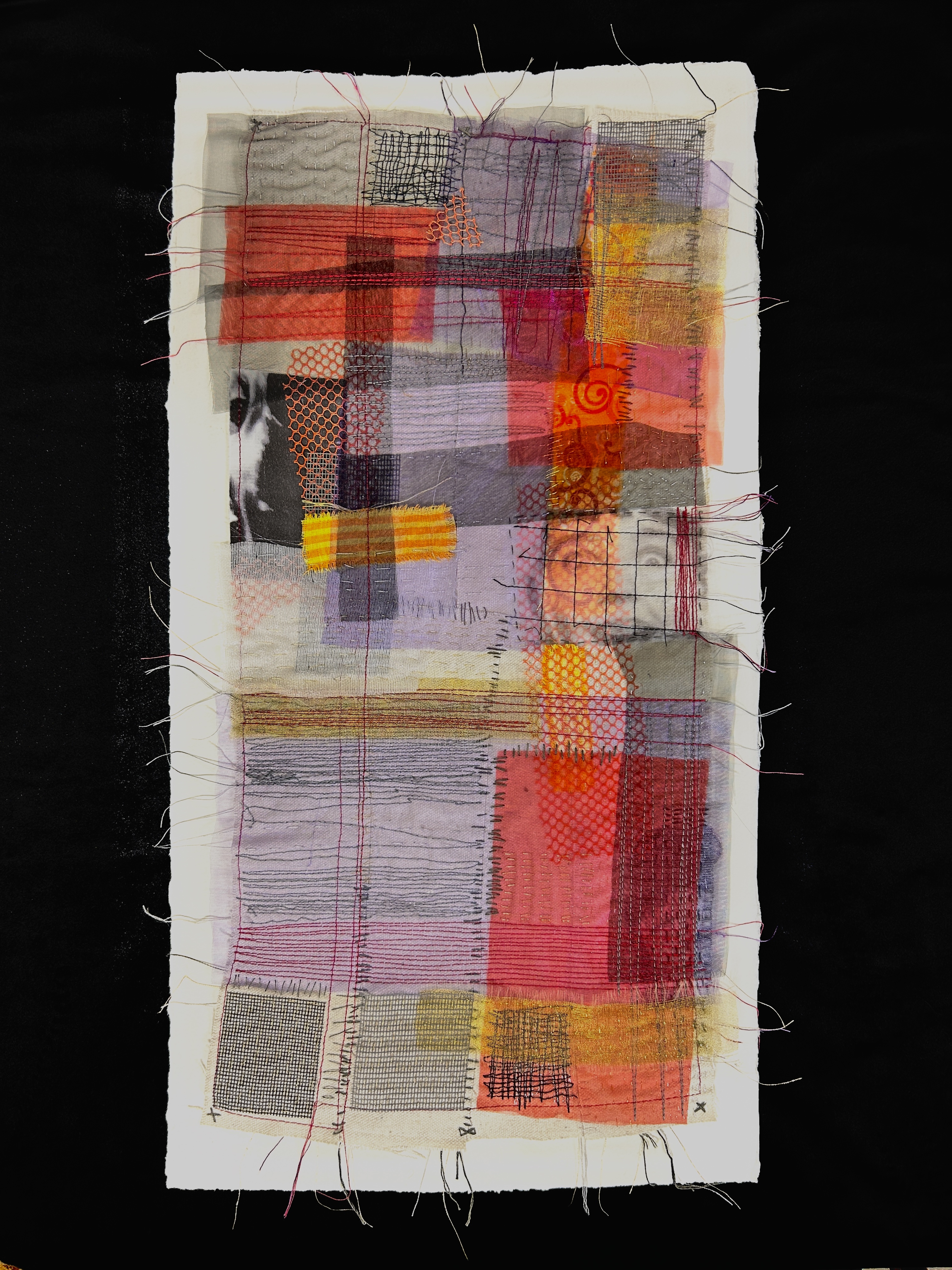
So I put the camera, the wax and the tissue paper and I pulled out my scraps of fabric.
And yesterday, as I stitched layers of rust-stained cotton and dreamy organza together, I thought about yoga. I thought about the verbal cues I use with the women and men with whom I practice. I thought about how I ask them to move with care. To move with intention and to be thoughtful. I thought about how I ask them to meet their bodies where they are in that moment. How I ask them to be present with their bodies and with their breath.
Yoga is a practice. Writing is a practice. Art is a practice, too. And as I move forward in my art practice I’m going to apply all the cues I provide for others during our sessions on the yoga mat. I want the work I bring into the world to be intentional, not rote. I want the work to be thoughtful, not thoughtless. I want to remain present for the making of the work and not to be thinking about what comes next.
I believe this new awareness will serve me well.

 Mimm Patterson