A Pain in My Tuchus and Shining Your Good Light

A weird thing happened to me on Wednesday morning. I was in a rush to take off my walking boots (I’m at the stage in life where my bladder responds to seeing our front door like a horse catching sight of the stable). Instead of slowing down, bending over and untying the laces properly I tried to push the left boot off with my right foot. We’ve all done it. But the laces were caught in the hook eyelets and the boot wouldn’t budge. I pushed harder. When the left boot finally flew off my foot, it let go with such force that my right leg swung forward. I heard a very loud crack and felt an immediate, searing pain in my…well…to put it delicately…in my right buttock. And for the next forty-eight hours I was beyond miserable. Sitting hurt. Walking hurt. Thinking about sitting and walking hurt.

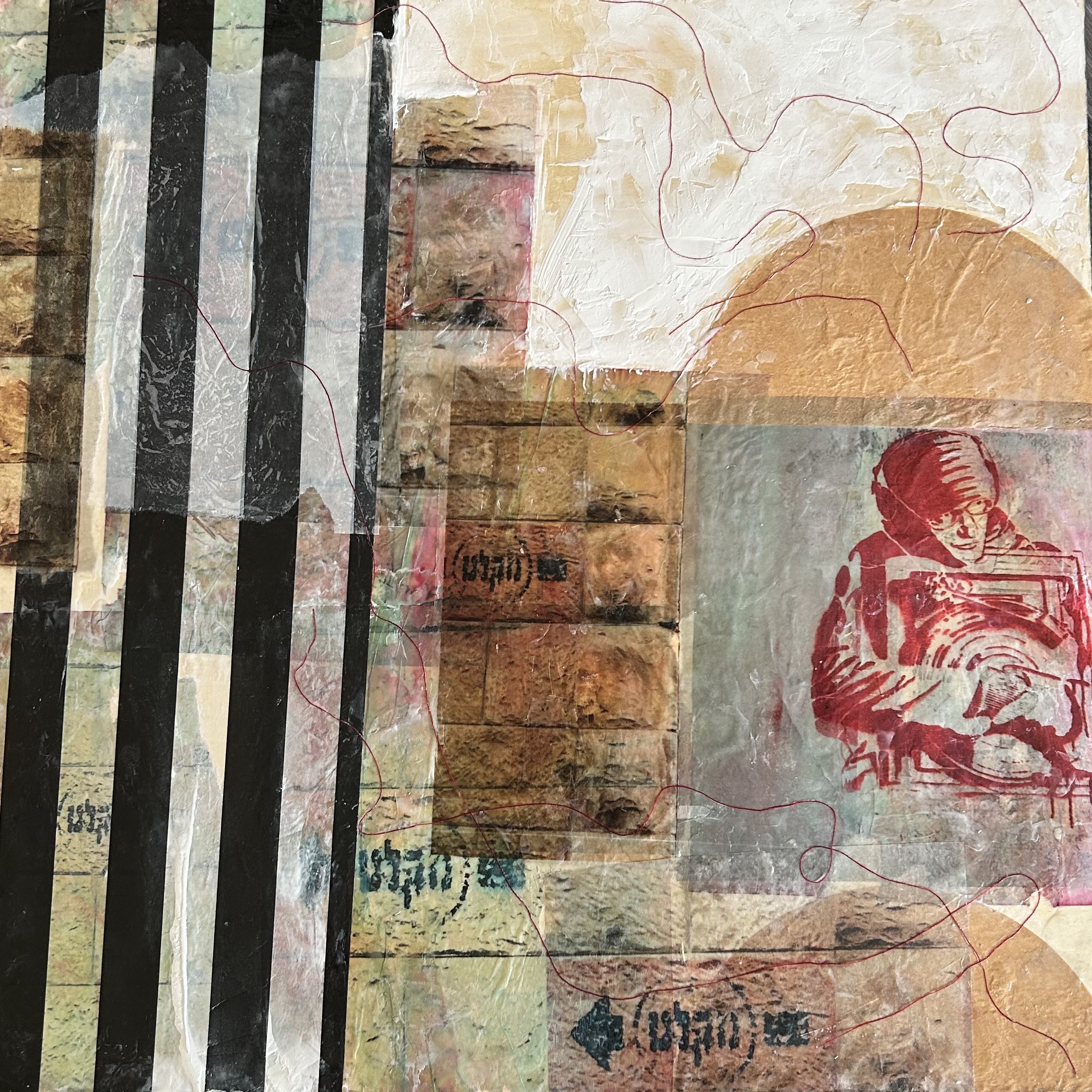
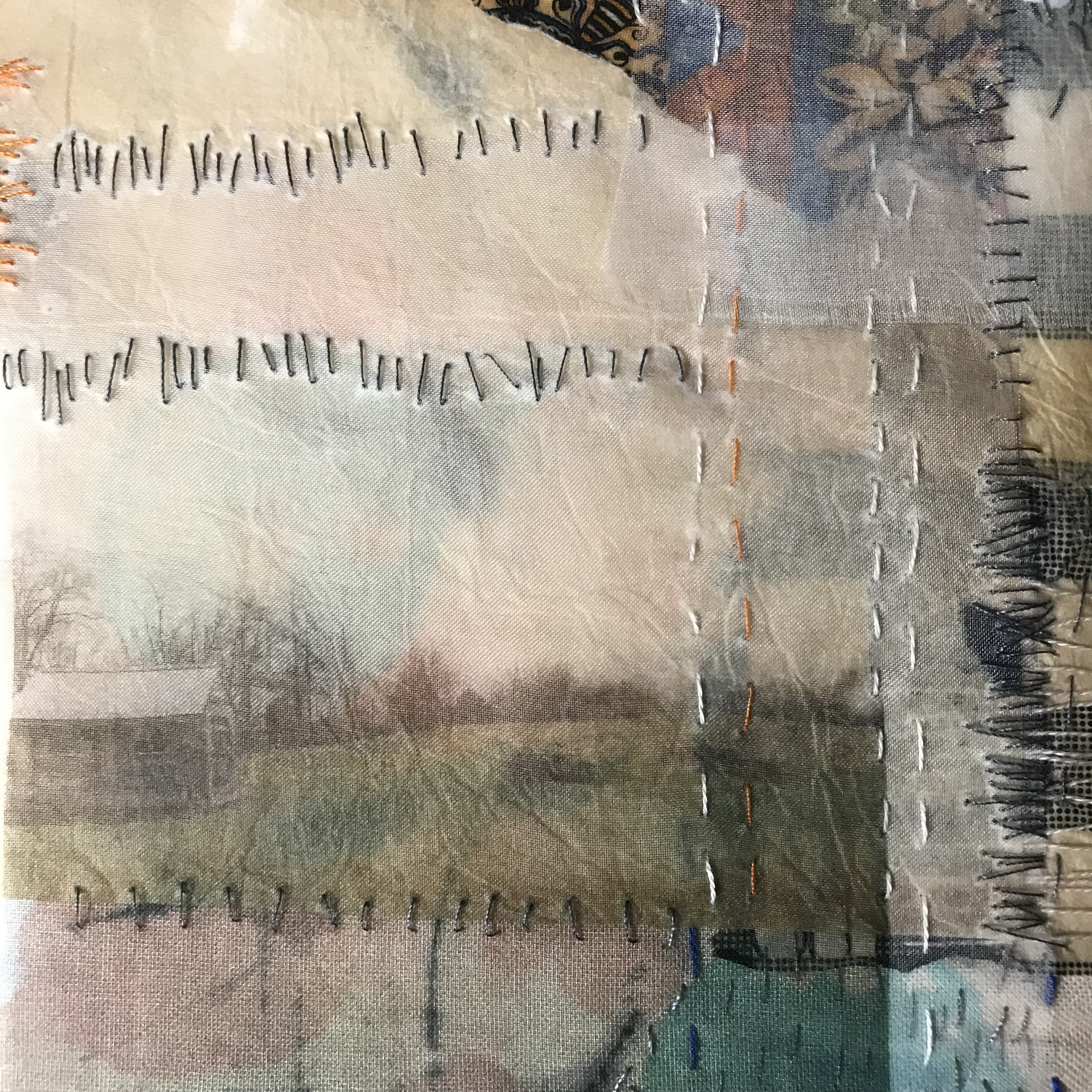
Miklat (Bomb Shelter), 20×20″ encaustic collage, 2023

This morning the ache running from my tuchus to my heel is down to a grumpy growl. I discovered that standing was better than sitting, and sitting was better if my butt was parked on a bag of ice, and any movement was better with enough ibuprofen to make my liver work overtime.

And right about now we’re thinking, ‘so what?’. 

But this story isn’t about what happened to my body. It’s more about where my chattering monkey mind took me and the vulnerability we all feel when order is lost.

On Thursday morning, twenty-four hours after my injury, I decided to walk to the class I teach at the local assisted living community. If I take the trails it’s a lovely twenty minute stroll. The direct route takes ten minutes. I chose the direct route. My gait was slow and I had a pronounced limp. But taking the car or even taking the day off didn’t occur to me. Why on earth would I give in to the pain? Why would I choose rest? I was just taking my boot off!

A few blocks ahead, walking toward me, was a woman maybe half my age. Fresh from the gym, a delightful spring in her step, the picture of health.

I crossed to the other side of the street. I felt fat, unhealthy and ashamed. I felt judged but I know now the judgement was not emanating from a stranger walking home from the gym. It was coming from my own heart.

And that’s when my brain tumbled down the rabbit hole toward the cesspool of despair.

Because walking is my antidepressant. It’s my anti-anxiety medication. And if I can’t walk then what will become of me?

On Thursday morning my brain answered that question with another one. ‘Why bother’  my brain moaned.  ‘Give up’ my brain told me. ‘This is your life now’ it chided. ‘Everything is going to hurt…forever’ my brain teased. 

This cycle of self pity continued through the whole of Thursday. Because far be it from me to use what I know about pain and the brain and the stories we tell. Far be it from me to use the same knowledge I use to help others in order to help myself.

Today is a rainy Friday morning. There’ll be no walking today. And that’s ok. I’ve spent the past few hours reflecting on the last two days and coming to the realization that my reaction to an admittedly very painful accident was less about my aggravated sciatic nerve and more about the collective vulnerability we’re feeling but perhaps not acknowledging.

The world is a tragic, messy place right now. Since March of 2020 we’ve lived through  a chaotic series of events that seem to be escalating and it’s impossible to know when or if the shift that is necessary to right the apple cart – to bring us to a healing path – will ever happen.

Everything feels out of control. And in an uncontrollable environment we seek order. Until Wednesday morning I had order. Ben and I walked three to five miles every Monday, Wednesday and Friday morning. When I took off that boot order was lost. The loud crack I heard from my hip cracked the protective shell I keep wrapped around my psyche, too. It created a jarring chasm in me. Left me unprotected and vulnerable. It made me want to give up.

I wallowed. I have no problem with wallowing because after awhile it just gets boring and I come to my senses. Which is precisely what happened.

I remembered what I learned about accepting current conditions – not giving in to conditions but accepting that this is how things are for now – and still finding the strength to remain committed to moving through life according to the values we cherish.  

Conditions will change. Maybe for the better. Maybe not. Our values – those things that bring heart and meaning to our lives – are the bedrock to which we can anchor ourselves. Our values are always there. They bring order to chaos. They help us to remember who we are. They remind us that we are all capable of shining our good light into the world. 

My self-diagnosed sciatica will ease. Ben and I will be back to our walking schedule. We might even try Mint Springs tomorrow. In the meantime I will continue to park my tuchus on bags of ice and take ibuprofen as needed. And I will remember those things I value – humor and stillness, art and beauty, family and nature – and I’ll shine my good light into the world.


A Year at McGuffey’s: Gratitude, Connection, and Am I the Mean Girl?

I have a cold. I’ve not slept. And I’ll be honest. Stringing together a series of cohesive sentences is a struggle. But it’s been too long and so I must try. Yet how dare I write about the trivial pursuits of my life when it feels like the world is falling apart? Although we know the detrimental impact to our mental health, Ben and I watched CNN non-stop most of last week. We saw Clarissa Ward dive into a ditch and Anderson Cooper cry. 

Turning away from what is happening in the world is not possible. Moving through life under an umbrella of blissful ignorance is wrong. It’s difficult to watch but not as difficult as surviving while bombs rain down. Meanwhile, Ukraine still burns and Putin rubs his hands together with glee. We live in tragic times.

The word clarity has been used. The phrase ‘moral clarity’.

Clarity is a good word. By the second half of last week Ben found the clarity to remain informed while at the same time focusing on the goodness in life. The beauty. The moments of awe. Like the maple trees outside our back window turning more crimson red by the hour. Or the adorable warblers making enough racket on our porch for poor deaf Bruce the Cat to take notice.

I gained a different sort of clarity during my week in California at the end of September. On a sunny Thursday morning in the garden of a friend I found myself surrounded by bright and beautiful people who had gathered to celebrate not just my visit but one another. There were moments that morning when I stepped back to a quiet corner so that I could take in all the color and the effervescent joy. Those moments were a rich reminder of the value of human connection and community. 

Before that morning and since the early days of the pandemic shutdown I’d seen most of the friends around me three days a week via the flat, muted scrim of Zoom. I assumed that was enough. It wasn’t until I was basking in their technicolor energy that I learned my assumption was wrong. I realized what I was missing.

I am so grateful for that experience. It was an invaluable lesson. The question is: how will I put what I’ve learned into action?

I’m not the natural traveler that I was a few decades ago but being with my friends that morning, in that garden, recharged my batteries.

I have to do it again. I’ve known many of these men and women for twenty years. Zoom chats fill a gap but I can’t let a continent keep us apart. I’m looking forward to seeing everyone again in September 2024.

Meanwhile, at McGuffey Art Center I’m creating relationships with my five studio mates. When we moved into the studio space in July I envisioned six women of various ages and backgrounds building something together – building a small community, I guess. But as the weeks went by and it didn’t feel like that was happening I withdrew into myself and began to work mostly from home, going into the studio for First Friday gallery openings and to install completed art. When I did see someone I heard myself complaining or being contrary about the silliest things. I felt myself being a little judgmental. One day I wondered aloud, “Am I the mean girl in this group?”

Yesterday we had an hours long critique of our work with two well-established local artists and teachers. My early hope of us being a community had vanished weeks ago. Besides, my cold was settling in and so my enthusiasm for the afternoon was at a low. But as each of us spoke about our work and why we do what it is we do as craftspeople and artists, I began to see the thread that binds us together. We are very different. Different ages, different faiths, different socio-economic backgrounds and different countries of origin. Our little group includes a potter, a pastel artist, a painter, a printmaker, a performance artist and a mixed media artist. And yet – there’s something that connects us on a level deeper than the fact that we were accepted into the McGuffey Incubator Program.

If I fail to nurture that connection – a connection that won’t last forever but will at least last until June – then I am failing myself, missing opportunities to learn and ignoring the lesson I learned in California. It won’t be easy for me. I am an introvert who enjoys her own company. But connection shines a light on our humanity.

And I want my light to shine.


The Iris Apfel of Trees…and My Hair

It’s August. Almost September. And there’s change in the air. It’s as if the trees are tired of being green (and we all know being green is not easy). Stealth like a ninja, Autumn is approaching. It gives itself away, though, by helping those tired trees dress themselves in fall glory. There’s one tree in particular, just outside my window, that begins to show its true colors early. While the doubly tall and slender trees that form a line of sentries behind it appear too shy to offer anything but hints of drab yellow, this little tree has crisp hits of gold along the edges of its leaves and muddled russet on its lower branches. This time of year it is the Iris Apfel of trees. And it is a tree that offers me comfort. A tree that provides cooling shade in the summer for all the deer and other critters that drink from the creek that tickles its roots. A tree that becomes a vibrant, flaming show off in autumn, cuts the sky into hard edged shapes with its bare, black branches in winter and sweetly blossoms in spring. I’ve watched my tree embrace each version of itself for one full year.

I love having four distinct seasons and their clear reminder of time’s passing. (But do I? Really? Four distinct seasons – definitely. Time’s passing? Maybe not so much.)

Early next month I’m having my hair cut by a stylist for the first time in three years. Throughout the pandemic I relied on my tried and true electric trimmer to keep my hair well shorn with a number five blade guard. I didn’t mind that there was no attempt at style. I just wanted my hair to stay out of my face in downward dog. But the east coast humidity curls my hair in a way that others sometimes envy and for a brief moment I considered letting myself transform into one of those beautiful crones with flowing locks who look like they’ve just stepped away from their floor loom to go fill their seagrass basket with wild blackberries plucked from the forest. And then I looked in the mirror and realized I am not that woman. I’m more likely to morph into Rosie the Riveter. In other words, my unkempt curls have to go.

But time has passed and I can no longer pull off the Sinead O’Connor-esque buzz cut I wore with my vintage dresses, fishnets, costume jewelry and combat boots in 1990. Damn you, time. It was my favorite look. The look the made me feel most like me. Now I’m afraid I’ll walk away from my date with hair destiny looking like I have a ‘do’ – a poofy, teased, too perfect coif. I guess that’s easily remedied with a tussle of fingers but still I can’t help but believe that being sixty-four and eight months old is a really weird age for a woman. I no longer look like the woman I feel like and I have no clue how to embrace the woman I’m becoming. More than that, I’m not seen by others as the woman that I feel like.

I know I’m being silly. If I can manage the journey through puberty and adolescence I can survive this journey, too. At the end of the day we’re not measured by how we look and how our looks change. 

Are we?


Bruce the Cat and Full Moon Mornings

The moon woke me this morning. Just like last month’s full moon. Suspended like a prison guard’s searchlight outside my living room window. So bright I can read by its light. That moon. Too stunning to turn away. I watch its stealth decent – soon half gone behind the trees across the way. Meanwhile, grey dawn begins to cast its own soft light through the kitchen window behind me. A reminder that soon there’ll be no time to be distracted by light bouncing from a pock marked rock floating in blue black space. My day is beginning. And in the last few minutes of pre-dawn stillness my task is to put down words to describe what I see and feel. 

But that’s impossible because the padded click of Bruce the Cat’s clawed feet across our luxury vinyl plank flooring tickles my ears as he approaches the overstuffed chair where I sit with my laptop resting – appropriately – on my knees. A fresh brewed cup of coffee is on the table to my right. 

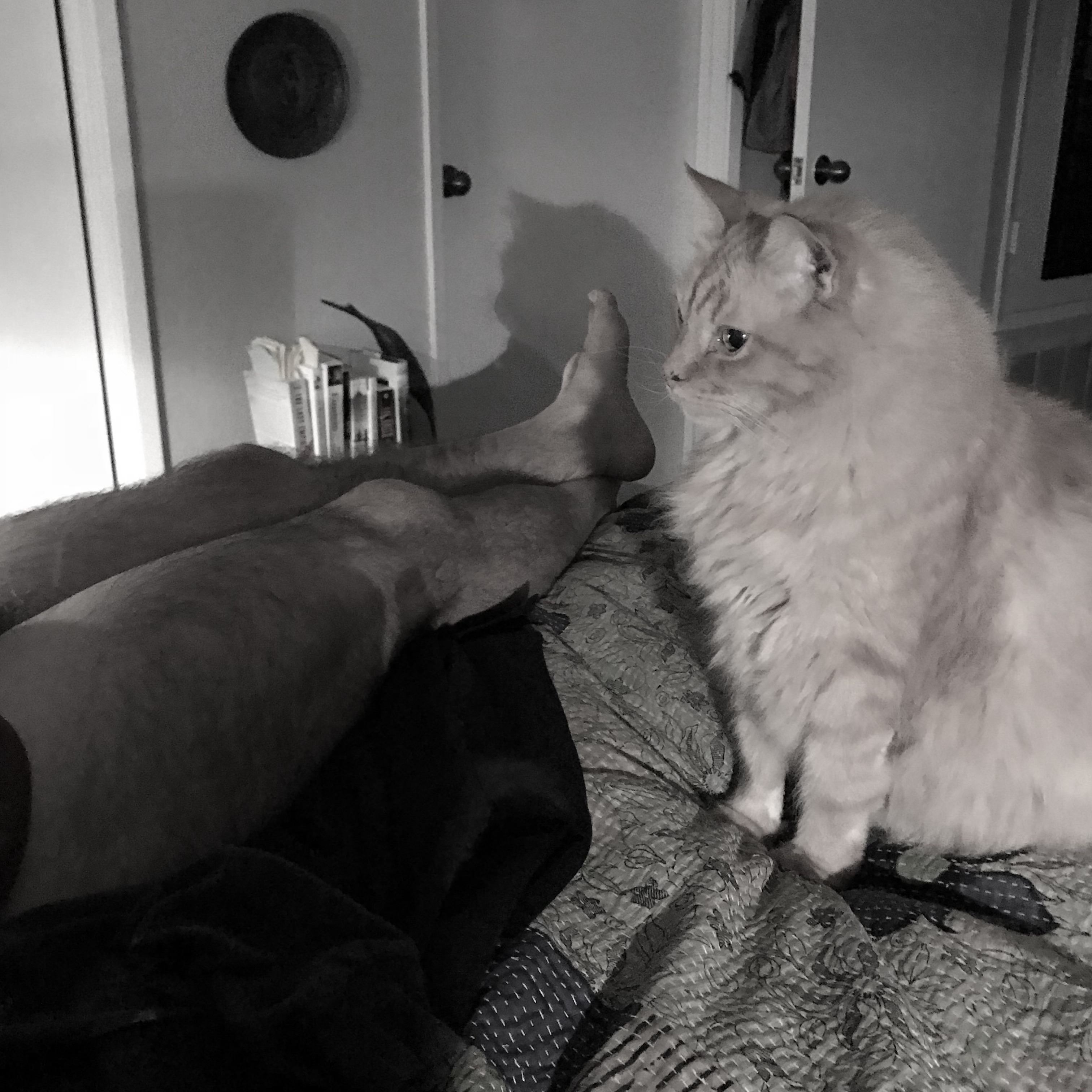
Bruce the Cat is deaf. These days he compensates for his deafness with meows loud enough to wake the dead. They are meows that after twenty years are beginning to grow rough around the edges – a combination of Screech from Saved by the Bell, Urkel from Family Matters and a two-pack-a-day habit. And as his primary human companion I know what each meow means. 

‘Hold me. Love me. Feed me. Pet me. Take me out. Bring me in. Leave me alone.’

Despite a stagger in his step when he first wakes Bruce remains nimble and has no problem hopping onto the arm of the chair. He spends a good five minutes investigating – my computer, my face, my coffee cup – before settling on the sofa to watch the moon with me. Or to take a nap.

I adopted Bruce when he was fourteen-years-old the death of his first human companion. I saw his photo on NextDoor and was smitten by the cheeky look in his eyes and his long ginger coat. My own human companion, Ben, was not a ‘cat person’. But he loved me (miraculously he still does). He said ‘as long as Bruce doesn’t jump on the bed’. Not only was Bruce a senior cat, he was obese. So I said, ‘don’t worry, he’ll never be able to jump on our bed’. 

After three days, when Bruce the Cat decided that his new living accommodations were satisfactory, he crawled out from under the couch, sauntered into the bedroom, wiggled his butt to build maximum vertical lift, leapt onto the duvet and fell asleep on Ben’s and my pillows.

From that moment Ben and I knew who was boss. It wasn’t us.

And now, six years later, our lives revolve around Bruce the Cat. We’ve grown accustomed to being covered in cat fur. It’s become second nature to do a visual sweep of the kitchen floor in the morning to make certain there are no horked up hairballs. And we clean Bruce’s litter boxes with the ease and nonchalance of a mother changing a diaper. 

Bruce the Cat will be twenty-one in September and I know that means the time Ben and I have left with him is limited.

If I’m being truthful, knowing that Bruce’s best days are behind him, I feel compelled to spend time with him. To keep him nurtured and comfortable. I cook chicken for him and give him bonito flakes as a treat. I don’t like to upset his routine and avoid traumatizing Bruce with cat sitters. So I don’t leave the house for more than a day. And as the sun rises and the moon sets, I put off writing to offer Bruce the cuddles he and I both need. I love Bruce, I love Ben and I love my home. I feel immense gratitude for all three.


When I Grow Old…

I broke my wrist on April 12th. I blame the woodchuck. He was running down a grassy hill, away from the pug and Frenchie and their sharp barking from behind a neighbor’s fence, toward his burrow near the trail on which Ben and I were walking, the one that runs along Lickinghole Creek. In my excitement I turned back to say something to my dearest, loss my footing, fell down and went boom.

It’s my right wrist, of course. On my dominant arm. Why would I bother to stick out my non-dominant arm in an attempt to soften what was a very hard fall?

It’s a classic break of my distal radius but does not require surgery. What it requires is immobilization for a few more weeks – six in total.

That’s the thing about life, isn’t it? You think you have yourself organized. You make plans. You set goals. You create deadlines. And then one chubby woodchuck charges down a hill and all that order you created in your head falls apart like a post-menopausal woman tripping over a tree root on a slippery dirt trail.

The first ten days or so were pretty miserable. Not because of the physical pain – although it was uncomfortable. It was the self-inflicted emotional pain that kept me feeling sorry for myself. I was so angry with myself. How could I have let the accident happen? And I didn’t expect falling down at sixty-four and one half years to be so very different from falling down at twelve and one half years. I was determined to live my life as if there wasn’t a broken bone in my right arm. I was determined to do everything by myself and refused to let Ben be the caregiver. I did not want to accept that what my body required more than anything was stillness and rest. I did not want to accept that what I needed to practice more than anything was patience.

Our bodies have innate intelligence. And my body’s innate intelligence refuses to go along any wacky ideas I have about chopping vegetables or cleaning house or going to the gym. My body is more interested in sitting on the porch, taking gentle walks that do not involve woodchucks and hours spent reading. The true healing began when I finally acquiesced to these little requests from my body for some peace and quiet. 

Now that my body and my brain have reached an understanding – let’s be honest: it’s less of an ‘understanding’ and more of an ‘acceptance’ – I’m almost enjoying the unexpected interruption to my regularly scheduled programming. It helps that I can use a keyboard again. And that my cast is a pretty shade of grape. It reminds me of that Jenny Joseph poem, ‘Warning’ – the one that begins, ‘When I grow old, I shall wear purple…’.


Mark Making

Hang around with enough artists, eventually you’ll hear the phrase ‘mark making’. It’s the bane of my existence.I know the words roll off the tongue. I know the alliteration hums. But as much as we want the term to describe some magical, mysterious portal to the creative process, the phrase ‘mark making’ describes nothing. Two words puffed up to mean something special, in reality the phrase is nothing more than empty air.  Using the term to describe what it is we do as artists diminishes our work. 

We paint. We draw. We sculpt. Along the way we scumble and scratch, we carve and stitch and scribble and brush. We etch and boil and glue and cut. We try to communicate in a way that moves beyond words. We blur edges. We skew and flatten perspective. We hope that what we pull from our own heart touches someone else’s. Are we making marks? Of course. But mark making is so much more than what’s left behind on a canvas. 

And mark making isn’t restricted to fine art. We all make marks. All the time. And the marks we make don’t require a loaded paint brush, threaded needle or stick of charcoal.

Bump into the sharp edge of a coffee table with your shin and as the welt begins to form you might say, ‘oh, that’s gonna leave a mark’. Lean a dirty palm against a white wall? You left a mark. 

In the same way that you don’t have to be an artist to make a mark, not all marks are seen. Sometimes an angry storm of words or a hardened glare will leave a mark on another person that is invisible to the eye. Those marks are like tiny paper cuts on the psyche. 

When I’m creating I can erase, paint over, or cut away the marks I make. I can use a seam ripper to remove misplaced stitches. When I choose hurtful words or glances – those are marks that I can’t make disappear. So in the same way that I try to make considered choices when I create, I need to have the same consideration when I speak. What about you? Have you left any marks that you can’t erase?


Journaling Does Not Require Washi Tape

It’s the cusp of 2023 and the algorithms know me too well. They know that this is the time of year when I demonstrate a personal weakness. The time of year when I will spend hours if not days searching for the journal and calendar that will change my life. The algorithms have logged my clicks and so now, as the year races towards its end, photo essays of the hike you took with your family or that tearful video of the little boy receiving a puppy for his birthday are being replaced by scrolls of ecstatic people thrilled that what they hold in their arms is the journal that will fuel their productivity and help them become the version of themselves that they see in their mind’s eye. Over the years these journals have seduced me with their assurance that in exchange for my hard-earned $39.95 plus shipping and handling they’ll send me the key to achieving all my goals. All I need is a few rolls of washi tape and a dozen fine point markers in rainbow colors. 

I spent the first half of 2022 packing for our move and what I found in the dusty recesses of our storage locker were half-a-decade’s worth of Bullet*, Wellness, Productivity and Law of Attraction journals in various sizes, colors and bindings. Most began the year that I acquired them on solid footing but by late February were abandoned like a New Year’s Resolution that made little sense in the first place.

The lesson that I had to learn – that I finally learned – is that these pseudo-magical journals are nothing more than spiral-bound sheets of paper with calendar dates, faint horizontal lines and the occasional affirmation or Mary Oliver quote printed in pretty pastels and sandwiched between jewel-toned embossed vegan leather. They are nothing more than little naked emperors ruling kingdoms of dreamers.

It turns out that all the color-coding and tracking and planning and washi-taping takes too much time. I mean it really takes time. Time that might be better spent doing what we want to do rather than doodling about what we want to do.

This doesn’t mean writing down our dreams and goals and aspirations is a bad thing. It isn’t. Journaling is a contemplative act. With practice and commitment it becomes a ritual that supports our mental health by helping us to process our past, shift our perspective and plan for our future. Writing down the vision of the life we see for ourselves is like drawing the road map that will lead us to our destination. Even as the vision we have for ourselves morphs and changes. Even as we are blocked by obstacles and dead ends. Journaling is a way of discovering how to navigate through unexpected difficulties. Keeping track of the goals we aspire to and the steps that will take us to those goals holds us accountable. It also provides that clarity we need to determine when our set goals no longer have heart and meaning. Seeing the seven days of the week laid out before us reminds us to take time for self care. To make certain we’ve given thought to holding sacred the present moment and the relationships we have with others that mean so much.

But don’t let any slick online advertisement convince you that it’s their product that provides the one true way of journaling, increasing productivity or keeping track of what day of the week it is. If you believe that putting pen to paper will bring clarity to your intentions then what you need is simple. You need a pen, some paper and some time alone.

And so…

I pull out a notebook and my favorite ultra fine point pen and write ‘2023’ at the top of the first page. I begin to think about this new group of twelve months we launch in a few hours. I don’t want to write a list of resolutions. But I need to put down on paper a written sketch of sorts for my life in 2023. I decide a theme for the year will provide focus and without too much hesitation choose, ‘grounded wellness’. What that means is allowed to unfold as the new year progresses. What is your theme for this coming year?

I divide my life into four quarters: health, wealth, my creative heart and my loving heart. If you divided your life into four quarters what would that look like? In each quarter I take note of what is important to me…fitness…writing a will and health directive…committing to the art workshops I’ve enrolled in as an act of self-care…building and maintaining community…being open to love and friendship…remembering that I am a good person doing my best. What’s important to you?

When I finish I have a broad list of objectives to complete that need to be set in stone and ideas to embrace that are more fluid.

On the next page I write, ‘Practical Goals for 2023’ because I’m nothing if not practical. These goals are a list of ‘action items’ for the year. A breakdown of the objectives and ideas that I was able to determine for the four quarters of my life. This list is a cross between a guideline and a series of goal posts. If I want to create, if I want to write and if I want to continue to teach yoga with any small amount of success then the action items on this list need to happen. Do you have a list of ‘action items’ that you want to see complete?

But it’s all a bit overwhelming. So I break it down even further, until everything is bite-sized. Until everything feels doable. If there’s something you’re stuck on, what can you do to break it into bite sized chunks?

From here it’s easy to find order and clarity. I write the word ‘January’ at the top of the next page and ask myself, ‘what needs to be done?’.

What needs to be done? What do I need to do in order to move forward in my life in a way that is profound, life affirming, celebratory and self-actualizing? What do I need to do in order to be a positive force in the world?

And to think I did it all without spending $39.95 plus shipping and handling! With no washi tape! No color coordinating! Venting about algorithms in this post took WAY longer than creating my 2023 Journal. We’ll see how it’s all working for me in February but I have high hopes.

In the meantime, I’m wishing all of you a very happy 2023. May you find heart and meaning in all that you do.

*full disclosure: I actually appreciate and still employ some of the organizational tips learned during my ‘Bullet Journaling’ phase…


Seasons Change

I spend my childhood in rural Pennsylvania. In the 1970’s we keep cool during the hot and sticky summer by catching minnows and crayfish in the creek that runs down from the Blue Ridge Mountains and past my house. In the fall we kick our feet through thick blankets of candy corn colored leaves while the blue mountains turn russet. With the first flurries my sister and I press our ears against transistor radios tuned to WAEB and with fingers crossed hope to hear the name of our school, Northwestern Lehigh Elementary, read aloud along with all the others closed by icy roads and blowing drifts of snow. In spring we trade long pants and boots for knee high socks and cotton culottes. The periwinkle in my mother’s rock garden begins to bloom. The snow melts, the frozen creek thaws and the Blue Ridge Mountains drop their coat of rich winter grey as the new leaves stretch for the sun. For a few weeks the air is perfumed by the lilac bushes outside my bedroom window, and then the school year ends and the hot and sticky dog days of summer return.

When Ben and I first arrived here, to Virginia, the early mornings were already warm and humid, the evenings tolerable. And now, five months later, we’re pulling out the woolly hats and thick coats that spent California winters crammed into the back of a dark closet.

I didn’t know until now how much I missed seasons.

Outside my window is an endless row of tall, bare limbed trees that grow along the Slabtown Branch of Linkinghole Creek. When we arrived in July they were lush and green. Towards the end of August the leaves of one began to shift from shimmering emerald to shades of deep ruby and dusky gold. I was certain it had died. But it was simply leading the way and within weeks all of the trees seemed to be competing with one another to see which might be the most autumnally resplendent.

But now the leaves have dropped. I can see through the trees’ crooked boughs and across the creek bed to the nest of family homes that wind their way up Bishopgate Lane. In the early evenings that we have in mid-November warm light glows from each window and I imagine the homes are filled with the scent of baking bread, home cooking and childish giggles. And as the folks who live there look out toward Old Trail Drive and see the light from Ben’s and my home I wonder if they imagine the same story? Not wanting to disappoint, I returned from my last trip to the local Harris Teeter with flour and baking powder and yeast. It’s definitely soup season and what better treat to enjoy with soup than warm bread with lashings of butter?

Today the temperature will be hard pressed to break forty-five degrees and it will be raining by this afternoon. How cold does it have to be to snow? It doesn’t have to be freezing but I’m certain the ground is not yet chilled enough to support a dusting of the white stuff. But will those trees outside my window be coated with white on Thanksgiving?

I’ve been told by new friends who’ve been here longer than Ben and I to not get my hopes up. There are, without a doubt, four wonderful, glorious seasons here in little Crozet. But winters, my neighbors tell me, lean a little too far toward the temperate to see snowball fights or a carrot-nosed Frosty in every garden. 

I’m more likely to find puddles of slush. I’m ok with that.

Settling into the rhythm of changing seasons changes everything else: the food I eat, the clothes I wear, how I spend my downtime, how I commune with nature. It changes my yoga practice and the yoga I teach. It makes me aware of time and the passage of time in a way that the glorious, endless California sunshine never quite managed to do for me.

And while it’s true that at some point I’ll rue the moment that I step into a deep puddle of wintry slush I know that I will never not love watching the seasons change.


Confidences and Morning Walks

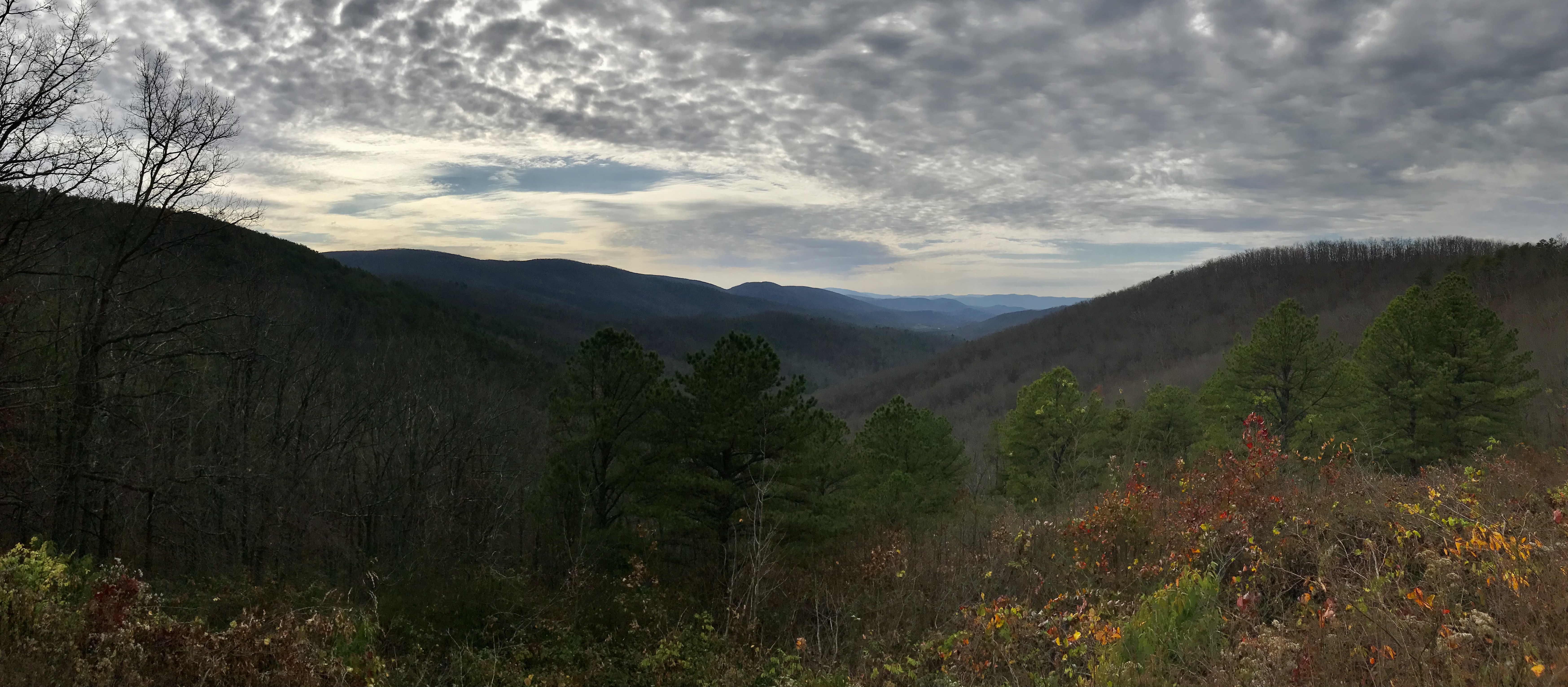
In late October dawn breaks in Crozet, Virginia a little past seven in the morning. It’s cold this week and I need gloves and a winter jacket for my walk. Two trail heads are a few breaths away from my door. This morning I choose the one that leads down for a bit, crosses a wood plank bridge and then climbs – not too far or too hard – and opens with a panoramic view of Beaver Creek and Bucks Elbow, two nearby peaks that are part of the Blue Ridge Mountains, which in turn are part of the Appalachian Mountain range that run from Maine to Georgia. On a crisp morning filled with dawn light coming in low and sparkling, like this perfect morning, Beaver Creek and Bucks Elbow are russet, or maybe a sort of blood orange color with flecks of crimson, gold and deep umber. 

I set a strong pace, walking purposefully, slowing only to say good morning to the three white tailed deer whose breakfast I have disturbed. Two of the deer look up to stare at me, their brown eyes showing no fear of this interloper. The third doe, younger than the other two and perhaps more nervous about me stomping through her forest so early in the morning, looks at me, then at her companions, then back to me before springing away. My eyes track her five swift leaps that defy gravity and carry her from open grass to the thick brush in which she disappears. Her more experienced sisters follow with a slow saunter and more than a little attitude that shows no concern about where I’m going or what I might do next.

I turn my attention back to the trail. My footfalls begin to syncopate with each breath and as they do my body falls into a bright rhythm that gives the sun a run for its money and gives my mind permission to wander. And once my mind shakes off the detritus of the day before, that’s exactly what it does. 

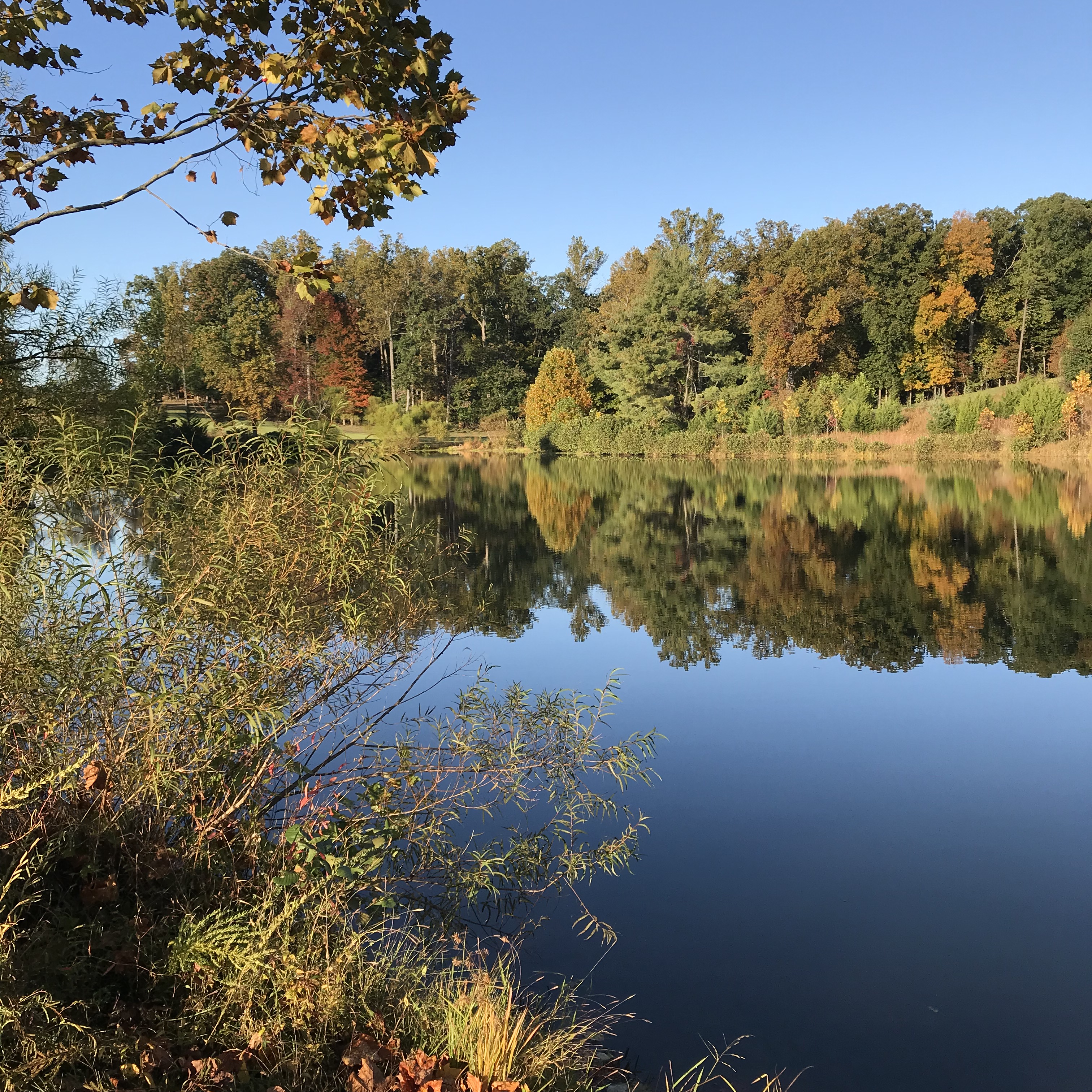
This time of year the tree roots and small rocks obvious during summer walks are hidden by a mosaic of wet, sticky leaves. My pace slows.  The trail takes me past a pond that only last week was a resting spot for the Canada Geese flying south. On that day the mirrored surface, broken by the landing wake of one lone goose that dawdled somewhere over Waynesboro town, reflected the sky and clouds and colors of the hills. The Canada Geese are gone now but maybe their cousins, the Cackling Geese, will visit during winter. On this frozen morning though, all that rests on the water is a cold white mist that the sun will soon burn away. 

I’ll be sixty-four next month. This year my birthday falls on Thanksgiving Day. I know that sixty-four is old to some and young to others. Either way, on these mornings, with the damp and solid ground beneath my feet, I spend less time considering the road ahead, with all its joys and sorrows, and instead reflect on the joys and sorrows I found on the road I traveled. And I take the beauty surrounding me into my confidence. I open the jeweled reliquary that is my heart and tell these mountains all my secrets. 

I confide in the dark winter berries, the crimson ones, too. I confide in the milkweed, bright green in spring but now dried and split to angel wings, their gossamer white threads glistening and weightless in the air. I confess my sins to the red shouldered hawk perched in judgment on the bare branches one hundred feet above me.

I trust the trail and the mountains, the deer and the geese. I trust the loam beneath my feet and the rising mist. I trust it all to hold my secrets. To listen in sacred silence. This earth, it’s ancient and knowing wisdom, will not try to fix a flailing human who isn’t broken.

Three miles later I exit the trail and follow the sidewalk past the blocks of shiny townhomes. Most are decorated for Halloween. The school bus stops so that I can jaywalk across Old Trail Drive. I pass a gaggle of kids with full backpacks and wearing shorts in stark contrast to my bundled body as they head toward the middle school around the corner on Rockfish Gap Turnpike. I am home. I am healed.


Comfort

I enjoy Caitlin Kelly’s Broadside blog. Kelly is the author of Malled and Blown Away and, as a journalist, has written for the Financial Times, the New York Times and Forbes. And every Monday morning, without fail, I can count on finding Broadside in the dozen or so emails that have landed during the night.

Tiny treasures: a bag of vintage buttons and century old sewing needles.

What I enjoy about Broadside is Caitlin Kelly’s concise, sweet, simplicity. She has a way of taking quiet moments from her own life and writing about them in a way that makes her readers feel as if she’s writing each one a personal letter. Kelly is not maudlin nor does she over-romanticize stories from her life. She writes with touching economy and clarity that’s easy to read with my morning coffee. And more often than not what she chooses to share resonates because I either have been or am ready to go through a similar experience. I’m certain it’s because we are about the same age and life events tend to align, but sometimes I can’t help but say, ‘dang girl, you too?’.

For example, in a recent Broadside Kelly wrote about a small inheritance she received from her mother with whom she was estranged. The inheritance included a large pastel of Kelly’s great-grandmother and a small framed sampler – the embroidered alphabet grey with age. Having never received an inheritance, she found comfort and continuity in having these objects around her. And then she asked her readers, ‘what brings you comfort?’.

Many things, of course, bring comfort. A good meal. A loving partner. The purrs of your feline purr baby or the unconditional happiness of your canine best friend.

But other things – other circumstances – bring me comfort, too. I find comfort in surrounding myself with objects that have a history and the energetic imprint of the people from whom they were received. In fact, from where I sit this morning, I’m surrounded by things given to me by others: the painting on my wall, the brass lamp, the sofa and chairs, the tea chest and pillows, the porcelain box and the ceramic vase. Everywhere I look I’m reminded of friends that feel more like family and am I filled with love.

I wasn’t always so blessed. I’ve lived what I might describe as an IKEA-like existence. Easy to assemble, sometimes quick to fall apart, ready to go at a moment’s notice. No matter where life took me I managed to get there with as few boxes as possible. With as little excess weight as possible. 

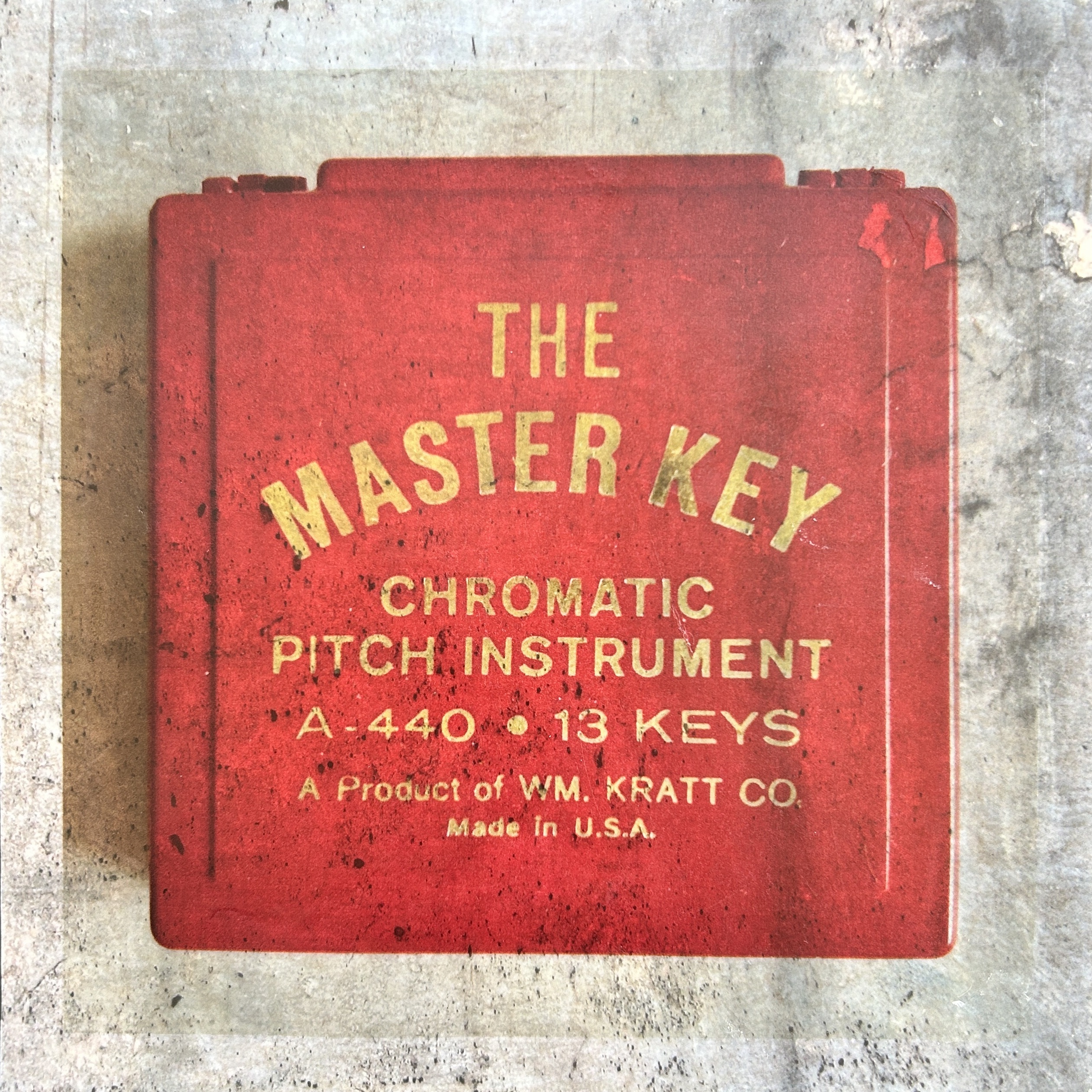
There are a few things, of course, that managed to stay with me through my many moves. I still have the capo I was given fifty years ago when I played 12-string guitar. I still have the little plastic box that held my guitar picks. I have a few of my picks from those days, too. But these things don’t speak to who I am. They speak to a time in my life when I borrowed my roommate Sissy’s Gunne Sax dresses, which were always a size too small. They speak to a time when I rode shotgun in Mike’s green Chevy Nova from our college campus in Crete, Nebraska to a shopping mall’s fern bar in Lincoln where we’d unpack our guitars and sing Dan Fogleberg songs. 

I love that I have that old capo and those guitar picks even though I no longer have the guitar. It’s nice to have a few things that hold the memory of moments decades old. But what do I have that tells the story of who I am and why does knowing who I am – where I came from – bring comfort?

Over this past weekend I drove five hours north on Interstate 81 to clear out the books and tchotchkes and photographs and furniture that filled every square inch of storage locker 2011 at the East Penn Self Storage emporium in Trexlertown, Pennsylvania. These things were the remnants of my mother’s life and had been collecting dust and bugs and spiders for four years. My mother was still alive when I sold her trailer; when I threw away her sofa and shoved her clothing into a collection locker I found in the parking lot of the Walmart off of Hamilton Avenue. She didn’t know that I needed to do that; that she wasn’t going home. And I didn’t tell her. Instead I saved what I thought was important. Furniture that had been in the family for a few generations. The dog tags she wore when she joined the Women’s Army Corp. Family photos, marriage certificates and divorce decrees. A complete set of the Harvard Classics. I saved a wooden 12-inch ruler advertising a long since closed life insurance company headquartered in Pittsburg. And her knitting needles. I really wanted her knitting needles. 

What I saved has little monetary value. Not the ugly Edwardian pendulum clock that stopped working before I was born nor the yellowed newspaper clippings my mother taped onto lined binder pages, her perfect Palmer penmanship taking note of why and how and who. I saved them anyway.

I don’t need these things. And while friends who, like me, are approaching the middle of their seventh decade choose to downsize I’m choosing the opposite. I’m gathering. Surrounding myself with a collection that others might describe as junk but to me is a treasure that exists to remind me of a time long past and a place that no longer exists.

It’s important for me to do this because it connects me to a history and to people I never knew but who gave me my nose, my blue eyes and my propensity for weight gain. These strangers whose blood is in my veins also gave me a passion for art and music. A love of nature. Keeping my great-grandmother’s writing desk and my great-aunt’s crocheted doilies honors my history. It honors them. I know the fragile aperitif glasses, the shell shaped plate from Japan and the lustreware casserole dish in which my grandma made my favorite corn pie could be gone in an instant. And after the sorrow of loss passed my life would be the same. Every new day people move through the loss of the things that remind them of who they are and I know how lucky and how blessed I am and I understand the impermanence of this jumbled collection of artifacts that until Sunday were covered in grime in a storage locker five hours up the road. But having these things around me now helps me feel less lost in this world; less like an uncertain, aimless wanderer and more like a woman secure in who she is and how she came to be.

And that brings me comfort.