Toxic/Not Toxic

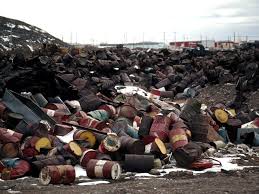
This is toxic:

Unknown

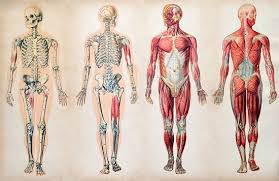
This is not toxic:

Unknown-2

And that’s why I don’t use the word ‘detox’. Yes, it’s time for my yearly campaign to ban the word ‘detox’ and any associated eating plan that encourages us to either eliminate entire classes of macronutrients, requires a blood test before we meal plan or encourages us to subsist on lemon, cayenne and honey.

Why don’t we call what most of us are about to embark on in a few days’ time what it actually is: an opportunity to practice mindful eating.

The problem with a ‘detox’ program – or any strictly defined and limiting diet that promises more than it can deliver – is that it is finite. The rules and edges are so sharply defined that we are almost guaranteed to fail.

If instead we reframe our efforts as an opportunity to slow down and to consider our food choices, we allow ourselves room to explore, to try something new, to reset and – most importantly – to change our relationship to food, our bodies and the intentions we hold when we eat.


The Accidental Vegan

Vegetables


Remember this post? The one where I proclaimed that my omnivorous ways did not make me a bad person? How times have changed. Turns out I’m a very fickle woman.

Eating meat worked well for me during the winter months. A nice stew of vegetables and grass-fed beef on a cold day warmed my bones and blood. But at the time I was sharing most of my meals with a friend. It was easier to prepare one meal, and even if I’d wanted to I knew I didn’t have the discipline to say “no” to bacon on a Sunday morning. So I was an omnivore. And I loved it. What I noticed, however, was that when I was on my own the foods I craved were foods that hadn’t been born. They didn’t have a face and they didn’t have a mother. They were grown from the earth.

When spring arrived our schedules changed and my friend and I had to say goodbye to the beautiful tradition of breaking bread together. I miss sitting down at a table and sharing a meal. It’s a ritual good for the soul. I miss the conversation and the laughter and I even miss cleaning away the dishes.

But I don’t miss the meat. Or the eggs. Or the dairy…except for the feta cheese I used to add to my kale salad.

I remember attempting a vegan diet about six years ago. I don’t think I lasted two weeks.

But I’m a different person now, and being a vegan wasn’t really something I thought I was moving towards. It just sort of snuck up on me. First I let go of the meat. The eggs came next – that was easy. The goat milk was more difficult because I love it warmed with honey before bed and I love milk in my coffee. But I did it. Last was the feta cheese.

So here I am. My favorite meal these days is a bowl of steamed veg with a spicy tahini sauce. Go figure.

How long will this last? Who knows. That’s the thing. I’m not really putting any pressure on myself to eat any one way or be any one thing.

I have to say, though, that this time it feels different. My first challenge arrived yesterday when the staff and teachers of Samyama had a dim sum celebration with owner John Berg at Ming’s. I passed the challenge. The next big test will be in two weeks when I fly home to Pennsylvania for my mother’s 80th birthday. I don’t know how to break it to her that I really don’t want pork chops fried in butter and mock seafood salad in mayonnaise.

I think sometimes you have to choose your battles. Besides, you just can’t argue with an eighty-year-old woman with a cigar in one hand and a slab of raw pig hanging from a fork in the other. Sigh.

Wish me luck.


I Eat Meat. I am Not a Bad Person.

Public domain photograph of various meats. (Be...

This afternoon I had an early dinner with friends. The main course was a perfectly roasted, medium-rare prime rib. It was delicious.

Yes, I’m a yoga teacher who eats meat.

Before you imagine Mimm Flintstone drooling over a giant Brontosaurus burger, allow me to explain. Michael Pollan is right – it is a dilemma being an omnivore. But sometimes it’s who I am. It’s who I need to be.

Over the past year a friend and I carried out a nutritional experiment. Our goal was for each of us to find a balanced meal plan that supported optimal health.

We began with an organic, vegetarian diet that teetered on the precipice of veganism. Eight weeks later, after not seeing the results we hoped for, caution was thrown to the wind and we ate whatever landed on the dinner plate. That was not the best move. We quickly regrouped and tried again by introducing meat back into the diet. At the same time we reduced grains. Our morphed version of the trendy Paleo diet. Three months later and I have to tell you:

I feel great.

Don’t get me wrong. I’m not trying to sell my vegan friends on the benefits of eating meat. Because I don’t believe everyone functions at their best on a meat-based diet. Some folks thrive on a plant-based diet. Others need to add a bit of dairy to their greens. Me? I like a side of skinless chicken breast with my arugula salad.

The real reason I’m telling you this story is to inspire. It took work to find the foods that help me thrive. It was frustrating. Sometimes we took two steps forward and three steps back. But we kept at it. My friend and I continued to peel back the layers. Paring our list of foods down to their most basic, simple forms. We now maintain a mostly gluten-free diet that includes meat, eggs, dairy, fruit and vegetables. We keep as organic as possible, which means we are also, as much as possible, GMO free.

This is not a sugar-free, fat-free diet. It’s a good, wholesome, meal plan that lets a potato be a potato instead of a french fry. Besides tinned tomatoes, there’s not much in my kitchen that comes out of a can or a box.

Yes, choosing to eat meat was a struggle. Throughout my life I have spent short periods – sometimes a few months, sometimes a few years – playing and ultimately failing at being vegetarian. The movie Food, Inc. was a turning point, but not in the way you might think. The film taught me that meat eaters had choices. I had choices. My friend and I both decided it was worth the extra money to source our animal protein from farms that reared their livestock humanely. We look for labels that say ‘organic’, ‘grass-fed’, ‘cage-free’, ‘pasture raised’. I’m a big fan of the number system Whole Food’s uses at their meat counter to educate the consumer.

If our meat is organic, then it goes without saying that our produce is organic and, when possible, local. Milk is from grass-fed cows. We also drink goat milk. Warmed goat milk with honey and turmeric is a wonderful bedtime treat.

Mornings begin with freshly juiced organic apples, carrots, ginger and beetroot. I dilute my juice 50/50 with filtered water.

Breakfast might be boiled eggs with wild salmon or porridge made with Rice n’ Shine. Lunch is usually the largest meal of the day – a one-pot meat and vegetable stir-fry. Dinner could be leftovers but sometimes a simple bowl of yogurt and fruit.

While my new food choices are bringing results, the meal plan has its challenges. I wasn’t accustomed to planning three meals each day. It’s been a bit of a learning curve but mastering the Crock Pot has helped. So has preparing and then freezing large batches of home-made soup.

Food shopping, in the beginning, can be a bit like an episode of Portlandia. Changing habits takes patience and requires some knowledge. Remembering to read labels and then knowing how to translate what those labels mean, in the beginning, was frustrating. It left my friend and I agonizing for thirty minutes over which honey to choose on more than one occasion.

Fortunately, we’re fast learners.

Do I feel deprived? Overwhelmed with all the planning and cooking? Do I miss spending my lunch hour circling the hot bar at Whole Foods?

Not one bit.

I’ve gained more than good health from my new food choices. I’ve become more mindful and more thankful. More grateful. I can see the farmers hands in the mud I wash from my orange carrots. I can feel the power of the soil and the sun as I slice through deep crimson orbs of beetroot. This can’t happen when we’re eating pre-formed food from a styrofoam box.

The truth is, good health from good food is a wonderful gift. So much has to happen to bring that food to my plate. Pausing to give thanks for all the work and lives that contributed to the food that nourishes my body makes that gift even better.

ps…and despite spending more to choose organic, cage free, humanely reared food I’ve discovered I’m actually spending less on food because I know longer use Whole Foods as a refrigerator.  I’ve stopped buying one (sometimes TWO) meals per day from the hot bar!

Making Butter

I made butter yesterday. I think.  I poured heavy cream with a dash of salt into a cold mason jar, tightened the lid and shook it until the slosh of liquid thickened into the thwip of something that wasn’t quite Kerrygold but was far removed from Cool Whip.  I don’t know if it truly qualified as butter but on the first rainy evening of autumn my friend and I smeared it on fresh-baked rosemary bread and washed it down with homemade soup. It was delicious.

Yep.  Butter making.  Soup making. You might say I have too much time on my hands.  My toilet has never been so scrubbed, my hide-a-way bed so neatly hidden, my laundry so freshly washed and my dishes so deliberately stacked.

And I have to be honest.  I love it.

At first, when I lost my ability to fill the space between appointments, I wanted to believe I’d lost my drive.  I wanted to believe I’d become lazy. Isn’t laziness easily remedied?  You pull yourself together, up the caffeine and step on the gas.

But the only thing rushing through life has ever done for me is blur my vision.

So, for now, I’m going to let life slow down.  I’m going to take a more considered path.  And I’m going to make butter.


Pu-erh, Genmaicha and the Hero’s Journey

Beeng Cha teacake pu erh tea and Japanese teapot

Image by Scott MacLeod Liddle via Flickr

I’ve been thinking about tea. Real tea.  My favorite teas are black Pu-erh and green Genmaicha.

Pu-erh is an earthy tea. Its scent alone transports me to a dark woods.  One sip and I feel I’m walking on a soft forest floor inches thick with fallen, decaying leaves and pine needles.  Moss grows around tree trunks and drapes over the rocks that line my trail.

Genmaicha is light and clear by comparison.  It’s roasted with brown rice that softens bitterness and adds a warm, contented note. When I drink Genmaicha I think of standing in an open field with the sun on my back and a broad, cloudless sky above.

But to enjoy the complexity of these teas, they must be brewed correctly. Pu-erh can be brewed forever.  Manhandled.  Genmaicha requires more finesse, water just below the boil and a short brew time.

Thirty-six hours ago, when I posted Mani/Pedi Om, I didn’t know it would be my penultimate weekly (sometimes daily) post.  But as I moved through the day I couldn’t shake the feeling that while I was good at observing life, I wasn’t doing so well at living it.  My life had become as weak and diluted as a cup of tea brewed from a used, day old bag.  Sound familiar?

There’s something missing and I mean to find it.  There’s a gap between what my life is supposed to be and what it has become.

Every time I sit down to write a poem or work on a book proposal or even think about composing a query letter and instead become distracted by Facebook or Twitter or this blog, I’m throwing another bucket of sand on the fire I used to burn with.

I’ve lost track of who I am.  I’m not brave anymore.  I used to be brave.

If I remain glued to this chair, this desk and this laptop engaging in barely witty repartee with people I’ve never met; or if I struggle to be profound in one hundred forty characters or less, I’ll never see Norman Foster’s Millau Viaduct.  I’ll never walk through Tate Modern again, or cry when I see Prague’s St. Vitus’ Cathedral for the first time.  I’ll not drink a pint of the black stuff at a session in Donegal, toss back too much sake and belt out bad karaoke in New York, or play guitar with Mike in Reno.

I’ll never be published.

And I won’t find someone to read to me.  And that is my favorite thing in the world, when someone reads to me.

If I stay here, doing this, I’ll never find out what happens next.  I won’t ever really know how my story is supposed to end.  My only view of the world will come courtesy of Wikipedia.

I learned about Pu-erh and Genmaicha in the garden of the Santa Cruz Zen Center five spring times ago.  A man I knew and maybe loved read TS Elliot’s J Alfred Prufrock to me in the afternoon sun.  We brewed the Pu-erh and Genmaicha.  And then he served sliced oranges dressed in rose water and cinnamon.  I’ve not seen the man for years, but I’ll never forget that quiet, perfect afternoon.

So I’m taking a break for awhile.  It’s time for me to dig a little deeper instead of tossing off six hundred easy words because I can.

Last night I finished reading Karen Armstrong‘s The Spiral Staircase (for the second time).  Towards the end, she talks about the hero’s journey:

The hero has to set off by himself, leaving the old world and the old ways behind.  He must venture into the darkness of the unknown, where there is no map and no clear route.  He must fight his own monsters, not somebody else’s, explore is own labyrinth, and endure his own ordeal before he can find what is missing in his life.  Thus transfigured, he (or she) can bring something of value to the world that has been left behind.

I’m not going on a hero’s journey – at least I don’t think I am – but Armstrong’s words certainly inspire. So do these:

“Not only our actions, but also our omissions, become our destiny.”

And I, for one, have no intention of leaving anything out.