New Guided Autobiography Series

I never know where to begin when it’s time to write about Guided Autobiography. I always want to let you know that it’s not a writing class – even though each week you’ll be writing. And I always want to describe the impact Guided Autobiography has on those who join – but it’s difficult to find the words. 
Guided Autobiography, I guess, is about processing. It’s about looking at the events of our lives. It’s about finding again those lost experiences that may have been the catalyst for profound change in our lives. 

And it’s about sharing those moments. Which is the best thing about Guided Autobiography – the friendships that are deepened and made all the more rich as we learn from one another’s stories.

Our Guided Autobiography meetings follow the same format each week: 

  • We begin with a check-in – a casual chat about the successes and the struggles we endured or celebrated during our writing week. This typically involves howls of laughter.
  • As our check-in winds down I introduce the writing theme for the following week. James Birrin developed his Guided Autobiography program around twelve life themes and the questions that accompany each theme as a means to stimulate our memory. When I was a fledgling GAB facilitator I followed those themes and questions to the letter. But as I gained confidence I did what most GAB facilitators do and developed my own themes and questions. Themes can run the gamut from how we developed trust in ourself or others, moments in our lives that became turning points, or the experiences we’ve had around failure or loss.
  • After the theme is introduced I offer a five minute break but no one ever wants to take a break so we jump right into reading.
  • The essays we write are about 800 words – two pages. And it’s important that we try our best to keep to this limit. Once read, as a group we don’t offer a critique of the writing. What we offer instead is encouragement and support. We might ask questions to know more details in the story. On more than one occasion tears have been shed by all of us.
  • When we have finished our readings we close the class with a final discussion about the following week’s theme.

And that, for the curious, is Guided Autobiography in a nutshell.

Our next 6-week Guided Autobiography session begins Thursday, March 31st at 2:00 PM.

Tuition is on a sliding scale from $60-$120, payable through PayPal.

To register, a simple email will do.

Once I receive payment you’ll receive our Zoom invite.

Class size is small – no fewer than four, no more than eight.
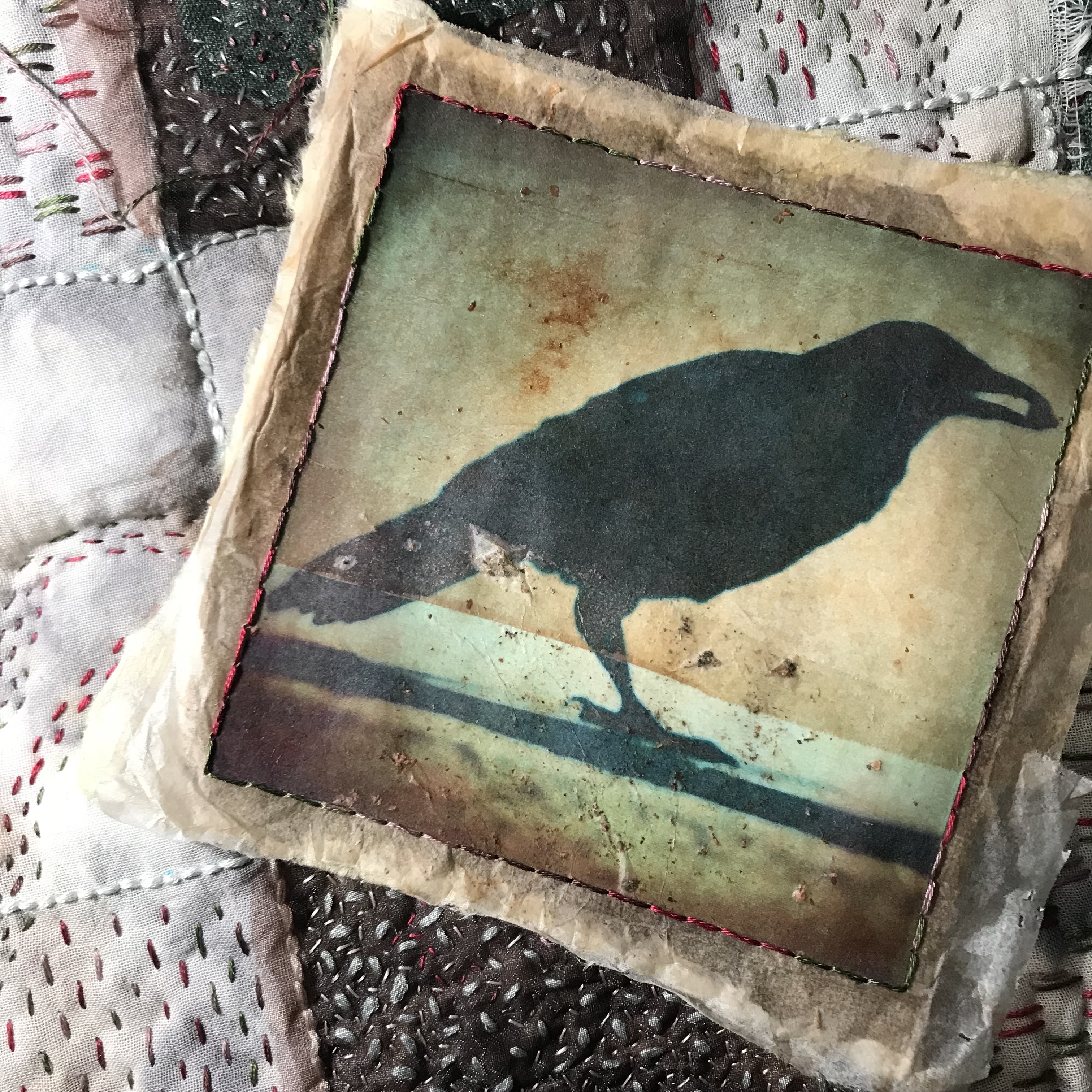

Creating as a Contemplative Practice

As a young girl I spent weekends at my grandmother’s narrow red brick row home, the one at the end of Poplar Street in Allentown, Pennsylvania, while my mom and step-dad went on the road with their country and western band. To cure my boredom, on Saturday afternoons my grandma would take a small bottle of Elmer’s Glue, some colored construction paper and a pair of child’s safety scissors from the metal cabinet tucked in a corner near the back door and put them down in front of me while I watched at the kitchen table.

Sometimes she poured all the dots left in the bottom of my grandpa’s hole punch into a bowl. Even better was when she gave me the hole punch so that I could make my own dots from the pages of a well read McCall’s magazine. Sometimes my grandma crushed the egg shells she’d saved from breakfasts that week, separated them into three or four Dixie cups and adding a few drops of McCormack’s food coloring to each one.

And then she left me to my own devices. I was free to create textured mosaics with the egg shells or to follow the outline of a pencil drawing with my pile of dots in all shades of color and tone. I sat at that table for hours while my grandma worked around me, grilling sliced onions, mixing horseradish with catsup and frying my beloved Minute Steaks while rolls toasted in the oven for my favorite Saturday dinner. 

The act of creating – whether it’s an egg shell mosaic or an egg filled soufflé, a loom knitted beanie or a black bean burrito – can be a balm that shifts our focus from ruminating on the past or worrying about the future to the moment in which we are living. This moment. The present. There is, however, one caveat. While our intent when we’re creating may be to produce something that we’ll gift to others, the act of creating must be something we gift ourselves. Because creating is a mind-freeing act of self-care.

It took me half a century and a global pandemic to figure that out. 

I think what catches us up when we consider creating something out of nothing is our predilection for wanting to make something perfect. Wanting to create precisely what we see in our mind’s eye. The perfect portrait. The perfect flower arrangement. The perfect layered cake. The perfect dance. When we abandon those ideas of perfection and decide instead to lean into the question ‘I wonder what would happen if…’ creating becomes contemplative play. As the chaos we’re living through continues to storm around us, creating as contemplative play becomes a gift of self-care that reduces anxiety, changes perspective and sparks joy.

Right now I’m spending my ‘creativity time’ playing with needle and thread, fabric and photographs. I’m learning new skills like felting and sashiko and boro and remembering old skills that I loved as a child like embroidery. 

When was the last time you dug out that set of colored pencils you keep stashed at the back of your desk? Or finished the blanket you began knitting two years ago? Or made your grandmother’s lemon bar recipe? Or dusted off that guitar? Or done any activity that lights up a different part of your brain and moves you from the routine to the sublime?

It’s time.


Your Creative Heart

When I was a child I loved September. I loved school shopping. I loved the smell of a new lunchbox, fresh new clothes, breaking in new shoes and the sharp graphite tip of a bright yellow number two pencil whose perfect pink eraser was still intact and whose pristine finish had yet to be marred by my biting incisors.

But that was then. This is now. And as we enter the second September of the pandemic, it’s a struggle sometimes to hold on to my optimism, my hope and my motivation. I know I’m not alone. Let’s face it. The past year and a half has been one heck of an endless slog.

What do you do when you know you’re reaching critical mass? When you know the stress of all we’ve been through and all we’re bearing witness to weighs too heavily on the heart?

Inspired by a friend whose journey as an artist has been so much fun to watch, I pulled out my own art supplies. The creative process, whether it’s at an easel with a fresh gessoed canvas, in your kitchen whisking a roux or with pen in hand and a story to tell, is the distraction we need. It offers us room to breathe. The creative process slows down time and provides space for honest reflection. It provides the clarity we need to be honest with ourselves about how we are experiencing life in this New Normal.

Where is your creative heart? Music? Visual arts? Cooking? Writing? Is it time to get your creative heart beating again?

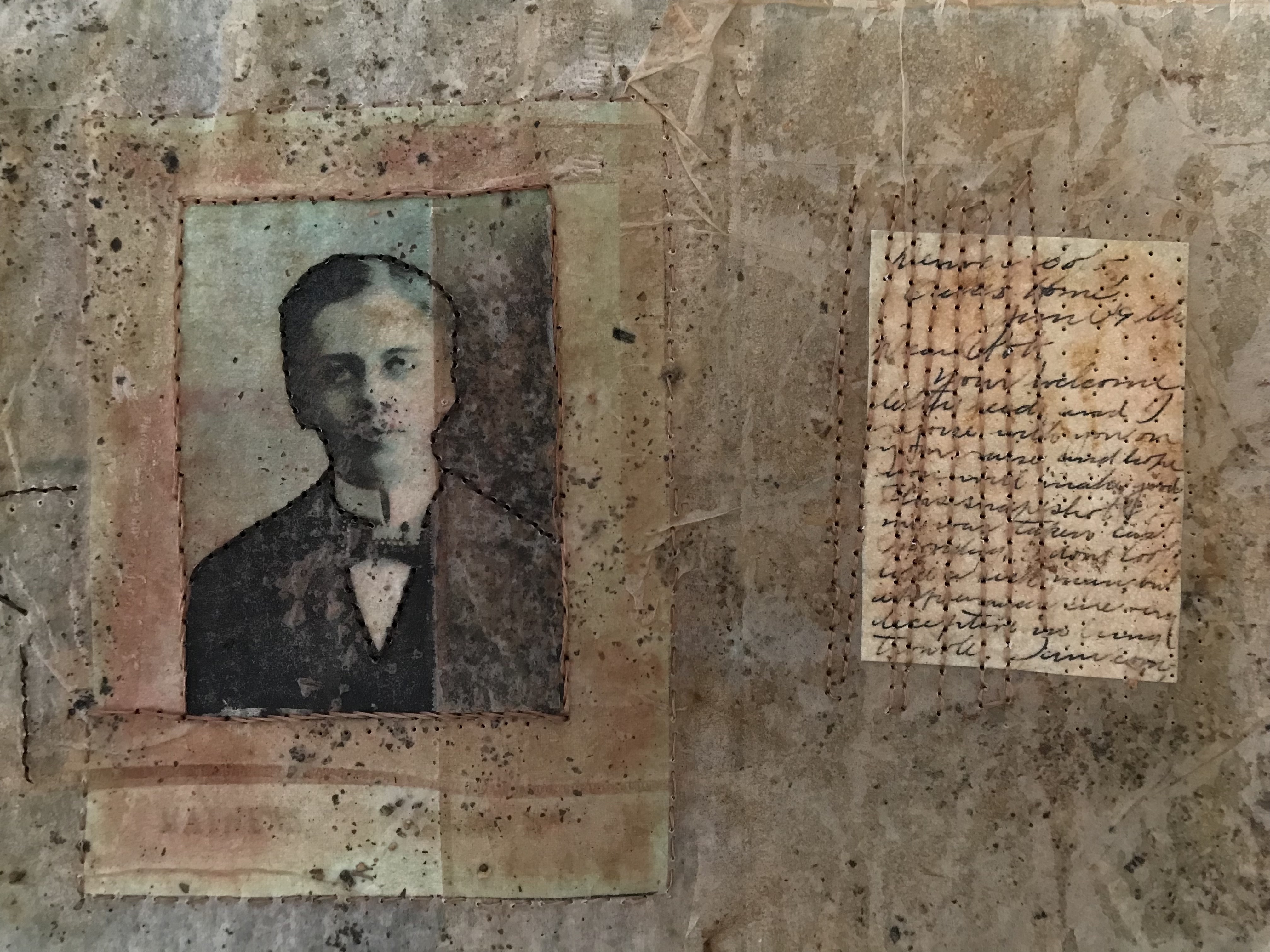
Lately I’ve been seduced by the practice of ‘slow stitching’. Letting time pass one slow stitch at a time. My Aunt Mimmie taught me how to embroider when I was young and slow stitching has nudged awake a joy I’d forgotten. I’ve also been working on a series of mixed media pieces called ‘Family Album’. This collage is from that series. The man on the left is my great uncle William Harrison Barber, known as ‘Henry’ to his friends and family. The text on the right is from the last postcard he sent to his brother Robert. From the moment I found his postcard in my mother’s collection of family ephemera I felt a connection  to this man. I can’t explain it. I just did.

Henry wrote the postcard in 1903 from the Oakes Home for the Consumptive in Denver, Colorado. He tells his brother, “I don’t look like a sick man but appearances are very deceptive with lung trouble.” His doctors tell him he is not improving and advise that he head to Saranac Lake in the Adirondacks. Henry knows that if his health doesn’t improve when he is in New York, he will never see Colorado again. He’s only twenty-three. And he never makes it to Saranac Lake.

His story has given me pause to reflect on what we do to survive and the connection between good health and creativity. 

Throughout the pandemic it’s been my adventures with basket making and needle felting and wet felting and eco-dying and collage that have brought me comfort. They’ve kept me sane and quite possibly alive.

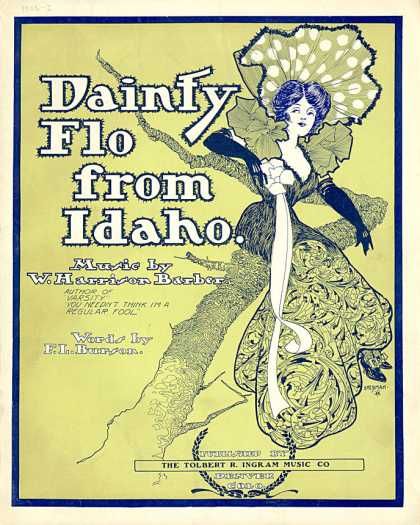
William Harrison Barber was a musician. He left his studies in Boulder to pursue a career in music and found some success with his ditty ‘Dainty Flo from Idaho’. I’m sad that music didn’t save his life but I bet it brought him comfort. 

Can exploring your creative nature be a comfort to you?