Creating as a Contemplative Practice

As a young girl I spent weekends at my grandmother’s narrow red brick row home, the one at the end of Poplar Street in Allentown, Pennsylvania, while my mom and step-dad went on the road with their country and western band. To cure my boredom, on Saturday afternoons my grandma would take a small bottle of Elmer’s Glue, some colored construction paper and a pair of child’s safety scissors from the metal cabinet tucked in a corner near the back door and put them down in front of me while I watched at the kitchen table.
Sometimes she poured all the dots left in the bottom of my grandpa’s hole punch into a bowl. Even better was when she gave me the hole punch so that I could make my own dots from the pages of a well read McCall’s magazine. Sometimes my grandma crushed the egg shells she’d saved from breakfasts that week, separated them into three or four Dixie cups and adding a few drops of McCormack’s food coloring to each one.

And then she left me to my own devices. I was free to create textured mosaics with the egg shells or to follow the outline of a pencil drawing with my pile of dots in all shades of color and tone. I sat at that table for hours while my grandma worked around me, grilling sliced onions, mixing horseradish with catsup and frying my beloved Minute Steaks while rolls toasted in the oven for my favorite Saturday dinner. 

The act of creating – whether it’s an egg shell mosaic or an egg filled soufflé, a loom knitted beanie or a black bean burrito – can be a balm that shifts our focus from ruminating on the past or worrying about the future to the moment in which we are living. This moment. The present. There is, however, one caveat. While our intent when we’re creating may be to produce something that we’ll gift to others, the act of creating must be something we gift ourselves. Because creating is a mind-freeing act of self-care.

It took me half a century and a global pandemic to figure that out. 

I think what catches us up when we consider creating something out of nothing is our predilection for wanting to make something perfect. Wanting to create precisely what we see in our mind’s eye. The perfect portrait. The perfect flower arrangement. The perfect layered cake. The perfect dance. When we abandon those ideas of perfection and decide instead to lean into the question ‘I wonder what would happen if…’ creating becomes contemplative play. As the chaos we’re living through continues to storm around us, creating as contemplative play becomes a gift of self-care that reduces anxiety, changes perspective and sparks joy.

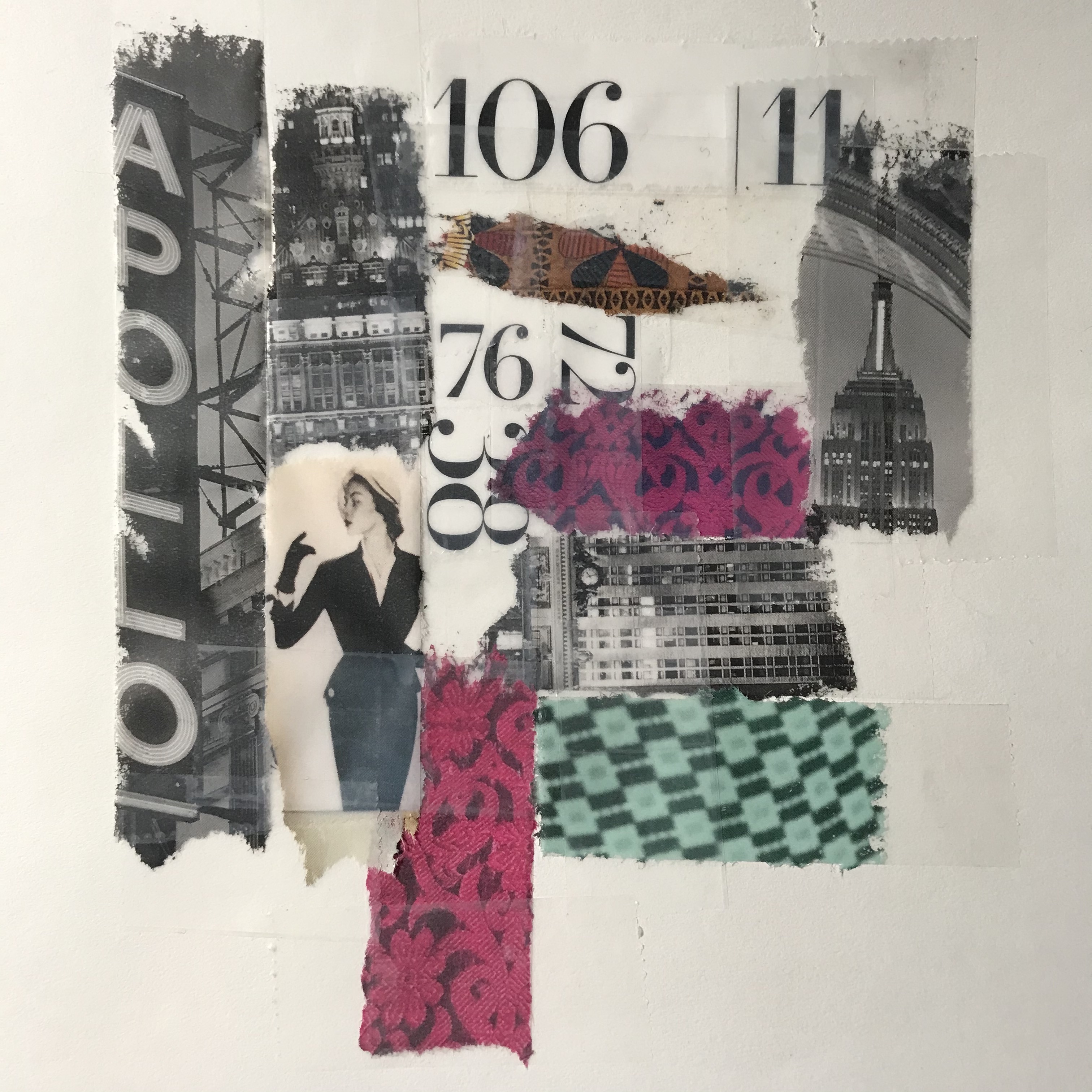
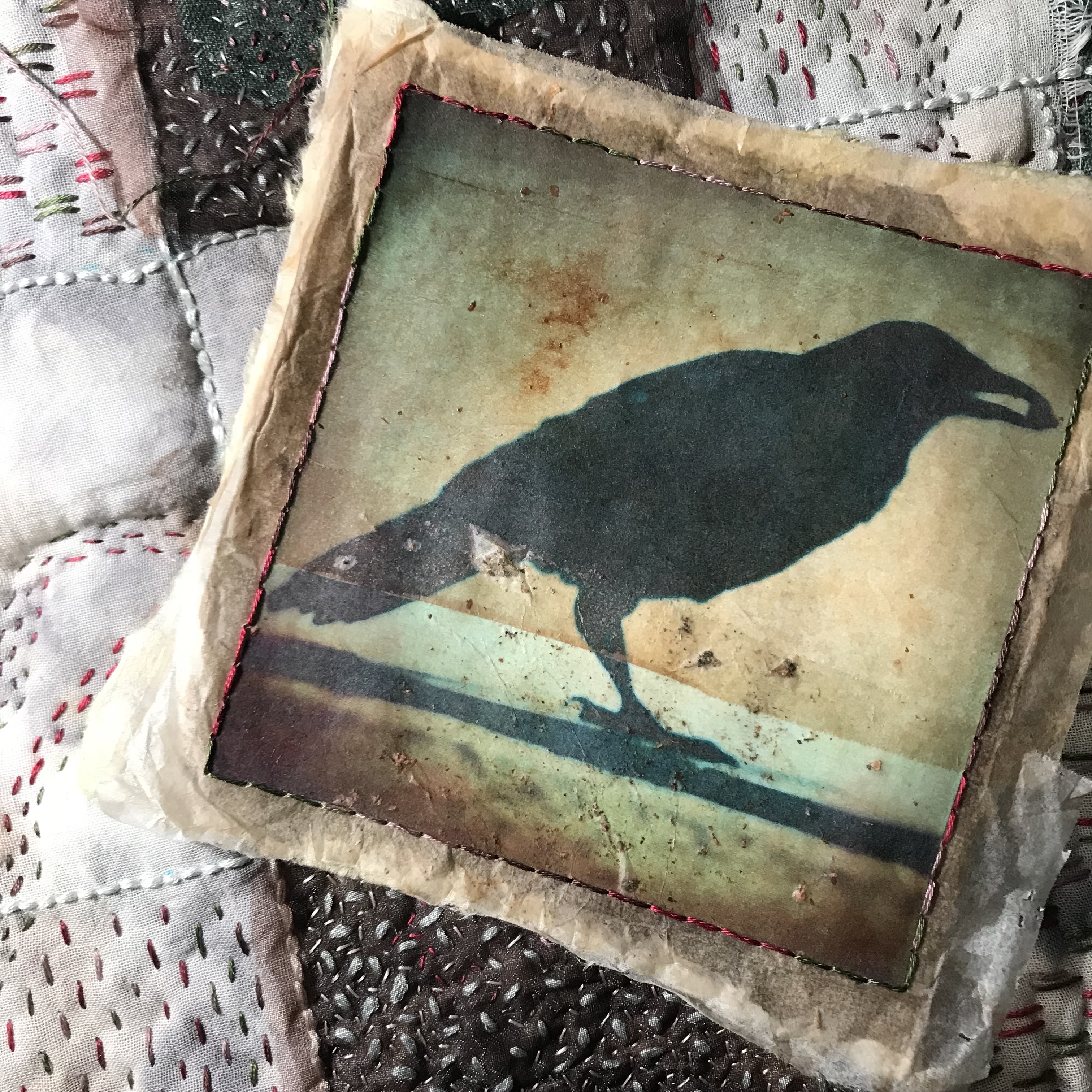
Right now I’m spending my ‘creativity time’ playing with needle and thread, fabric and photographs. I’m learning new skills like felting and sashiko and boro and remembering old skills that I loved as a child like embroidery. 

When was the last time you dug out that set of colored pencils you keep stashed at the back of your desk? Or finished the blanket you began knitting two years ago? Or made your grandmother’s lemon bar recipe? Or dusted off that guitar? Or done any activity that lights up a different part of your brain and moves you from the routine to the sublime?

It’s time.


I Resolve

Scroll through the last ten years of Practically Twisted posts and you’ll discover a pattern. Every few years, around the middle of December, I write about the long list of promises that I resolve to keep in the fast approaching new year. And then I’ll confess to feeling the deep disappointment of personal failure when those promises are broken by February. In other years I write about how I’ve learned my lesson about resolutions. I decide to throw caution to the wind and to swear resolutions off for good. I give myself carte blanche to do whatever I darn well please.

But throwing caution to the wind is not in my character. It doesn’t sit right, this going rogue. There has to be a place for everything and everything has to (more or less) be in its place. I like to know where I’m going and how I’m going to get there.

I think that’s why I love this time of year. It’s the time of year that asks for introspection and reflection. It’s the time of year when I can look back and see that I’ve survived another circle around the sun more or less intact. It’s the time of year when I’m giddy with the anticipation of making a game plan for the next twelve months. Of figuring out how I can reach the heights to which I aspire.

I guess that’s why I like to make New Year’s Resolutions. Even when I try to convince myself that it’s a fool’s errand. Taking time to make a resolution suggests we’ve taken time to contemplate, to imagine ‘what if’, to ponder. And it helps me create order out of chaos. Resolutions are a road map. There’s plenty of opportunity for me to take side trips and short cuts, but resolutions point me in the right direction.

What about you? Do you set resolutions? 


On Purpose

I have a morning ritual. Bruce the Cat wakes me up at 5AM. While the kettle boils he and I go outside for a breath of fresh pre-dawn air. When he completes his ‘check of the perimeter’ (and after he is thwarted in his attempt to munch on a nasturtium leaf) we come back in, I make a cup of coffee or tea and sit down at my desk to begin my day. I write a few words in my journal and then open all the emails that arrived while I was sleeping.

Last Friday, in between taking the New York Time’s Weekly Quiz (I scored 10.67!) and watching Seth Meyers’s Closer Look (his impersonation of Mike Lindell the Pillow Guy is hilarious!) I opened my newsletter from Medium and scanned the page with my finger ready to ‘delete’ until I saw this quote from the actor Wil Wheaton: “Whenever possible be the person you need(ed) in your life. Do it on purpose.”  

On the surface it reads like one of those sickly sweet pseudo-inspirational phrases that show up on our Facebook feed. The ones written in a graceful, italicized font over a soft focused image of a field of flowers or the sun setting over the ocean.

It’s the second part of Wheaton’s message that struck home for me: do it on purpose

What the little guy from Stand by Me is talking about, I think, is intentionality. 

Back in the day I was in an acting class taught by Ed Hooks in the basement of a local church. Each week we’d perform a short scene with a partner which would be followed by critique. I can’t act my way out of a paper bag (I’m way too self-conscious) but I remember the question Ed posed to us again and again about our acting choices we made for our character: What is your intention? 

In the pre-pandemic Before Times, when I found myself contemplating something new, I often asked myself the same question: What is my intention? Knowing why my choices mattered to me helped me commit more fully to the process.

But the shut down changed all that. My spirit grew as soft as this new roll around my middle. I lost sight of my purpose. I forgot how to live on purpose. I forgot how to choose with intention. Did you?

As we begin to stretch our legs and make our way out of the den after a long COVID winter we might remember Wil Wheaton’s words: Be the person you need in your life. Do it on purpose

Live with intention. 


Do Clothes Make the Yoga Teacher?

You wouldn’t know it to look at me but I love clothes. It doesn’t matter that my daily uniform rotates around a tee shirt paired with yoga pants or two identical pairs of Target jeans bought in two different sizes on sale for a tenner each – I love clothes.

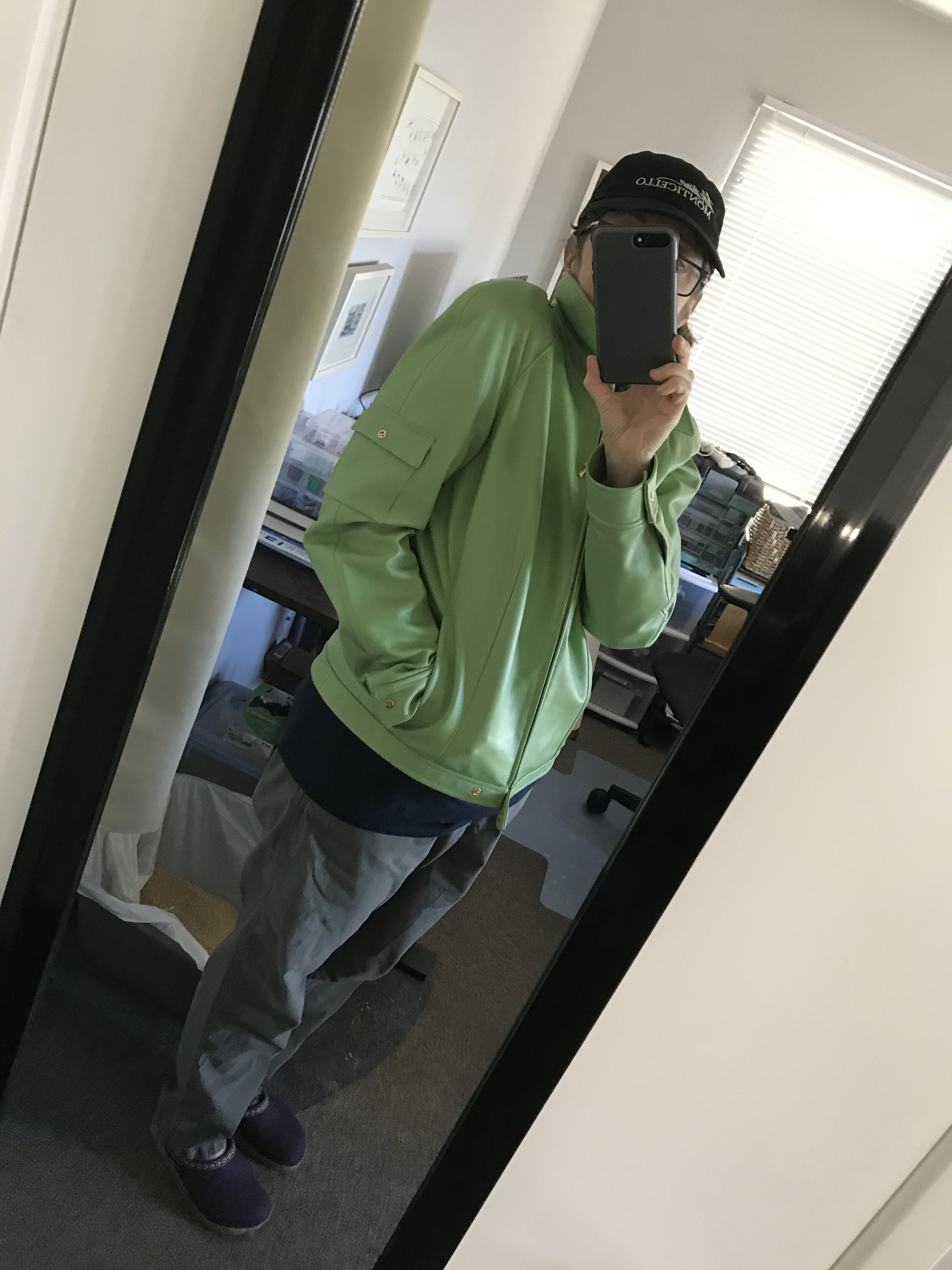
Who knew I needed a pea green bomber jacket?

I love the expressive nature of clothes. How the colors you choose can reflect the mood you are in and how the way you style your clothes can shout to the world, ‘here I am!’ or whisper ‘shhh…I’m thinking’. I love how a structured shoulder can help you ‘fake it ’til you make it’ and how cutting cloth on the bias changes the drape of a dress. Clothes can indicate where you stand politically. Clothes can shine a light on your inner artist or reflect your relationship with nature. 

Thirty-five years ago I loved nothing more than to spend a Saturday afternoon at the Goodwill on El Camino Real in Mountain View scouring the racks for vintage dresses. I paired my findings with fishnet stockings, Doc Marten knock-offs and baggy houndstooth jackets with fabulous, patterned satin linings from the men’s section. I was making jewelry at the time – huge brooches made with old watch parts and those tiny spoons you find in salt cellars – and I’d have one pinned to an oversized collar or maybe use one to replace a missing button. The look had a grunge-goth vibe that I embraced. The style was trendy, of course – I mean, what self-respecting Goth didn’t have a pair of Doc Martens? – but those clothes also told a story. Anyone looking at me would know, without asking a single question, a little bit about me.

I don’t dress to impress or express these days. While the pandemic influenced an even more relaxed approach to my sartorial splendor, I’ve been rolling through life in baggy clothes and graphic tees for awhile now. The only story I’m telling through the clothes I pull on each morning is the one that says ‘I’m not worth the effort’. How sad is that?

But maybe that’s about to change.

Last week a woman who plays the role of ‘cool, older aunt’ in my life cleaned out her closet and offered the clothes she no longer wore to me. 

I took them.

These are not clothes with worn out knees or thread bare elbows. These are clothes my bank account would never allow me to purchase for myself. These are beautiful, classic, never going out-of-style clothes.

I slipped my arms through the sleeves of a well-tailored jacket and caught a glimpse of myself in my friend’s mirror. Who was that? I recognized my face, but everything else about me had changed. For one thing, I had a waist. For another, the chatter in my mind shifted from the typical self-deprecating ramblings to which I’m accustomed into something approaching pride. 

I brought the clothes home that evening and the next day purged my own closet. And the day after that? I started showing up for my Zoom meetings sitting a little bit taller and a little bit more confident.

And then I started thinking.

You wouldn’t know it to look at me but I love clothes.

That being said, I’m conflicted. I know clothes are nothing more than the means by which we keep our bodies – our souls’ temporary home – protected from the elements. So why should clothes matter? But if our naked bodies are a blank canvas then clothes are the paint by which we express to the world who we are and who we aspire to be.

Who will you be today?

ps…As a yoga instructor I will continue to wear baggy tee shirts and budget leggings to class. It’s my small protest against the Yoga Industrial Complex and the sexualization of a practice that means so much to me.


Power Tools

While training with International Coach Academy, Power Tools were the bane of my existence. A coaching concept to help shift the perspective of clients, at the time a Power Tool felt too much like mental slight-of-hand, as if a few well-timed questions gave me the ability to trick my client into moving from doubt to trust, from trying to committing, or from reacting to responding. It all seemed too easy. Too magical. Akin to a magazine article proclaiming ‘Ten Days to a New You!’

But coaching isn’t magic (although it can feel that way sometimes). Change doesn’t happen overnight. And, as a coach, it’s not my job to shift a client’s perspective. The client can do that all on their own. My job is to remain present, to remain curious and to ask a few well-timed and on-point questions. When I do my job well a client can move from doubting themselves to trusting themselves, from trying to achieve a goal to committing to a goal, and from reacting to a situation to responding to a situation. 

My changing perspective began when I experienced first-hand how substituting one word for another had the potential to displace a less than desirable attitude for one that offered joy.

Such a simple thing. Changing one word. Simple, in fact, to the point of being embarrassing.

How many times do you find yourself saying a version of any of the following:

  • I need to get up
  • I need to go to work
  • I need to do the laundry
  • I need to email (fill in any name)
  • I need to cook dinner

What would happen if we changed those needs into wants? As in:

  • I want to get up
  • I want to go to work
  • I want to do the laundry
  • I want to email (fill in any name)
  • I want to cook dinner

I told you it was simple. But did you feel it? Did you notice a shift in how you felt about each one of those sentences? A shift from avoidance to engagement, procrastination to anticipation and drudgery toward achievement.

Words have power. They have the power to influence our perceptions and perspectives. Words are tools we use to find clarity and understanding. When we understand their power, we see our world through a different lens. 

Words are tools. 

They’re…wait for it…Power Tools.


Life through a New Lens

This past Tuesday Ben and I drove to Pleasanton so that I could receive my first dose of the Moderna vaccine. Ben made the same trip solo two days later and took his first dose of the Pfizer vaccine. Other than a few hours of extreme fatigue that provided a great night’s sleep for me and a power nap for Ben we’ve had no side effects. Not counting, of course, the sore but tolerable upper arm.

Choosing to not be vaccinated was never an option for us. Looking beyond the politics, the pseudo science and the conspiracy theories that are aching to plant seeds of doubt, Ben and I believe taking the injection is a moment of self-care that supplements our already healthy lifestyle. We also believe it is an act of selflessness. We are protecting ourselves from severe illness. More than that we are protecting our community. We are part of the reason why that light we see at the end of the tunnel is burning a little brighter.

And that’s something to celebrate, right? Right?

I’ll be honest. I’m a little apprehensive about the New Normal that awaits. Of course I want the world to open again. I want to see family and to have a good reason to wear something other than sweatpants just like everyone else. I guess what concerns me is the possibility of falling back into old habits, relentless work and unfulfilled goals.

As we begin to hope again, we have an opportunity to view life through a new lens. Who do we want to be when the New Normal arrives? What ways of thinking no longer serve us? What attitudes need to shift? What can we let go of?

When this is over the world will have changed. I hope I’ll have changed, too.


Fear or Faith: My Choice

Can you keep a secret? The trainings in which I’ve been entrenched since before the pandemic’s shutdown began are coming to a welcome end and I find myself with a strange amount of time on my hands. But please. Let’s agree to keep this little admission between friends. I don’t want the universe catching wind of my twiddling thumbs because you know as well as I do that empty space loves to be filled. I’d like a chance to see what I do with all this spare time before that happens.

But I’m wondering…now that I have the chance to dive into all those ‘things’ I’ve always wanted to do but never had time for…what’s stopping me?

I’d like to blame the bout of ‘pandemic malaise’ I’m experiencing but to be truthful the malaise I’ve encountered on and off these past twelve months is fleeting. Maybe it has more to do with the weather, which has been unseasonably chilly and wet for mid-March in Northern California. Or maybe what looks like malaise on the outside is really, on the inside, indecision and fear.

Indecision I understand. I’ve always seen both sides of every coin. But why fear? What’s that about?

In a recent coaching conversation I wondered if the fear my client experienced was less about feeling unprepared for the tasks she needed to complete in order to move her project forward and more a fear of wasting time. It was easy for me to share that observation because that is where most of my fear is rooted. I’ve been alive longer than I have years left to live. I don’t want my time wasted. Besides, I need to earn my keep while my jiggly human form still takes up space on this planet. I need to draw a salary. Make money. Pay bills. I don’t have time for flights of fancy.

I wonder, though, if my excuse, “I don’t have time for that”, masks a harder truth. My interests, outside of teaching yoga, require focused attention. Commitment. Awareness of both my strengths and my weaknesses. They require a willingness to learn.

Yeah. Who has time for that? Especially if the final result is an amorphous unknown.

Another friend of mine is an artist. Seven or eight years ago, when we first met, she was learning to paint. Now she wins awards, exhibits regularly and is about to have her work published in two books.

I wonder if she felt her time was wasted while she was learning to turn a flat circle into a sphere? I wonder, when she first picked up a paint brush, if she even considered time?

It’s funny, isn’t it, how we give fear permission to stop us in our tracks? It can be fear of the unknown, fear of time wasted, fear of hard work or fear of financial insecurity. Or, in my case, all four.

Rather than giving fear carte blanche to run our lives, maybe it’s faith we need? 

So. Will turning my fears of the unknown into faith in myself lift the malaise? Will it help me find the motivation and momentum I need to make the transformation from someone who watches from the sidelines into someone who’s willing to take a chance on herself?

Good question. I can’t wait to find out.


In Search of the Elusive Authentic Self

In my coaching practice the issue of authenticity is a featured player. More often than not clients will, at some point in the session, tell me they are either:

  1. Searching for their authentic self
  2. Struggling to live an authentic life
  3. Questioning whether their motives are coming from an authentic place.

What has to happen for the conditions for self-doubt to manifest? When do we begin to feel we’ve lost touch with the image we hold in our mind’s eye of who we believe ourselves to be? And how can we return to the clarity that keeps us grounded and focused on the values we cherish most? When we answer those questions authenticity becomes less of an intention and more of a truth we live. 

When I was a child I was teased for having two left feet. More often than not I had fresh or fading scabs on my elbows and knees from all the falls I took. Like a puppy learning to leash walk I was easily distracted by metaphorical squirrels. I tripped over sidewalk cracks, missed steps when climbing stairs and walked into people, poles and walls in my pursuit of something different from the task at hand.

As an adult, while my elbows and knees have healed, not much else has changed. I’m still easily distracted by bright, shiny objects. I still stumble. I fall, enraptured by the aspirations of others at the expense of my own. My admiration for the high bar others set for themselves ignores the higher bar I’ve set for myself and fills my brain with ‘you should do this’ or ‘you should do that’ at the expense of my heart’s song. This longing to be someone I’m not steals validity from the wonderful life I’m living. It diminishes the dreams I have. It diverts my attention away from the values most important to me and ultimately away from my authentic self.  

The best we have to offer the world is grounded in personal authenticity. When we lose sight of that – when we feel lost – how do we find our way back? The answer to that question is as unique as the journey we’ve chosen for ourselves. But I find these suggestions useful:

  1. Get away from the noise. Take a day to yourself. Set work, obligation and commitment aside and give your heart the space to expand.
  2. Breathe with intention. When you feel unmoored, close your eyes and breathe. Lengthen the exhalation until it’s longer than the inhalation. Imagine the in-breath moving into the soles of your feet and connecting you to the earth.
  3. Trust your instincts but know that the answers aren’t black and white. Some of us choose to listen to our heart. Others listen to our brain. But what about the space in between? What is that space saying to you and how does it align to the authentic life you want to live? Is there an equilibrium to be found?
  4. Honor the truth that journeys change. There are detours, road closures and surprises if we choose to spend some time exploring roads taken less often. It’s these moments that help us take the next step.

When we look carefully, we discover that the sense of self is not a particle that never changes, but rather a flow, a wave of thought and feeling that can increase and decrease and is therefore not permanent.

—Shinzen Young, “Brief Teachings”


The Day After: Teaching Yoga in the Storm

Even though I saw it coming. Even though we all saw it coming. There was an element of stunned surprise as we watched it happen.

It’s morning. I’ve had my coffee. I’ve watched Stephen Colbert’s opening monologue from last night (it’s worth fourteen minutes of your life). I’m flipping between CNN, MSNBC and Fox (yes, I am). What I believed, what I thought was right and my innate optimism is scattered across the floor this morning like a bucket of spilled Lego blocks. And now I’m left to figure out how to put my faith in who we are as a nation back together. How the Legos stack. They’ll never align the same way. I’m shook.

Are you? You should be.

But before I dig out my pink pussy hat from 2016 and run off to the nearest march, I have yoga classes to teach. People to coach. Papers to write and a Noom account to manage.

So. As yoga teachers, what do we do? When we log into Zoom today do we pretend it never happened? Is this the day we pull out the Ahimsa trope and rehash all the cliches’ we’ve gathered about non-violence over three decades of teaching? Do we set aside the vigorous flow we had planned and trade it in for quiet reflection? I don’t know. I guess it depends on who we are as teachers. 

Something is happening. We preach ‘be here now’ without ever really understanding what that means. Be here now. Stay awake. Remain present. Do not sweep what is happening in our country under the yoga mat.

This morning I’m reactive. I’m responding thoughtfully (I hope) to comments I see in my Facebook feed from strangers across the Atlantic who are describing yesterday as ‘amusing’ or ‘not as bad as…’ (choose any atrocity in Northern Ireland).  I sent a lengthy text to a dear friend wondering why the stock market is up today because my brain is filled with images of gleeful brokers in suits and Italian leather shoes surrounded by money and oblivious to the carnage around them. Every time I hear a talking head say, “this is not who we are” I ask myself, “then who are we?”

Like I said. I’m reactive. I’m reactive when I want to be active. Reactivity is impulsive and not well-thought out. We witnessed reactivity yesterday. And while we watched the capital stormed by thousands of maskless souls, three thousand nine hundred other souls died of COVID. But that’s another story.

I don’t want to react. I want to act. By that I mean I want to be informed. Even when that means tuning into news that may lean toward a political philosophy that is different from my own. I want to be responsive and responsible.

As a yoga teacher, as a yoga therapist, as a coach – it’s an obligation I intend to fulfill.


Resolve & Clarity

There was a time when New Year’s resolutions meant everything to me. This is how it typically played out:

  1. In December I begin to create a list of goals impossibly long and non-specific
  2. By mid-January I’m inching toward failure
  3. February arrives and the goals and aspirations I imagined for myself in December are forgotten
  4. Guilt ensues

I’m not alone. By February most resolution loving humans have become fickle wrecks, rationalizing all the reasons why the promises we made to ourselves were broken. Why no amount of good intention was enough to realize change.

After many decades of repeating this pattern I decided resolutions were a fools errand and stopped torturing myself. Until now. This year, 2021, is different. I’m not certain why. Perhaps  the chaos and commotion of 2020 has left me feeling untethered and the only way to anchor myself in the present is to build a framework for the future.

I’ve read that one of the reasons why our resolve fails after a few short weeks is because the goals we set for ourselves are not specific enough. For instance, it’s not enough for me to tell myself “In 2021 I want to be published.” What does ‘be published’ mean? Do I mean a letter to the editor of my local newspaper or a feature in O Magazine? It’s more helpful for me to set this intention: “In 2021 I want to be published in the Readers Write column of The Sun.” That still may not happen, but the specificity of the intent allows me to create a plan of action that moves me forward toward that goal.

In the past, like many, ‘lose weight’ and it’s sidekick ‘exercise more’ has made an appearance on my list of resolutions. Even when my weight was well in the realm of ‘average’ and I was hitting the magic number of steps. It landed on my list this year but I had to wonder why. And so, it’s been helpful to take time to consider what I actually mean when less weight and more exercise land on the list. It hasn’t taken long for me to realize these goals are really not about weight loss and exercise. They’re about health and wellness. They weren’t about fitting into the embossed leather pencil skirt a friend outgrew and passed on to me. They’re about living life with vibrancy. With clarity. Besides, can you see me teaching yoga in an embossed leather pencil skirt?

So how do I find vibrancy? Where is the clarity I seek?

Last year began with the death of my mother. She was an alcoholic. As was my grandfather.  Two months after the local post office lost and then recovered my mother’s ashes (it could only happen to my mom) we shut down and the life we knew became The Before Times. Overnight we were strategizing new coping mechanisms. 

My coping mechanism was wine. What became a glass or two on weekends morphed into a couple of glasses on weekend nights and a glass or two over the course of the work week which eventually morphed into a glass or two every night of the week. Every now and again I took a break for a few days – just to prove I could – but the next COVID graph would send me back to the Pinot. The amount I was drinking was more than I should but I was convinced my nightly habit relieved the pressure of coping in the weird time in which we live. And besides, I only poured the Pinot as a nightcap before climbing into bed. When I started climbing into bed at 7:00 PM I had to ask myself, ‘how much drinking is too much drinking?’

And the cheap Pinot was not supporting the vibrancy and clarity I want for my life. And so, here I go, walking into this new, amazing year as a non-drinker. I’d like to say this is permanent but I don’t know if that’s true. I want it to be true but I’m just a humble and flawed yoga teacher. So we’ll see.